

The Glass Flowers
After seeing some of the Blaschkas' marine invertebrate models in Harvard's Museum of Comparative Zoology in the early 1880s, George Lincoln Goodale, the first director of Harvard's Botanical Museum, commissioned a series of glass plant models from the Blaschkas. The first of these models arrived at Harvard in 1887. Just three years later, the Blaschkas signed a contract to exclusively produce glass models of plants for Harvard, and dropped their production of invertebrate models. Their work on the plant models was sponsored by Elizabeth C. Ware (1819-1898) and Mary Lee Ware (1858-1937), a wealthy mother and daughter from Boston.
The Harvard commission absorbed the Blaschkas for the next four decades. Rudolf traveled to the United States twice, in 1892 and 1895, also visiting the Caribbean to see live plants. Rudolf continued to make models for the Harvard collection until 1936, only a few years before his death.
In total, the Blaschkas made more than 4000 models of more than 800 species of plants. Although a few have not survived, most remain on exhibit today at the Harvard Museum of Natural History, where they are known simply as “the Glass Flowers”.
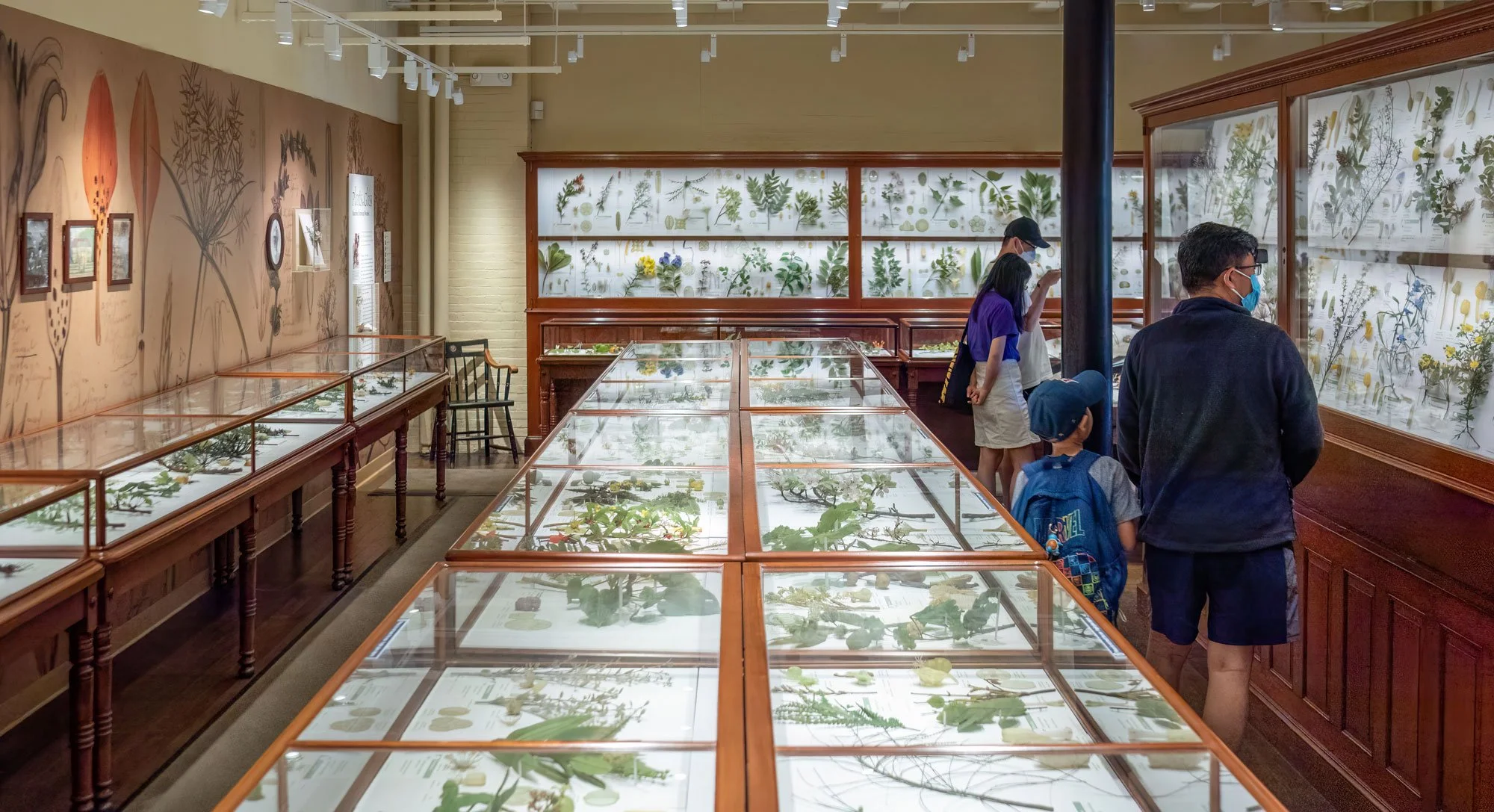
Glass flowers on display in cases at Harvard Museum of Natural History, Cambridge, Massachusetts, USA. Photo by Rhododendrites (Wikimedia Commons, Creative Commons Attribution-ShareAlike 4.0 International license, image resized).
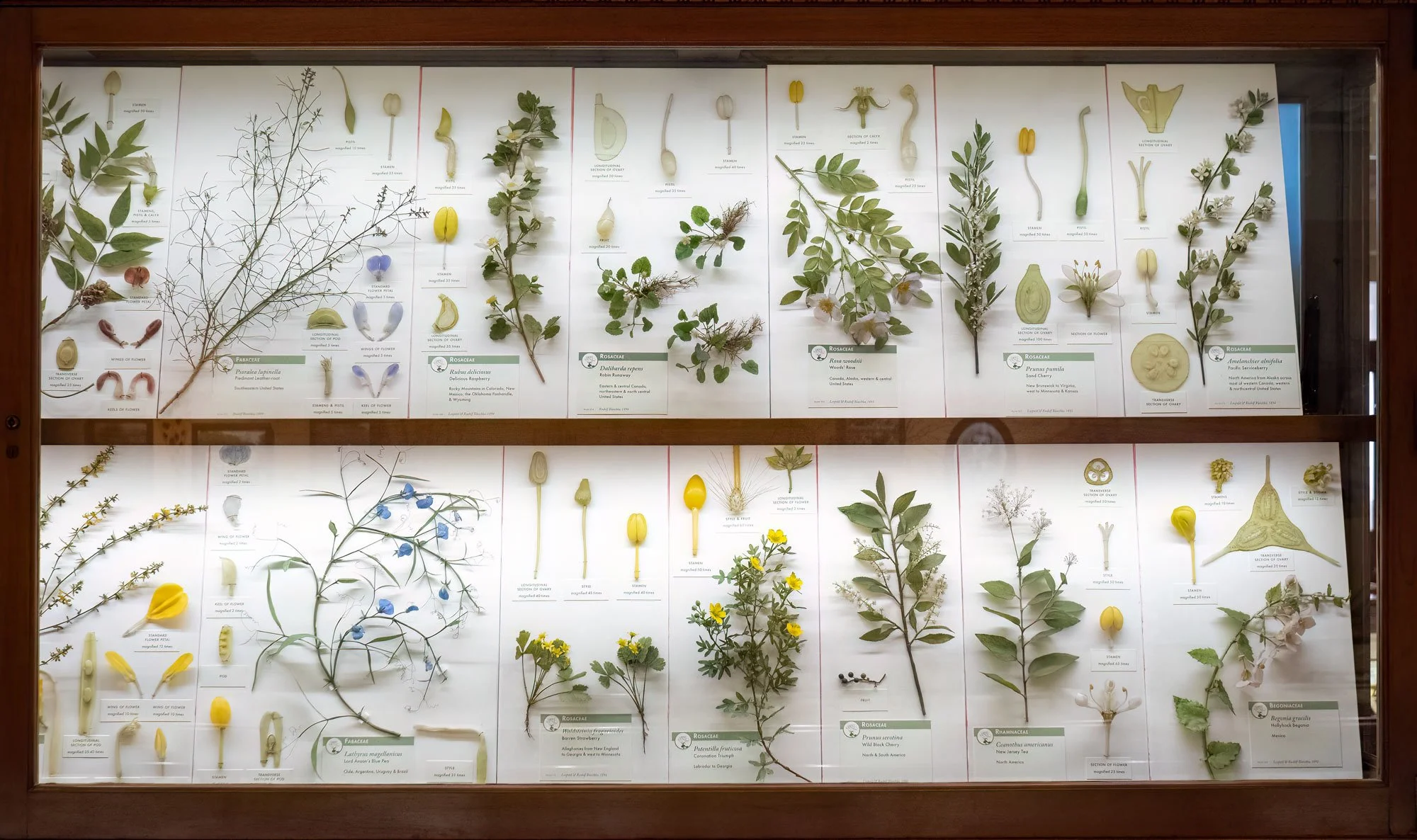
Glass flowers on display in a case at Harvard Museum of Natural History, Cambridge, Massachusetts, USA. Photo by Rhododendrites (Wikimedia Commons, Creative Commons Attribution-ShareAlike 4.0 International license, image resized).