

Cnidarians
Cnidarians
Cnidarians are one of the most basal groups (i.e., earliest branches) of animals. Until a few decades ago, Cnidarians and Ctenophores were included in a single phylum, the Coelenterata. More recent analyses suggest, however, that they are separate branches of the tree of life, although controversy persists about their exact relationship to each other and to the other most simple animal group, the sponges (Porifera).
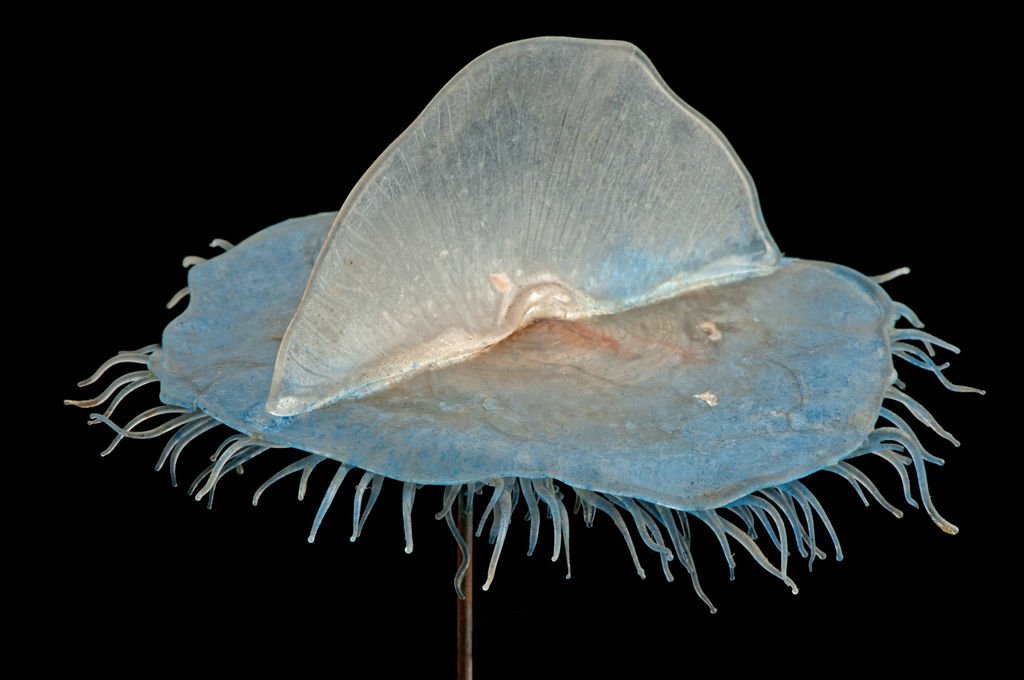
Velella velella, from Cornell Collection of Blaschka Invertebrate Models. Photo: Claire Smith, used with permission from Cornell University.
Cnidaria includes jellyfish, sea anemones, corals, hydra, and other similar forms. Most are marine and entirely soft bodied. Some, such as many corals, secrete hard calcium carbonate skeletons that contribute to reefs. All cnidarians possess distinctive stinging cells (nematocytes) which are used to capture tiny prey. Learn more about cnidarians on the Digital Atlas of Ancient Life.