

Devonian Life on Land
Catskills Delta and Fossils from Near Gilboa
Catskill Delta
During the Devonian, the eastern part of New York state was the edge of the sea, with the foothills of the Acadian mountains leading into a wide river delta. The mountains, uplifted by tectonic forces, eroded and shed sediments westward across the ancient “Catskill Delta” into the sea that covered Central and Western New York. Devonian rocks from the Catskills show what life was like on land at this time, and provide a key window into ancient plant and animal life.
Plants originated on land during the Ordovician Period, and grew in diversity during the Silurian Period. Early plants were tiny and closely tied to nearby water for their reproduction. The evolution of seeds during the Devonian allowed plants to reproduce farther from water.
Earth’s first forests evolved during the Devonian Period. Much of the earliest evidence for this comes from 387-million-year-old rocks from Gilboa, in Schoharie County, New York. Gilboa is a small community, about 50 miles southwest of Albany. During the Devonian, Gilboa was located between tall mountains to the east and an inland sea to the west.
Gilboa Fossil Forest
The Gilboa fossil forest was discovered in 1869 when workmen quarrying rock along Schoharie Creek discovered several fossilized tree stumps. These fossils caught the attention of New York State Paleontologist James Hall, who arranged for them to be taken to the State Museum in Albany. Construction of the Gilboa Dam on Schoharie Creek began in 1917. Dozens of additional stumps were discovered in nearby rock that was being quarried to construct the dam. The extinct trees represented by these fossil stumps were named Eospermatopteris.
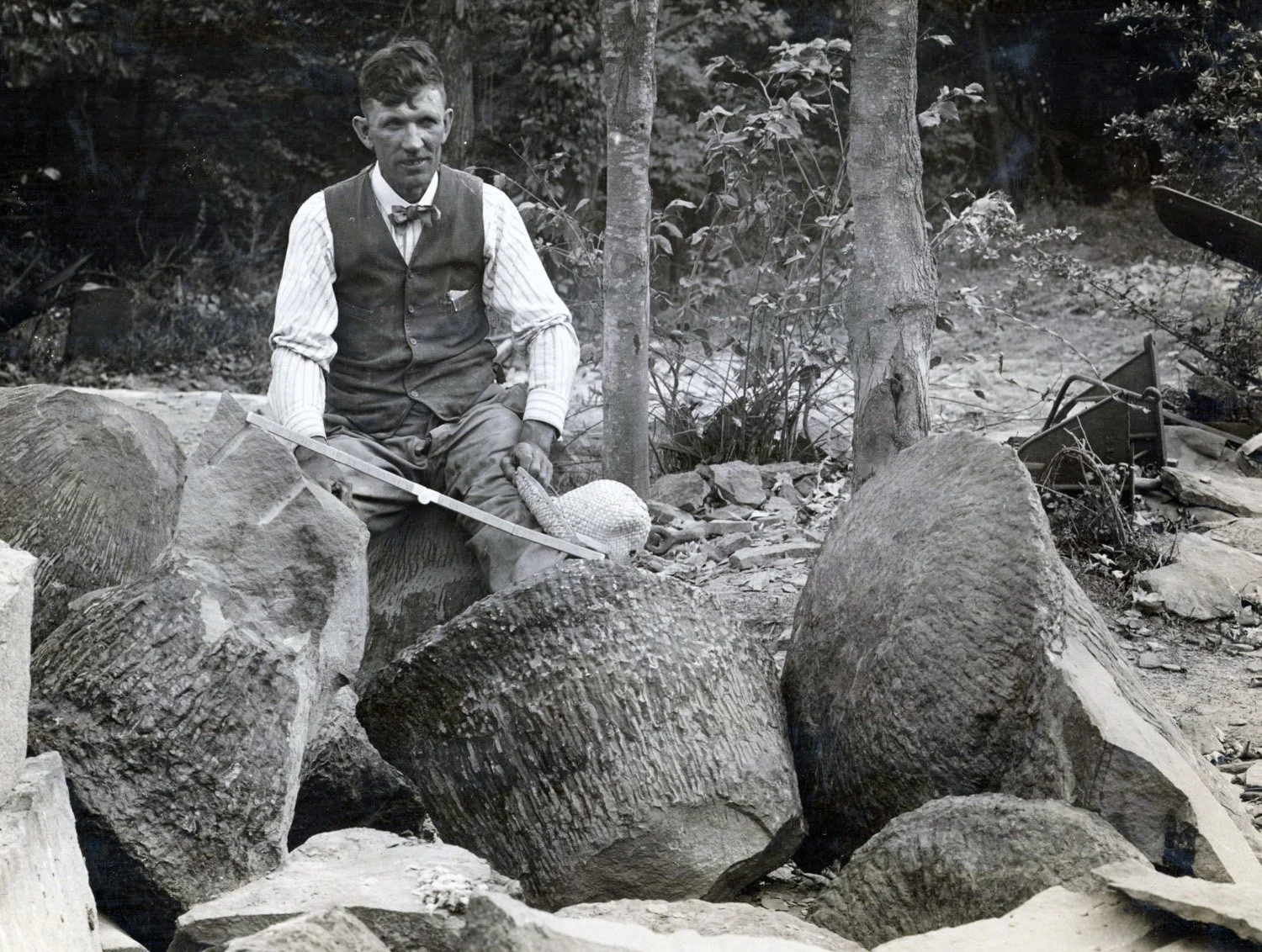
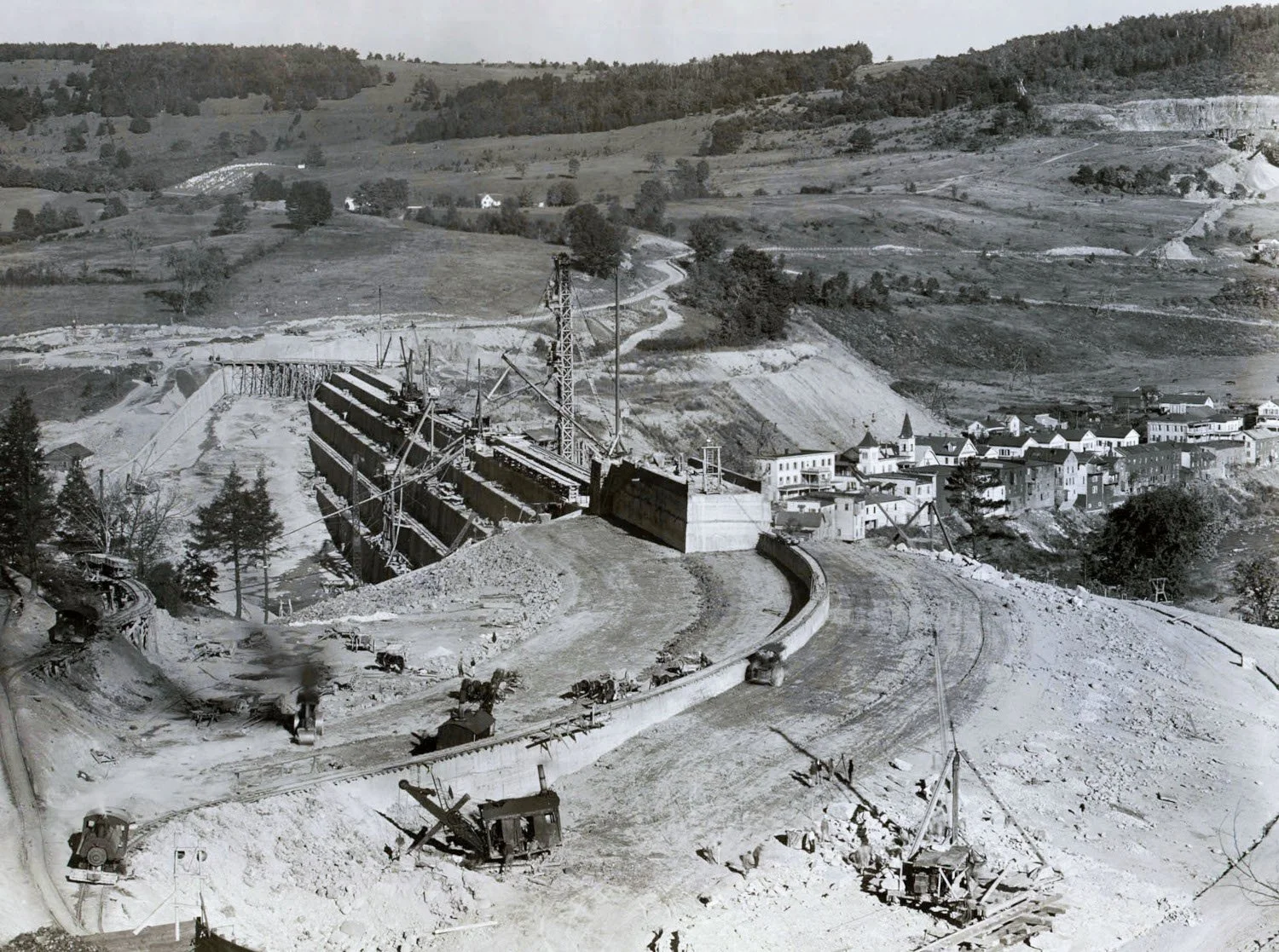
Gilboa Riverside Quarry & Dam Construction.
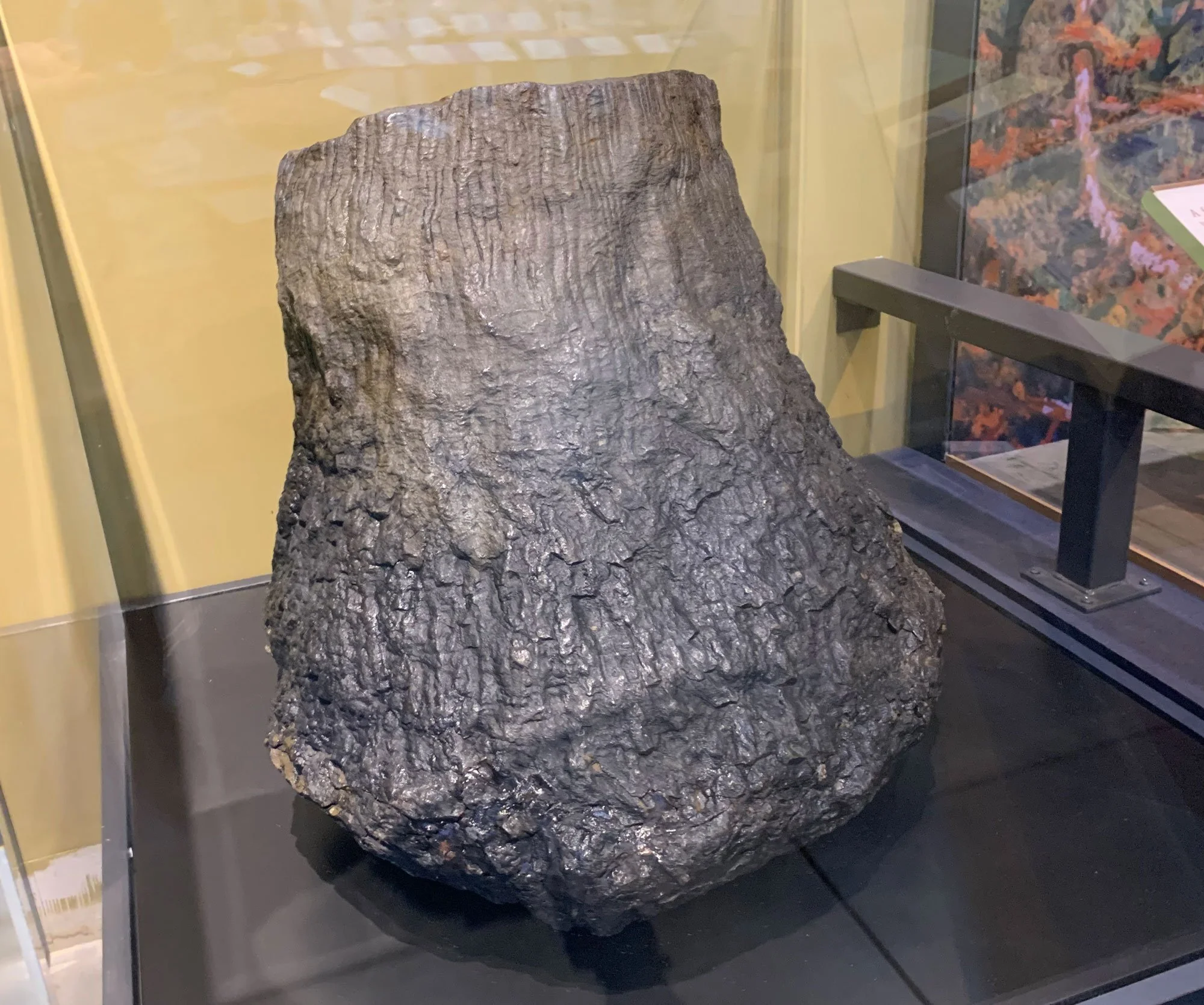
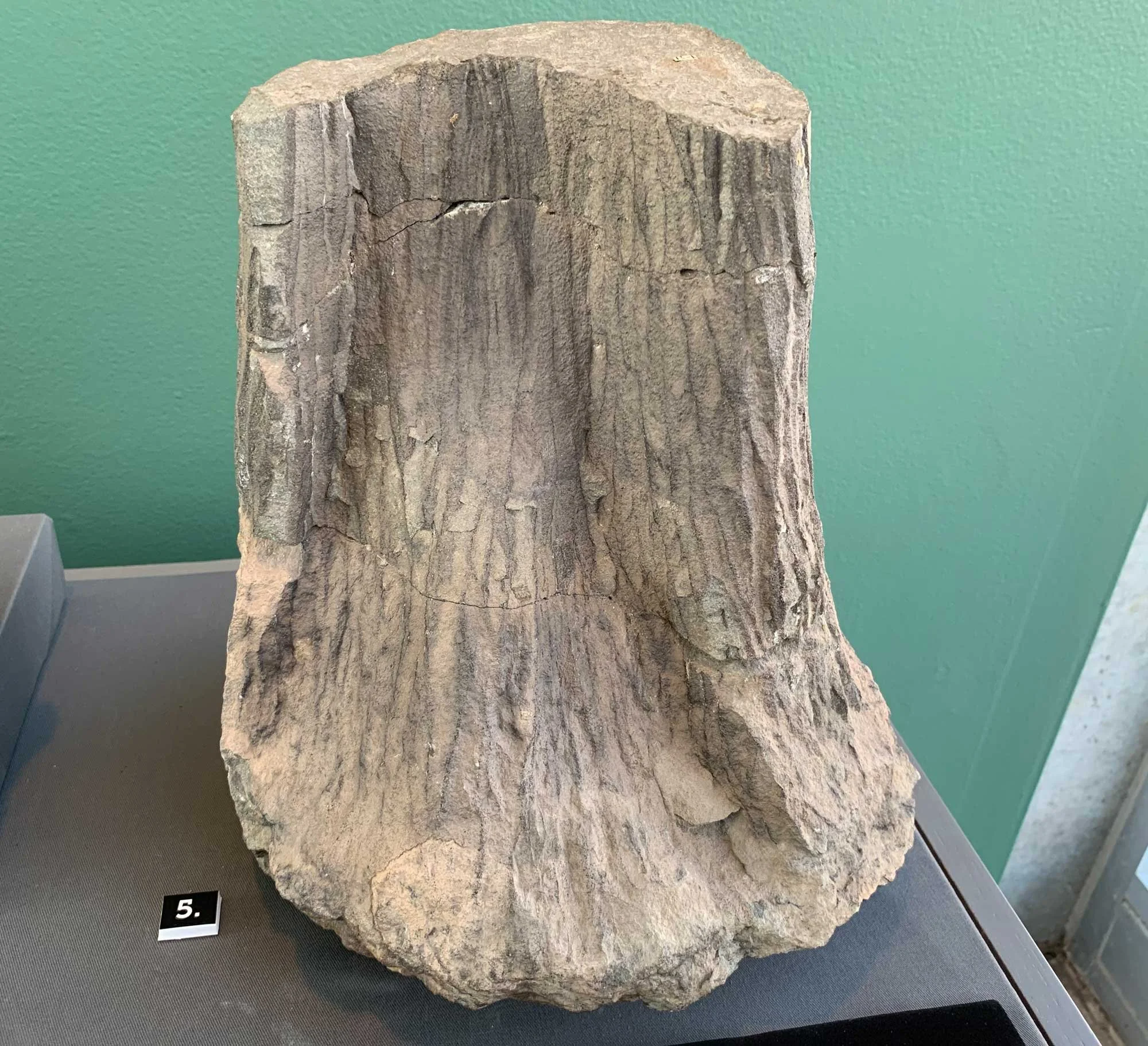
Recent Discovery
For nearly a century, paleontologists did not know exactly what the rest of the Eospermatopteris tree looked like, because fossils of leaves and other structures had never been discovered in one piece with the stumps. In the early 2000s, Binghamton University professor William Stein and colleagues reported on the discovery of the first fully-connected specimen, discovered about eight miles east of Gilboa. This fossil showed that Eospermatopteris trees were over 25 feet tall and had crowns composed of short, stick-like photosynthetic branches rather than the broad, leaf-covered branches of many modern trees.
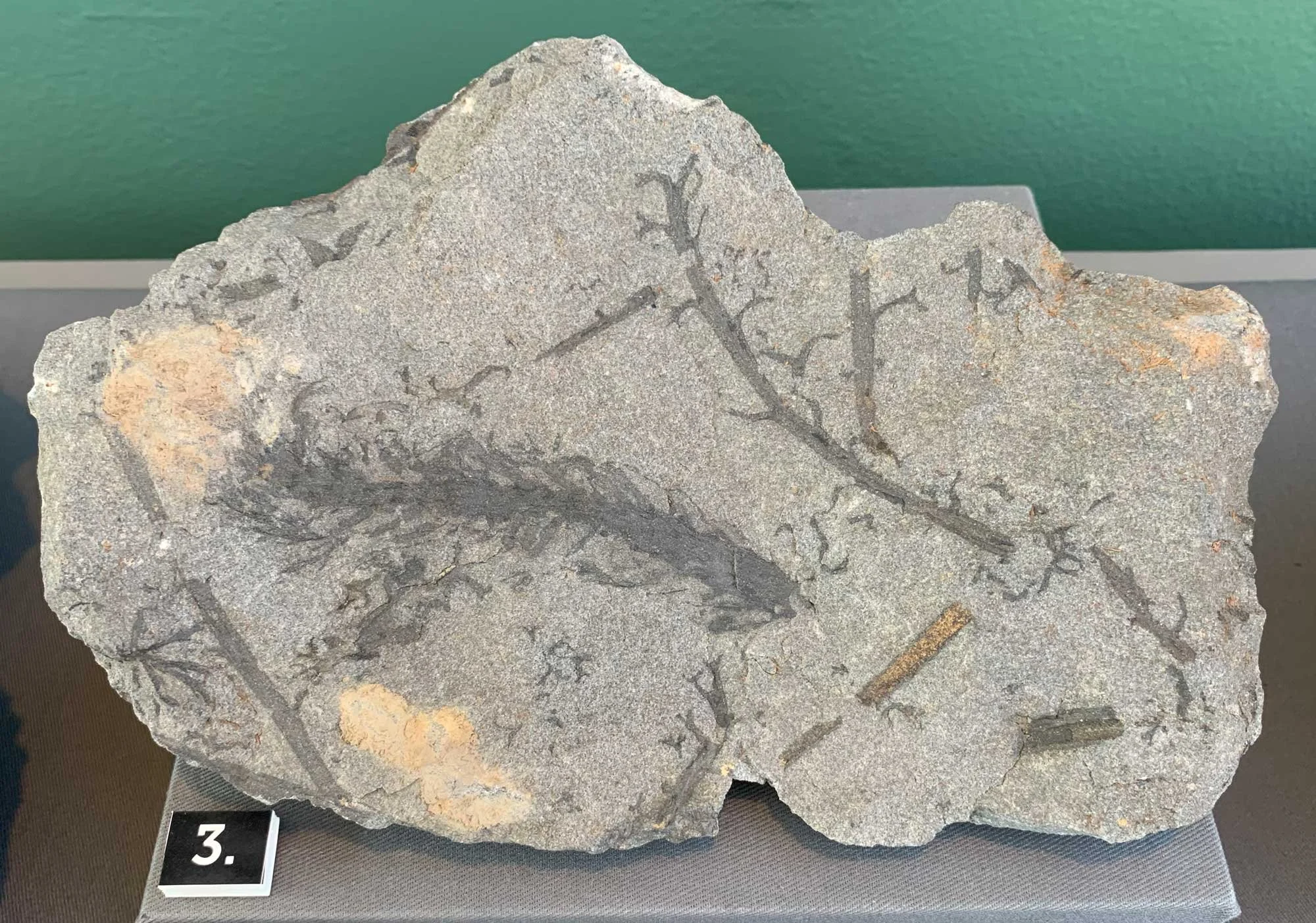
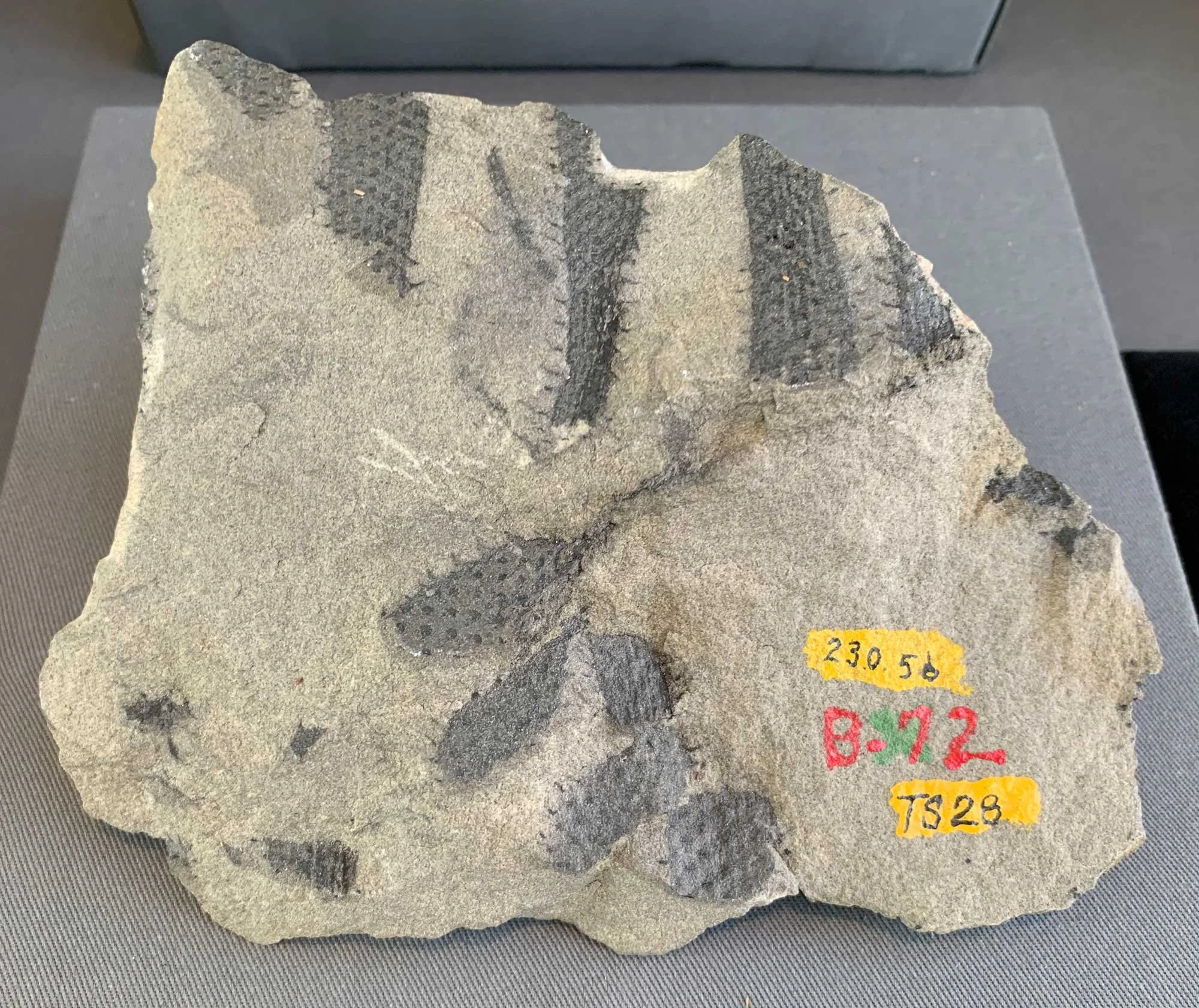
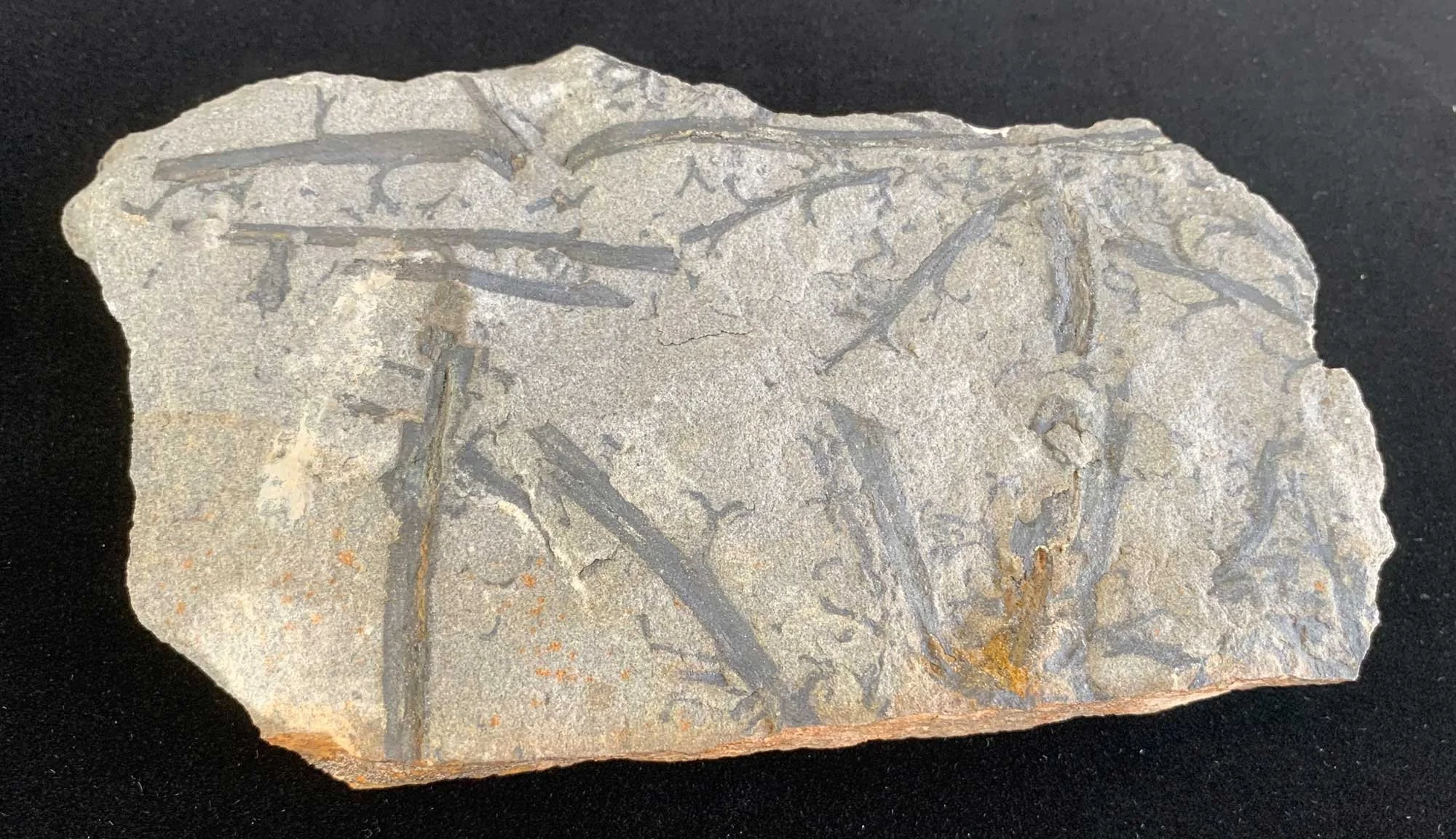
Examples of other fossil plants from Gilboa
Paleontologist Spotlight
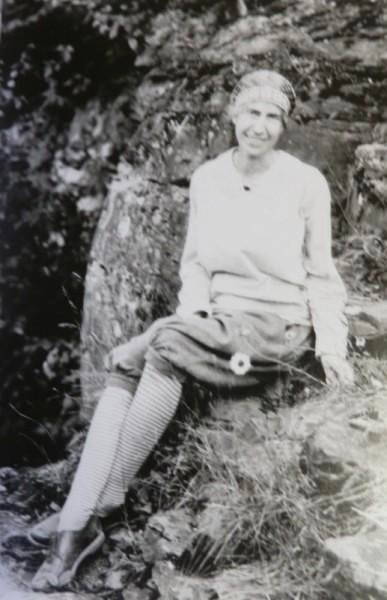
Winifred Goldring
The important fossil plant discoveries at Gilboa caught the attention of Winifred Goldring. Goldring was one of the most prominent U.S. paleontologists in the first half of the 20th century. She was the first woman to serve as State Paleontologist of New York and as president of the Paleontological Society. Due to the efforts of Goldring and others, many stumps from the Gilboa fossil forest were saved from the quarry before it was filled in and the area behind the dam was flooded. A small example of one of these stumps is shown here and a much larger specimen is on display in our museum.
Goldring published research on the Gilboa forest in the 1920s and assigned the scientific name Eospermatopteris to the fossil stumps. She also pursued projects to educate the public about the ancient ecosystem represented by these fossils. She created a diorama of the Gilboa forest for the New York State Museum and was involved in planning an outdoor roadside exhibit of fossil stumps near Gilboa. While the museum diorama is now gone, the roadside display still exists!
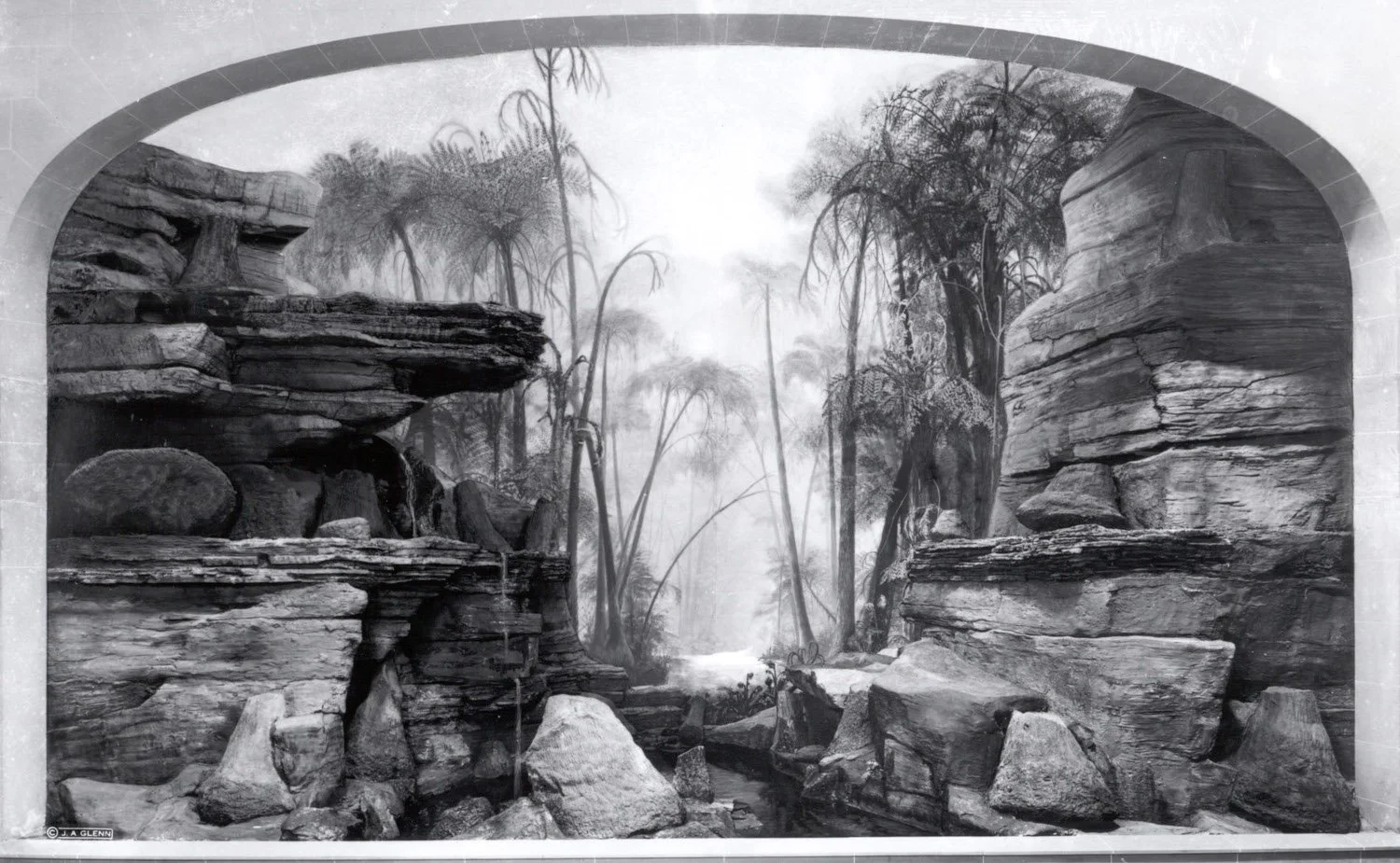
Gilboa Devonian Forest Exhibit, NY State Museum, February 12, 1925.
The exhibit was permanently taken down in the 1970s.
Freshwater Bivalves from the Catskill Delta
Some of the oldest known freshwater bivalves in the world come from the Catskills Delta and are represented by the specimen below.
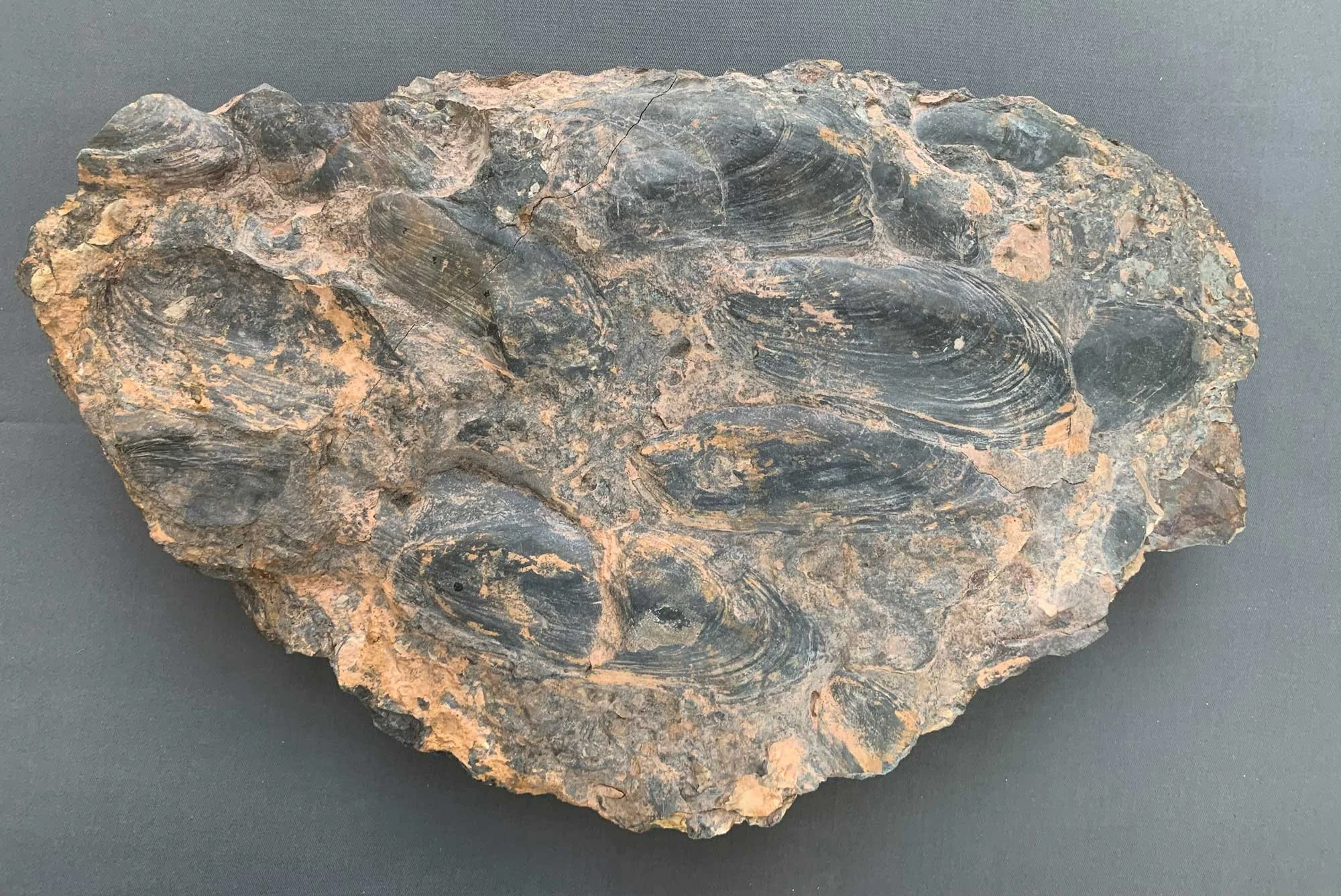
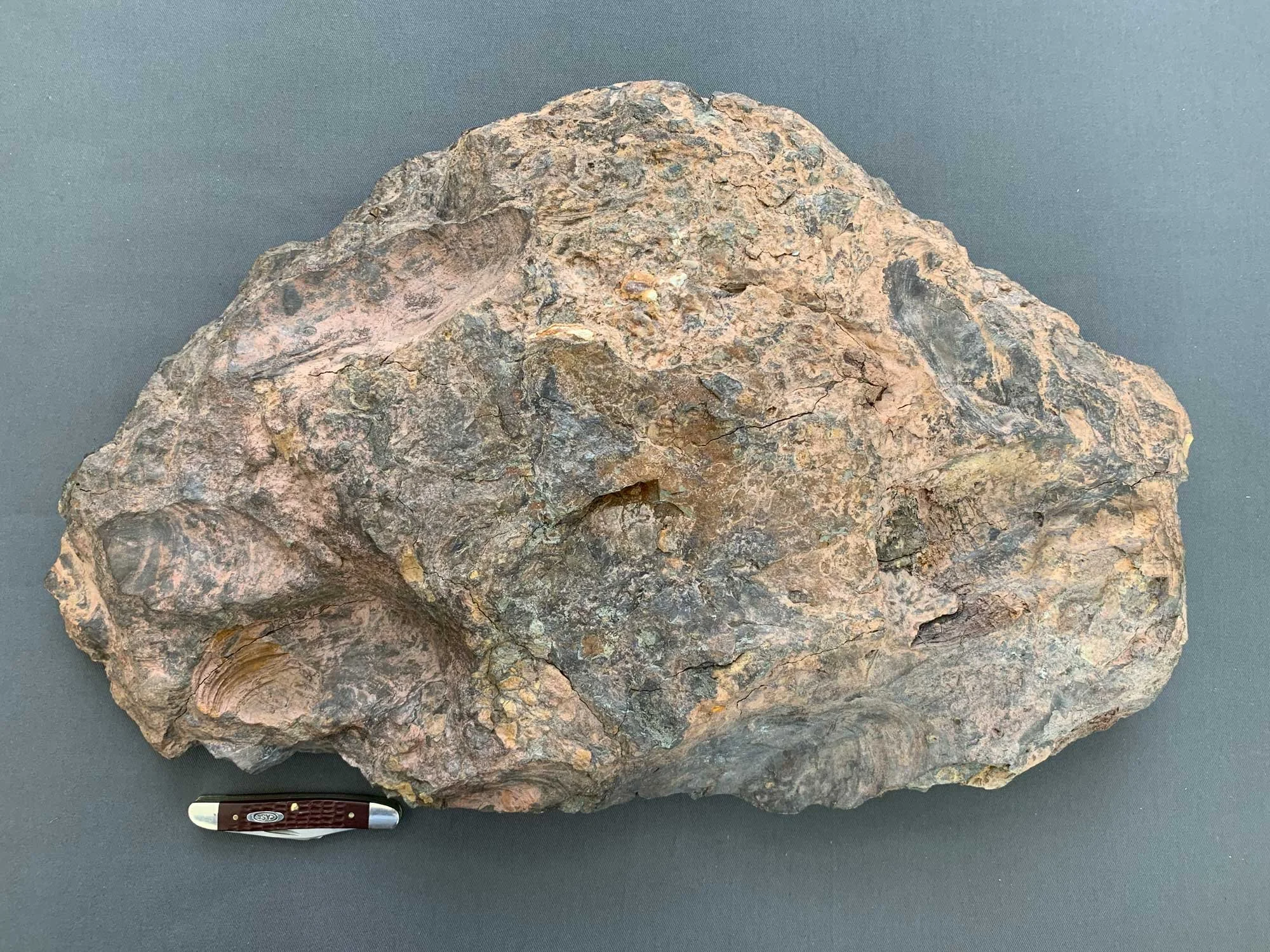
Bivalves evolved in the ocean and did not move into freshwater until the Devonian. This may have happened because the expansion of land plants during the Devonian caused an increase in the amount of organic matter in fresh water, such as was flowing off of the young Appalachian Mountains across the Catskill Delta. This organic matter provided food for the bivalves. The lower surface of this slab contains bits of wood and fragments of leaves from some of these land plants (see photo). The bivalve shells themselves appear to be oriented in a single direction, perhaps caused by flowing water.