


Introduction
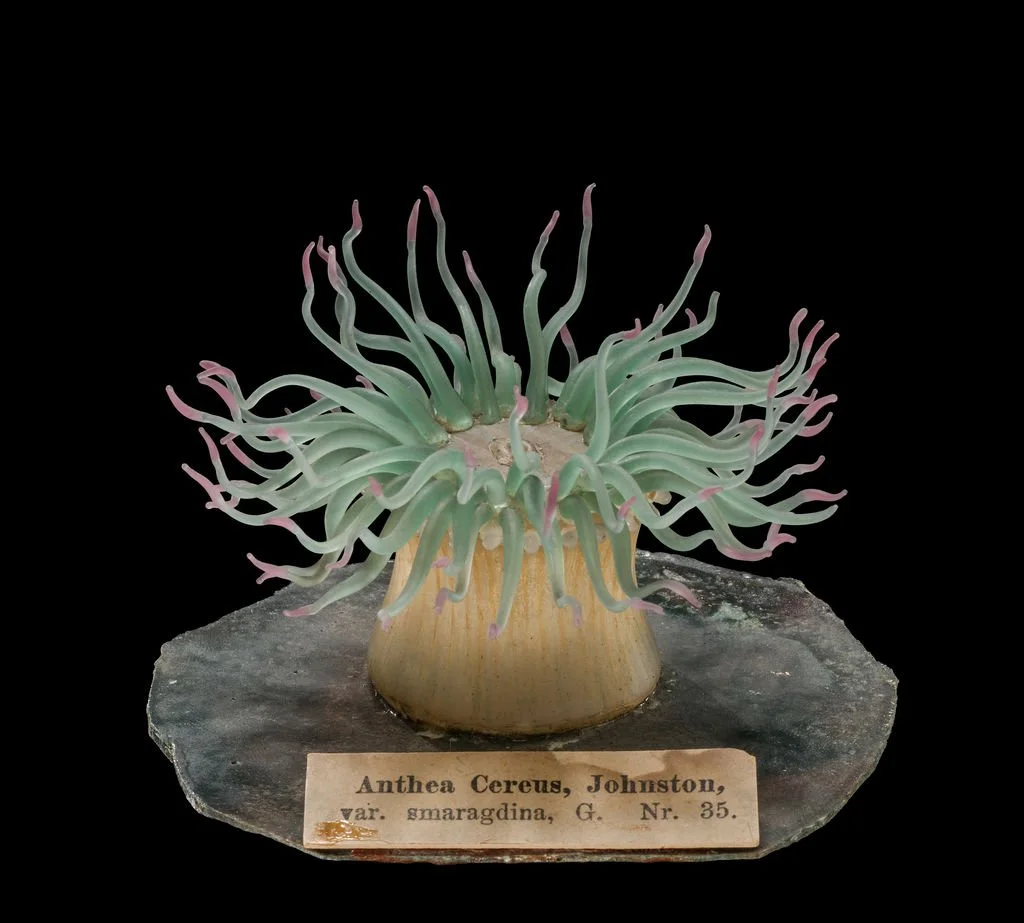
Anemonia sulcata from the Cornell Collection of Blaschka Invertebrate Models. Photo by Corning Museum of Glass, used with permission from Cornell University.
In the late nineteenth to early twentieth centuries, Bohemian glassmaker Leopold Blaschka and, later, his son Rudolf Blaschka created and sold an amazing series of glass marine invertebrate models. In a time before SCUBA or underwater photography, these models allowed people to see what marine invertebrates looked like when they were alive, rather than what they looked like when preserved. During the course of their lives, the Blaschkas created thousands of models, many of which are still held today at institutions in Europe, the United States, and other countries. This online exhibit explores the Blaschka models from the Cornell University collection, currently on display at the Museum of the Earth in Ithaca, New York.
Acknowledgements
For their assistance with and support of the display of the Cornell Blaschka collection at the Museum of the Earth, we are grateful to all of the following.
At Cornell University:
Leslie Babonis
David Brown
Department of Ecology and Evolutionary Biology
At the Corning Museum of Glass:
Stephen Koob
At PRI:
Leon Apgar
Kiera Crowley
Dave Fass
Brian Gollands
Jon Hendricks
Elizabeth Hermsen
Wendy Marvel
Whitney Ribeiro
Andrielle Swaby
Nico Tutoni
Ingrid Zabel
Financial support, in memory of Barlow Ware:
Mary Berens and Paul Feeny
William H. Cagney
Dierdre Courtney-Batson
John Foote
George Gull and Nancy Potter
Barry Jacobson
Jacob Schiller
The Flamingo Fund at the Community Foundation
of Tompkins County
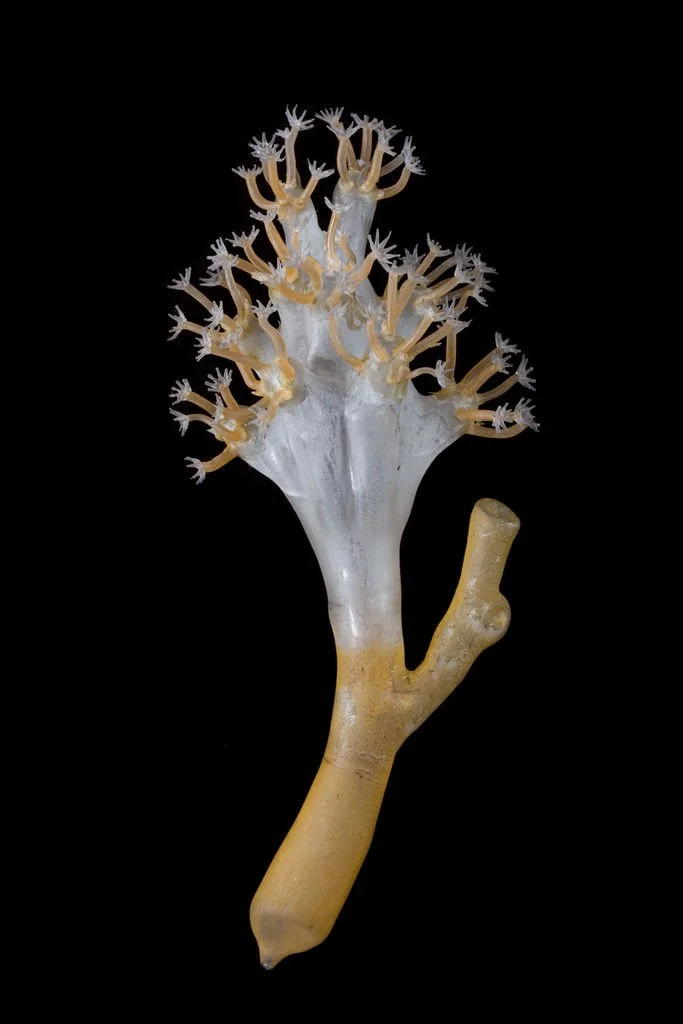
Paralcyonium spinulosum from the Cornell Collection of Blaschka Invertebrate Models. Photo by Gary Hodges, used with permission from Cornell University.