

The Blaschkas and Their Glass
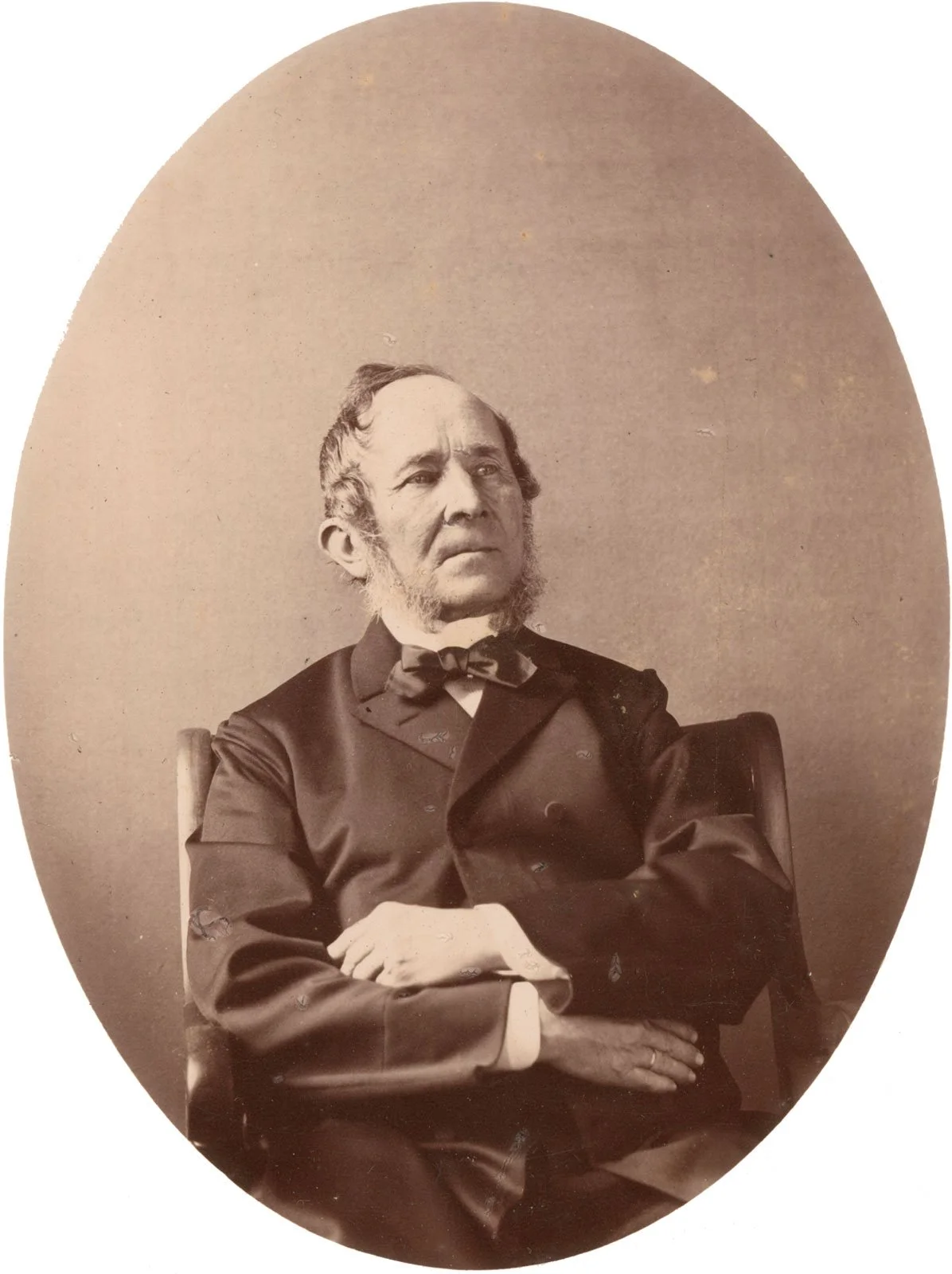
Leopold Blaschka (1822-1885)
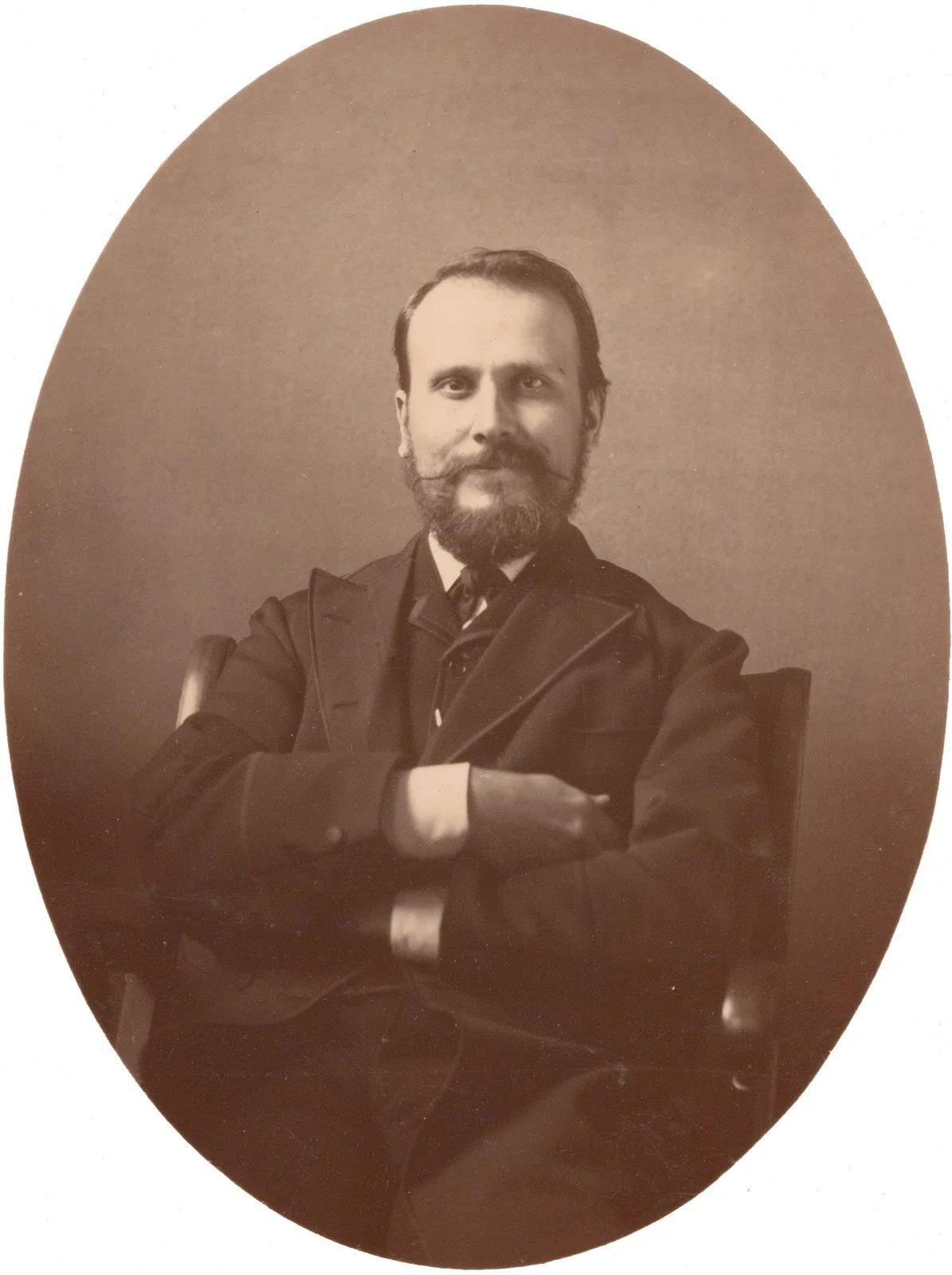
Rudolf Blaschka (1857-1939)
Leopold Blaschka (1822-1885) was born in Bohemia (in present-day Czech Republic) to a family of glass and jewelry makers. His early career mostly involved making decorative art glass, jewelry, and glass eyes. He became particularly skilled in a technique called lampworking (flameworking), which involves using a low-temperature flame to heat glass rods or tubes, which are then manipulated with metal tools.
In 1850, Leopold’s first wife died of cholera, and his father died two years later. To relieve his grief, in 1853 Leopold traveled to the US. On the voyage, his sailing vessel was becalmed in the middle of the Atlantic for several days. Leopold passed the time examining jellyfish and other sea creatures that swam and floated by. He later attributed his work on glass invertebrate models to this experience. His description of what he saw conveys his sense of wonder:
“It is a beautiful night in May. Hopeful, we look out over the darkness of the sea, which is as smooth as a mirror; there emerges all around us in various places a flashlike bundle of light beams, as if it is surrounded by thousands of sparks, that form true bundles of fire and of other bright lighting spots, and the seemingly mirrored stars. There emerges close before us a small spot in a sharp greenish light, which becomes ever larger and larger and finally becomes a bright shining sunlike figure.”
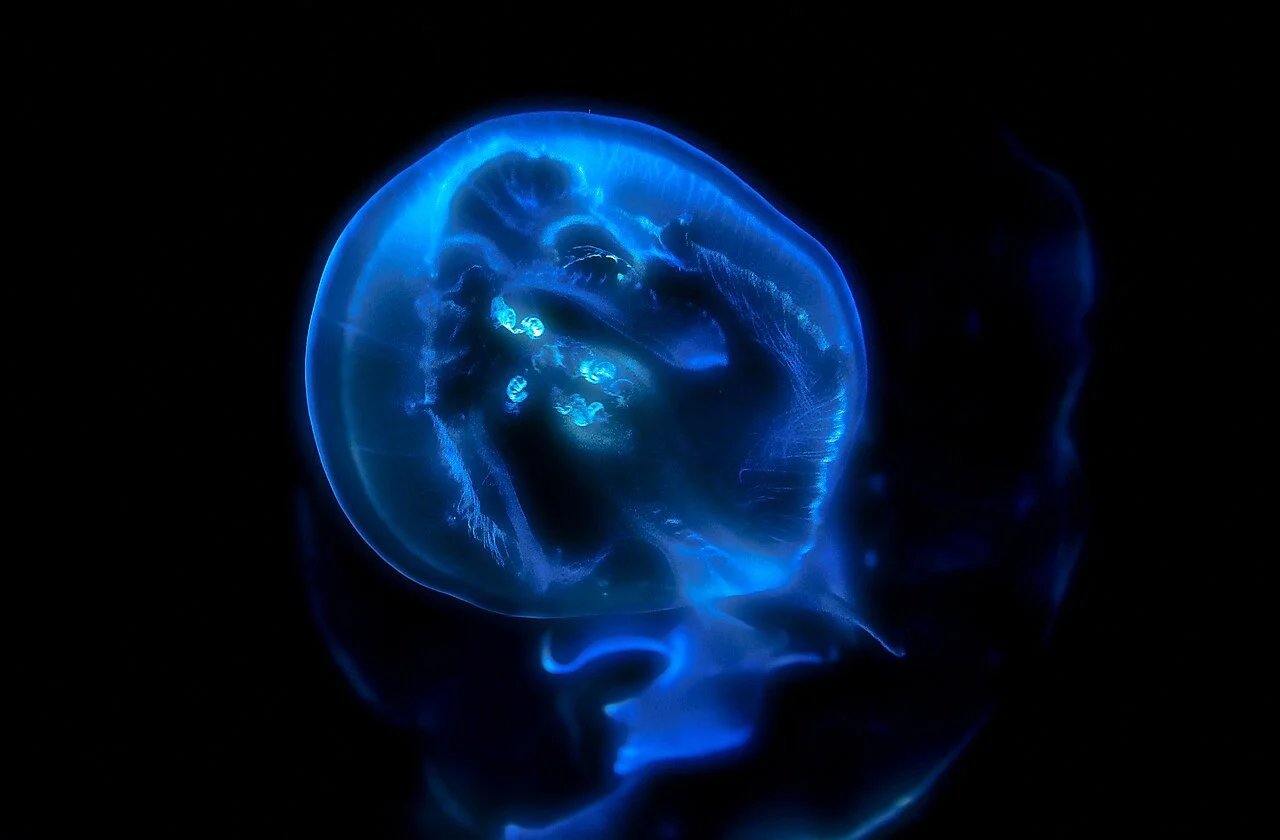
Jellyfish swimming in the National Aquarium in Baltimore. Photo: Robert Zunikoff (public domain) via Wikimedia Commons
Returning to Europe, Leopold married Caroline Reigel in 1854, and their son Rudolf was born in 1857. The family moved to Dresden, Germany in 1863. In 1876, Rudolf joined his father in the business. Rudolf continued to make models after his father died in 1895. But since he had no children and no trainees, the Blaschka natural glass business closed down with Rudolf’s retirement shortly before his death in 1939. The Blaschka studio somehow survived the bombing of Dresden in World War II, and in 1993, the Corning Museum of Glass and the Harvard Museum of Natural History jointly purchased the remaining Blaschka studio materials from a family member.
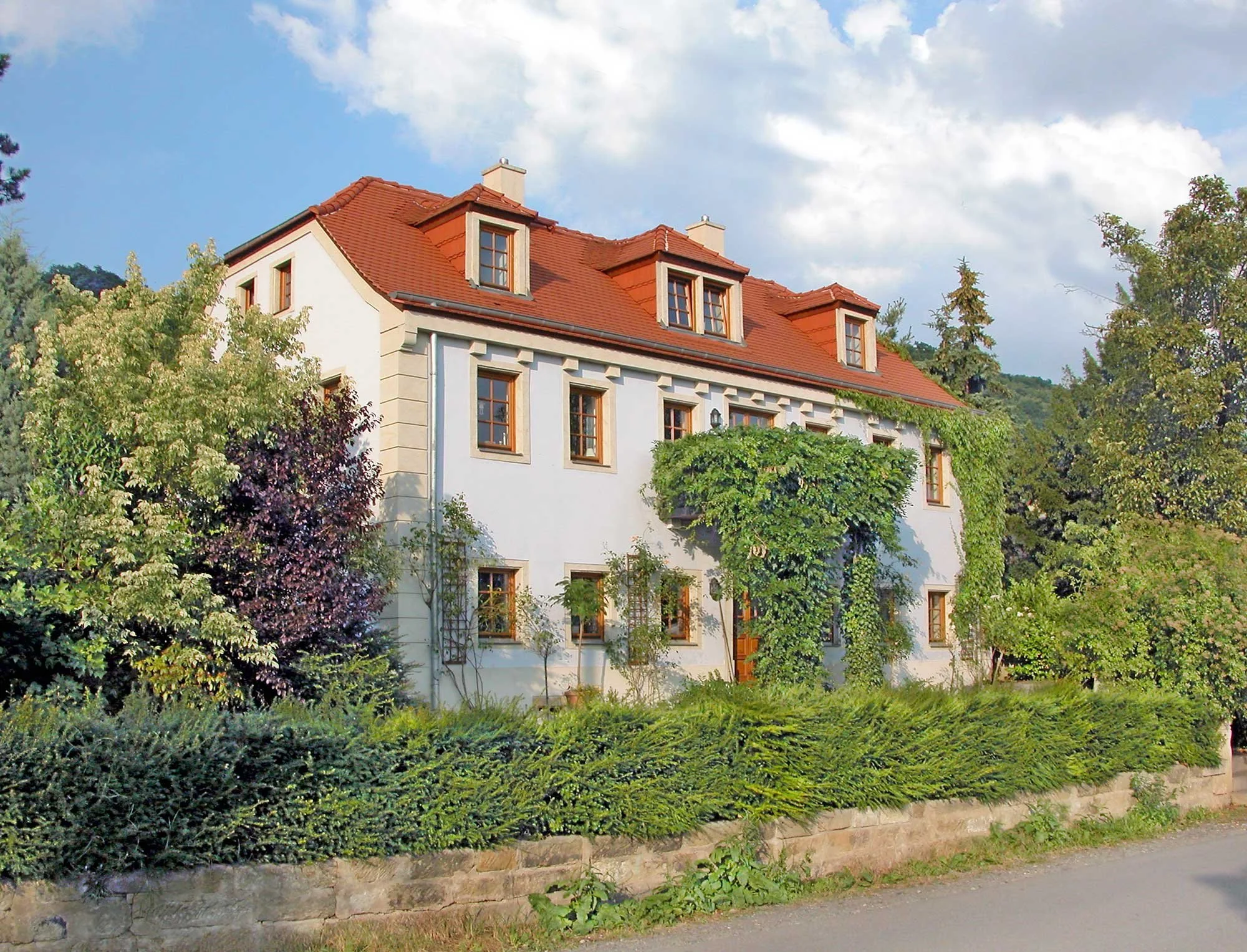
The Blaschka house in Dresden-Hosterwitz, Germany, photographed in 2008. Photo by Jörg Blobelt (Wikimedia Commons, Creative Commons Attribution-ShareAlike 4.0 International license, image resized).