

The Glass Invertebrates
In Dresden, Leopold began to experiment with making realistic glass models of plants. These came to the attention of Prince Camille de Rohan, who exhibited about 100 models of orchids and other exotic plants on artificial tree trunks in his palace. The prince introduced Leopold to Prof. Ludwig Reichenbach, director of both the botanical garden and natural history museum in Dresden. In 1863 Reichenbach commissioned Leopold to make models of sea anemones to be displayed in the museum.
In the time before SCUBA or underwater photography, it was extremely difficult to learn and teach about marine animals. During late nineteenth century demand was exploding for ways to share information about these animals. The public was eager to learn about natural history and biology, not least because of interest in evolution after Darwin’s publication of On the Origin of Species in 1859. Colleges and universities were expanding in both Europe and North America; numerous museums of natural history were being established.
The Blaschka models filled an important need for these museums, which were generally unsuccessful in exhibiting soft-bodied marine invertebrate animals in a compelling way. Unlike vertebrate skeletons and taxidermied skins, or shells and corals, which could be displayed dry on shelves, animals like anemones and jellyfish lost much of their natural form and color when stored in bottles of preservative. As one Australian curator complained in 1897, for the museum visitors, shell-less animals were “only visible as damp, unpleasant bodies; crammed into jars of spirits, through which it is somewhat difficult to make head or tail of them”.
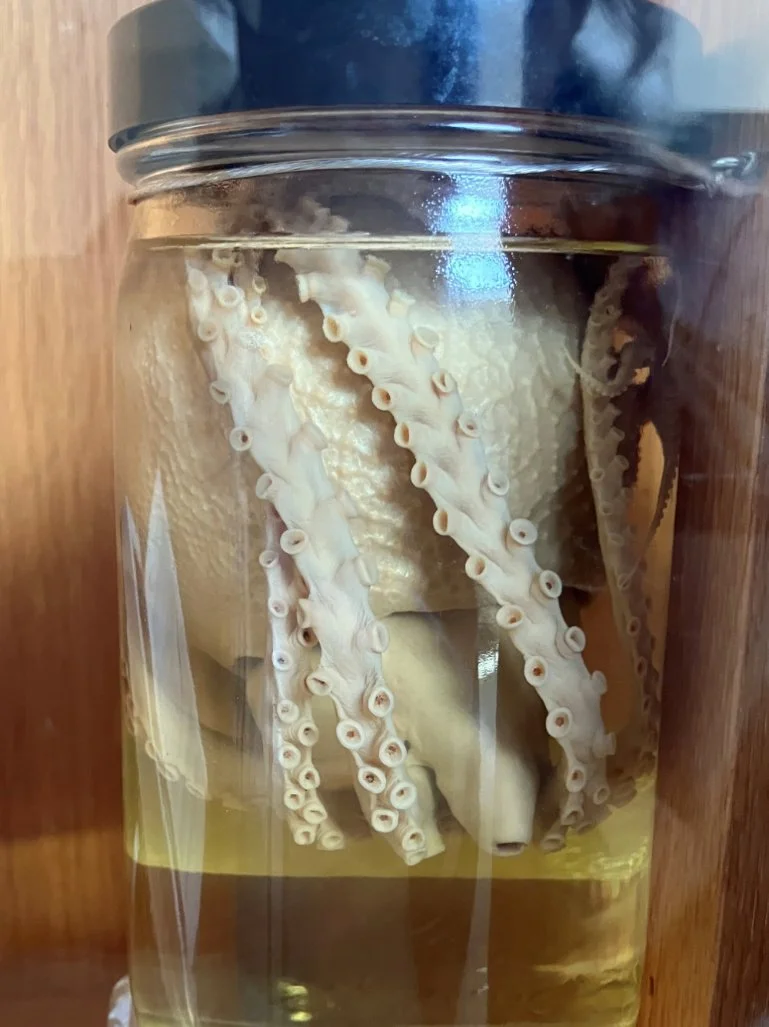
Tuberculate pelagic octopus (Ocythoe tuberculata) in alcohol. PRI specimen, formerly in the collection of Wells College.
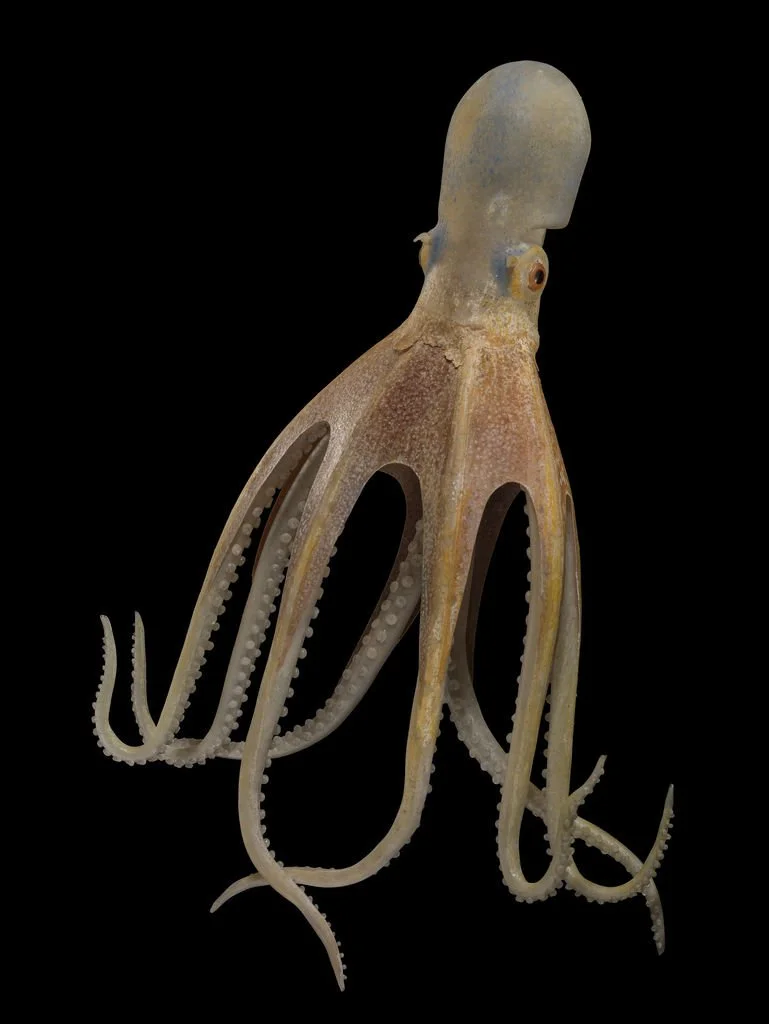
Blaschka glass model of Octopus salutii from Cornell Collection of Blaschka Invertebrate Models. Photo: Corning Museum of Glass, used with permission from Cornell University.
Leopold’s invertebrate models were very successful in the Dresden museum, and by 1871 he was selling them to other institutions. The models soon became very popular as educational tools, and Leopold began to sell them to schools, colleges, and universities around the world.
The Blaschkas also made glass models of tiny planktonic organisms, such as radiolaria, which like marine invertebrates were very difficult to display to students in classrooms or the public in museums.
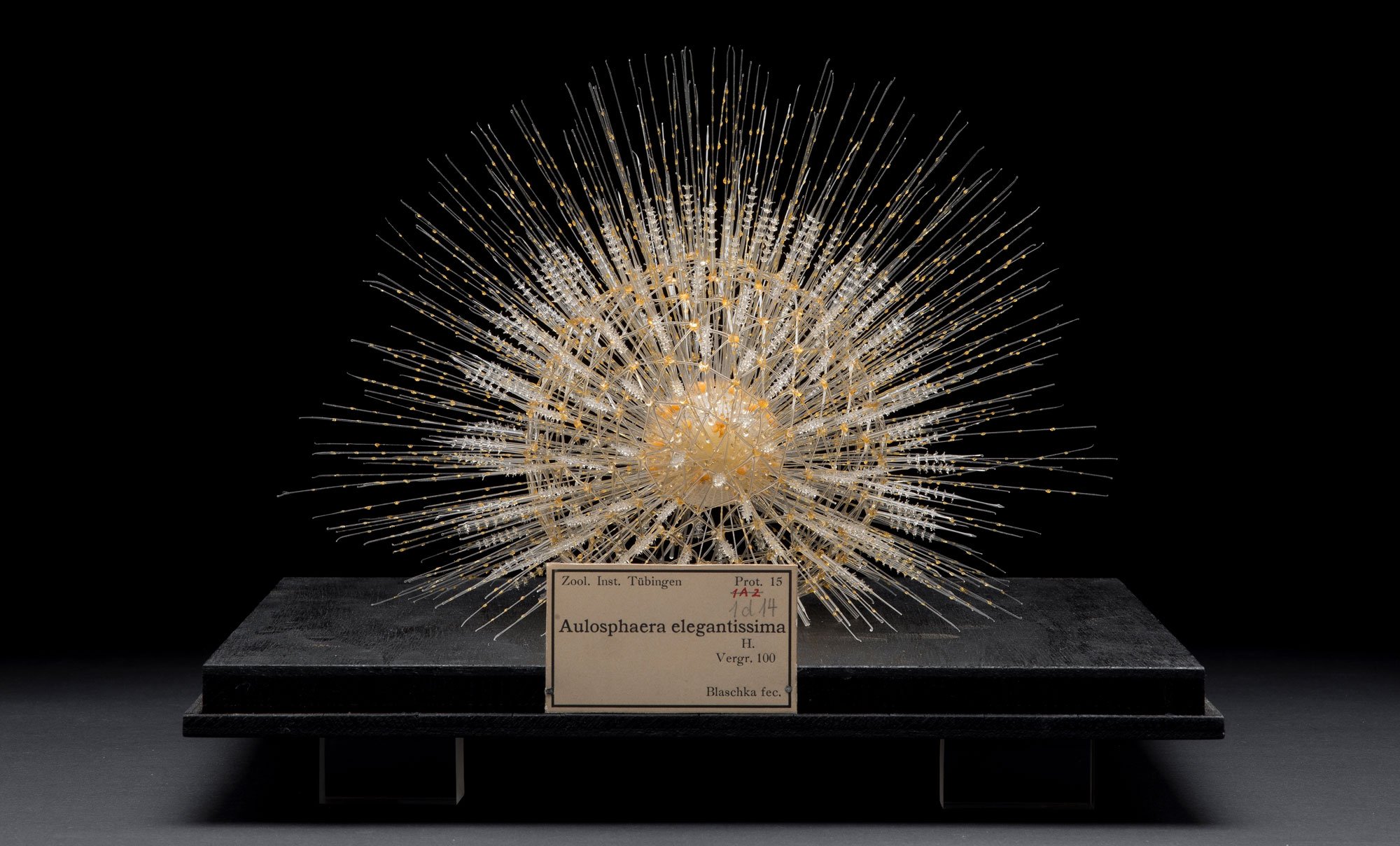
A glass radiolarian made by the Blaschkas on at the Zoologische Sammlung der Universität, Tübingen, Germany. Photo by Museopedia (Wikimedia Commons, Creative Commons Attribution-ShareAlike 4.0 International license, image cropped and resized).
Blaschka sea anemone model (Phymacits pustulata). Model SC-41, Harvard Museum of Comparative Zoology Collection of Blaschka Marine Invertebrates (Sketchfab, Peter Fried).
Blaschka nudibranch model (Flabellina veruccosa). Model B-370, Cornell University Collection of Blaschka Marine Invertebrates (Sketchfab, Peter Fried).
During their joint lifetimes, Leopold and Rudolf Blaschka produced perhaps 10,000-15,000 glass invertebrate models. All of the models were made individually, by hand. They are distinctive for their extraordinary accuracy, delicacy, and the use of extremely thin glass. The colors were achieved by a combination of adding pigments to the glass while it was warm and paint applied after it was cool. Although research has revealed aspects of the techniques the Blaschkas used in making the models, they are still not fully understood, and some have never been replicated.
The delicate models were shipped wired to paper cards (see an original example to the right). In this way, they (mostly) remained undamaged despite traversing thousands of miles by horse-drawn wagon, train, and steamship.
It has been estimated that 35-50% of all the Blaschka marine invertebrate models produced still survive today, in more than 50 institutions around the world. In addition to Cornell University, other major collections are in the Natural History Museum in London, the Harvard Museum of Natural History in Cambridge, Massachusetts, the National Museum of Ireland – Natural History in Dublin, and the Australian Museum in Sydney. See this Wikipedia page for more on institutions that have Blaschka collections.
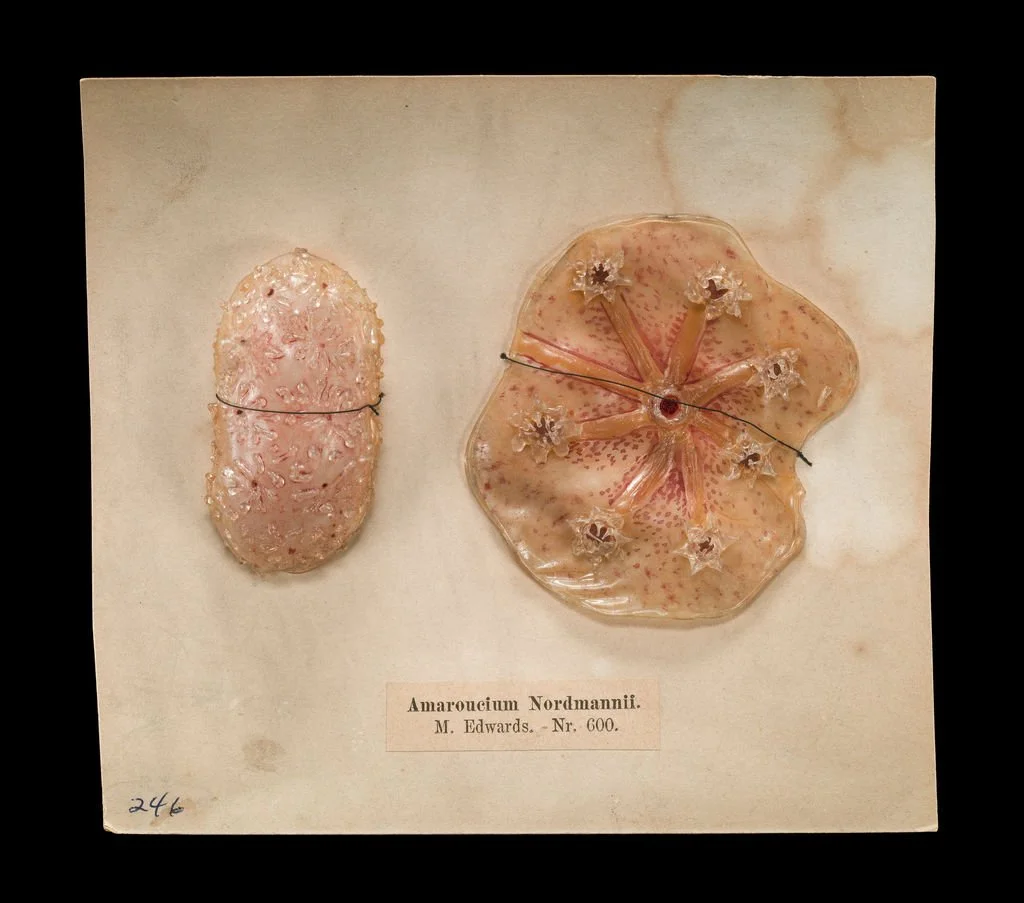
Glass models wired to a paper card for transport. Aplidium nordmanni, from Cornell Collection of Blaschka Invertebrate Models. Photo: Corning Museum of Glass, used with permission from Cornell University.
Models for the models
At first, the Blaschkas used published illustrations of living marine invertebrates as the basis for their models. Of particular influence were color drawings in books by English naturalist and author Philip Henry Gosse (1810-1888), including Actinologia Britannica: A history of the British sea anemones (1860). Another important influence was the German zoologist Ernst Haeckel (1834-1919), who loaned the Blaschkas books and provided advice. Haeckel was himself very intererested in the decorative arts, and between 1899 and 1904 he published Kunstformen der Natur (Art Forms of Nature), which had an important influence on the emerging Art Nouveau style.
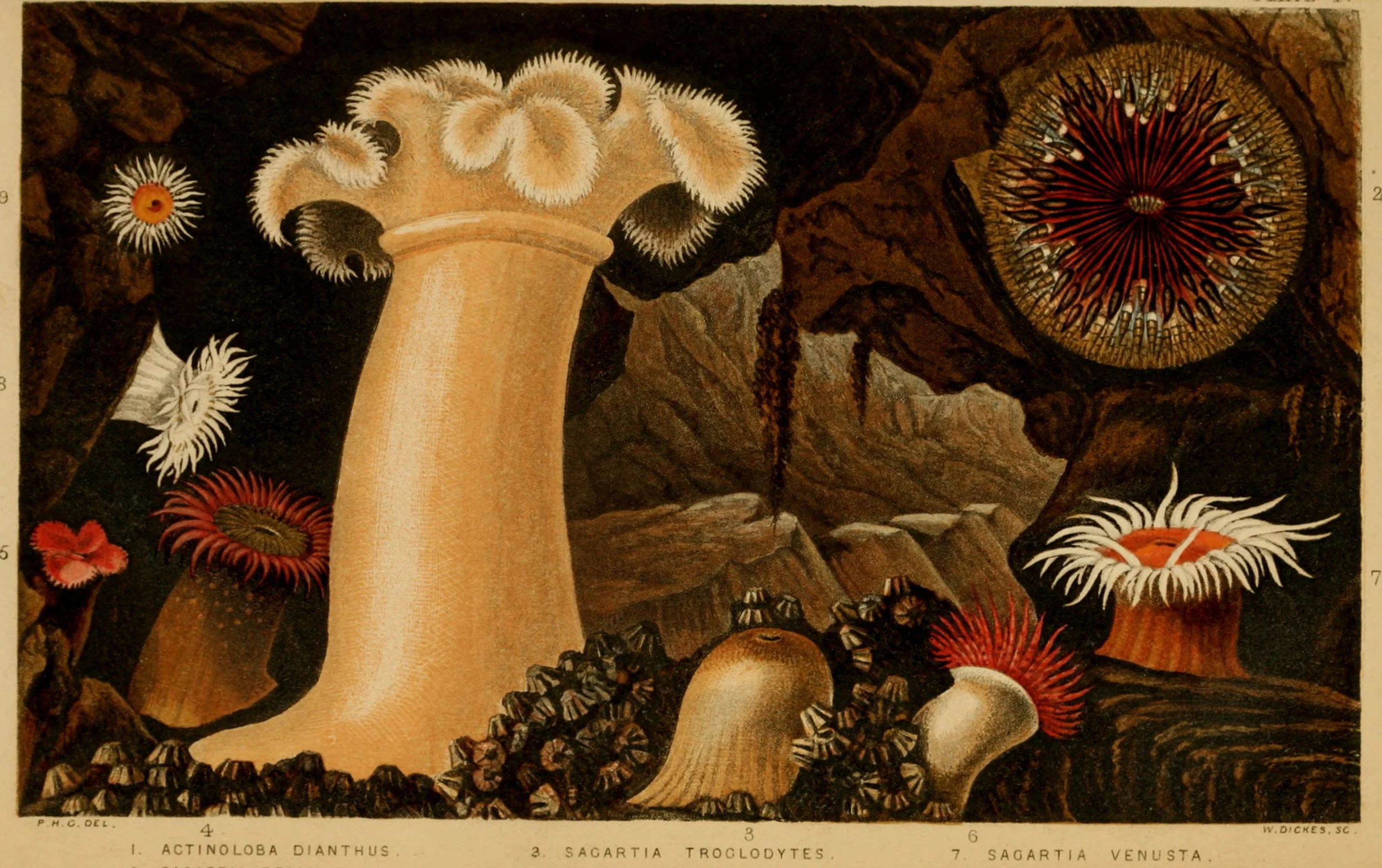
Artwork by Philip Henry Gosse from his book Actinologia britannica. A history of the British sea-anemones and corals (1860). Image via Wikimedia Commons (public domain).
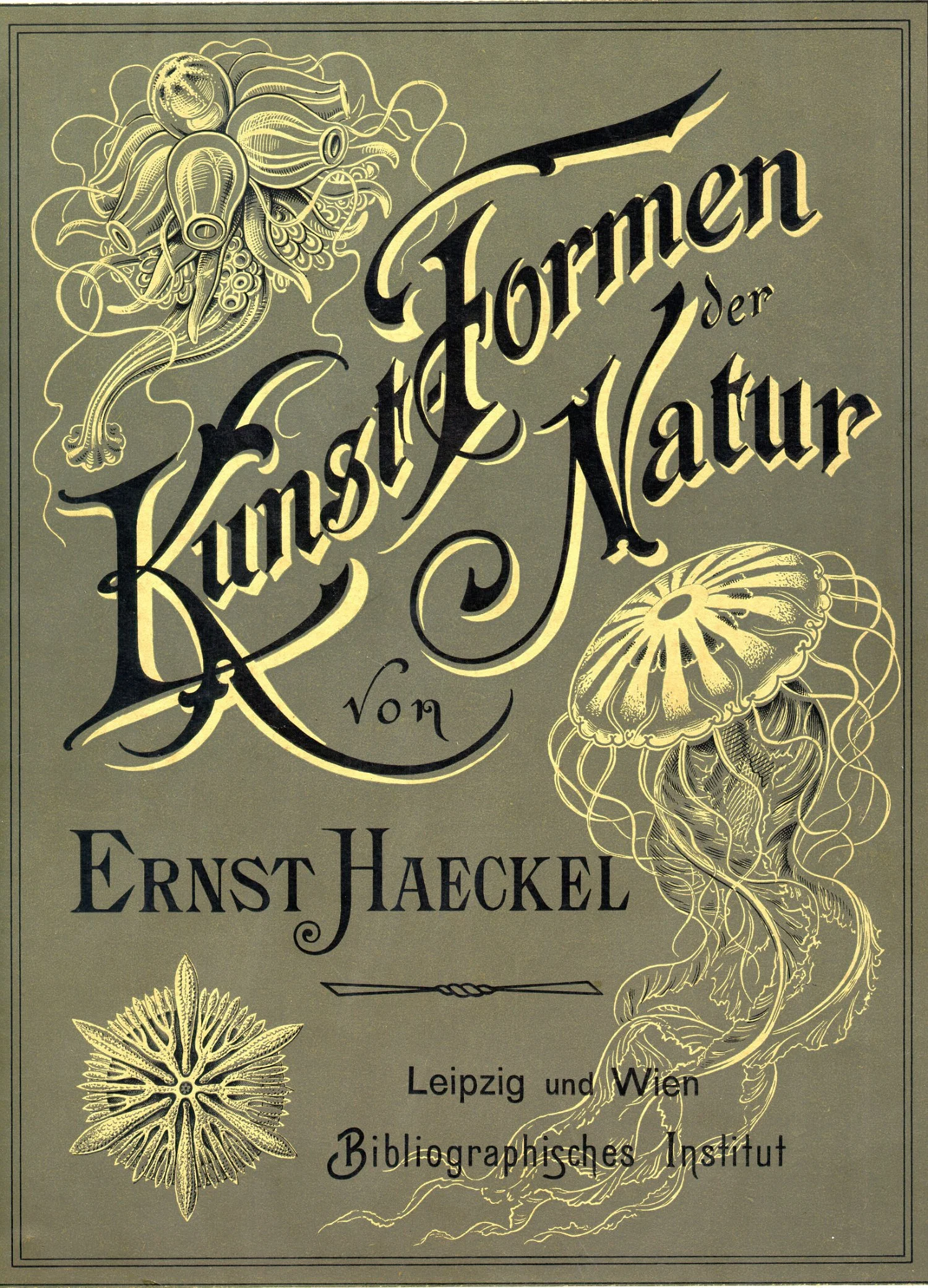
The cover of Ernst Haeckel’s Kunstformen der Natur (1904). Image via Wikimedia Commons (public domain).
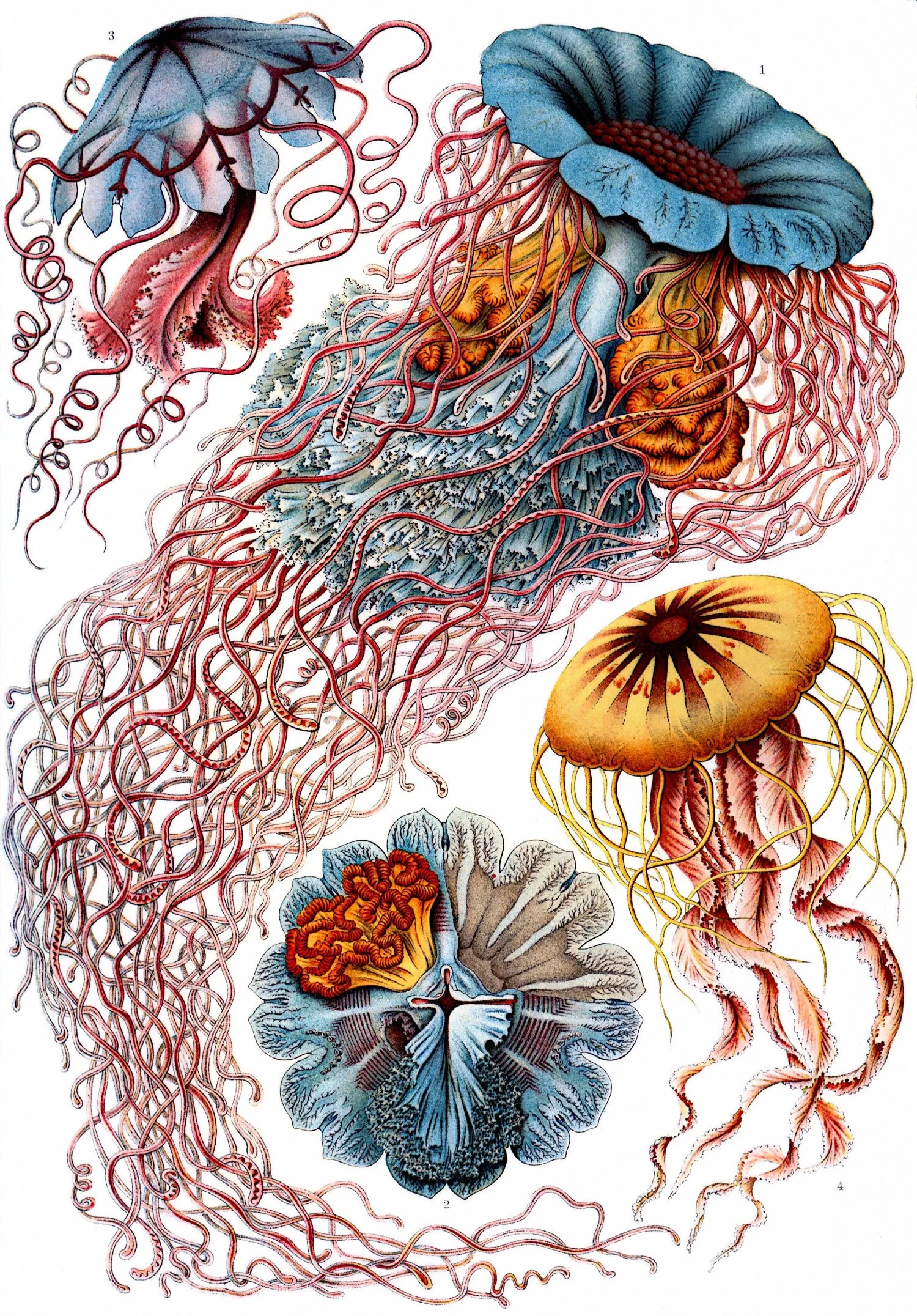
Ernst Haeckel Kunstformen der Natur (1904) Discomedusae Illustrated Plate 8. Image via Wikimedia Commons (public domain).
In the late 1870s, the Blaschkas began to maintain living specimens in seawater aquariums, which were increasingly popular. They procured specimens from Naples on the west coast of Italy, from upper Adriatic Sea, from Weymouth in England, and from suppliers on the coasts of the North and Baltic seas.
Rudolph was a member of the Natural History Society of Dresden, where he presented scientific papers on living marine animals based on his own observations. These papers show his detailed knowledge of the anatomy of these creatures, which also contributed to the accuracy of the glass models.
The Blaschkas come to Cornell
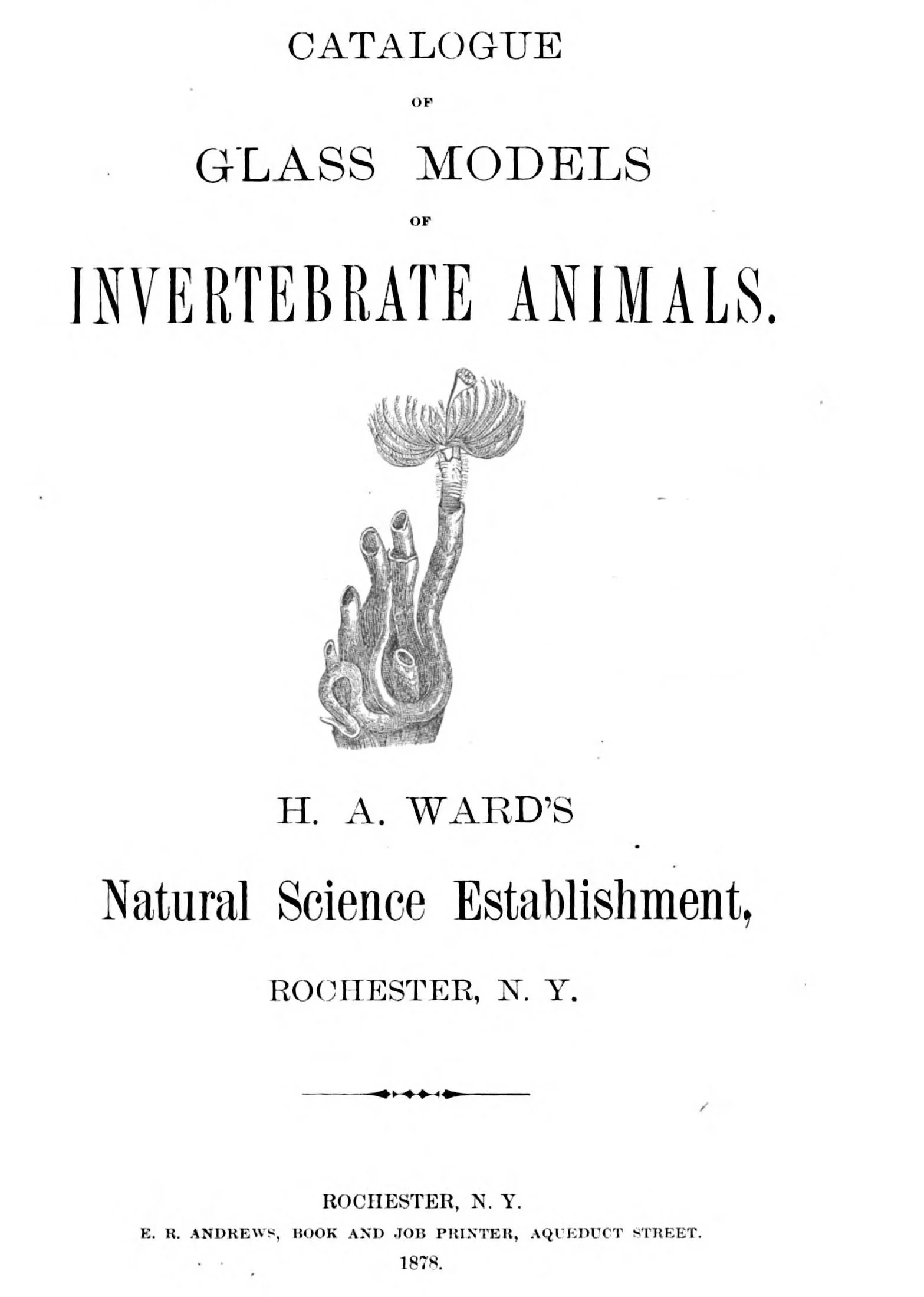
In the late 1870s, Henry Ward of Rochester, NY became the U.S. agent for the Blaschka models through his company, Ward’s Natural Science Establishment. The 1878 Ward’s catalog listed 630 different models available. This would grow to more than 700 by 1888.
In 1882, John Comstock, then a young instructor in entomology and invertebrate zoology at Cornell, was able to convince Cornell President Andrew Dickson White to order from Ward’s a set of of around 700 models, which was received by the University in 1885. This was one of the largest purchases of Blaschka models by any institution in the world.
It is not clear where the Cornell models were kept in the following decades. Many were likely displayed in the University’s natural history museum in McGraw Hall. As photography developed and became a preferred medium for illustrating science education, glass models in general fell into disuse in academia in the 20th century. At Cornell, the Blaschka models suffered a similar fate and were stored away.
In 1957, young professor of entomology Thomas Eisner discovered locked wooden cabinets containing the Blaschka models. Eisner initially did not know the models were made by the Blaschkas, but he was familiar with the models at Harvard and eventually made the connection. So impressed was Eisner with the accuracy of the Blaschka models that in 1964, when he published his book Animal Adaptation with Allison Burnett, he included photographs of models of two annelid worms and a squid to illustrate anatomical features. Unable to interest the University administration in the models, he looked elsewhere for advice and assistance for how they could be restored, and the Corning Museum of Glass offered to take the collection on long-term loan.
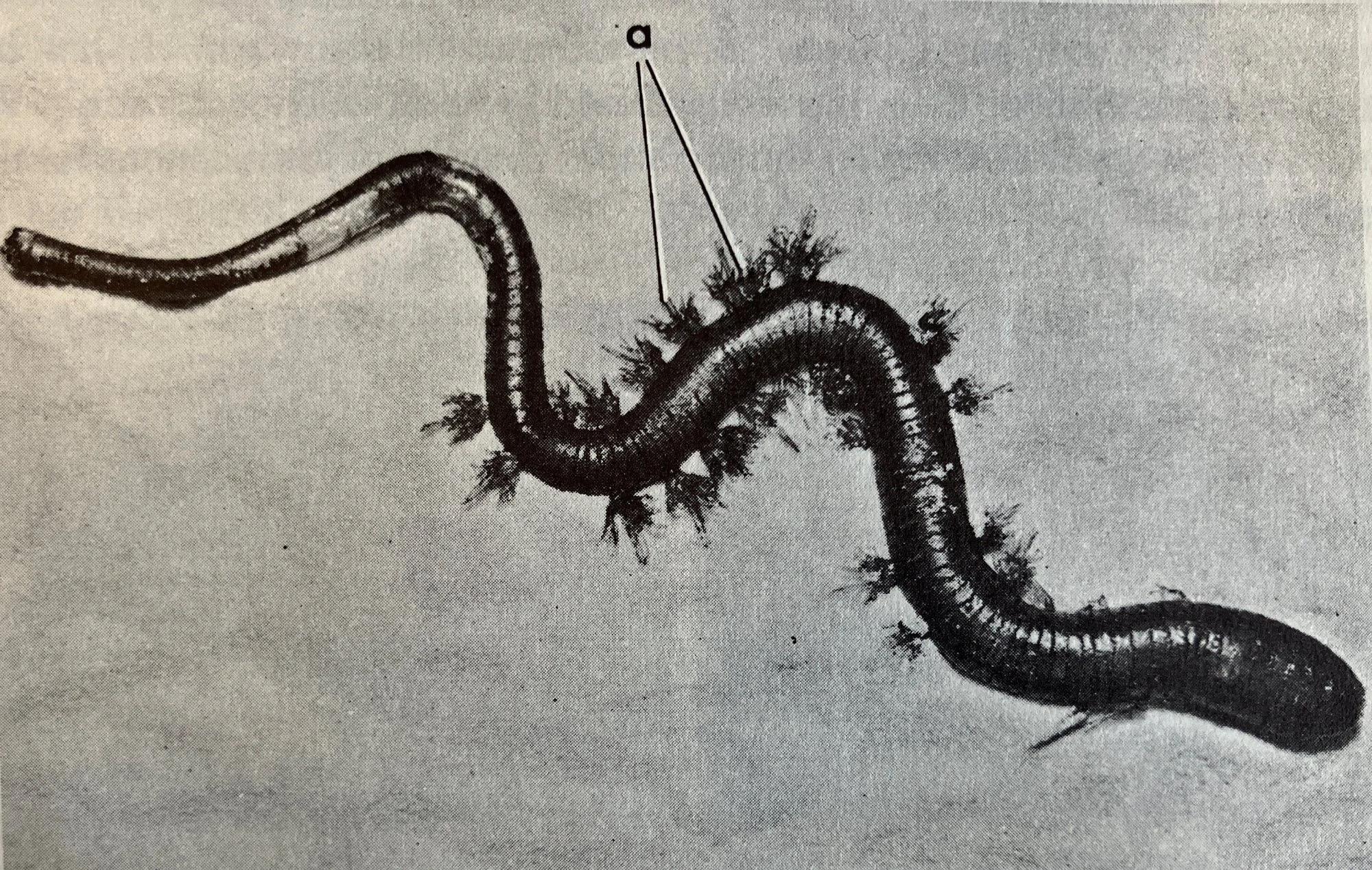
Photo of glass model of Arenicola by Thomas Eisner; (a) gills. Reproduced from Animal Adaptation by Allison L. Burnett and Thomas Eisner, Copyright 1964 by Holt, Rinehart and Winston, Inc. Reproduced with permission of Elsevier B.V. through PLSclear.
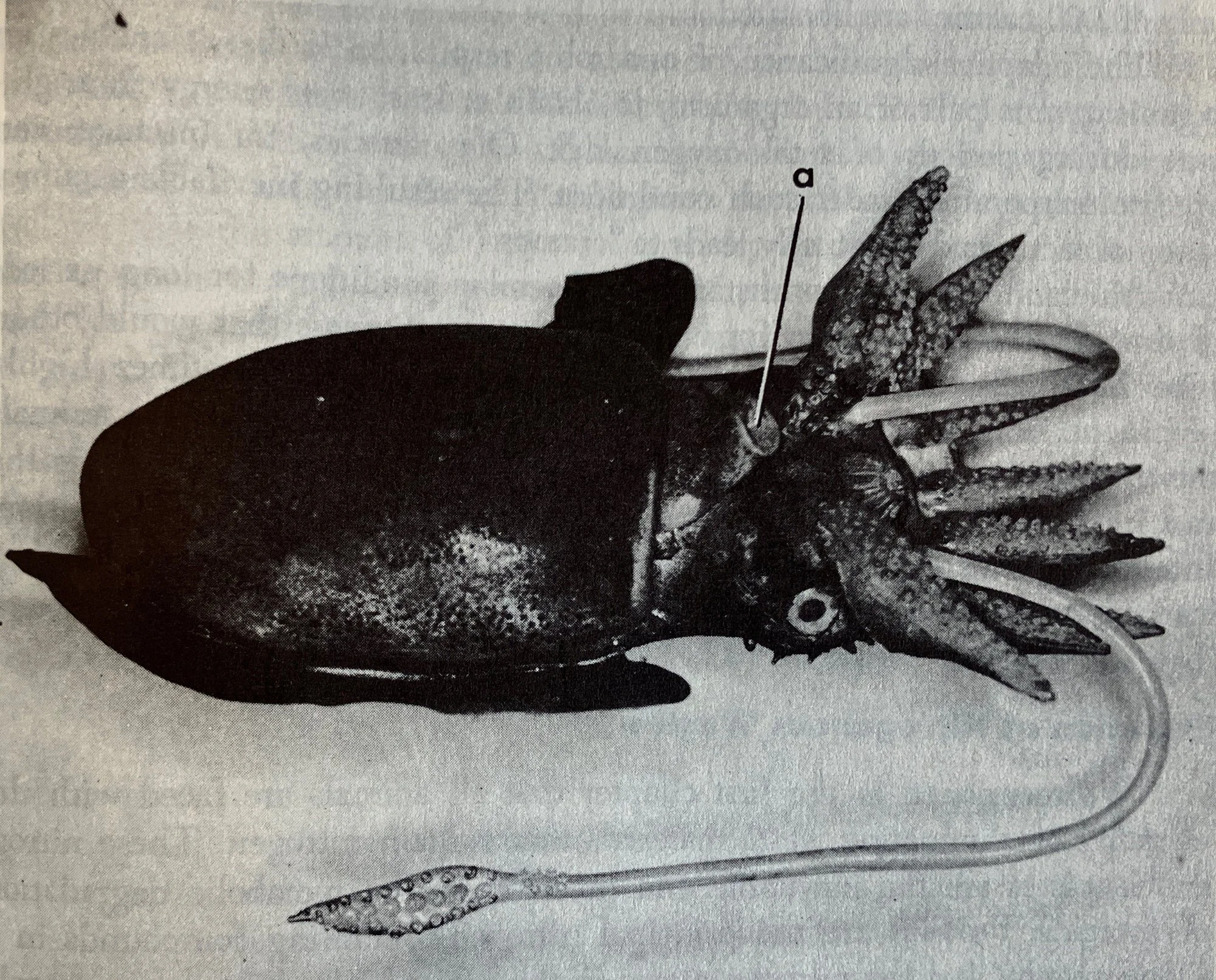
Photo of glass model of squid Sepia officinalis by Thomas Eisner; (a) excurrent funnel through which jets of water are expelled during locomotion. Reproduced from Animal Adaptation by Allison L. Burnett and Thomas Eisner, Copyright 1964 by Holt, Rinehart and Winston, Inc. Reproduced with permission of Elsevier B.V. through PLSclear.
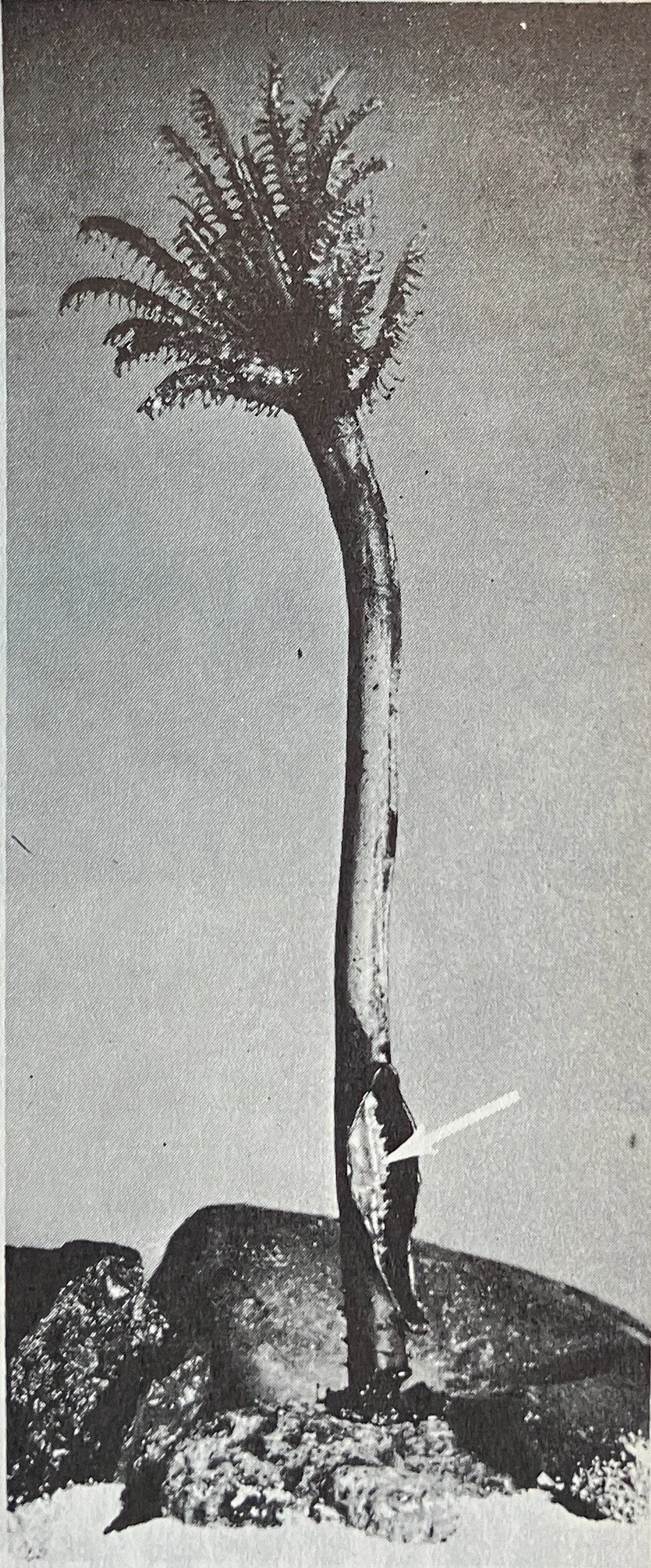
Photo of glass model of Sabella, a tube-dwelling polychaete, by Thomas Eisner. The arrow points to the slender body of the worm where the tube has been dissected open. Reproduced from Animal Adaptation by Allison L. Burnett and Thomas Eisner, Copyright 1964 by Holt, Rinehart and Winston, Inc. Reproduced with permission of Elsevier B.V. through PLSclear.
In the 1990s, funds became available for restoration of part of the collection, and about 170 of the 570 surviving models were repaired, cleaned, and returned to campus for exhibit. Some are on exhibit in Mann Library. Others were exhibited in the atrium of Corson-Mudd halls, but because of renovations, these models were moved to the Museum of the Earth in summer 2024 for temporary exhibit. The rest of the collection remains today at the museum in Corning.
Drew Harvell, a professor in Cornell’s Department of Ecology and Evolutionary Biology, was appointed as Curator of the collection, and she seized on the opportunity offered by the restored collection to use the models as a window into what the oceans looked like in the mid-nineteenth century, before human activities such as pollution and overfishing made many of the animals depicted in the models disappear from much of their previous habitat. She wrote a book, Sea of Glass (2016) and worked with Ithaca marine film maker David Brown on a documentary film, Fragile Legacy (2015), to highlight the urgent need for marine conservation.
For more information on the Cornell Blaschka collection, see https://digital.library.cornell.edu/collections/blaschka.