

Mollusks
Mollusks
Mollusks are an enormous and extremely important group of animals that includes snails, bivalves (clams), cephalopods, and other smaller groups. They live in almost all of Earth’s environments, but are especially diverse and abundant in the oceans. Many mollusks have hard shells made of calcium carbonate, but many do not, and these are the ones that the Blaschkas focused on, including especially the completely marine cephalopods (squids and octopus) and sea slugs (nudibranchs). Learn more about mollusks on the Digital Atlas of Ancient Life.
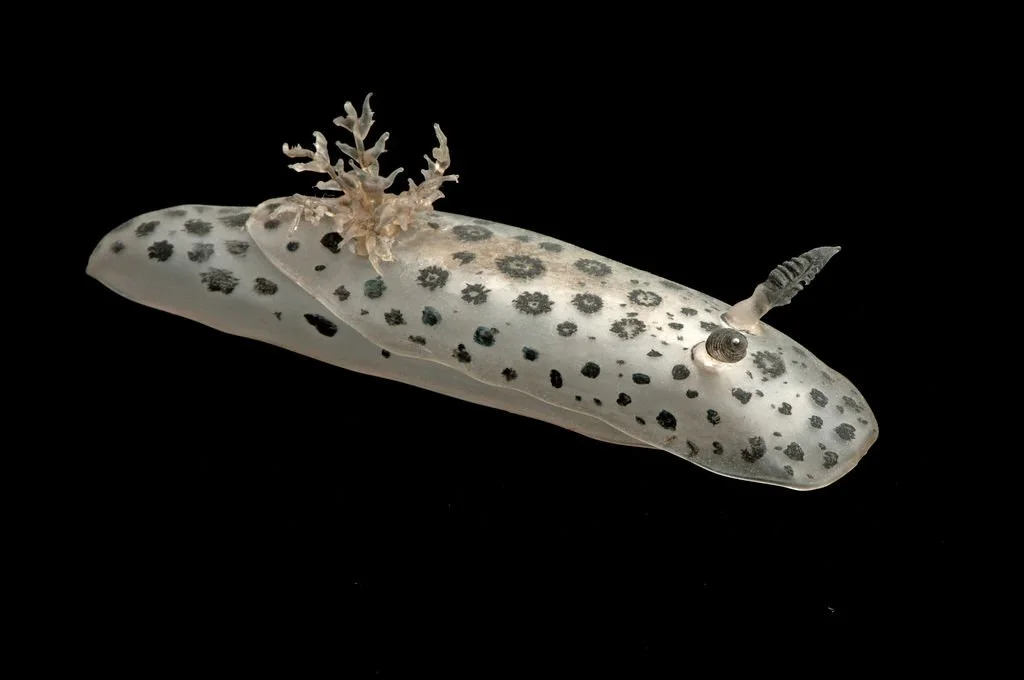
Jorunna funebris, from Cornell Collection of Blaschka Invertebrate Models. Photo: Claire Smith, used with permission from Cornell University.
Nudibranchs are marine snails (gastropods) that do not have shells as adults. The name means “naked gill”, and refers to the finger-like gills that project from their backs. They are especially fascinating for their extraordinary diversity of ways of making a living and defending themselves. Some species, for example, are brightly colored to advertise to potential predators their toxicity. Others eat the stinging cells (nematocysts) of sea anemones and retain them in their bodies as defensive weapons. Other species have evolved external anatomy with textures that mimic their undersea surroundings.
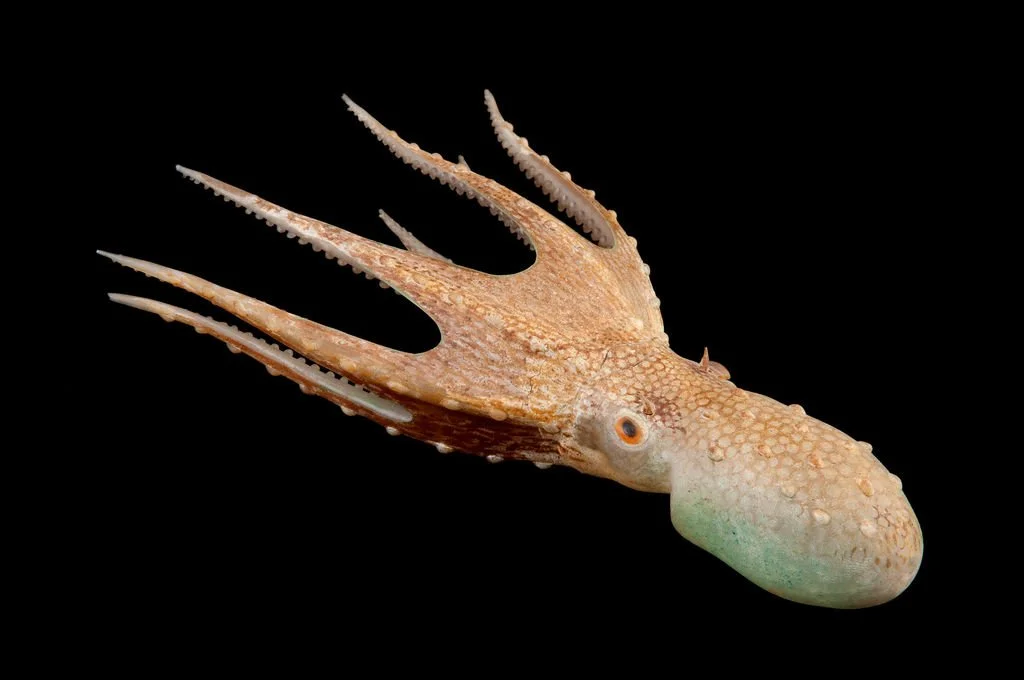
Pteroctopus tetracirrhus, from Cornell Collection of Blaschka Invertebrate Models. Photo: Kent Loeffler, used with permission from Cornell University.
Octopuses are cephalopods with eight arms and no mineralized shell. The group includes more than 300 living species, ranging from less than an inch to more than 14 feet in length. They are all highly intelligent predators that live at depths from intertidal to more than 20,000 feet.
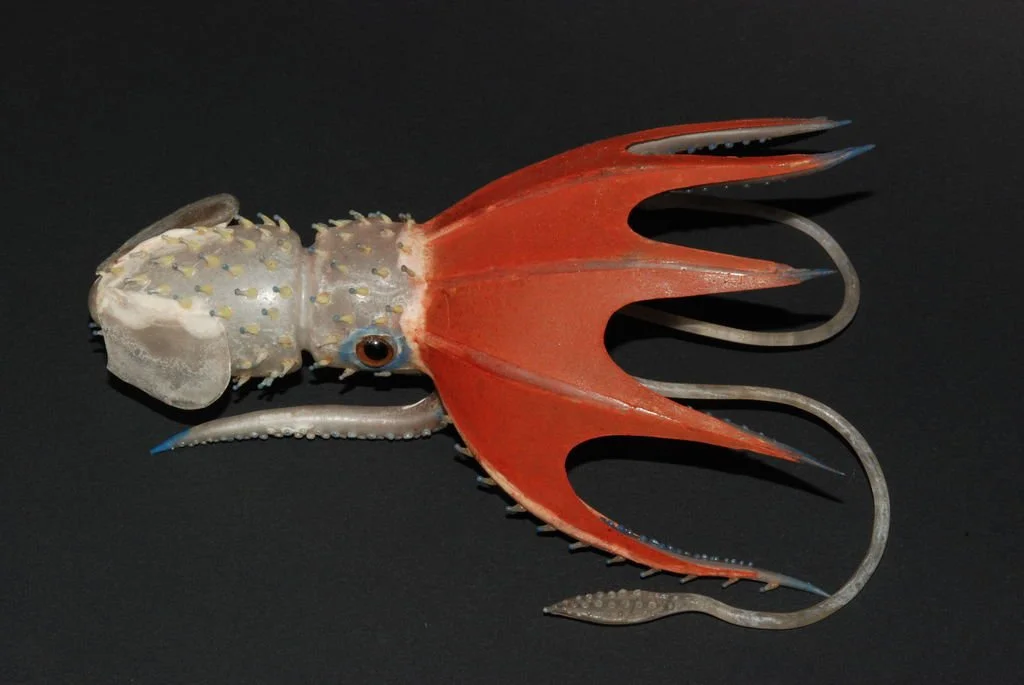
Histioteuthis bonnellii, from Cornell Collection of Blaschka Invertebrate Models. Photo: Elizabeth Brill, used with permission from Cornell University.
Squids are cephalopods with elongate bodies, eight arms and two elongate tentacles. They vary in size from less than an inch to more than 30 feet. They are mainly soft-bodied but have a small internal skeleton in the form of a rod- or spoon-shaped structure called a gladius or pen, made of chitin.
All cephalopods swim by jet propulsion, pumping water out of their bodies. Learn more about cephalopods on the Digital Atlas of Ancient Life.