

Marvelous Mollusks:
The secret world of shells
What are mollusks?
If you’ve ever imagined a seashell, you have almost certainly pictured a mollusk! But mollusks are far more than seashells. Mollusks are an extremely diverse group of animals that live all over the world – on land, in freshwater, and in the ocean. There are three major groups of mollusks. Gastropods include snails and slugs and live both on land in freshwater and in the sea. Bivalves include clams, oysters, and scallops and live in the ocean and freshwater, although some can live briefly out of water, along its margins. Cephalopods include living squid, octopuses, chambered nautilus, and cuttlefish, as well as extinct forms including ammonoids and many extinct nautiloids. In addition to these groups, mollusks also include the less diverse groups Scaphopods (tusk shells), Monoplacophorans, Polyplacophorans (chitons), and Aplacophorans (worm-shaped mollusks that generally have no shell)
Mollusk diversity
Mollusks are so diverse that, at first, they do not look like they are all related to each other. But all mollusks share a few common features.
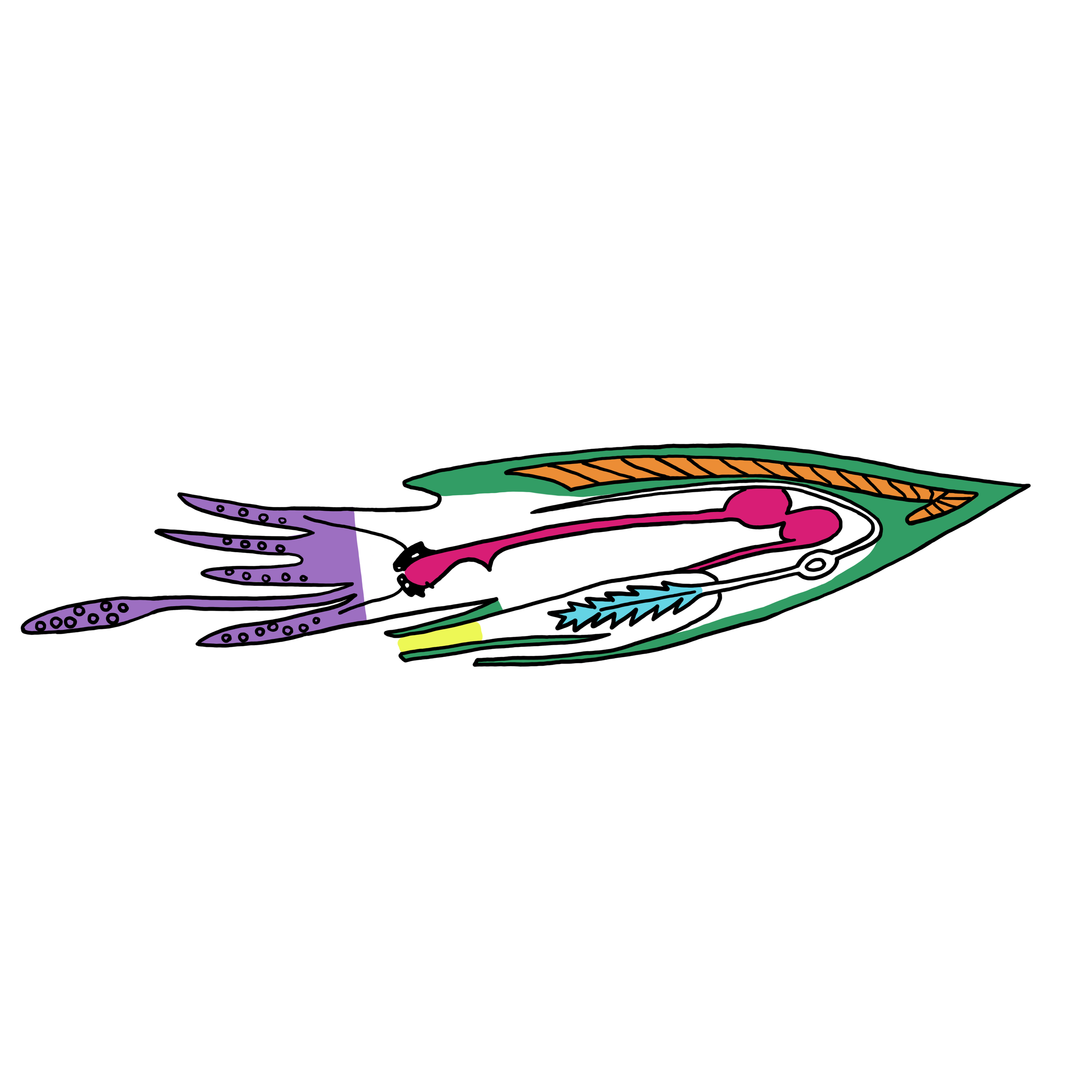
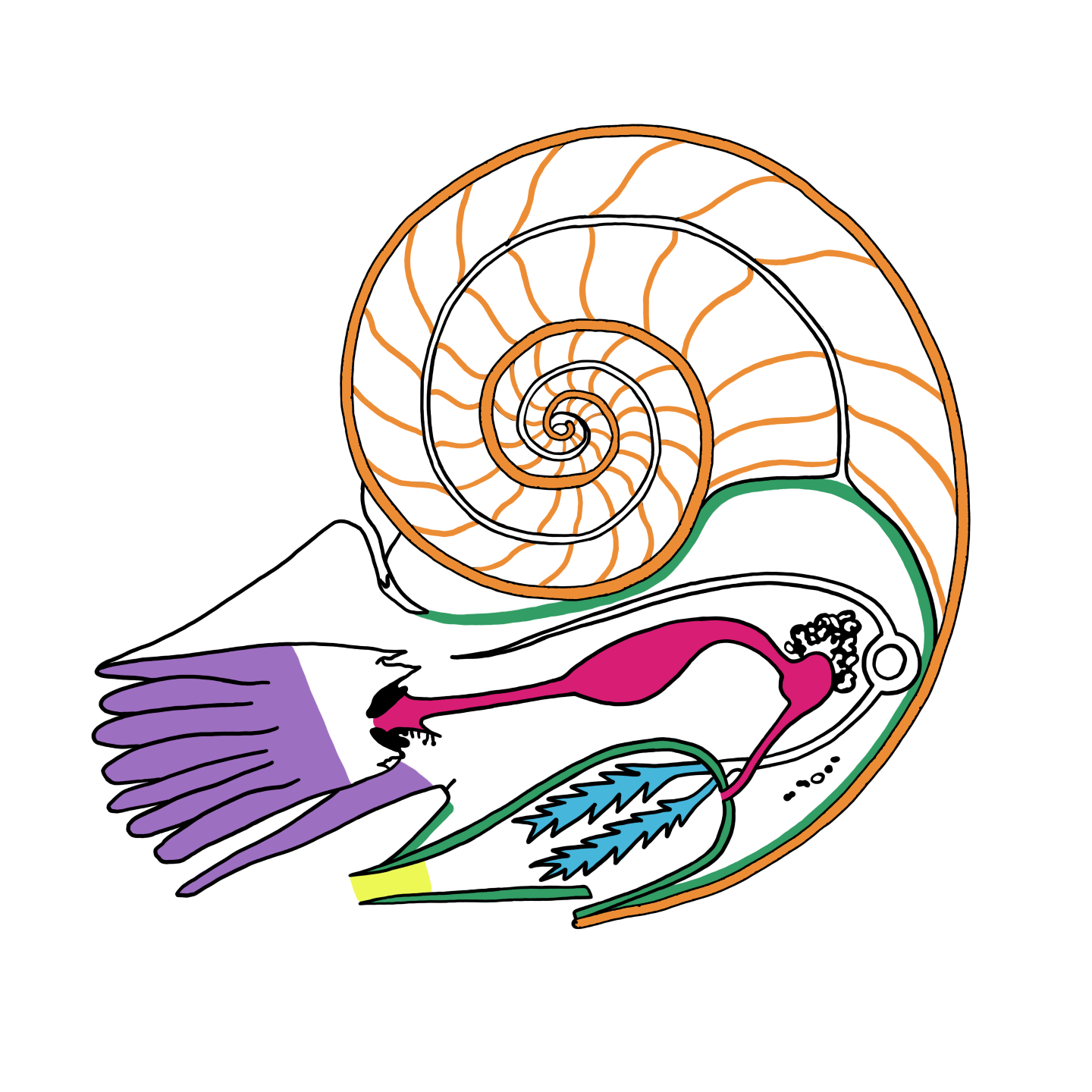
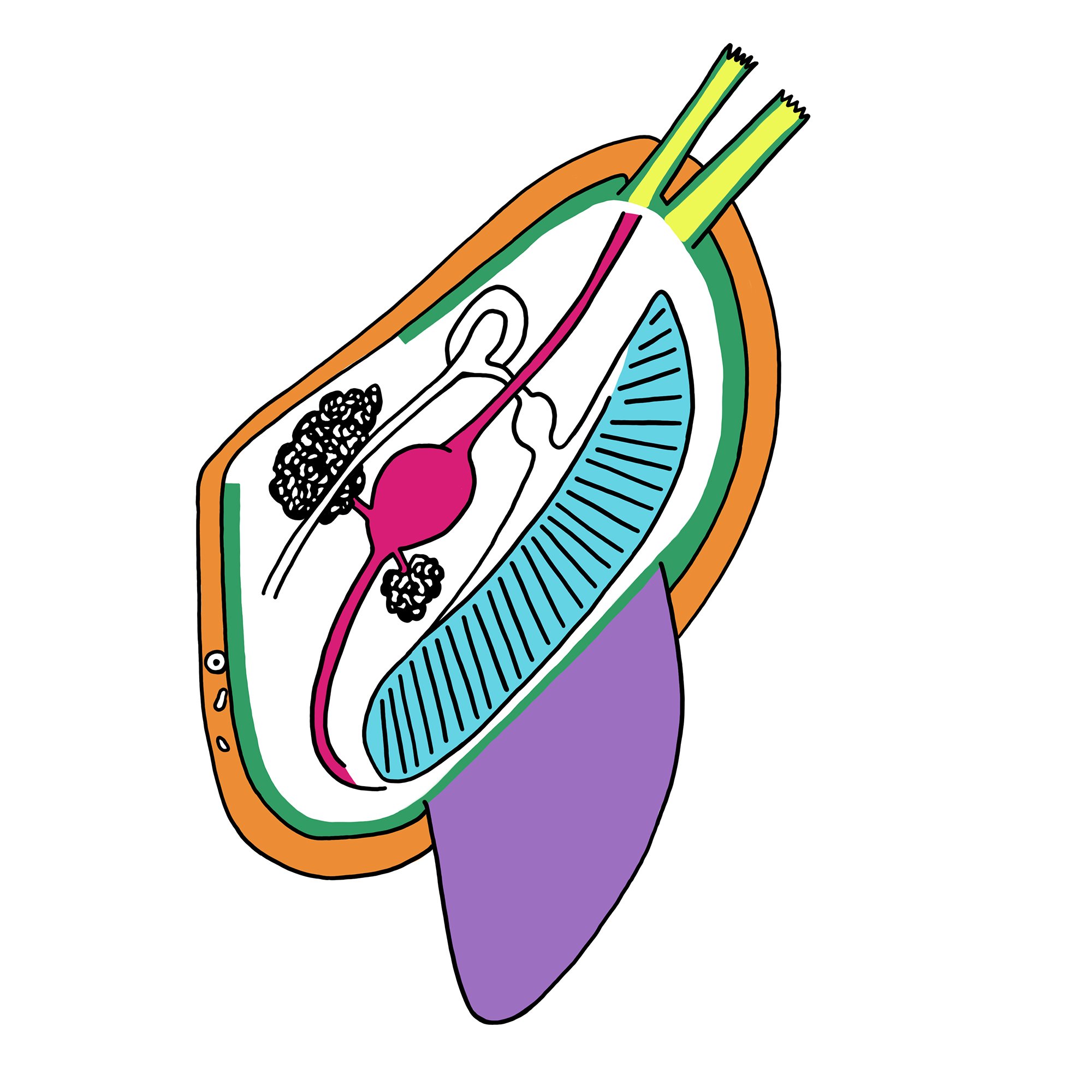
All mollusks have a mantle— a layer of soft tissue that covers the entire body of the animal. (The word “mollusk” comes from the Latin mollis, meaning soft.) Under the mantle is a cavity where respiration takes place. The mantle also secretes the shell in shell-bearing groups, which is made of calcium carbonate. All mollusks other than bivalves have a radula—a special tooth-covered tongue that they use to feed. Additionally, most mollusks have a large muscular foot (although this has evolved into arms and tentacles in cephalopods, and is much reduced in scaphopods). In the diagrams below, shared organs are color-coded to show how they differ in cephalopods with an internal shell, cephalopods with an external shell, bivalves, and gastropods.

Mollusks are second only to arthropods in the number of species in a single phylum in the world today. They are vital parts of many ecosystems and extremely important to humans — as food, in medicine, and in art. They also have an abundant and fascinating fossil record. Many mollusk species are endangered or threatened around the world.
Mollusks are some of the most important types of animals in their ecosystems, fulfilling a wide variety of ecological roles. Mollusks can be reef-builders, sediment-diggers, swimmers, and climbers. They might be herbivores, predators, or omnivores. Some even photosynthesize or use chemical energy to make food with the help of symbiotic microbes or chloroplasts stolen from plants. In turn, mollusks can also be important food sources for their own predators, including several important shellfish eaten by humans.
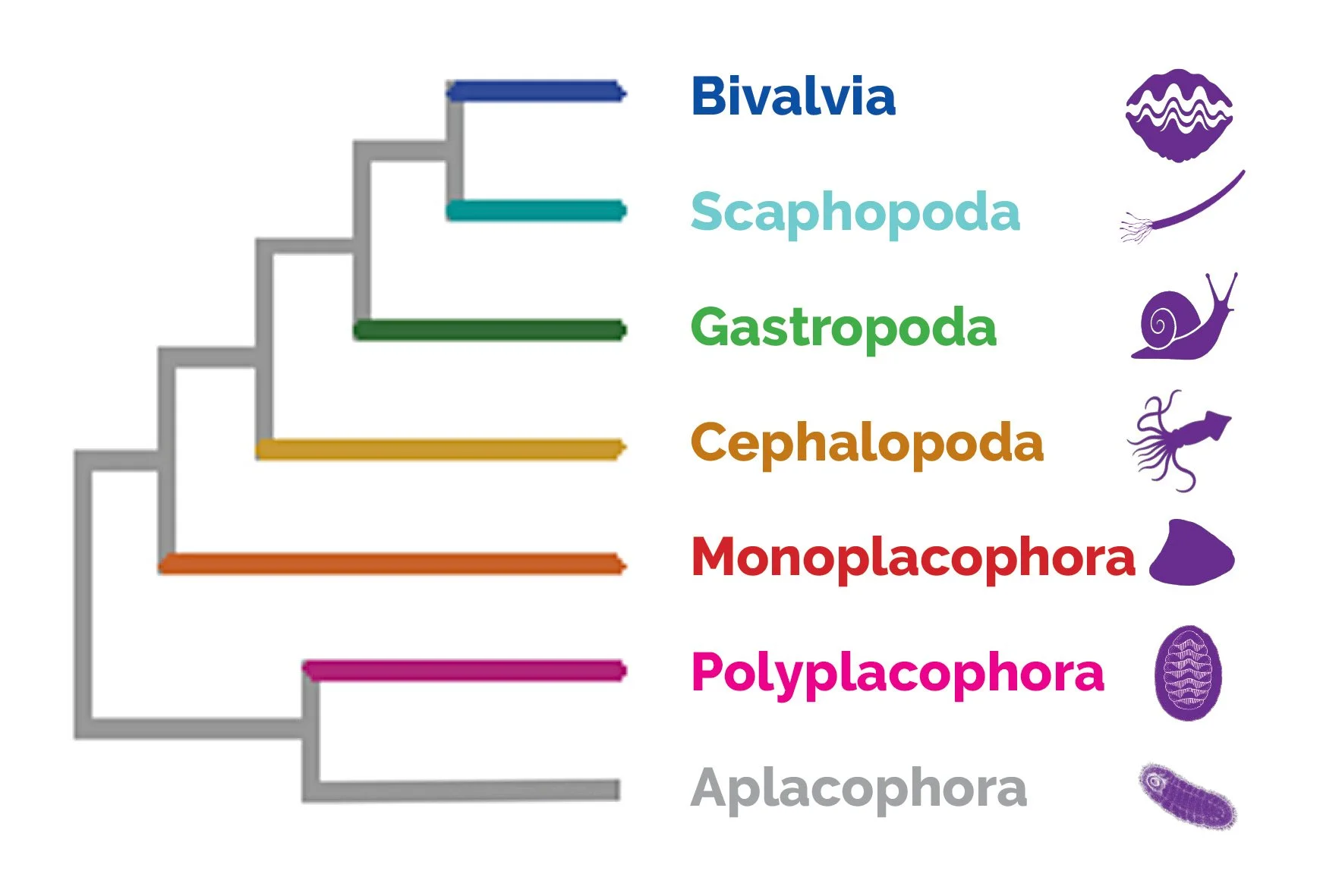
This diagram shows the evolutionary relationships between the major groups of mollusks.
The Evolutionary Tree of Mollusks
While scientists have agreed for a long time that mollusks are all related to one another, the exact relationships among the major groups of mollusks (phylogeny) have been elusive. Only in the last few years have scientists come to a consensus on their evolutionary relationships.
The diagram presented here was published in February 2025. It is based on DNA, but also agrees in most respects with information from body shape (morphology) and the fossil record. It shows that the three most important groups of mollusks are closely related to each other!
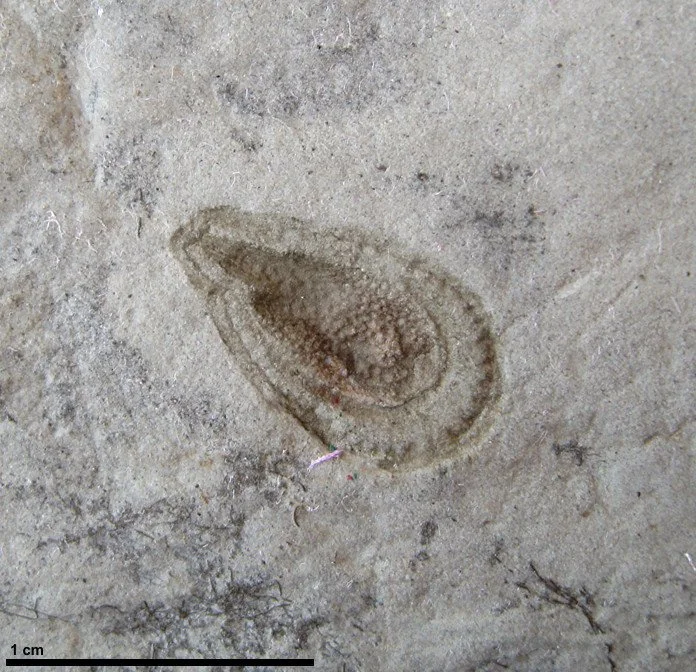
An image of Kimberella quadrata. Image Credit: By Aleksey Nagovitsyn (User:Alnagov) - Arkhangelsk Regional Museum, CC BY-SA 4.0, https://commons.wikimedia.org/w/index.php?curid=6024607
The relationships among the main groups of mollusks have been difficult to work out because the different mollusk classes all appeared very rapidly in the fossil record, but this new phylogeny seems to reflect the origin of these lineages very well. The earliest members of each group shared large amounts of genetic information because the ancestors of each group did not spend a very long time as intermediate forms before the origin of each of these modern groups. The rapid origin of so many different kinds of animals, including mollusks, is an event popularly known as the Cambrian Explosion or Early Cambrian Transition. One animal that may have been among the very first molluscs is Kimberella, a gastropod-like animal from the Ediacaran period. The classification of this group is debated among paleontologists. Some argue that fossil feeding traces found near multiple specimens indicate that Kimberella posessed a radula, while others argue that the feeding structure possessed by this group is unrelated to the characteristic molluscan mouthpart.
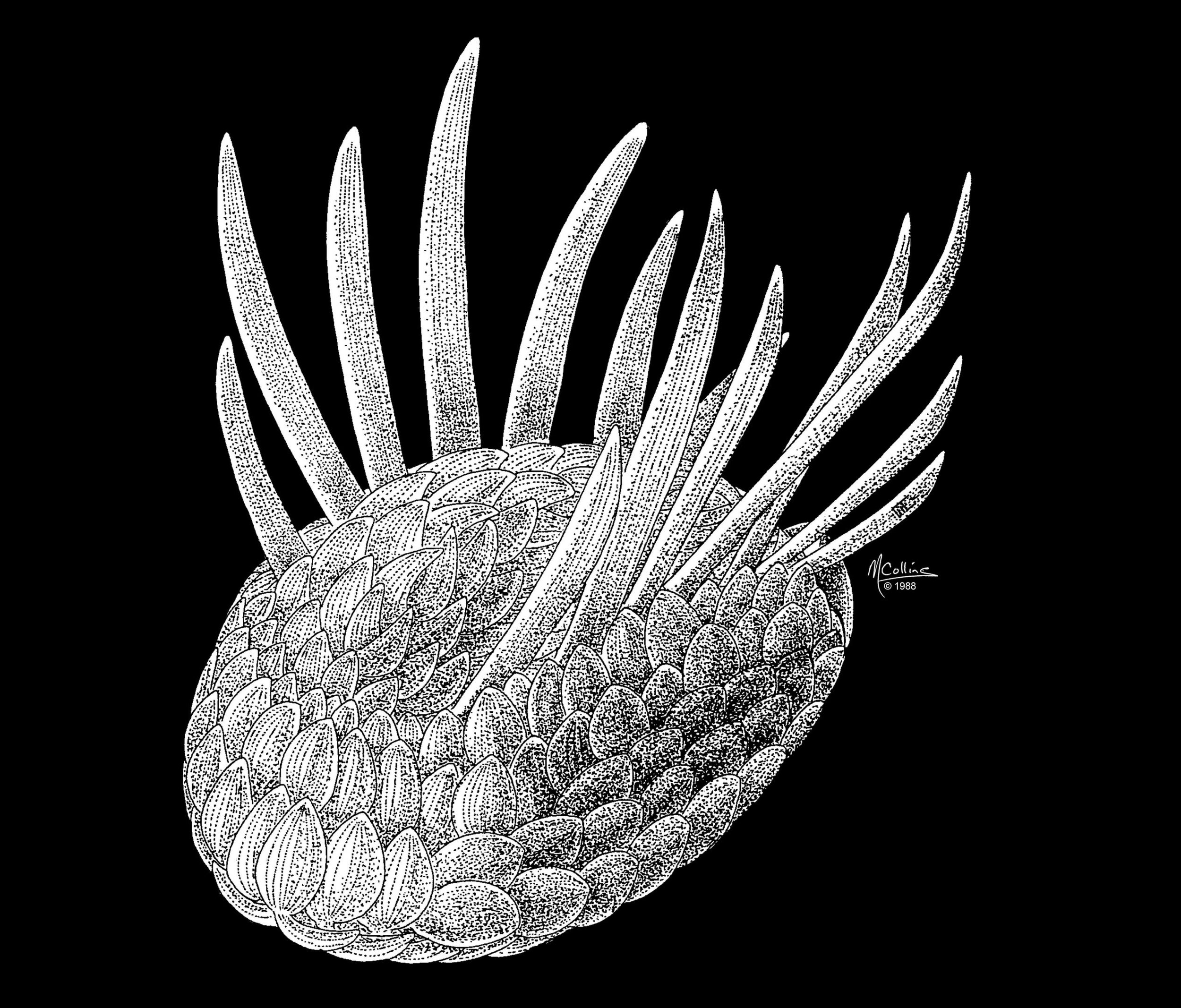
A drawing of Wiwaxia, an animal with potential mollusk affinities from the Cambrian period. Image credit: public domain from Martin R. Smith. .https://commons.wikimedia.org/wiki/File:Wiwaxia_3G_crop.JPG

Another possible early mollusk is Wiwaxia, an animal that lived ~505 million years ago and was covered in rows of scales as well as long spines. Wiwaxia also appears to have had a muscular foot and a radula-like feeding organ.