

Bivalves
WHAT ARE BIVALVES?
Bivalves are a diverse group of mollusks that includes clams, oysters, scallops, and mussels. They have two shells and live in both freshwater and saltwater all over the world. Bivalves are important to their ecosystems, and are also widely used by humans for food and other products. They have an extensive fossil record, and over 40,000 fossil bivalve species have been described. There may be 50,000 living species.
The Shell
The two shells of a bivalve are usually mirror images of each other (oysters and a few others are exceptions). The shells are joined at a hinge by a strong, flexible ligament. This ligament helps the shells open when the animal relaxes its muscles. To close the shell, bivalves use strong muscles called adductors. Some bivalves, like scallops and oysters, have one adductor muscle, while others, like many clams, have two. These muscles leave marks on the shell that allow paleontologists to reconstruct some of the soft parts of fossil bivalves.
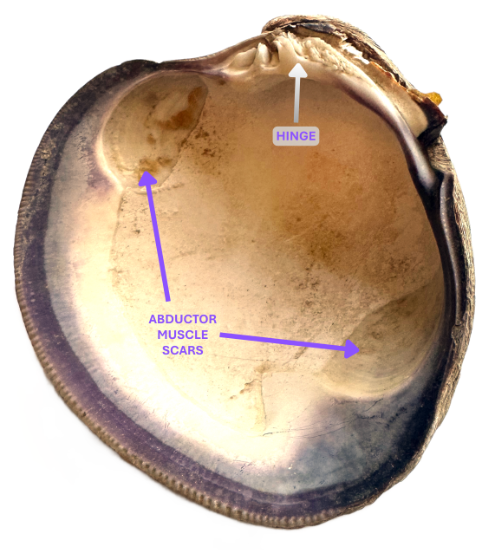
Inside the shell of a cherrystone quahog (mercenaria)
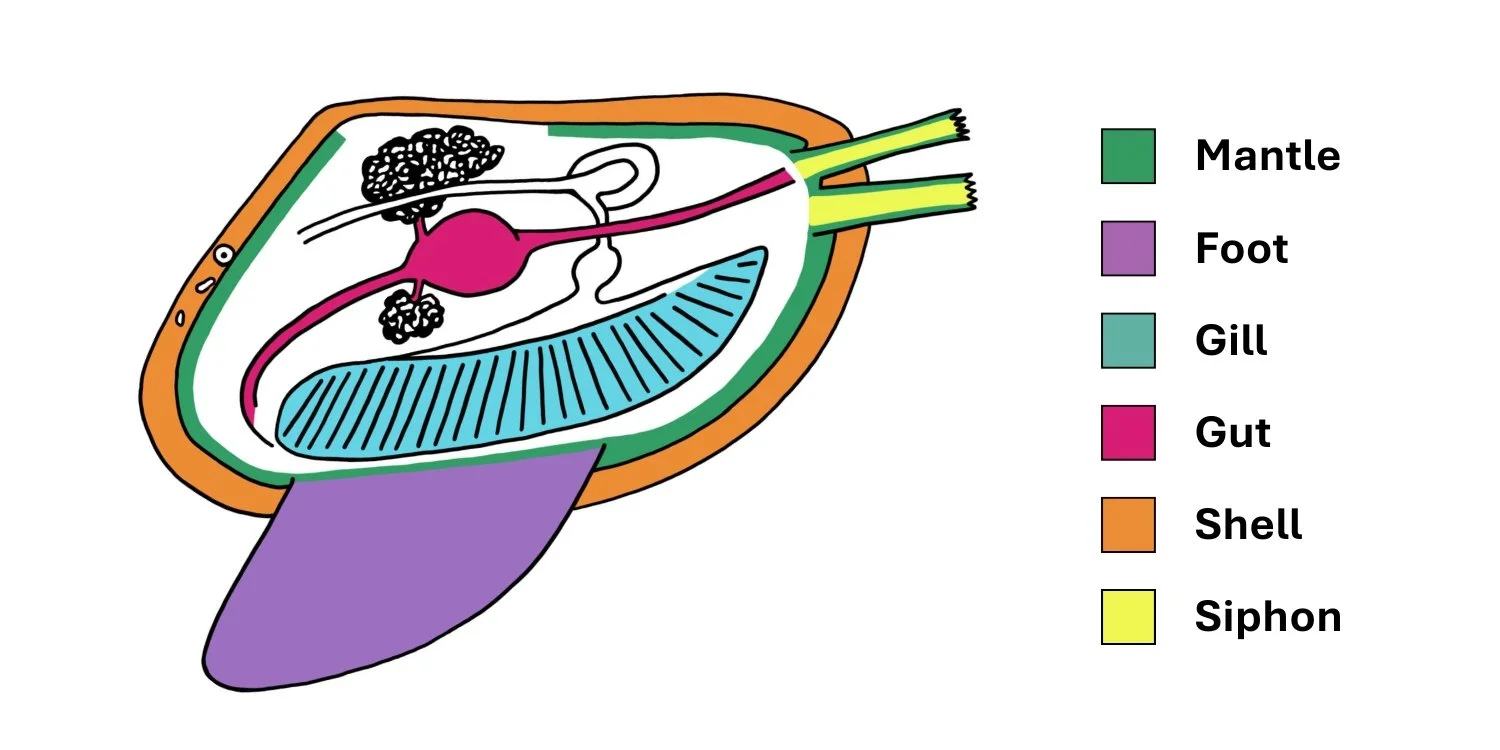
Inside the Shell
Bivalves use their gills for both feeding and respiration. Bivalves that burrow in sediment have a large, muscular foot and siphon. Bivalves don’t have a head or a radula (a special tooth-covered tongue that other types of mollusks use to feed).
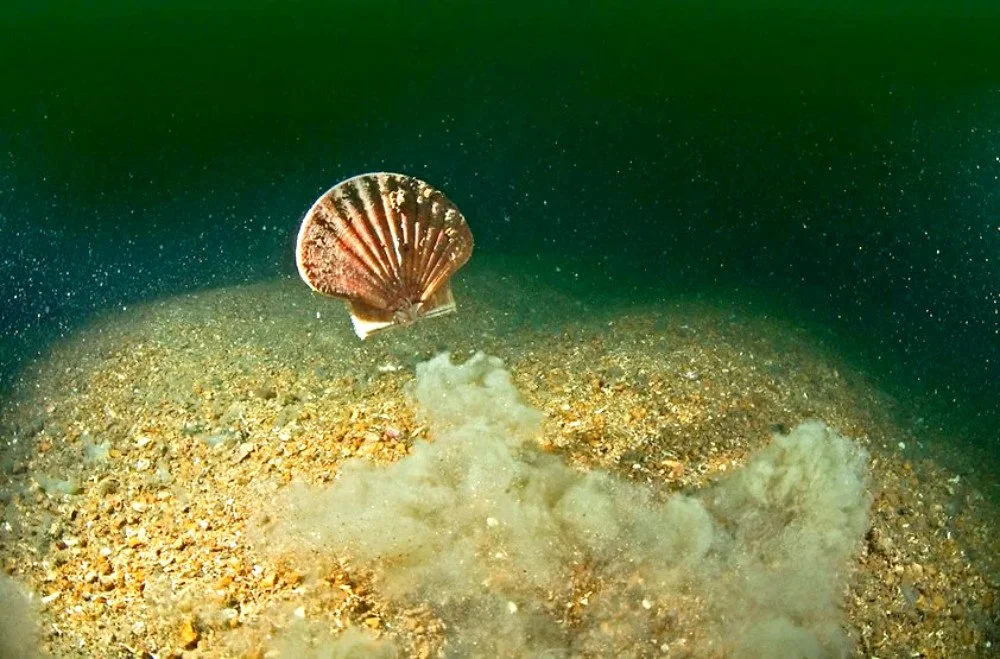
Scallop swimming
Bivalve Ecology
Most bivalves are marine, but there are also many freshwater species. The majority of bivalves are suspension feeders— filtering tiny food particles from water pumped over their gills— but bivalves also make a living in many other ways. Some are predators, eat wood, or have a symbiotic relationship with bacteria in their tissues that produce energy by photosynthesis or chemosynthesis. Most bivalves live on or beneath the bottom sediment and may burrow into it. A few, like scallops, can swim awkwardly through the water by rapidly clapping their shells together. Bivalves can also attach to hard surfaces by a cluster of threads called the byssus, which are secreted by the foot. Bivalves that burrow deeply can still access the water above by means of an elongated part of their mantle called a siphon. Siphons first evolved in the early Mesozoic Era, about 250 million years ago. Before that, almost all bivalves sat on the surface.

Click the button to the left to learn about giant clams, an important group of bivalves!
Fossil Bivalves
The oldest known fossil bivalves come from rocks of the Early Cambrian Period (541-509 million years ago). They were small and lived in the ocean. The oldest known freshwater bivalves are from the Devonian Period (419-358 million years ago).
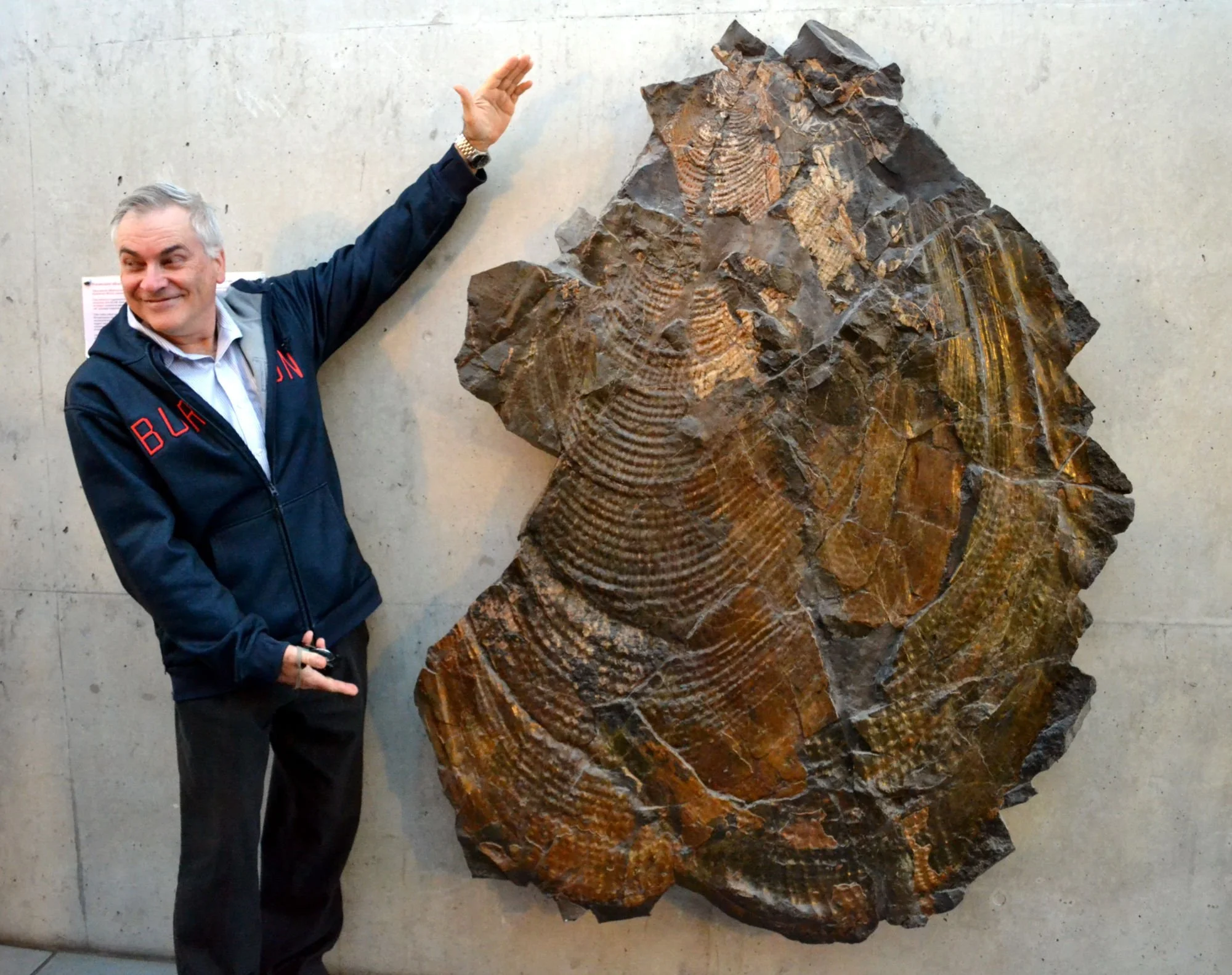
A shell of a bivalve mollusc (Inoceramus steenstrupi) that was found in 1952 in the valley Qilakitsoq on the Nuussuaq peninsula in western Greenland. Photo: Mike Beauregard (CC BY 2.0 license) via Wikimedia Commons.
The largest bivalves in Earth’s history belonged to an extinct group called inoceramids, which could grow 2-3 meters (~6-9 feet) in length. Inoceramids arose around 270 million years ago in the Permian period but became very widespread, abundant, and diverse in the mid-late Cretaceous (100 - 66 million years ago). The presence of chemosymbiotic bacteria in their tissues may have allowed them to thrive in areas of the ocean that were low on oxygen, a strategy used by some living bivalves today.
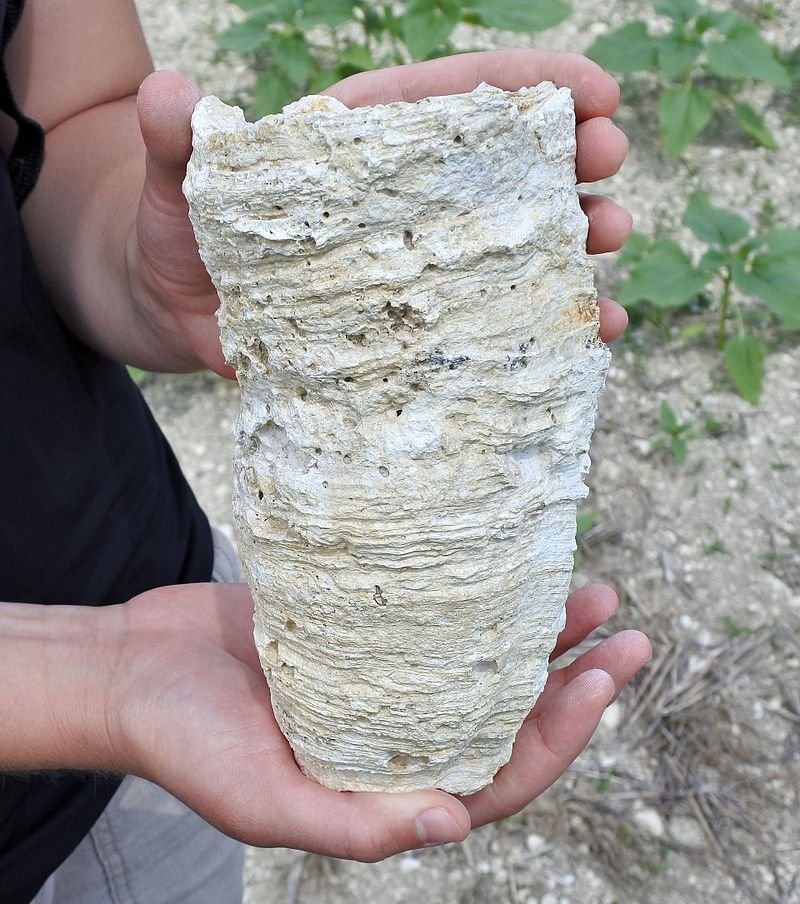
Rudist
Perhaps the strangest bivalves ever to exist were the rudists, which were a group of heavily modified bivalves. One or both of their shells evolved into elongated cylinders or horn-shaped forms. They were the most important reef-formers during their peak (from the Late Jurassic to Cretaceous, about 80-66 million years ago). They apparently had fast growth rates which some paleontologists think may be due to a symbiotic relationship with photosynthetic algae. Fossil rudist reefs are important oil reservoirs in the Gulf of Mexico and Middle East.
The fossil record shows that bivalves are more diverse today than at any time in their long history.
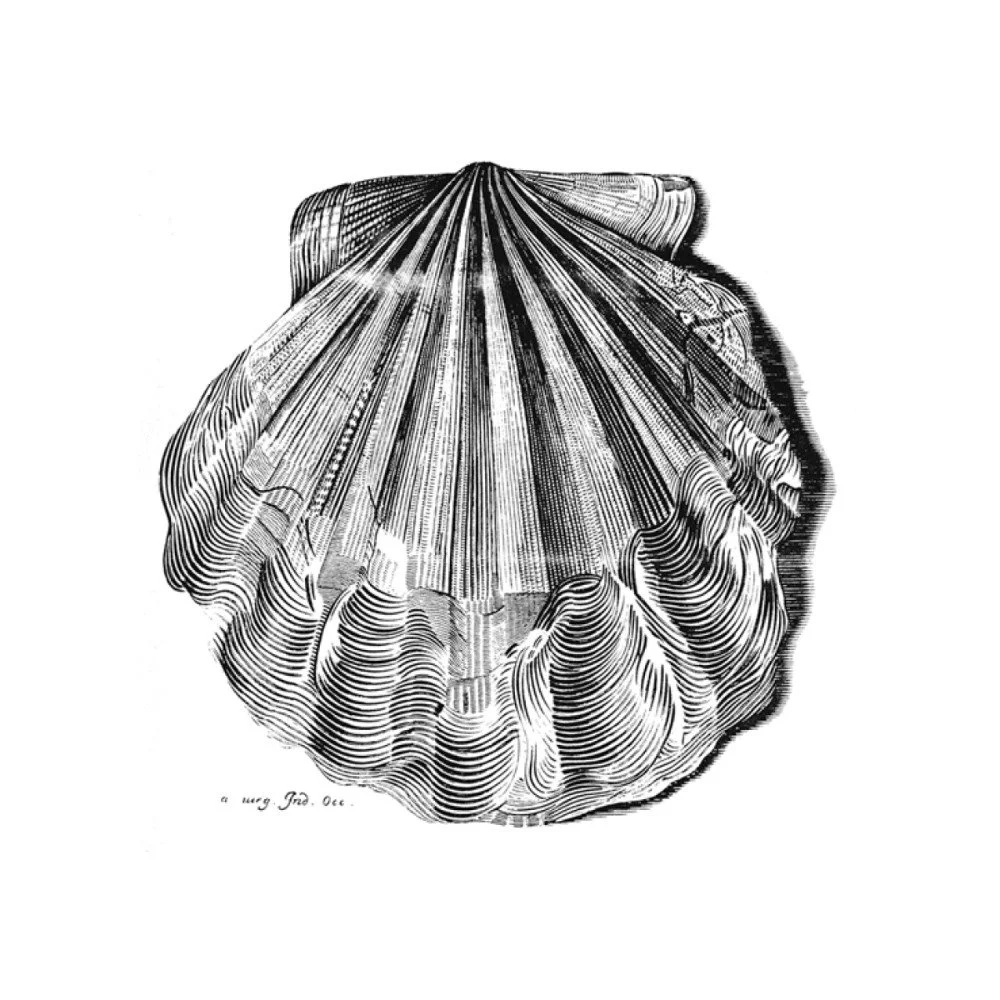
The first American Fossil
Chessapecten jeffersonius was the first North American fossil to be scientifically illustrated in 1687 by English naturalist Martin Lister. The species was officially named and described by the American naturalist Thomas Say at the Academy of Natural Sciences in Philadelphia in 1824. Chessapecten jeffersonius was a sea scallop that lived during the Pliocene (4-5 million years ago) on the Atlantic coast, and is the official state fossil of Virginia.
Scallops are unusual among bivalves for two reasons: they have complex eyes (on the edge of their mantle), and many of them can jump or swim. Scallops have up to 200 eyes with lenses; however, they have two retinas and a mirror structure, making them operate more like a modern telescope than a human eye. Scallop eyes do not have irises, but instead they dilate by adjusting the shape of their cornea, which may also help them form a clear image. Scallops that are broad and flat may be swimmers, while scallops with one flat shell and one curved shell are often escape-jumpers. The large adductor muscles used in these behaviors are the part of the scallop eaten by humans.