
Mollusk Research At PRI
For more than a century, scientists and students at Cornell University and the Paleontological Research Institution have been at the forefront of research about the geological history, biology, and (more recently) conservation of mollusks.
It began with Gilbert Harris (Cornell class of 1886), who became a professor at Cornell in 1895 and soon became one of the world’s experts on fossil mollusks of the western Atlantic region (from Virginia to northern South America) over the past 66 million years. He and his students made large collections of fossils mollusks from the Gulf and Atlantic coastal plains, Caribbean, and Latin America for the next half-century. Harris founded PRI in 1932 as a separate organization and base for his research. His former student Katherine Palmer succeeded him as PRI Director in 1952 and continued her own research where her mentor left off, with major studies of fossil and living mollusks. Her last published paper appeared in 1974, when she was 79 years old.
Scientists publish their research so it can be tested and used by others. The distribution of paleontological research was aided by Harris’ own scientific journal, Bulletins of American Paleontology, which he had started in 1895, making it one of the oldest paleontological journals in the world. He printed it on his own press (which is displayed in the lobby of this museum). When Harris founded PRI in 1932, the journal moved with his collections and library into PRI’s first building behind the Cornell campus, and is still published by PRI today. The Bulletins has published dozens of thick volumes on fossil and living mollusks over its 130 years, including several seen here.
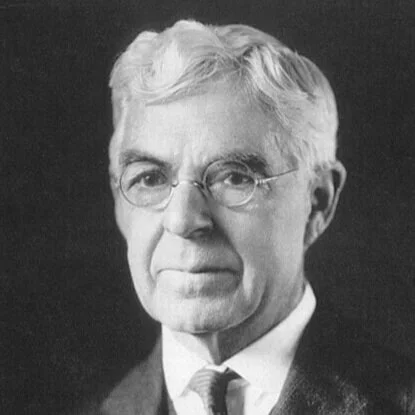
Gilbert Harris, PRI’s founder and first director.
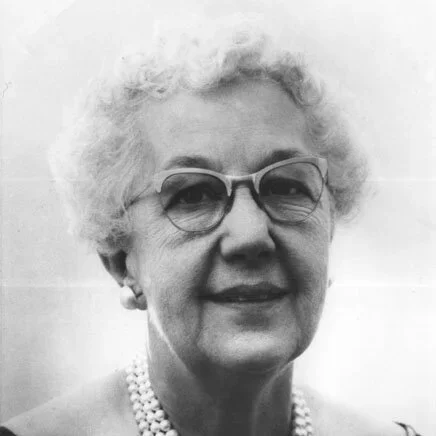
Katherine Palmer, PRI’s second director.
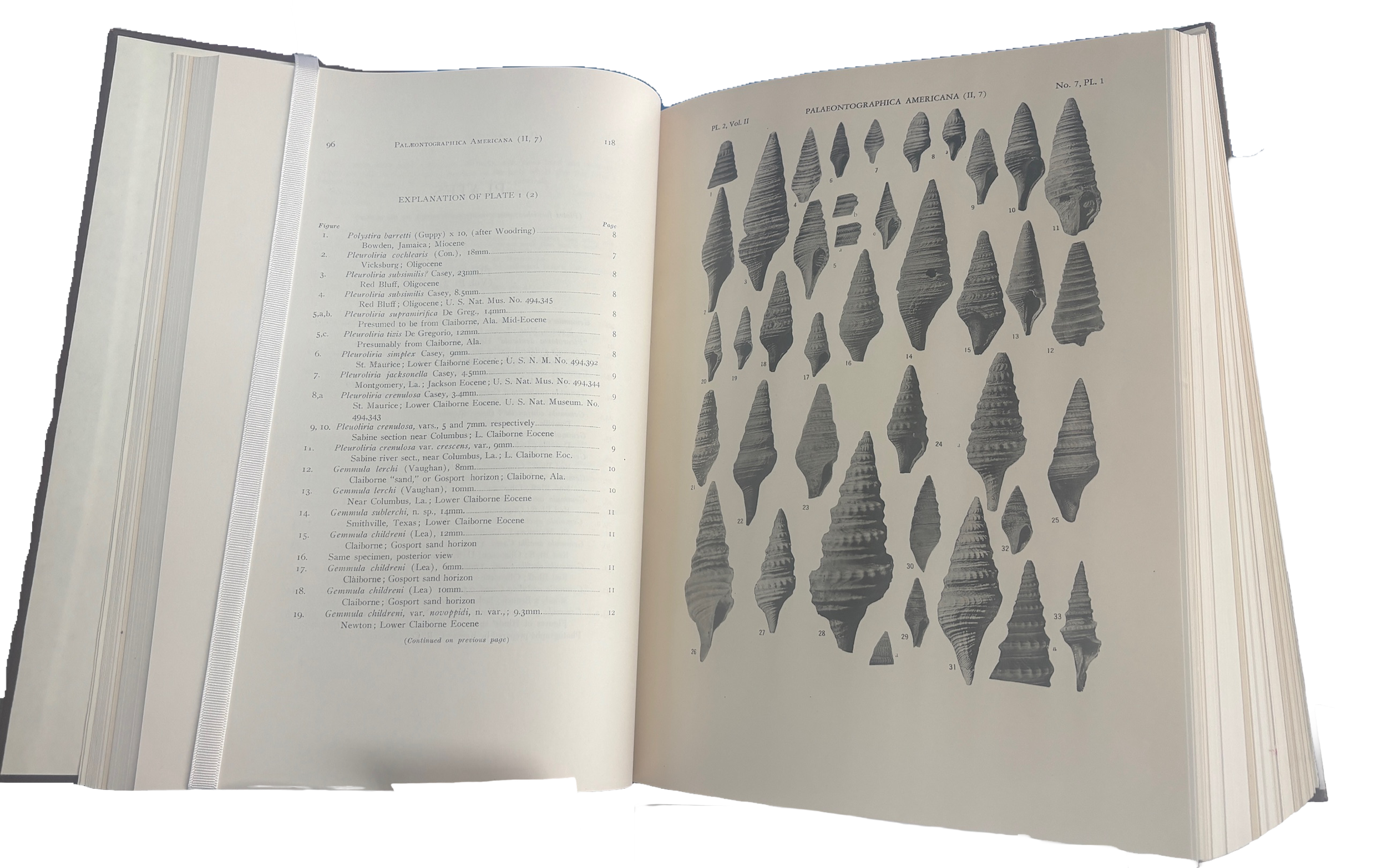
Harris, Gilbert D., 1937, Turrid illustrations. Palaeontographica Americana, vol. 2, no. 7, 94 pages, 14 plates
Turrid Gastropods
PRI’s founder and first Director Gilbert Harris published numerous detailed works on fossil mollusks from the Paleogene Period (66-24 million years ago) of the Gulf and Atlantic Coastal Plains. One of his studies focused on a group of gastropods (snails) called turrids, whose larval shells (retained at the pointed tip of the adult shell) have distinctive shapes. In order to understand them better (and to show them to students), Harris made models of these tiny shell tops.
On the left is a page of illustrations from one of PRI’s founder Gilbert Harris’ many works on fossil mollusks from the U.S. Gulf and Atlantic Coastal Plains, published in his journal Palaentographica Americana in 1937 (this journal was discontinued in 2008).
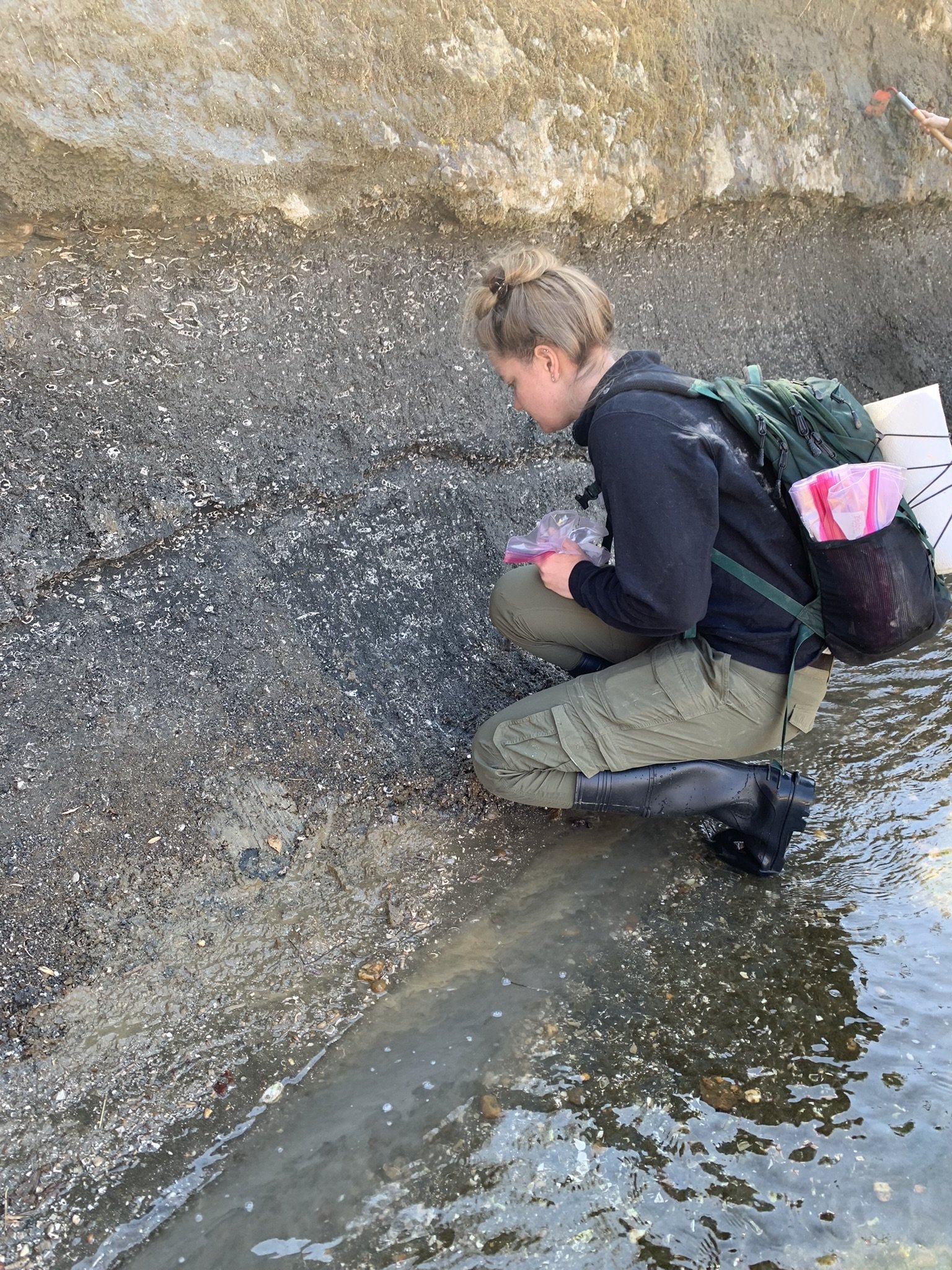
Student Kiera Crowley conducting research on turritellid gastropods in the Gulf Coastal Plain.
Turritellid gastropods
Turritellid gastropods (“tower snails”) are high-spired marine snails that today live in seas around the world. Since their origin in the late Jurassic Period (about 145 million years ago), they have been one of the most widespread, abundant, and diverse groups of mollusks, with their fossils being found on every continent.
PRI’s second Director, Katherine Palmer, worked on turritellids from the Eocene Epoch (56-34 million years ago) of the Gulf Coastal Plain, and published her results in PRI’s journal Bulletins of American Paleontology in 1937. Her work formed the basis for later work by PRI’s fourth Director Warren Allmon and his students, who also published their work in PRI’s journals.
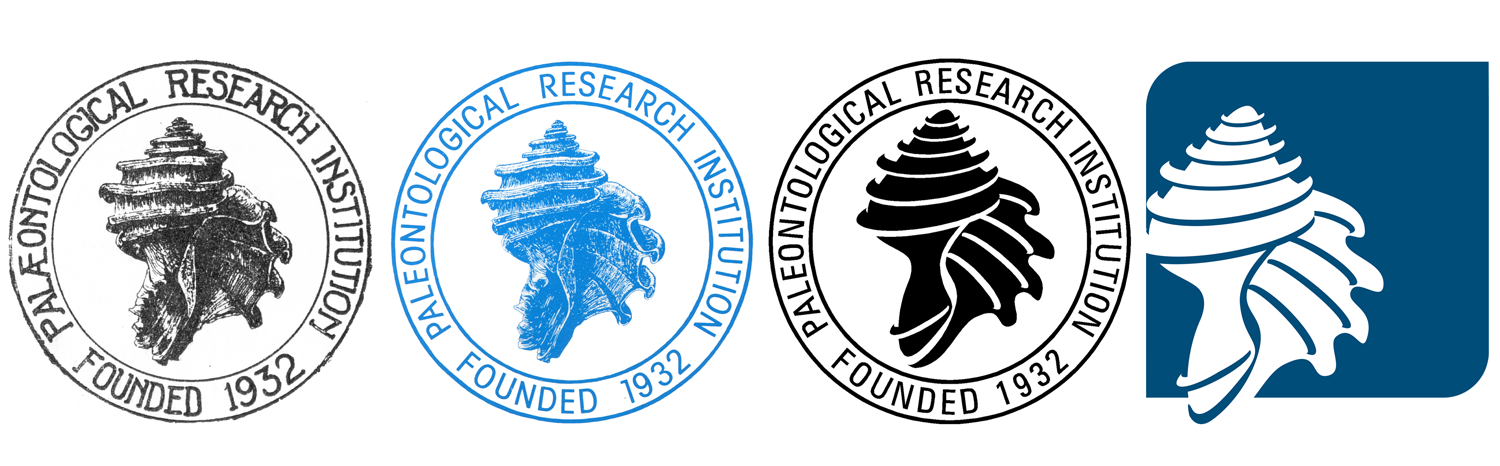
The progression of PRI’s logo over time.
The Snail on PRI’s Seal
PRI’s founder, Gilbert Harris, chose one particular fossil – the snail Ecphora – as the symbol of this institution when he founded it in 1932. He chose it not only because of its beauty but because it was one of the very first American fossils to be pictured in a published book, Historiae Conchyliorum (“History of Shells”), by English naturalist Martin Lister in 1771. Today, Ecphora is the official state fossil of Maryland!
Conservation Paleobiology
Thinking like a paleontologist can help solve today’s conservation problems!
Conservation paleobiology applies paleontological data and methods to prevent species extinction, restore habitats, and sustain the benefits people obtain from ecosystems. This approach can provide a long-term perspective that is often missing in conservation decisions.
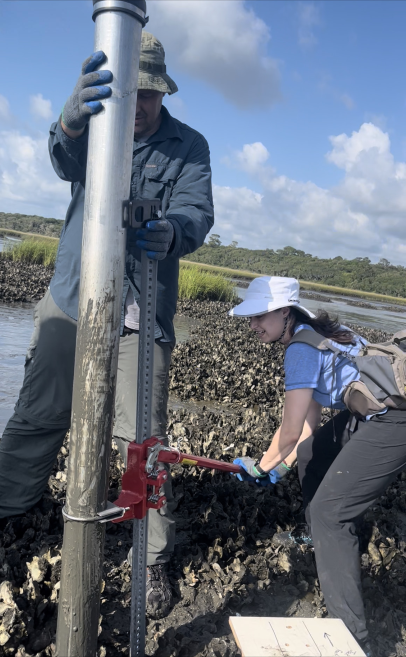
Jaleigh Goben (right) coring an oyster reef in Guana River, Florida.
Water quality restoration in Florida
The Eastern Oyster (Crassostrea virginica) forms reefs that act as a natural filter for improving water quality. Cornell PhD student Jaleigh Goben, with advisor and PRI researcher Dr. Gregory Dietl, has been coring oyster reefs in Guana River, Florida, to reconstruct oyster size and density estimates from the past prior to monitoring records. They aim to inform restoration decisions that could use oysters to improve local water quality.
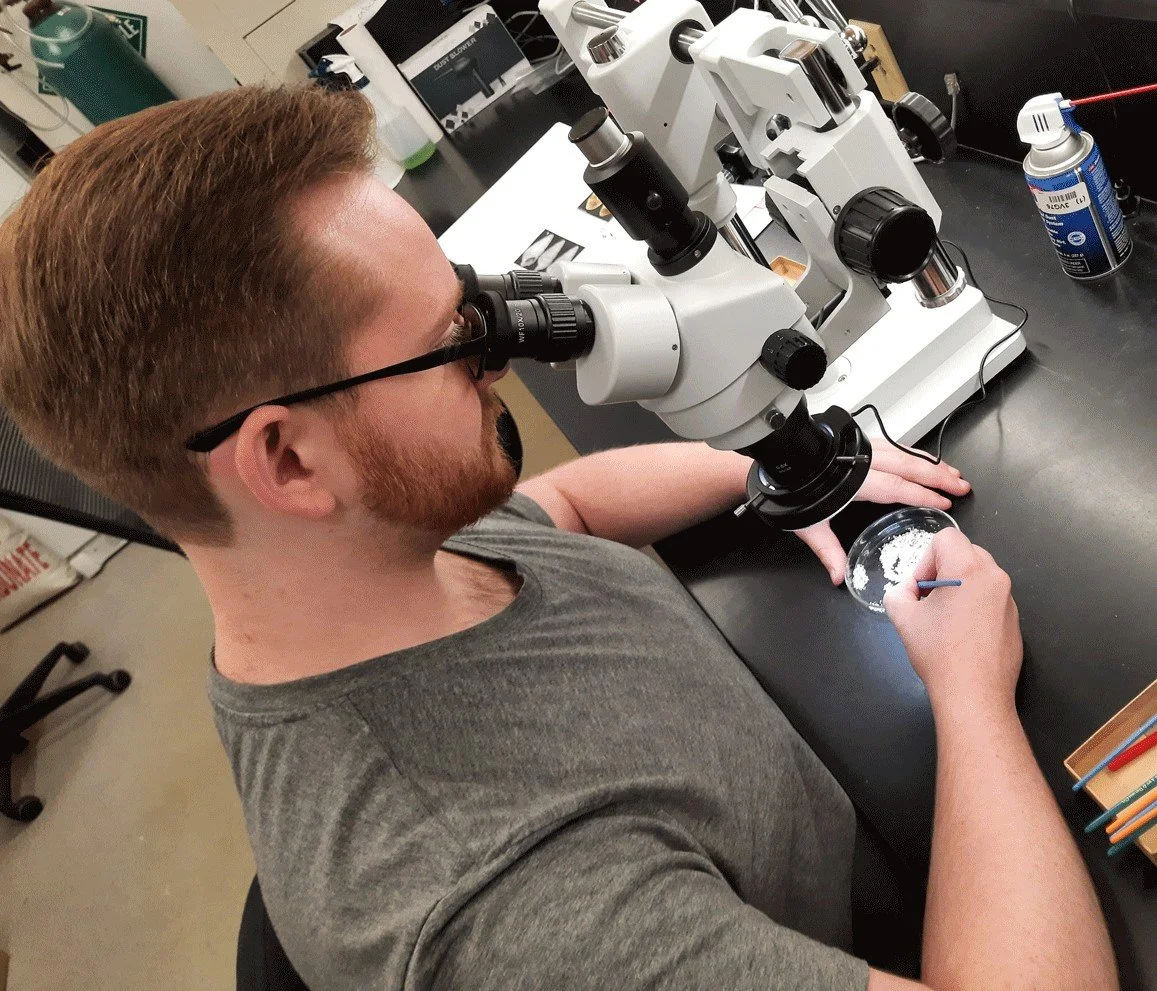
Matthew Pruden assessing fossil mollusk material under a microscope at PRI.
Ecological recovery in Long Island Sound
Excessive nitrogen pollution in Long Island Sound leads to low dissolved oxygen levels (hypoxia), impacting the Sound’s overall condition and the region’s economy. PRI researcher, Dr. Gregory Dietl, Cornell PhD student Matthew Pruden, and PRI research associate Dr. John Handley (University of Rochester) are conducting a New York Sea Grant-funded study comparing the abundances of living and dead mollusk shells (which retain a “memory” of past ecological conditions) to assess how mollusk communities responded to pollution reductions resulting from regulatory actions to address poor water quality. They aim to inform resource management decisions on whether more nitrogen reduction is needed for these communities to thrive.
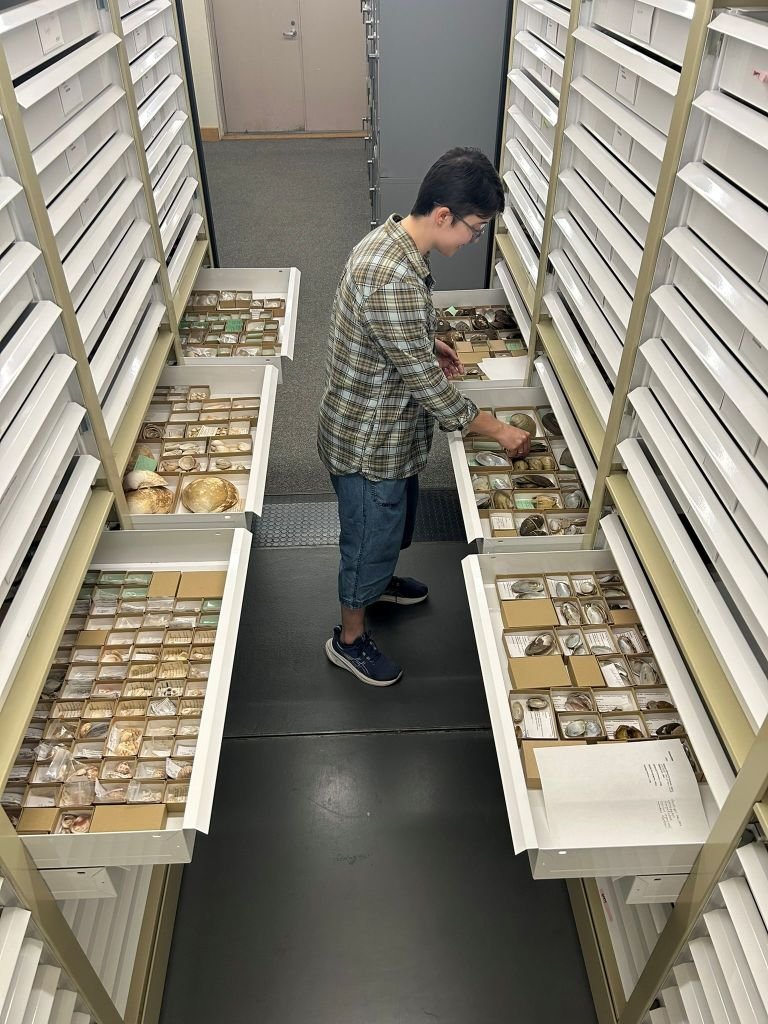
PRI Collections - More than a million mollusks!
The Paleontological Research Institution (PRI), the parent organization of this Museum, cares for one of the largest fossil invertebrate collections in the United States, with an estimated seven million specimens. A major strength of the collection is its extensive holdings of mollusks from the Cenozoic Era (66 million years ago until today), particularly from the southeastern United States, the Caribbean, and South America. PRI also houses a major collection of more than 400,000 modern (“Recent”) non-fossil mollusks, which is equally valuable for education and scientific research.
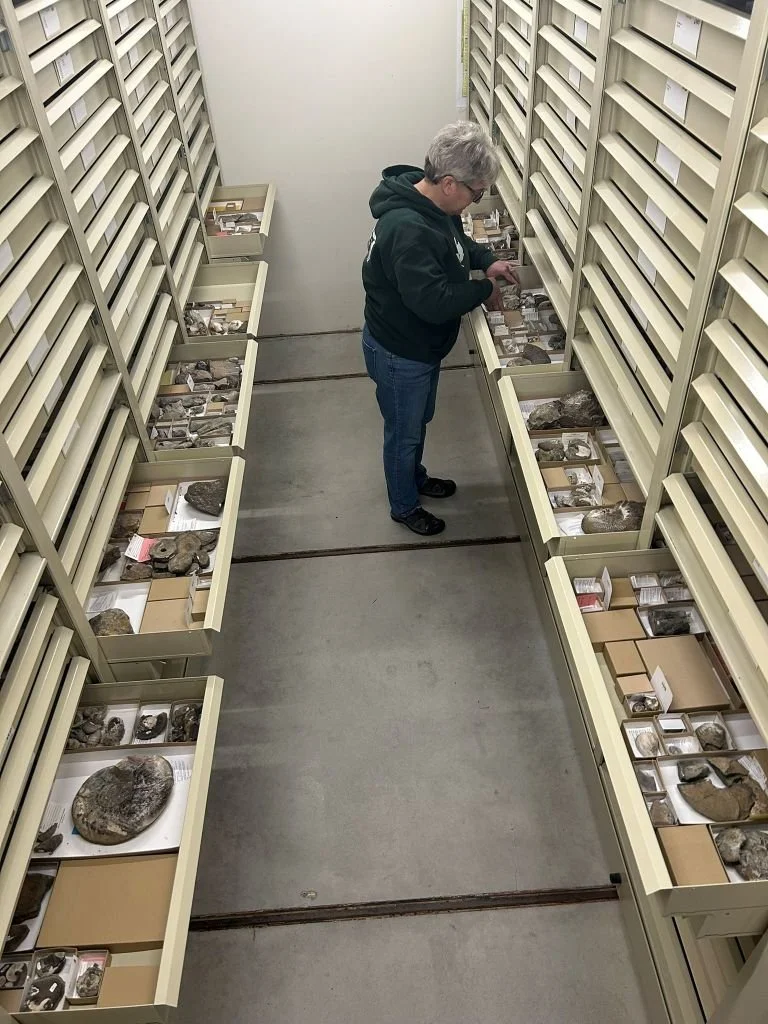
Cornell’s Shell Collection comes to PRI!
In 2018, PRI significantly expanded its modern mollusk collection with the acquisition of the Cornell University’s Malacology Collection of over 100,000 specimens. This collection includes two important 19th-century shell collections: the Wesley Newcomb Collection and the Carlotta Maury Collection. The Newcomb Collection, purchased in 1868 by Cornell University founder Ezra Cornell, was at the time considered one of the most complete mollusk collections in North America.
These historic collections are especially valuable because they preserve specimens from habitats that have since been altered or lost. For example, the Newcomb Collection includes many shells of Pacific island land snails, many of which are now extinct or endangered due to habitat destruction and introduced predators. Similarly, the Maury Collection contains freshwater mussels from New York that may no longer exist at their original collection sites due to pollution and habitat changes over the past century.
With major financial support from the Institute of Museum and Library Services, a federal agency, PRI has worked to improve the accessibility and long-term preservation of these important collections, which are now more available for research and education than they have been in many decades.