

Gastropods
ON THIS PAGE:
WHAT ARE GASTROPODS?
Gastropods, also known as snails and slugs, are the second largest class of animals after insects. There may be 90,000 living species today!
Gastropod Ecology
Gastropods make a living in just about every way you can imagine, in all sorts of ecosystems. They crawl, swim, and even surf on waves! Some gastropods are herbivores, others are parasites, and some are even meat-eating predators—including species that hunt fish!
Fossil Gastropods
The oldest known fossil gastropods come from rocks of the Early Cambrian Period (541-509 million years ago), were very small, and lived in the ocean. The oldest known snails that lived in freshwater and on land are from the Devonian Period (419-358 million years ago). Snails evolved to live on land at least 10 times!
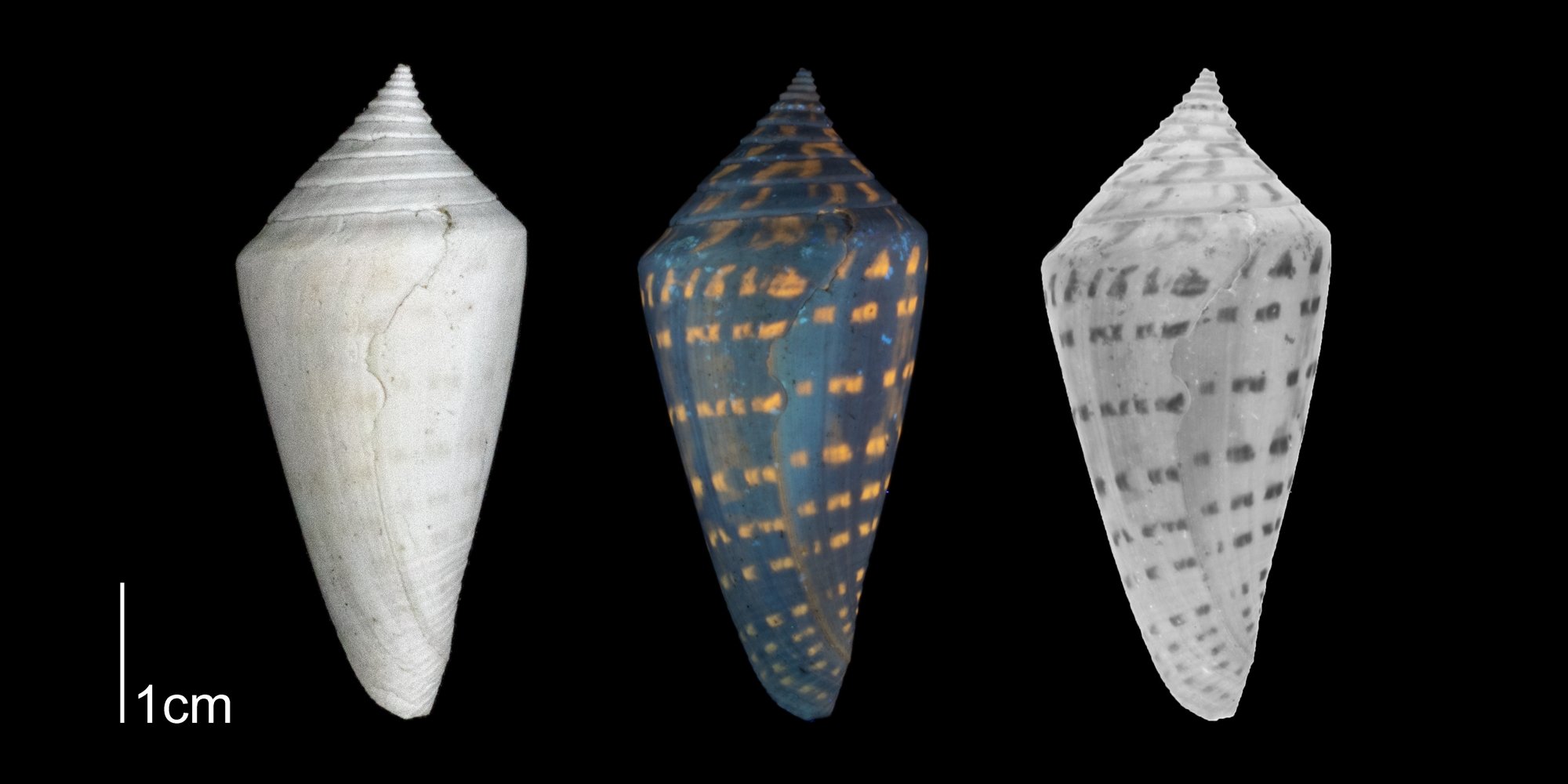
Conus anabathrum from the Plio-Pleistocene of Highlands County, Florida shown under regular and ultraviolet light, which causes its original coloration pattern to be revealed (PRI 70608). Image by Jonathan Hendricks, from the Neogene Atlas of Ancient Life (CC BY-NC-SA 4.0 license).
Ancient Color Patterns Revealed
The fossilization process usually causes the pigments that color shells to fade away over time, resulting in white fossil shells. In 1967, Dr. Axel Olsson (a former Board president of the Paleontological Research Institution) demonstrated that shining ultraviolet light (“blacklight”) over some fossil shells from Florida caused their original patterns to glow or “fluoresce”. This technique has now been used to reveal color patterns in fossil shells from all over the world. The fluorescing regions would have been darkly pigmented when the animal that made the shell was alive. Revealing these patterns helps paleontologists to tell species apart and to understand their evolutionary relationships. In a 2015 research paper, paleontologist Jonathan Hendricks used ultraviolet light to study the original color patterns of fossil cone snail specimens from the Dominican Republic stored in the collections here at PRI. This resulted in the discovery of 13 new species, including one with a unique polka dot color pattern that is not found on any living cone snail.
THE GASTROPOD SHELL
The Shell (and life without one!)
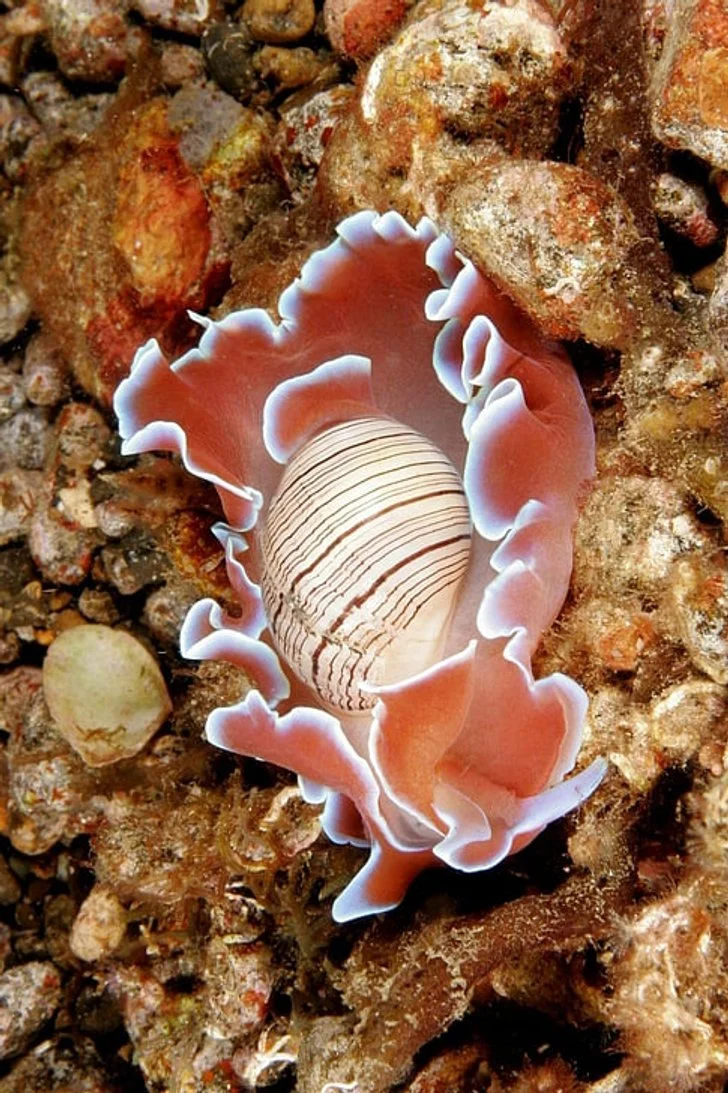
Gastropod shells come in all shapes and sizes. They are cone-like tubes, with the body fitting inside the opening, which is called the aperture. The mantle secretes calcium carbonate to grow the shell at this aperture. Some, like limpets, are simple hat shapes. Others are coiled in one plane, like a flat coil of rope or garden hose. Most are coiled in three dimensions, forming a helix. To protect against predators many snails have spines or other modifications to their shell, and can also pull their body inside the shell.
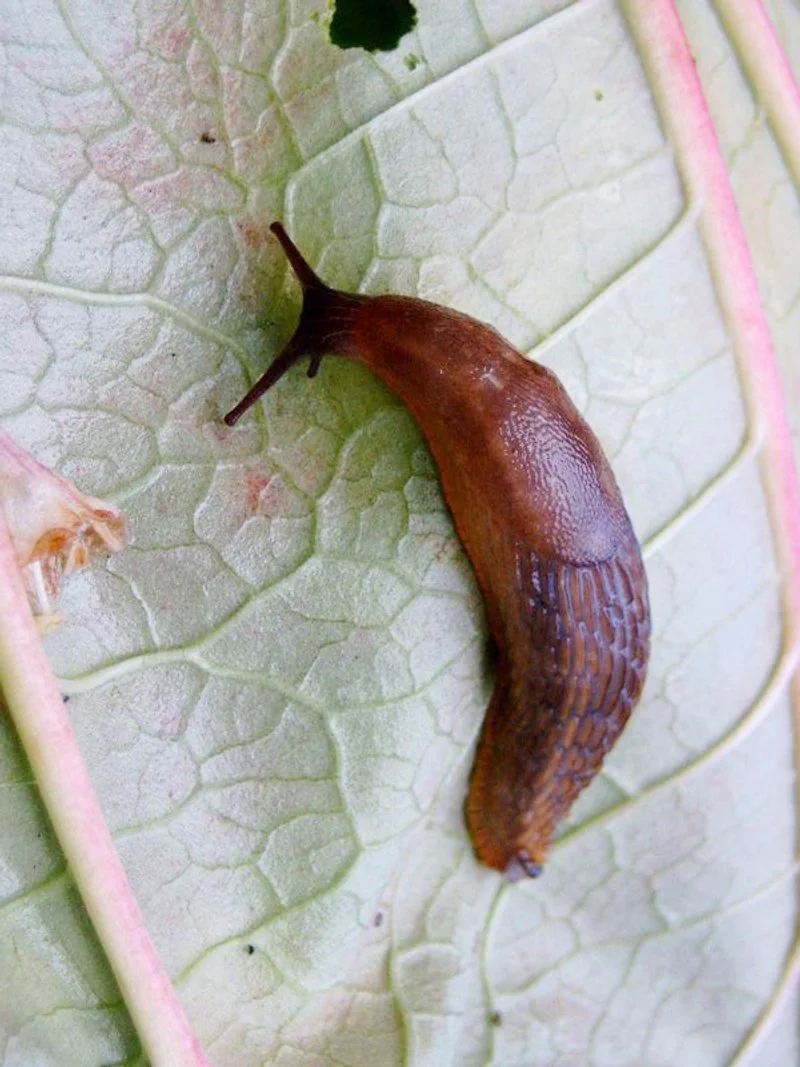
Gastropods without shells are usually called slugs, whether they live on land or in water. Some sea slugs are called nudibranchs, meaning “naked gills,” because their gills are exposed on the outside of their bodies. Many different groups of gastropods have independently lost or shrunk their shells and evolved into slugs or semi-slugs over time.
Inside the Shell
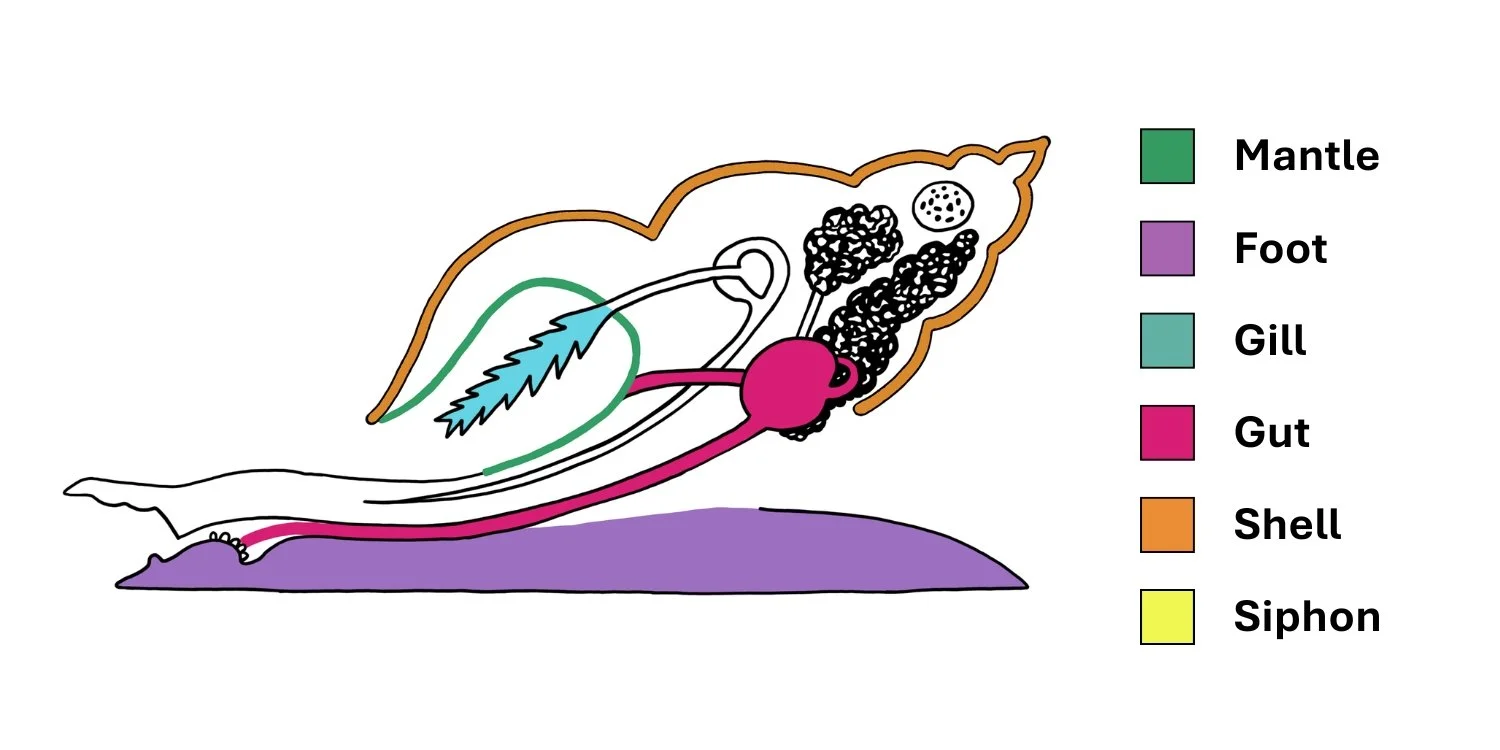
The name gastropoda comes from Greek words meaning “stomach-foot,” because snails seem to crawl on their bellies. In fact, they move using a large, fleshy foot. All gastropods have a head with a mouth, and most have sensory structure like tentacles, siphons, and eyes—sometimes on the tips of stalks. Snails that live on land have lost their gills, and breathe using the space under their mantle as a lung.
All gastropods go through a strange process called torsion. Early in life, the upper half of their body twists 180 degrees, so the digestive and nervous systems form a U-shape. Scientists aren’t sure why this happens, but it’s unique to gastropods!
The geometry of mollusk shells
Snail shells are cones, which start small (when the animal hatches from its egg) and grow at the opening, where the edge of the mantle secretes more shell material. As the cone gets bigger, it frequently bends to form a coil, either in two dimensions (like a coil of rope or hose), or in three (like a spring), which is called a helix. Snails and other mollusks including bivalves and cephalopods modify this basic plan in many ways, expanding the cone rapidly or slowly and adding spines or ridges and changing the shape of the opening, but much of the diversity of mollusk shell form is based on the very simple pattern of the coiled cone. Look for the many variations on this theme throughout this exhibit.
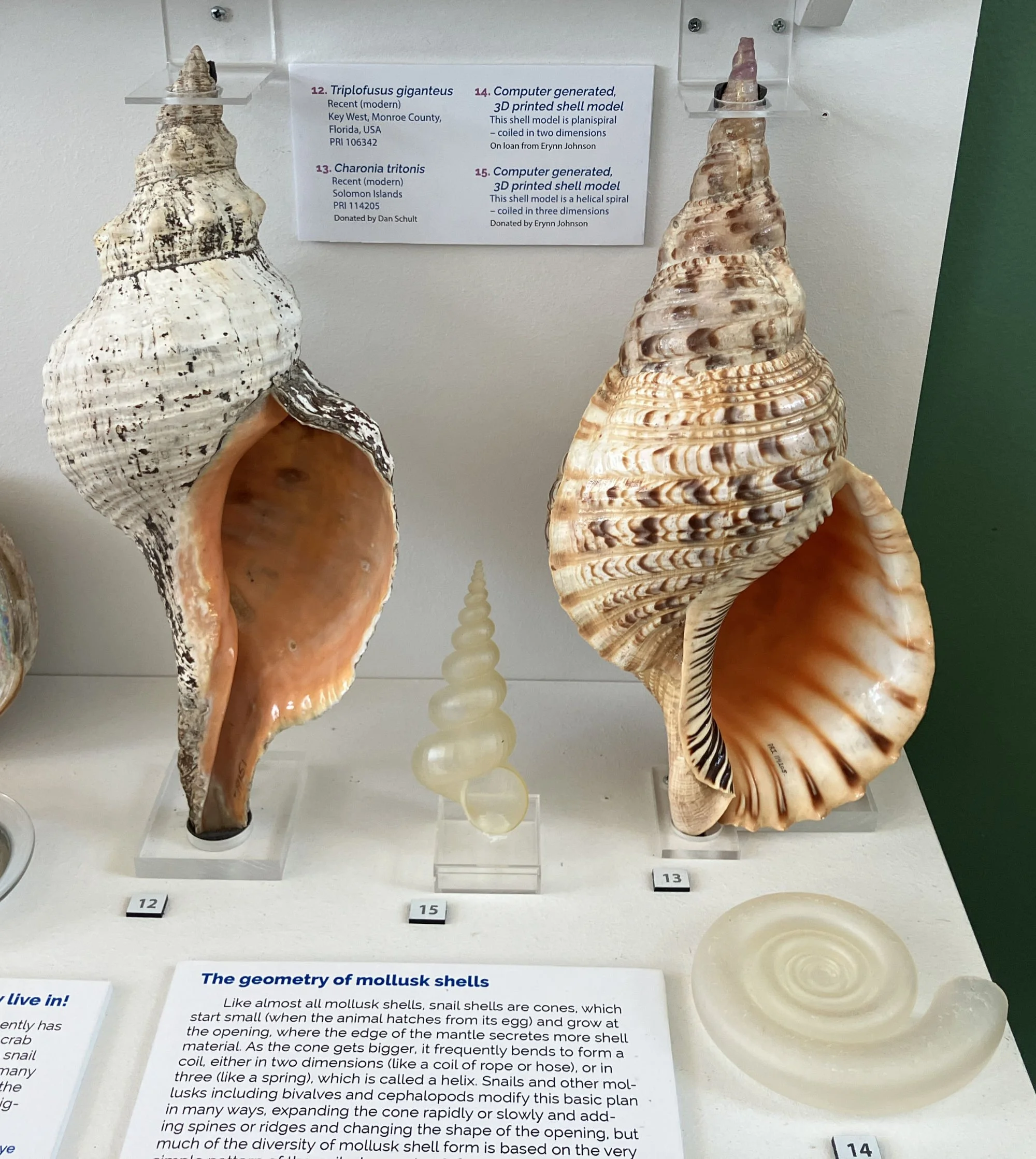
Specimens on display at the Museum of the Earth
A snail’s “trap door”: the operculum
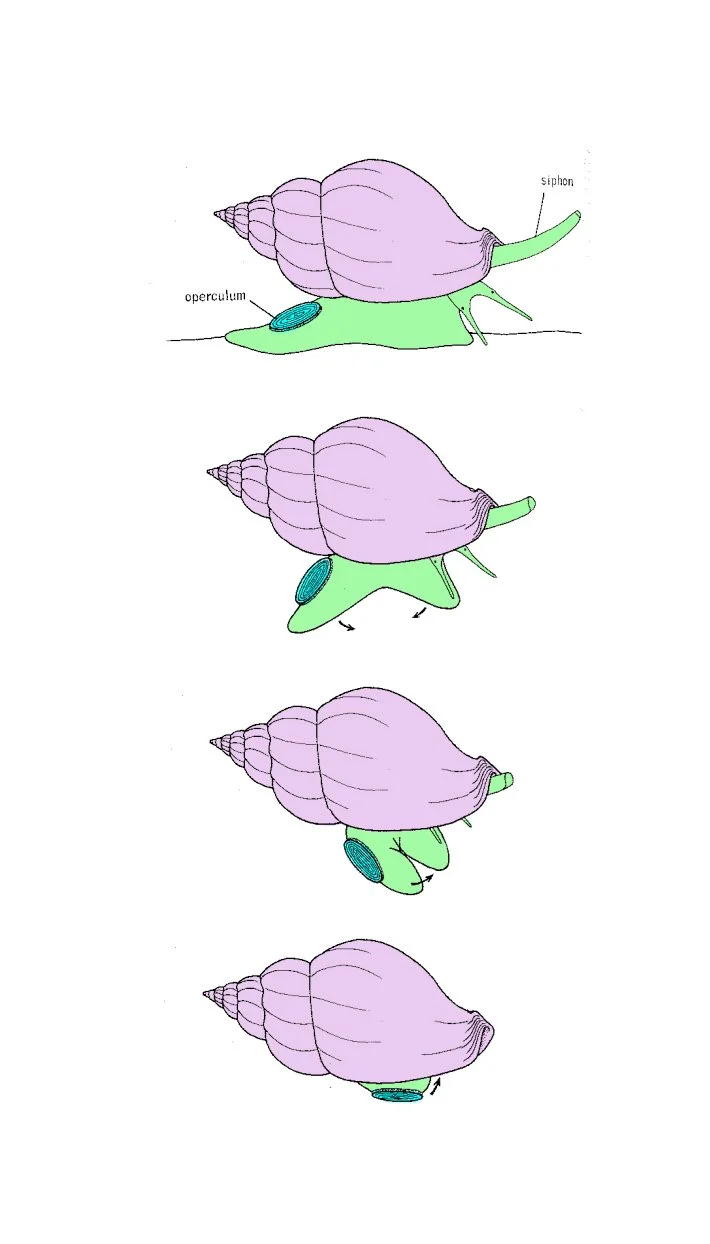
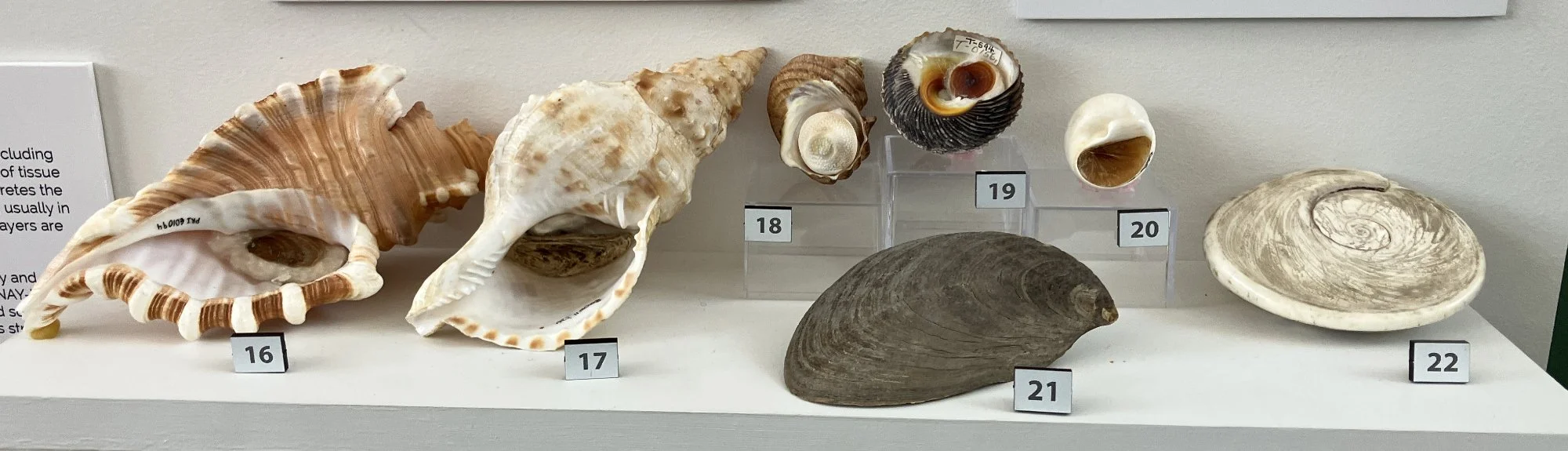
Most snails can withdraw their soft body into their shell when danger threatens. Some snails also have a structure called an operculum on the back of their foot that acts like a “trap door” to provide the animal with additional protection. Some opercula are made of calcium carbonate just like the snail’s shell. Others are thin and made of keratin (the same material as your hair and fingernails). Many snails have no operculum at all.
Specimens with opercula on display at the Museum of the Earth
How does a snail make its shell?
Not all mollusks make shells, but those that do – including all snails – all make them using the mantle – the sheet of tissue that covers the body of every mollusk. The mantle secretes the shell as multiple layers of calcium carbonate (CaCO₃), usually in the form of the mineral aragonite. The different shell layers are made of differently shaped crystals of the mineral.
One of these crystal arrangements forms a shiny and iridescent shell material called nacre (pronounced NAY-kur). It lines the inside of many snails, some bivalves, and some cephalopods such as chambered nautilus. Nacre is strong, and functions to prevent the spread of cracks in the shell. Nacre is also known as “mother of pearl” because pearls are made of it inside the shells of some bivalves (see the Mollusks in Art and History section of this exhibit).
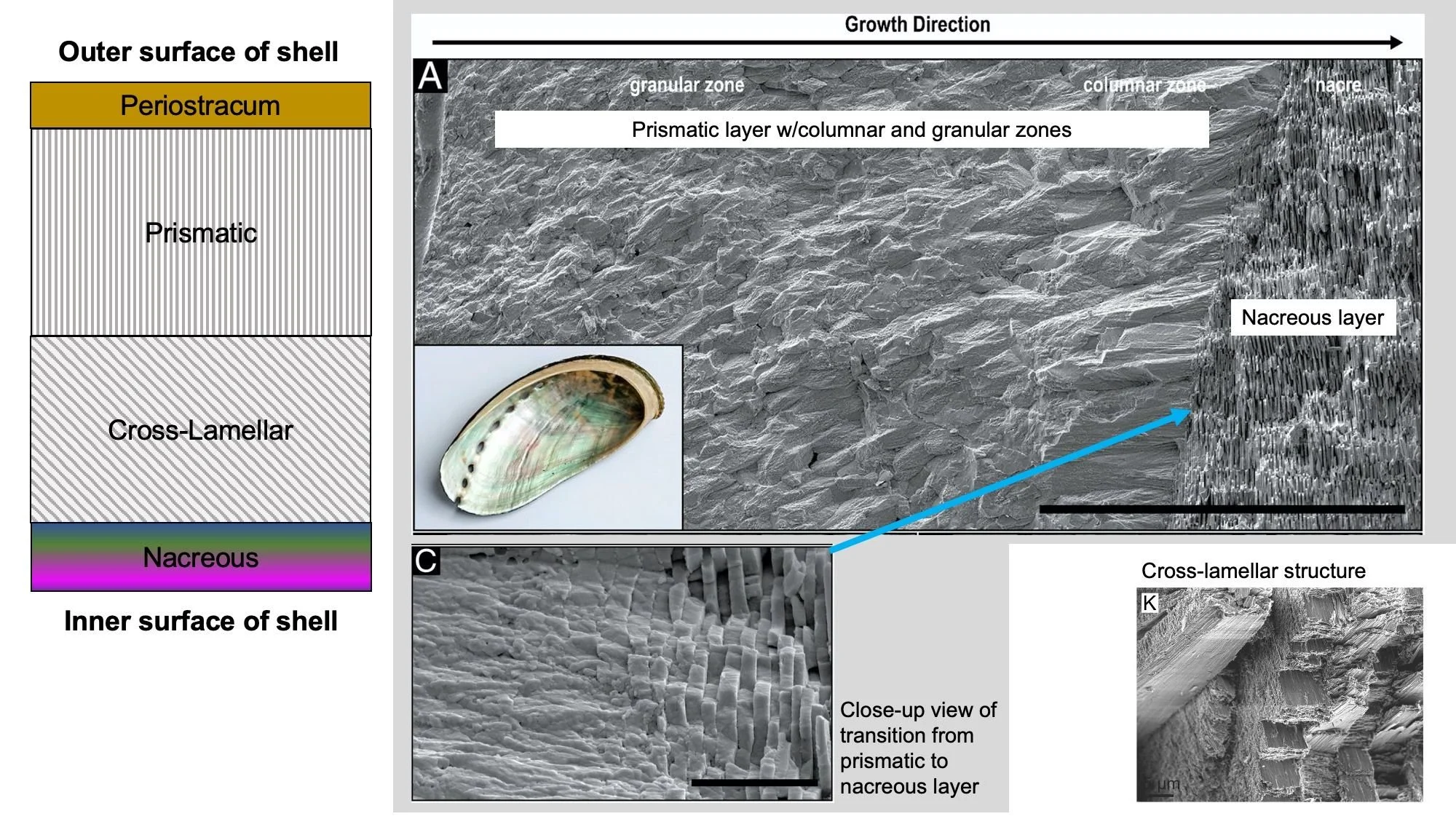
Gastropod shell microstructure. Left: Common ordering of microstructural elements in gastropod shells. Top right: Scanning electron microscope (SEM) image of a cross section of abalone shell (A), showing the transition from the prismatic layer to the nacreous layer, with close-up view of this transition (C). Images from fig. 5a, 5c in Schoeppler et al. (2019 in PNAS; Creative Commons Attribution 4.0 International license 4.0). Bottom right: Cross-lamellar structure in Semicassis granulata (K). Image from fig. 1k in Checa (2018 in Frontiers in Marine Science; Creative Commons Attribution 4.0 International license). Figure from Class Gastropoda, Digital Atlas of Ancient Life
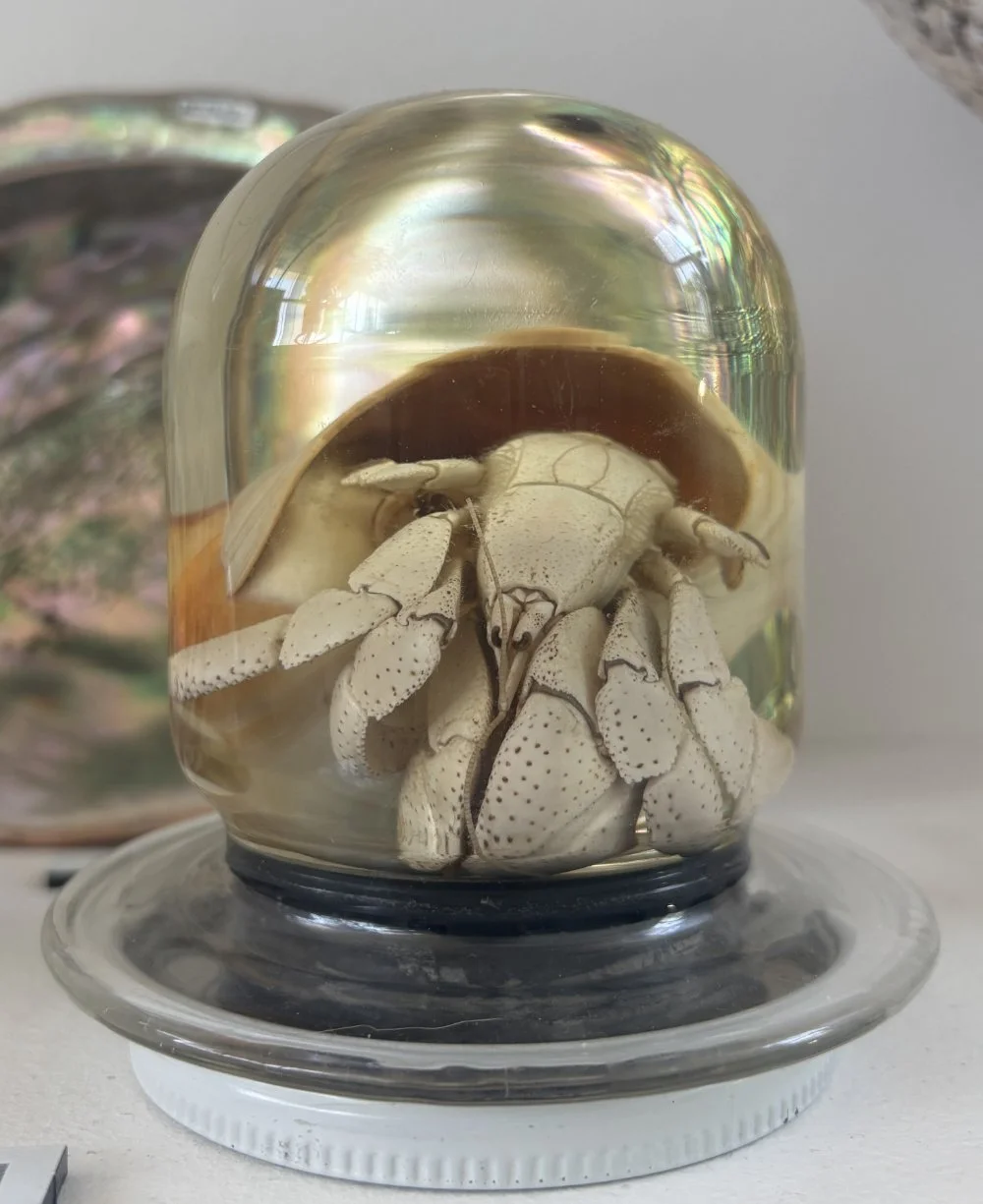
Hermit crab (unidentified species) inhabiting the shell of a moon snail, Neverita duplicata. These specimens were collected on the Gulf coast of Florida and are on loan from the Roosevelt Wild Life Collections, SUNY-ESF
Hermit crabs don’t make the shells they live in!
When you pick up a snail shell at the beach, it frequently has a hermit crab inside it, and this might make you think the crab made the shell. But it didn’t! It occupied the shell after the snail that made it died. Hermit crabs don’t have hard shells like many other crabs, and have evolved to borrow snail shells. When the crab gets too big for its borrowed home, it moves to a new bigger one!
Learn more about hermit crabs: https://en.wikipedia.org/wiki/Hermit_crab
Video: What’s Inside a Hermit Crab Shell? by Odd Animal Specimens (YouTube)
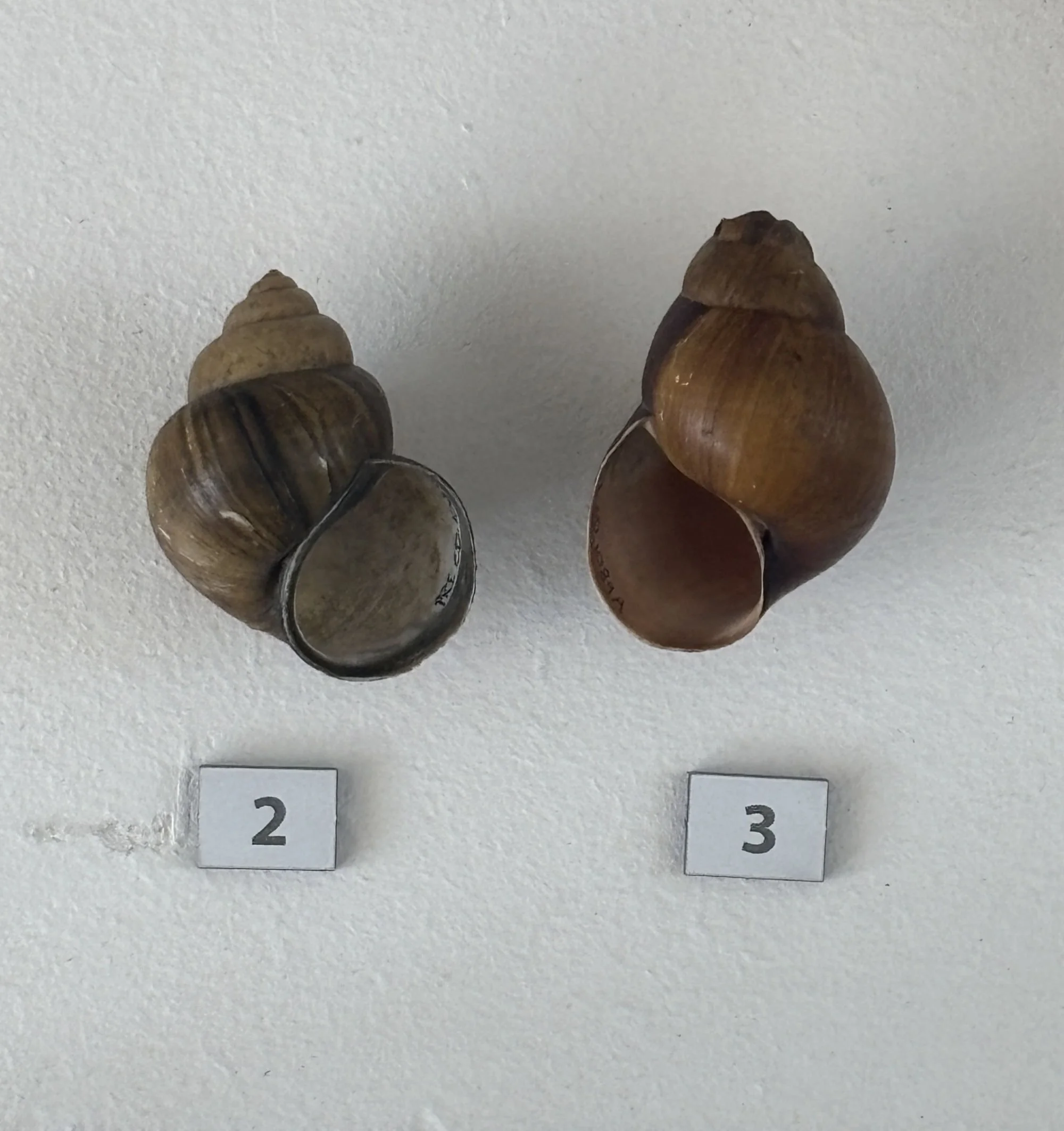
Specimens of the same species with different coiling directions
2. Campeloma decisum (dextral), Recent (modern), Cayuga Lake, New York, PRI 89203
3. Campeloma decisum (sinistral), Recent (modern), Cayuga Lake, New York, PRI ED1089
Are you a lefty or a righty?
Like most human beings, most snails are “right-handed”.
With the pointy end (called the “apex”) upward, most snail shells have the opening (the aperture) on the right. These shells are called “dextral”. A smaller number of shells have the opening on the left, and are called “sinistral”. (There are some species in which all individuals are sinistral, and some dextral species in which there are only occasional sinistral individuals.) Although some snails may have some protection from certain predators by being right- or left-handed, scientists are not sure why most snails (or most humans) are “righty”.
One of the web’s largest collections of sinistral shells can be found at: https://www.jaxshells.org/reverse.htm
Specimens of closely related species on display at the Museum of the Earth, two all dextral and two all sinistral
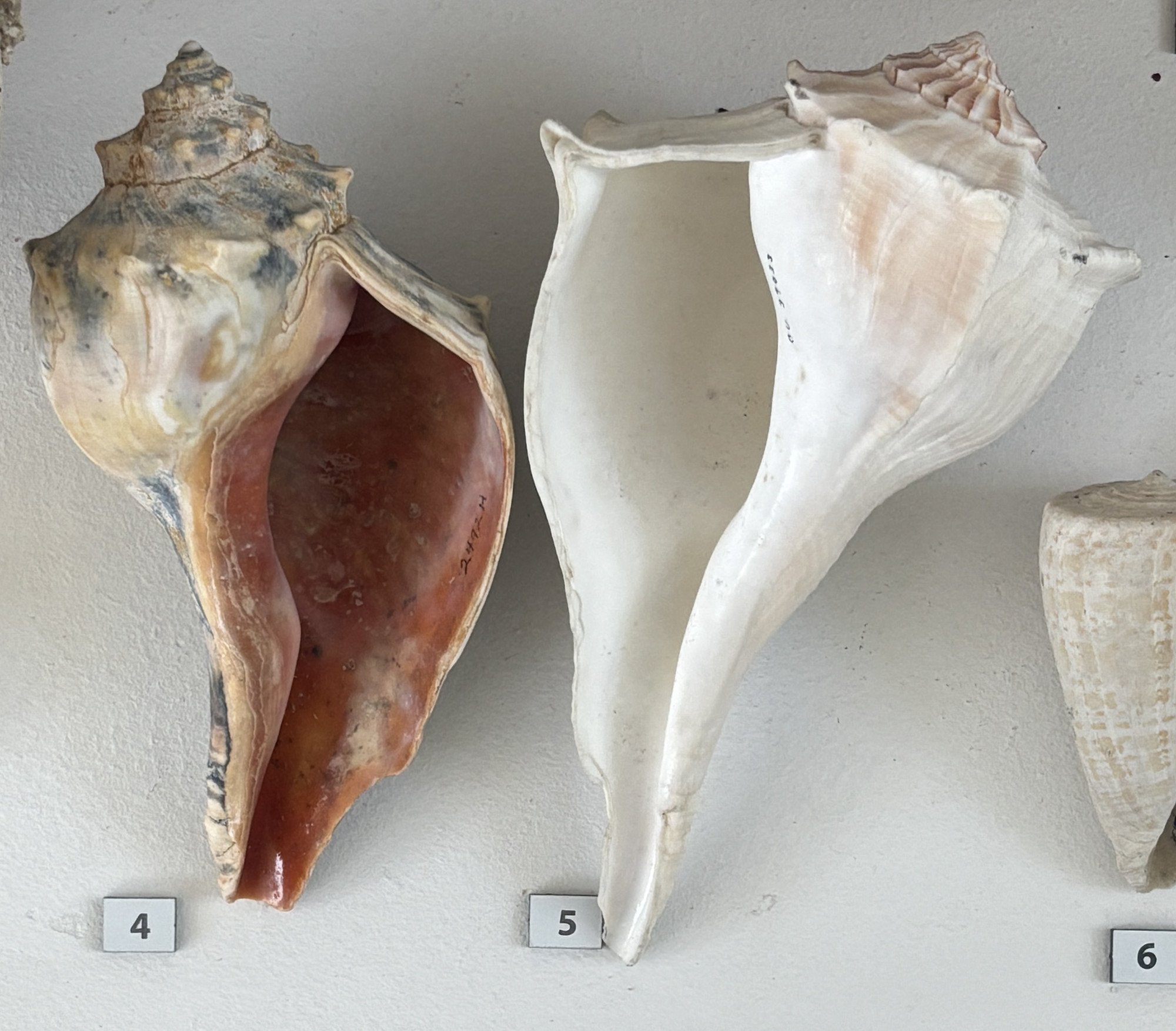
4. Busycon carica (dextral), Recent (modern), Marmora, New Jersey, PRI 2492H
5. Sinistrofulgar sinistrum (sinistral), Recent (modern), Sanibel Island, Florida, PRI 89221
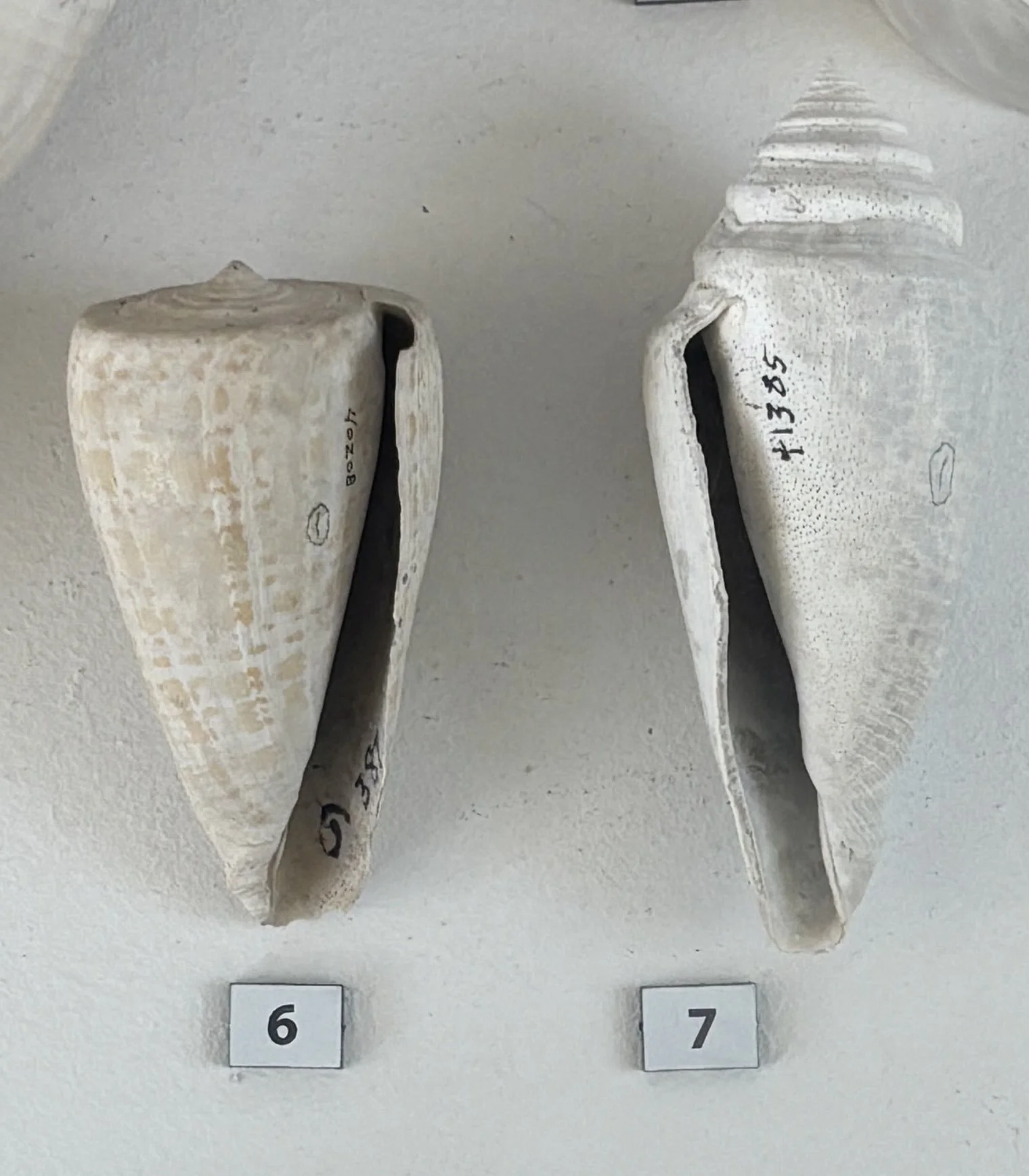
6. Conus spurius (dextral), Late Pliocene Epoch (lived about 3 million years ago), Sarasota County, Florida, PRI 40208
7. Conus adversarius (sinistral), Late Pliocene Epoch (lived about 3 million years ago), Palm Beach County, Florida, PRI 41385
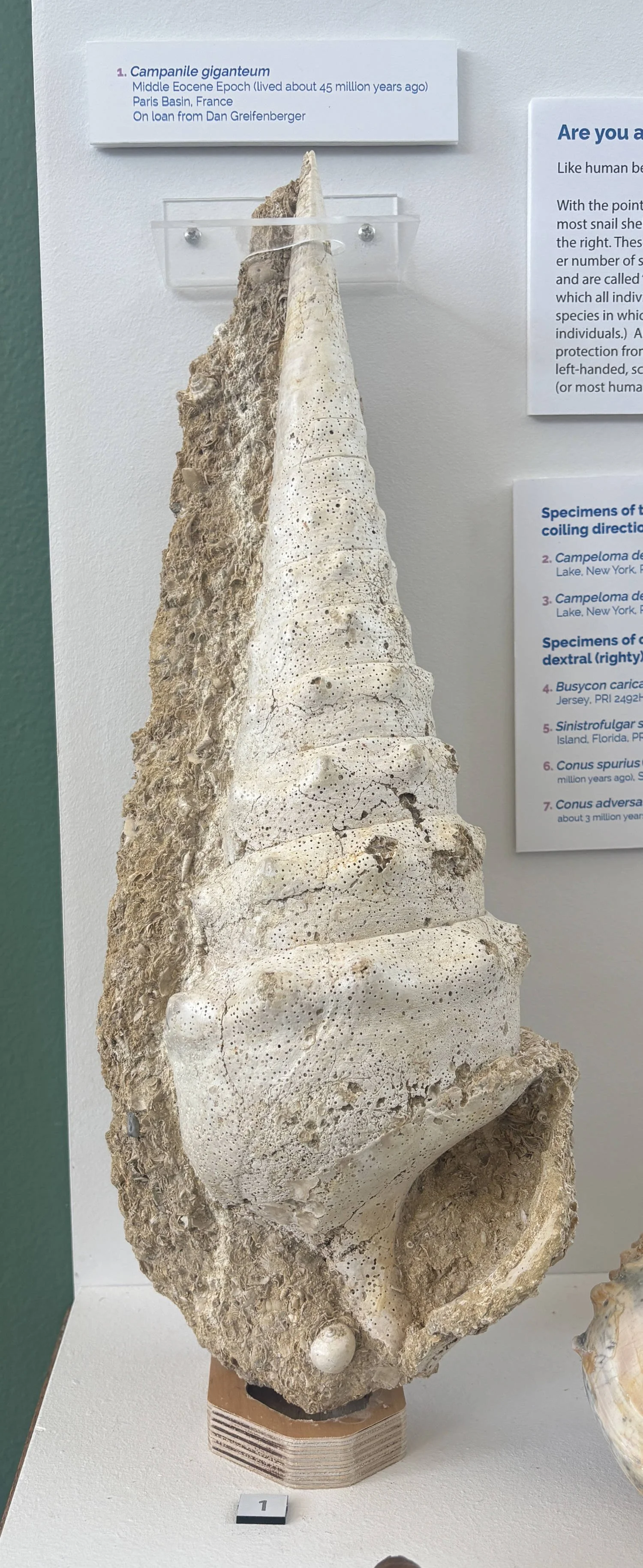
1. Campanile giganteum
Middle Eocene Epoch (lived about 45 million years ago)
Paris Basin, France
On loan from Dan Greifenberger
Specimens of this species are the largest known snails
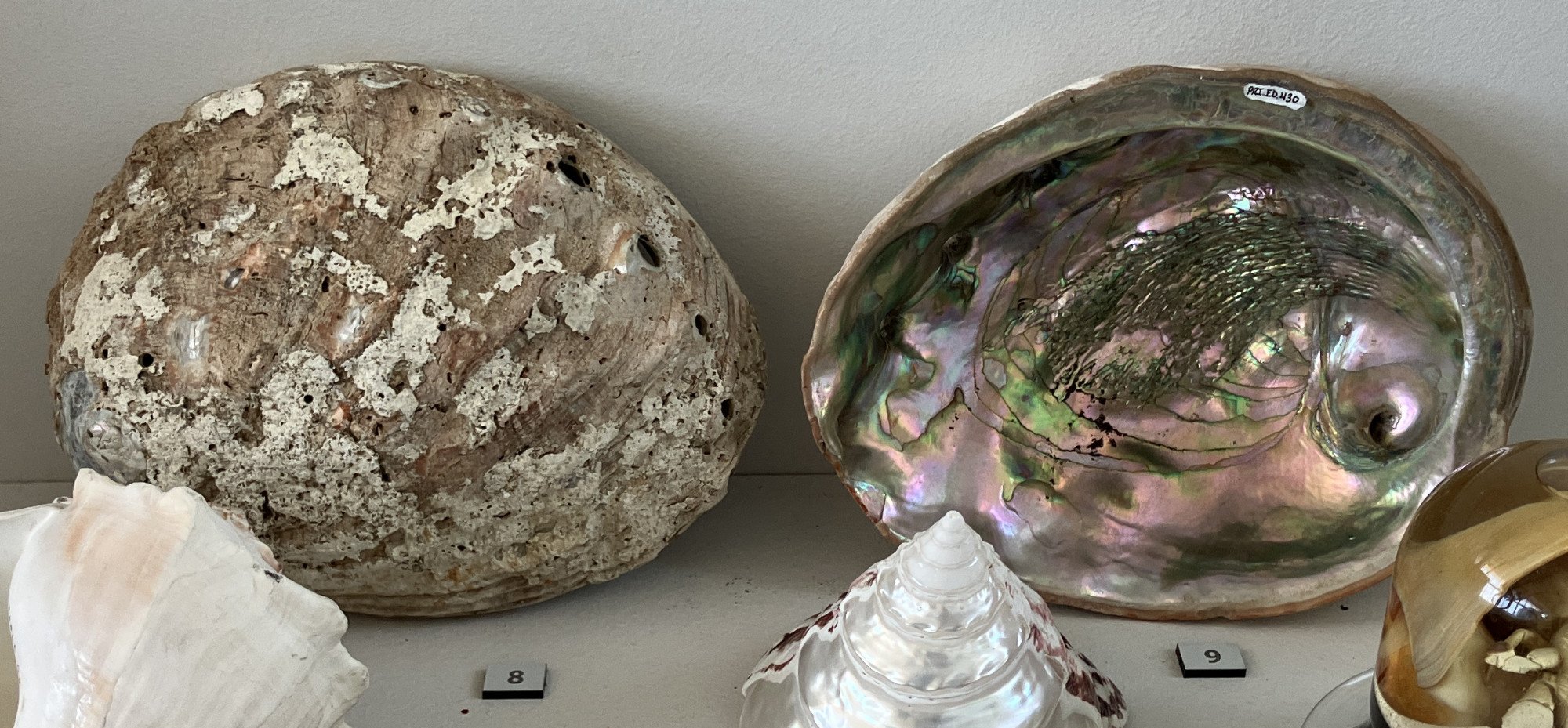
8,9. Abalones (Haliotis sp.)
Recent (modern)
California
PRI ED431, ED430
The outer shell layer of an abalone (specimen 8) has a dull surface, while the inner layer (specimen 9) is nacreous. The holes in these shells allow seawater to be pumped out of the animal’s mantle cavity after oxygen has been removed from it. Other snails have other features like slits or siphonal canals that allow them to perform the same essential functions.
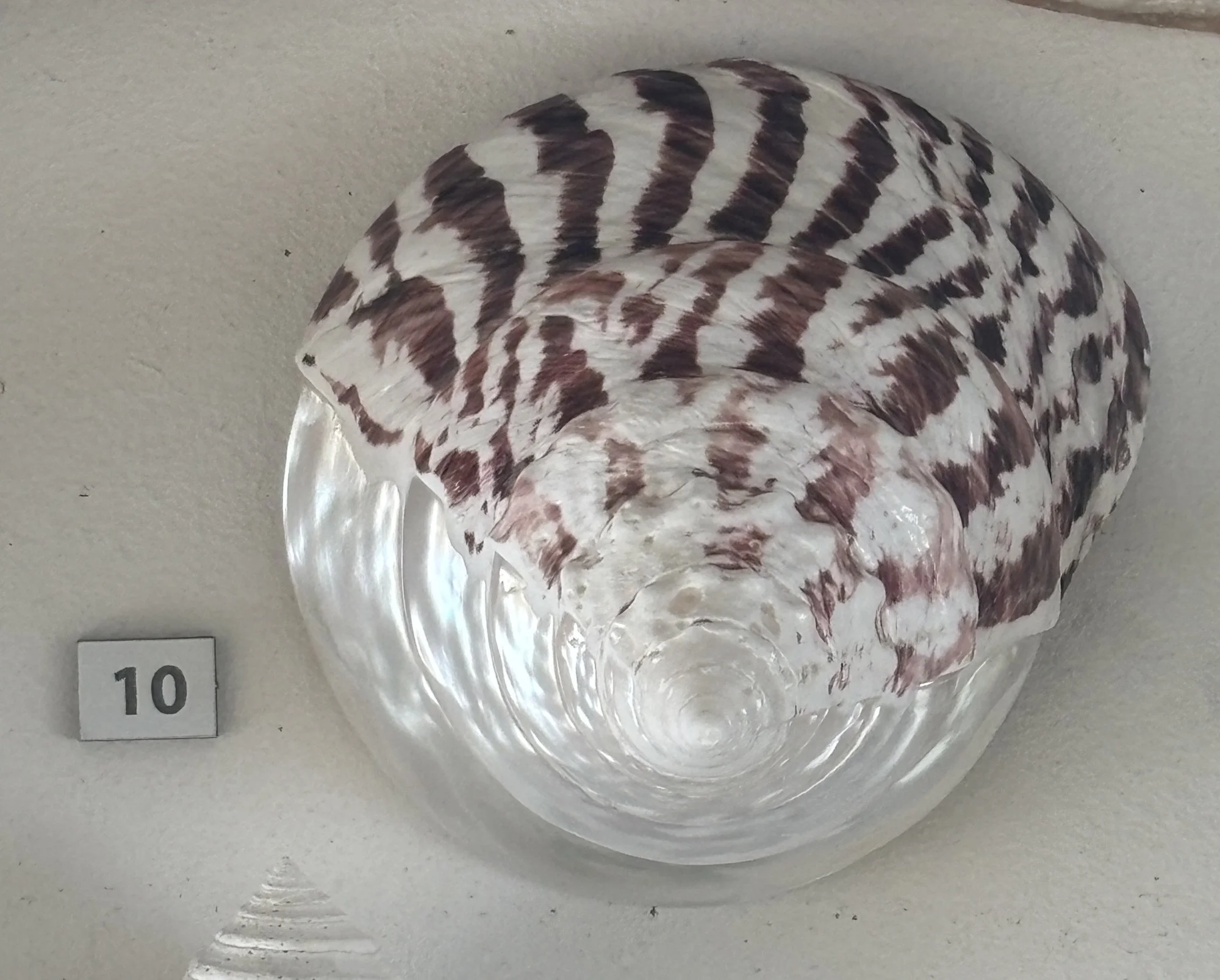
10. Trochus niloticus
Recent (modern)
Indo-Pacific Ocean
PRI ED1092
On one half of this shell, the outer shell layer has been polished off, revealing the nacreous inner layer below.
LAND SNAILS ON ISLANDS
This section was authored by Rebecca Rundell, Associate Professor in the Department of Environmental Biology at the State University of New York College of Environmental Science and Forestry in Syracuse, NY.
In this section:
Land snails on islands: Evolution and conservation to the extreme
Snails hate salt! How did they get to an island in the middle of the ocean?
Bonus content: Island snails too tiny for the exhibit in the Museum of the Earth!
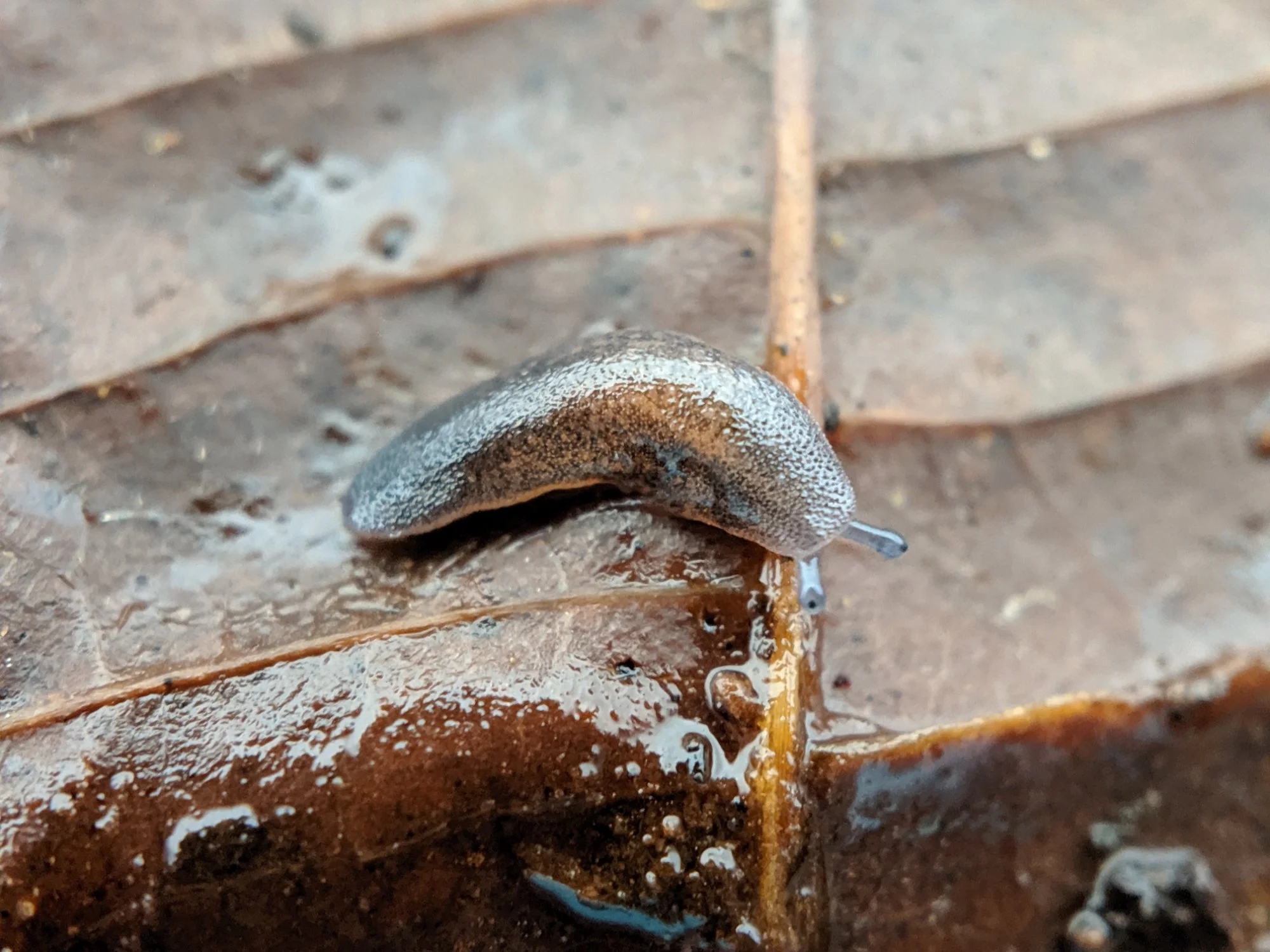
Non-native slug on leaf litter, Ngardmau, Republic of Palau. Photo: Rebecca Rundell
What is a land snail?
Land snails are animals. They are the land-dwelling members of the large mollusk group Gastropoda. Land snails have evolved more than once within gastropods, taking advantage of many habitats and foods available on land, and then diversifying into more than 35,000 species. Some land snails even live in the desert! Wherever they live they tend to find special cool and damp places or hiding spots that allow them to both resist drying out and find delicious food. Land snails can be vegetarians (herbivores), detritivores (eating dead leaves or leaf litter, and/or grazing on algae, fungus, lichen, and bacteria on leaf surfaces), or predators (eating snails, worms, and other invertebrate animals).
Living on land poses challenges for snails. These challenges include drying out, breathing, and mating. Land snails have many adaptations that address these challenges, that are different from sea snails. Note that when we say “land snails,” we are also referring to slugs. Slugs are just snails that have lost (or reduced) their shells over evolutionary time. The slug body form has evolved several times within different groups of snails. Because slugs do not have a protective outer shell, many slugs have evolved behaviors or especially protective mucus that helps them avoid predators and drying out.
See how snails and slugs use their mucus or slime in this video:
“Banana Slugs: Secret of the Slime” by Deep Look | PBS Digital Studios | KQED
Snail sex
The largest group of land snails are the pulmonates. Pulmonates are hermaphrodites, meaning that they have male and female reproductive parts in the same body. The Chittenango ovate amber snail is a hermaphrodite, and most of the land snails in the islands exhibit are hermaphrodites. Some land snail species that are hermaphrodites might occasionally self-fertilize, but usually they find a partner. They can follow each other’s slime trails to find a mate. The snails will touch and slime all over each other, smelling and tasting each other and preparing for mating. During this time they are recognizing each other as members of the same species and lining up their bodies so that the reproductive parts are close together. Some but not all land snails have “love darts” that they shoot into their partner to help stimulate mating. The common introduced pulmonate species in Central New York, the banded grove snail (Cepaea nemoralis) uses love darts in its mating.
When the snails (or slugs) mate they will either swap sperm between each other, or one snail plays the male role and the other plays the female role. Because the tiny openings for a snail’s reproductive parts are on the side of their head, it is important that the snails line up their bodies for mating to occur. They will get on top of each other or mate side-to-side. Matching up reproductive openings is more important for snail species on land than in the sea, because on land if snails spill their sperm it will dry out in the air and be wasted. Snails will orient their shells together to make sure the reproductive parts line up. Understandably, most land snail species have shells that either all coil to the right (dextral) or all coil to the left (sinistral). Mating tends to be more successful this way, so the offspring pass down their coiling direction genes to the next generation. If a right-coiling snail tries to mate with a left-coiling snail, it is more rare for mating to work. Occasionally it does work, and this helps explain why sometimes we find uncommon coiling directions in some land snail populations. The Pacific Partulidae in this exhibit have been subject to interesting research on speciation and shell-coiling direction.
See snails having sex in this video:
“Everything You Never Wanted to Know About Snail Sex” by Deep Look | PBS Digital Studios | KQED
Once the snails have mated, eventually they will find a moist place in soil, leaf litter (dead wet leaves), under a rock, or under a leaf, and lay a single egg at a time or a cluster of eggs. Some very special Pacific land snail groups in this exhibit, the Partulidae and Achatinellidae, actually give live birth to a single offspring! In the achatinelline tree snails we call the babies by the Hawaiian word keiki. These “live-bearing” snails are ovoviviparous, meaning the egg hatches inside the adult snail, and out pops a cute little baby that resembles the adult. This baby snail will keep adding to its shell as it grows larger, but the baby shell will be part of the snail shell throughout its life. Therefore you can look at an adult snail and see what it looked like as a baby by observing the tip/point or apex of the shell.
Land snails that are not pulmonates have separate sexes (male and female in different bodies). These types of land snails are more common in certain places, such as in the western Pacific archipelago of Palau included in this exhibit. Non-pulmonate land snails tend to have a “trap door” or operculum that can help close the shell tightly when the animal is resting. Pulmonates do not have an operculum, but many of them form a mucous plug or epiphragm at the aperture or open part of their shell when they are resting for long period of time. This helps them avoid drying out. Desert snails especially have these adaptations, and will also find damp and cool places under rocks to which they will seal their shells.
Land snails on islands: Evolution and conservation to the extreme
Land snails on isolated oceanic islands have frequently evolved into thousands of fabulously varied species. But islands are also tiny spaces with fragile environments. Habitat destruction and introduction of non-native snail predators by humans are ongoing threats to these peaceful little animals. Many island land snail species have become extinct over the past century, and many more are seriously endangered.
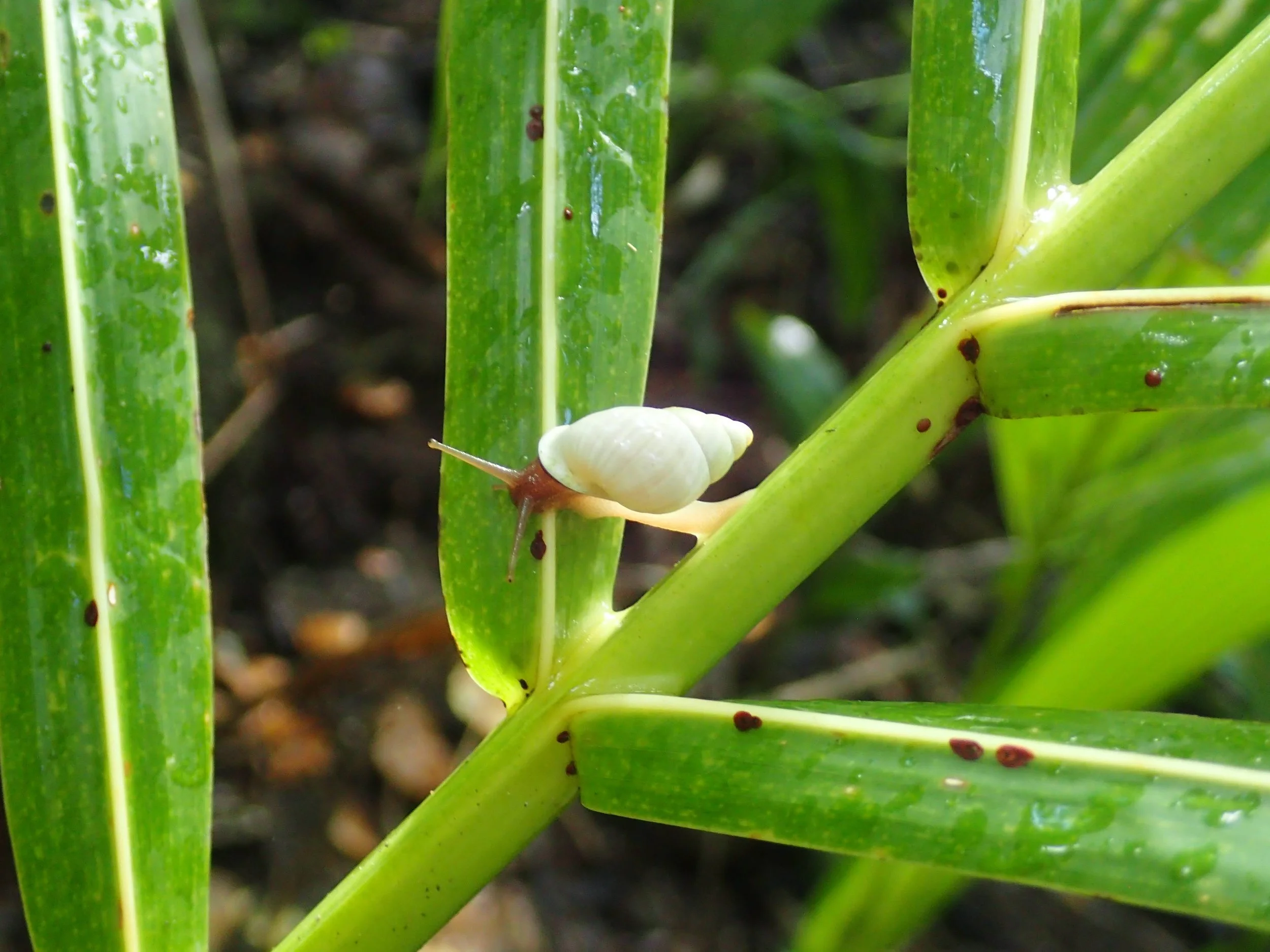
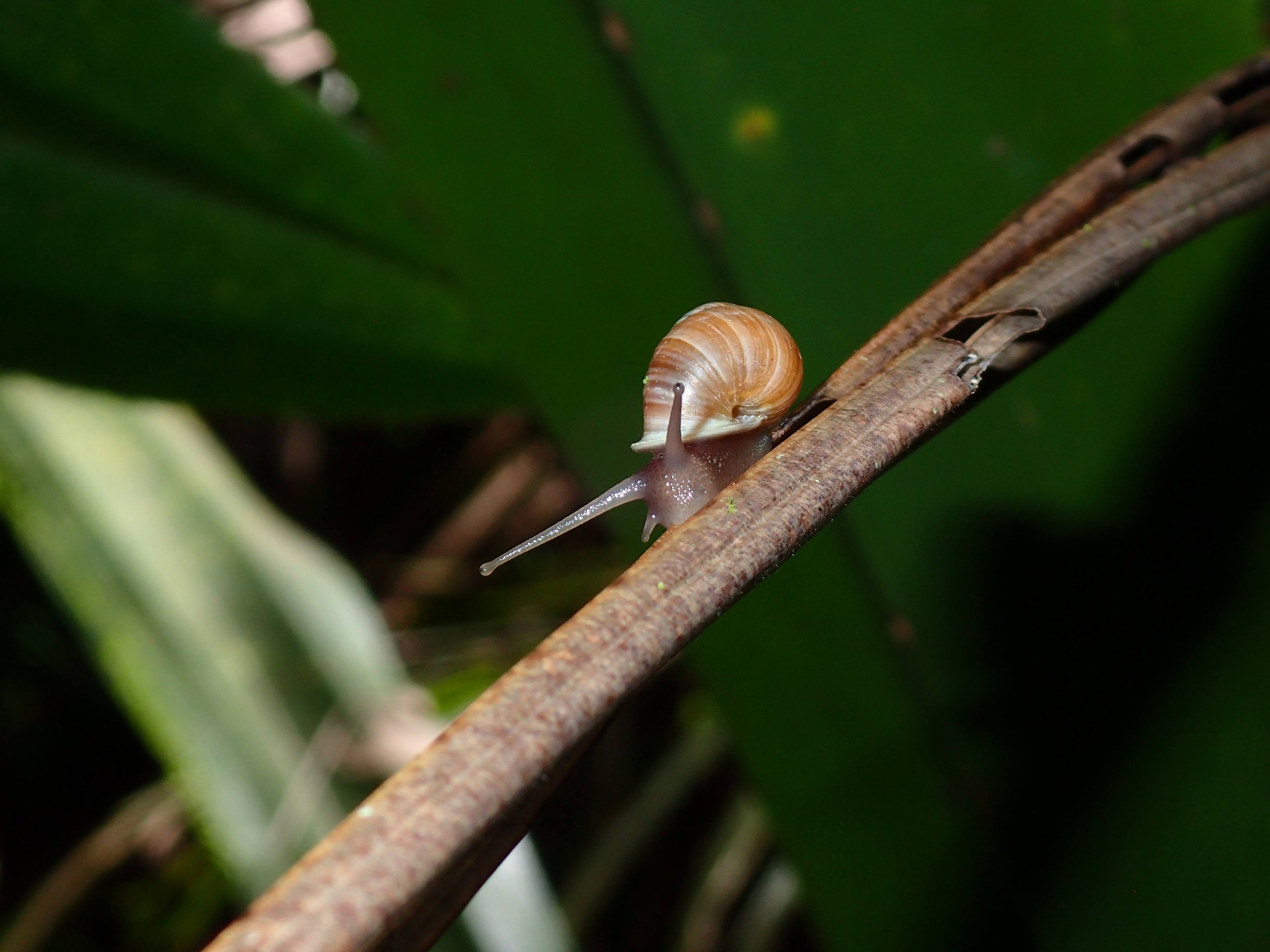
Partula lutaensis, (akalehaʻ in the local Chamorro language), is a rare tree snail known only from the island of Rota (U.S. Commonwealth of the Northern Mariana Islands, western Pacific). It is threatened by invasive predators and is the subject of conservation research. Photo: Ann Marie Gawel
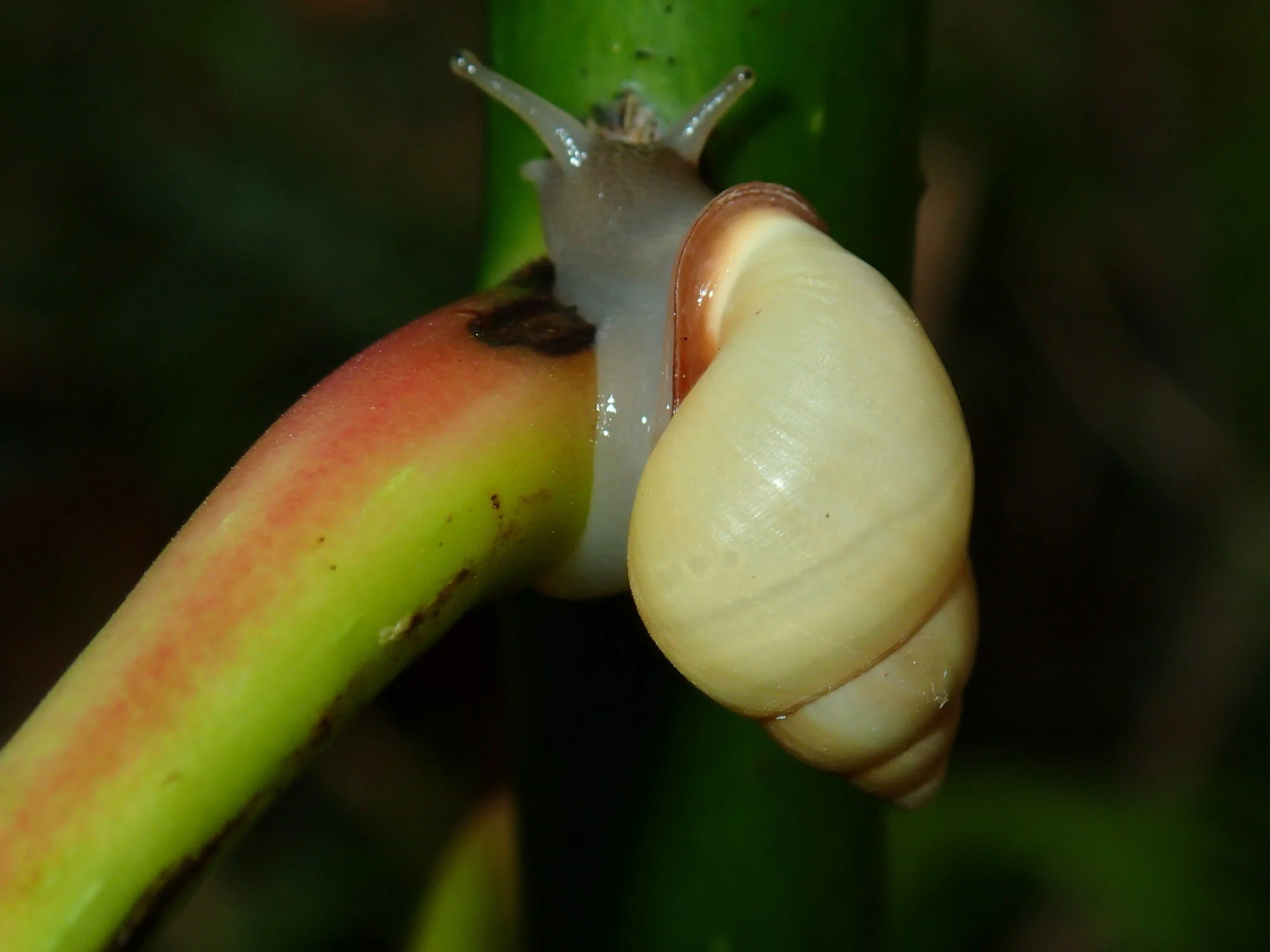
Partula lutaensis, (akalehaʻ in the local Chamorro language), is a rare tree snail known only from the island of Rota (U.S. Commonwealth of the Northern Mariana Islands, western Pacific). Photo: Ann Marie Gawel
Many island land snail species occur only on one island and nowhere else on Earth (biologists call this endemism). That means they evolved on islands from ancestor snails that dispersed there from far away. But how did these original ancestral land snails get there? Land snails hate salt (because it draws the water out of their skin by osmosis). So how do they cross an ocean? It’s a combination of predisposition and chance. Occasional storms can blow the tiniest snails by wind, and pick up natural “rafts” of vegetation that can carry land snails across the ocean. More regularly, snails can hitch accidental rides on driftwood or even coconuts. Some land snails are well-adapted for this type of transport since they can close up their shells and can survive drying out.
Once they make to an island, snails may find that it lacks predators or competitors, and they quickly evolve and diversify to take advantage of their new home. In the Pacific alone, this diversification has resulted in about 5000 species of land snails, many of which are unique to individual islands.
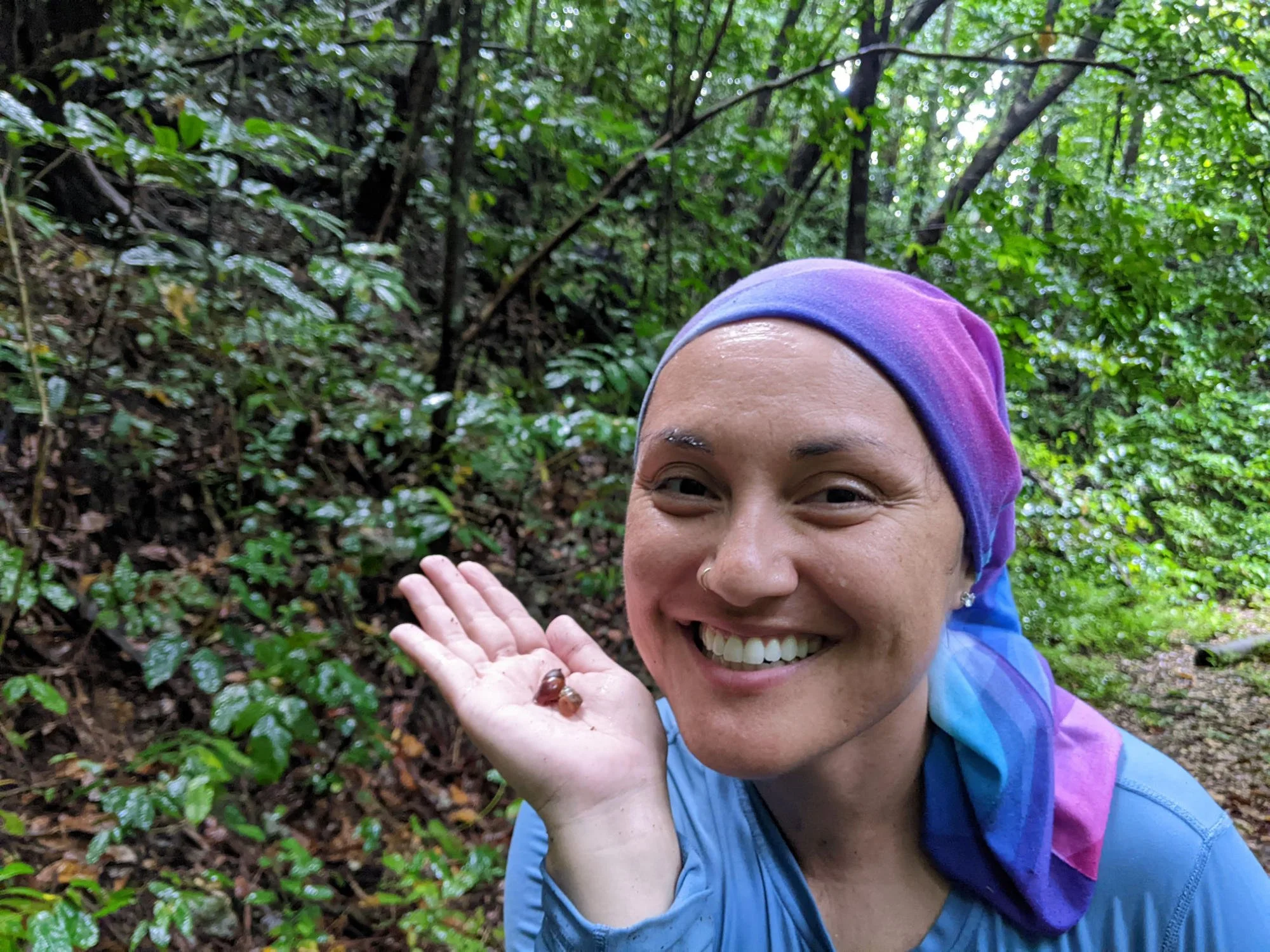
Micronesian American conservation scientist Dr. Ann Marie Gawel, holding rare rainforest partulids from the Republic of Palau in the western Pacific. Photo: Rebecca Rundell
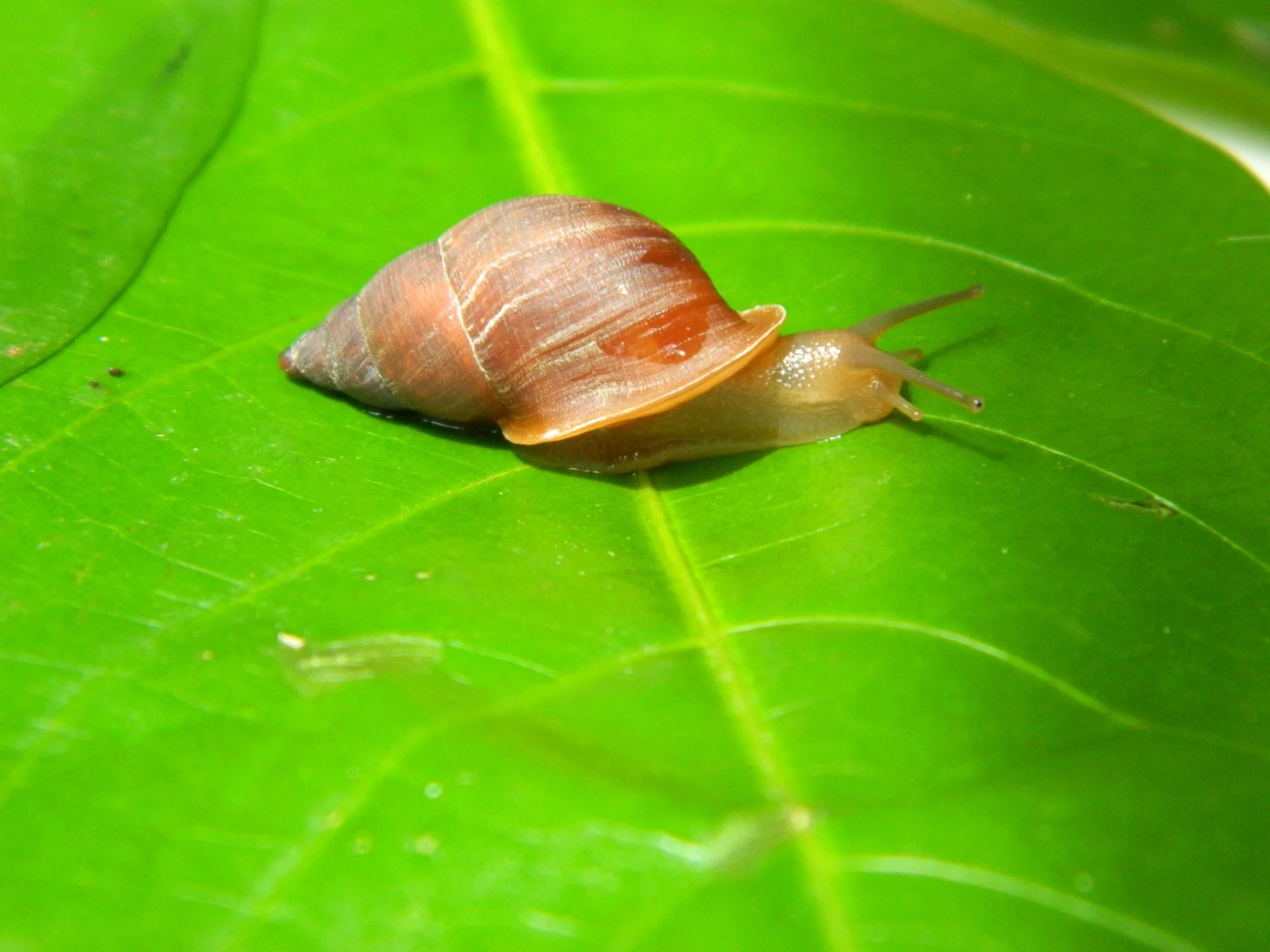
The Palau pandanus tree snail Palaopartula thetis lives in small habitat pockets in Palau and is threatened by rat predation and habitat modification. Photo: Rebecca Rundel
Conservation concerns in common
Islands have biological similarities, for example extraordinary diversification of unique species, fostered by their isolation and the rarity of establishment by dispersing propagules (seeds or tiny snails). Islands have other similarities that lead to repetition of conservation concerns among the different groups of land snails highlighted in this exhibit.
Islands are small, meaning that any flat land is precious for housing and agriculture. Thus the low elevations are developed first and native species tend to be extirpated from there, restricting their geographic ranges to smaller patches on steep ridges where humans do not live. The small and fragmented geographic ranges of native species can accelerate extinctions. And often at higher elevations, species are at the extreme limit of their temperature and rain tolerance, also stressing them. Invasive species also encroach easily in the low elevations where wild habitats are first changed by agriculture and subsequently by urbanization.
Islands are isolated and have a less “complete” flora and fauna than in continental areas. This means many species evolved without the same predation pressures present on continents. For the more isolated Pacific archipelagoes that means that introduction of snakes and rats is devastating, but fast-reproducing ecological competitors can also affect native species. The spread of invasive species has been accelerated by globalization. Maintaining biosecurity is challenging in small island nations with limited resources to inspect incoming cargo and identify potential invasive species hitching a ride.
Many islands often have a long military history. This includes but is not limited to conflict in World War II. Unexploded ordnance still litters Pacific Islands and poses risks to islanders, including curious children playing outdoors in their tropical paradise (see, for example, this article). New ordnance collects where military training is active. Often these areas overlap with scant remaining native habitats. The U.S. military now fortunately contributes to conservation efforts, however national security issues can take precedence. Some Pacific islands also contribute disproportionately to the U.S. military relative to island population size, including Pacific islander soldiers from Micronesia and American Samoa.
All of the above are strongly influenced by colonial histories. Different outside nations coming to islands to extract resources (lumber for ships, phosphate for fertilizer), set up cash crops (e.g. sugarcane), and begin various settlements have rapidly and dramatically changed (and sometimes displaced, diseased or exterminated) not only existing Indigenous cultures, people, and lifeways, but landscapes and native species.
The issues that island nations grapple with today, including saving species with little habitat remaining, trying to eradicate current invasive species and prevent new ones from entering, and figuring out how to exist with past and present military forces, are all issues with long histories on islands. In the face of these challenges islanders have been remarkably resilient. But repeated insults take their toll on wild species and island people alike.
Introduced predators: from biocontrol to out of control
Introduced species can have intense effects on isolated islands, since the native species on these islands have not evolved adaptations to these invaders. Multiple introduced species can sometimes amplify the negative effects of each other, and can lead to unpredictable and sometimes devastating long-term consequences for native species and ecosystems. Introduced species can be purposefully brought by humans (e.g. for food or for biocontrol), or can be accidentally introduced.
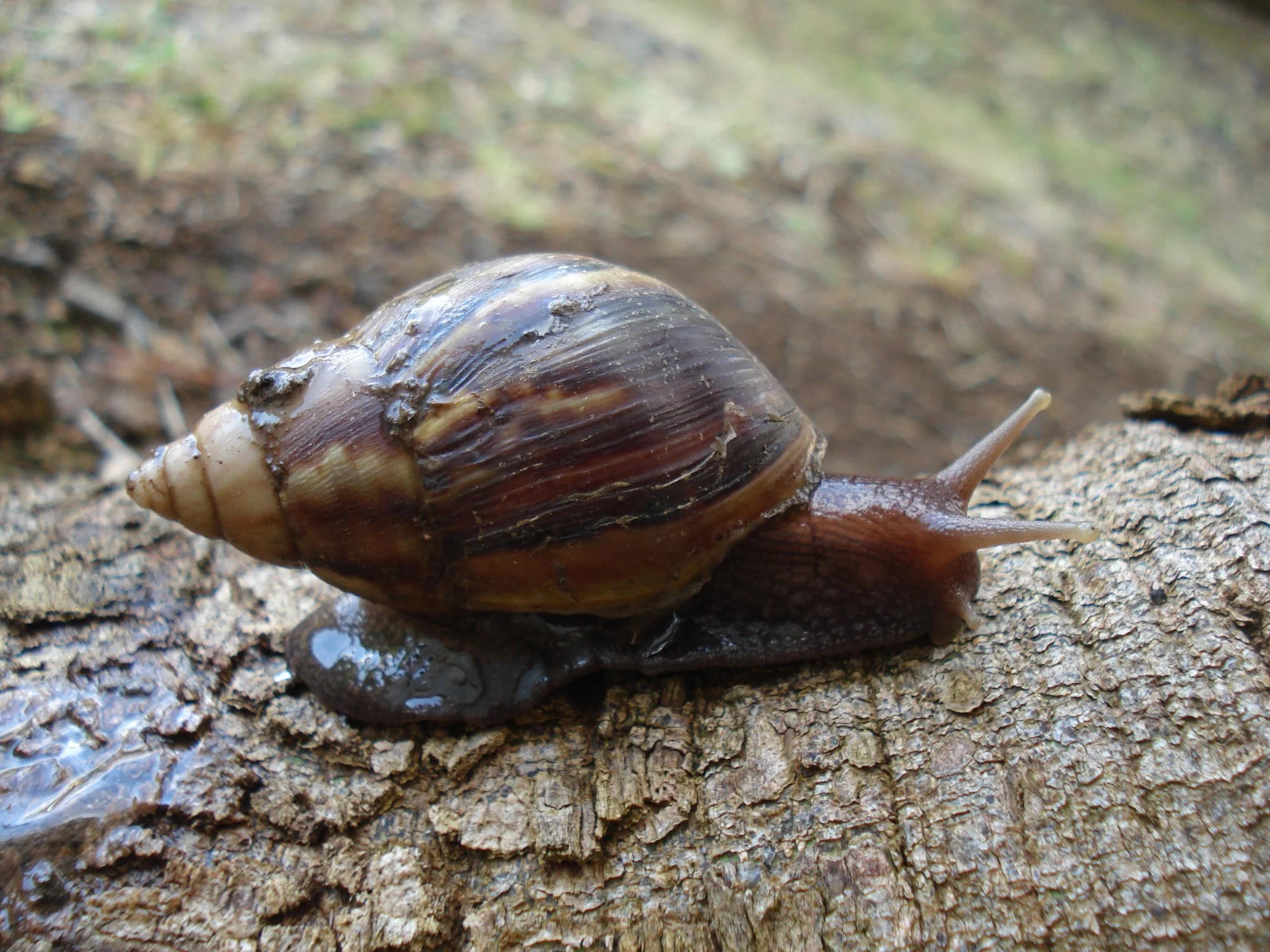
The introduced crop pest the giant African land snail Lissachatina fulica in Hawaii. Photo: Robert H. Cowie
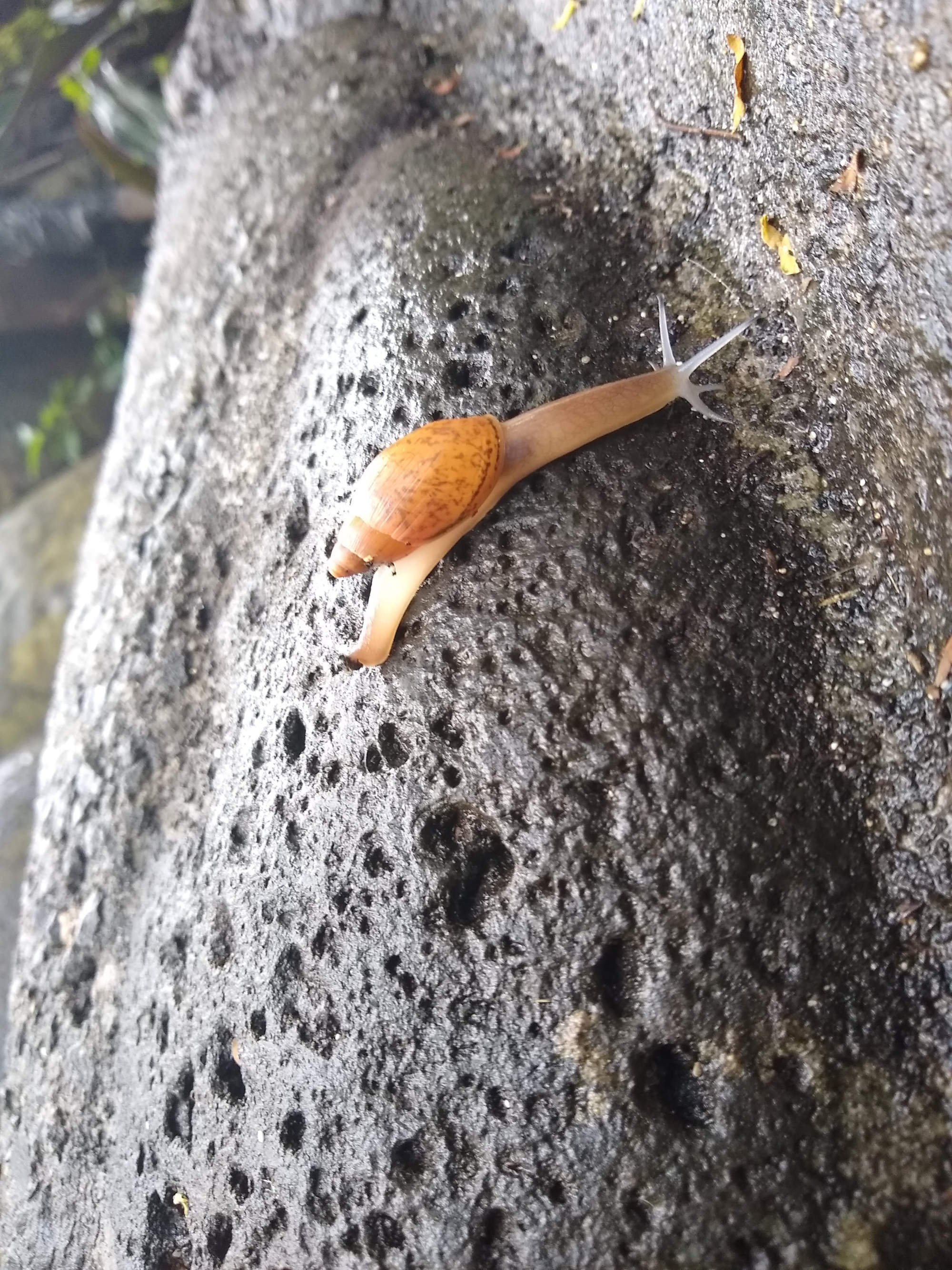
The invasive predator Euglandina rosea (“rosy wolfsnail”) eats native snails, not its intended target. Photo: Randi L. Rollins
In the first half of the twentieth century, the French Polynesian colonial government introduced Giant African land snails (Lissachatina fulica) to many Pacific islands as a potential human food source. These snails are vegetarians. They like human-inhabited areas, and do not interfere with native snails. But they quickly became agricultural pests on crop plants such as lettuce and papayas. Every Pacific island nation wanted to control them, and by the late 1950s the idea of biocontrol became a popular alternative to chemicals. Predatory snails, such as the rosy wolfsnail (Euglandina rosea) from Florida, were brought in to eat the Giant African snails, but the new predators themselves soon got out of control, eating native snails instead of the introduced pests.
Another unfortunate biocontrol introduction to Pacific Islands has been the predatory New Guinea flatworm Platydemus manokwari. This flatworm has been aggressively spreading among and within island archipelagos in the past few decades and is difficult if not impossible to control. It eats native land snails and is especially problematic for partulid snails due to their slow reproductive rates. Both the rosy wolfsnail Euglandina rosea and the New Guinea flatworm Platydemus manokwari are listed among the top 100 of the World’s Worst Invasive Species.
Despite abundant evidence that the rosy wolfsnail Euglandina rosea and the New Guinea flatworm Platydemus manokwari do not work to control the giant African land snail Lissachatina fulica, people persist in moving around these predators, purposely and accidentally (e.g. on soil and plant materials). You can help by educating yourself and others about invasive species and by not moving them around. This includes not purchasing or moving the vegetarian giant African land snail Lissachatina fulica. When the giant African land snail spreads, eradication is costly and will have unintended negative consequences for native snails. The giant African land snail is also a vector for rat lungworm disease in humans. Learn more about rat lungworm disease from the Hawaii Department of Health.
A live, invasive, predatory New Guinea flatworm Platydemus manokwari on the island of Rota (Luta in the local Chamorro language; U.S. Commonwealth of the Northern Mariana Islands, western Pacific). These flatworms are spreading among Pacific forests and prey on native land snails. Video credit: Ann Marie Gawel
Rats!
Rodents have also been introduced widely on Pacific islands by humans. Rodents such as rats have easily stowed away undetected on canoes, ships, and other vessels, from antiquity to present, and are repeatedly introduced to many islands. Rats can also swim from vessels that have run aground on shallow, treacherous and poorly-charted reefs near islands, and in some cases can swim between islands. The rodents described below can make their homes in seemingly “pristine” native forest, meaning that where the native land snails live, rats and mice will live.
The fact that certain rodents hop aboard our boats and are able to survive and raise their young there gives us a clue that an important relationship exists between humans, rats and mice. Humans bear responsibility for the transport and spread of non-native rodents to unique, spectacular, and vulnerable island ecosystems. They bear responsibility for the decline in populations and extinctions that rodents have inadvertently caused. Rats are just doing what rats do—but we humans set this problem in motion, and continue to perpetuate it by creating habitats and food sources that rats love, and by dispersing them widely in our boats.
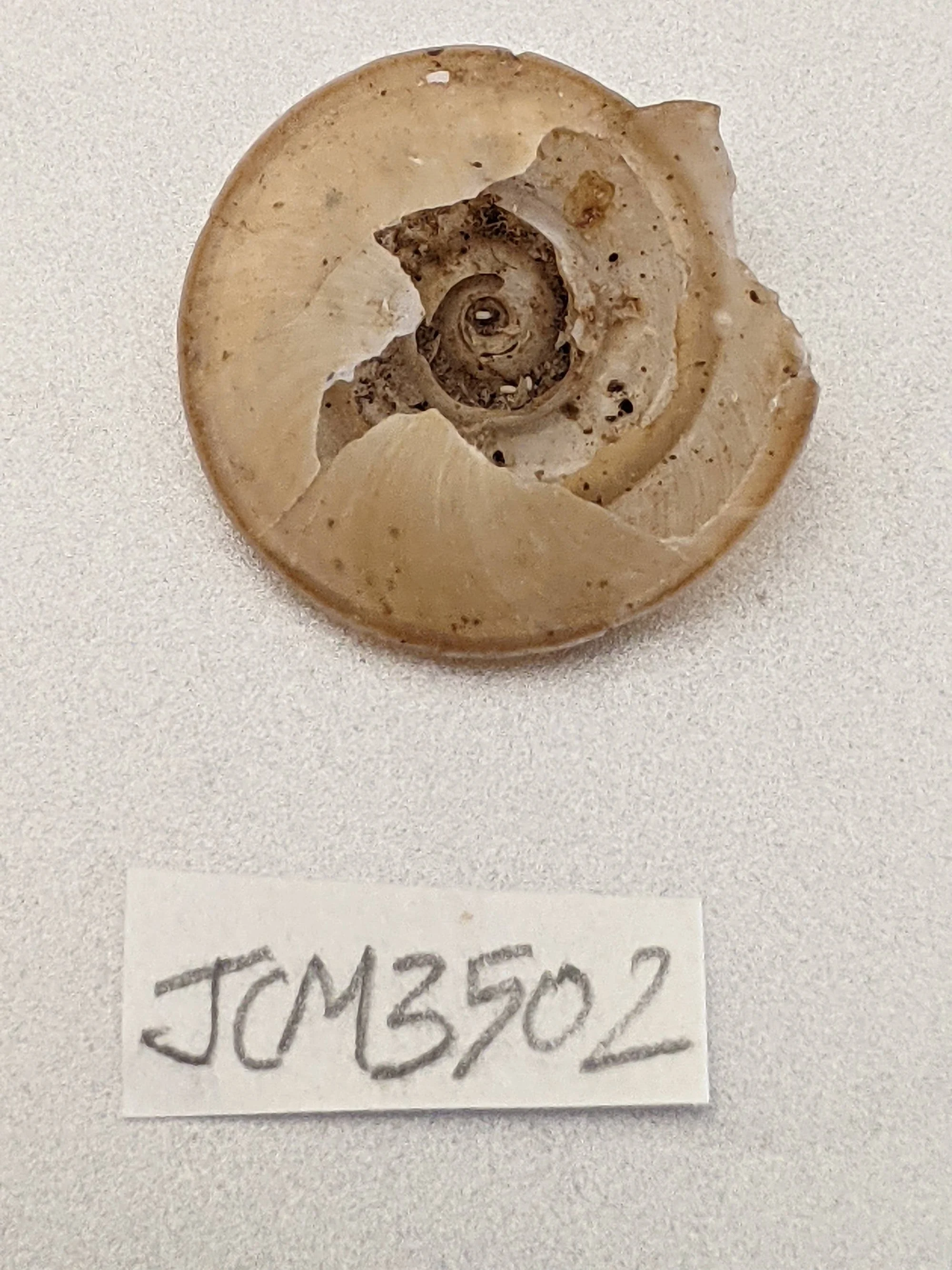
This native land snail from Palau was killed by a rat, as shown by the characteristic pattern of bite marks on this dead shell. Photo: Jesse Czekanski-Moir
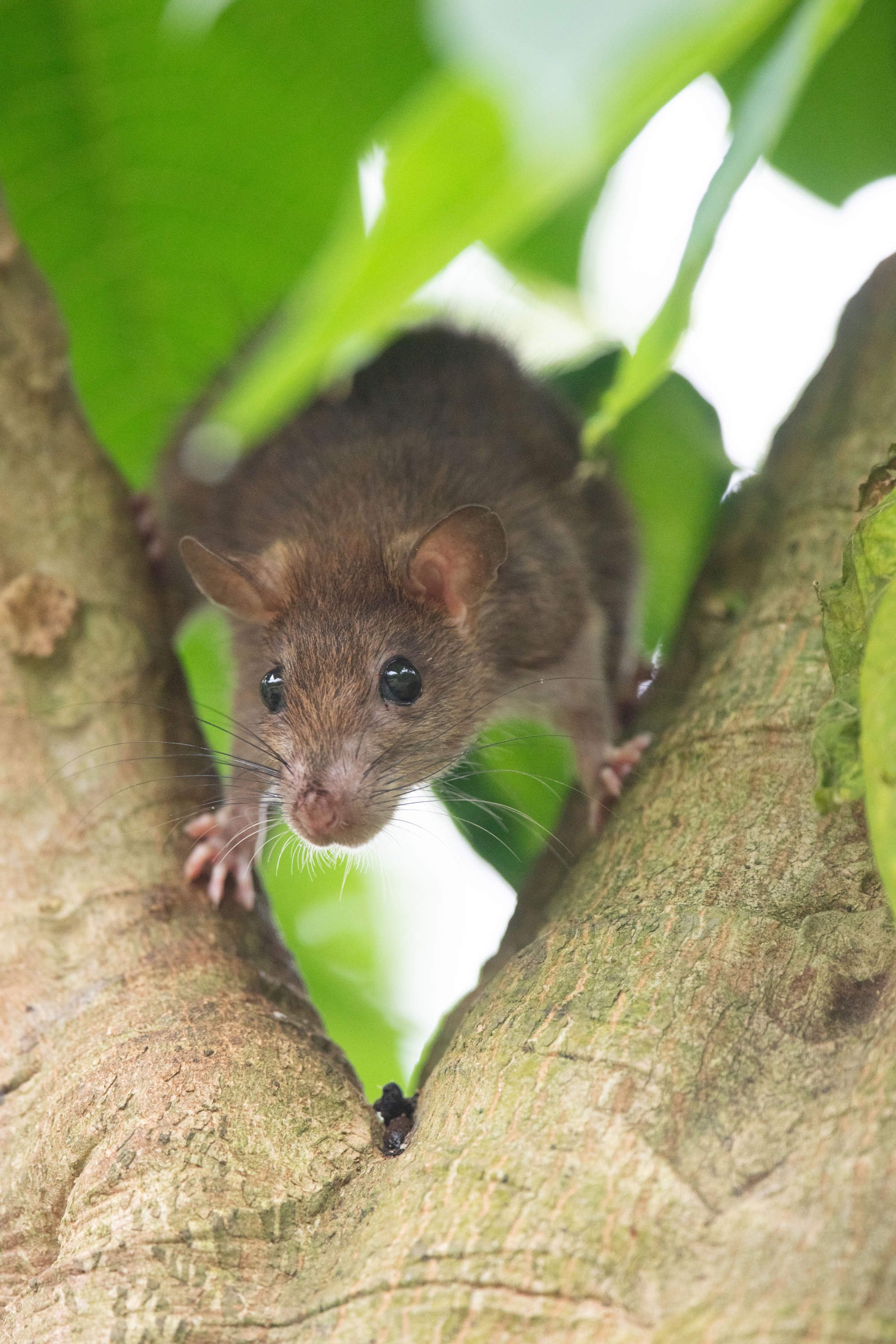
Non-native wild black rat (Rattus rattus diardii) on the island of Tinian (U.S. Commonwealth of the Northern Mariana Islands, western Pacific). Rats are Pacific island land snail predators. Photo: Kaeli Swift
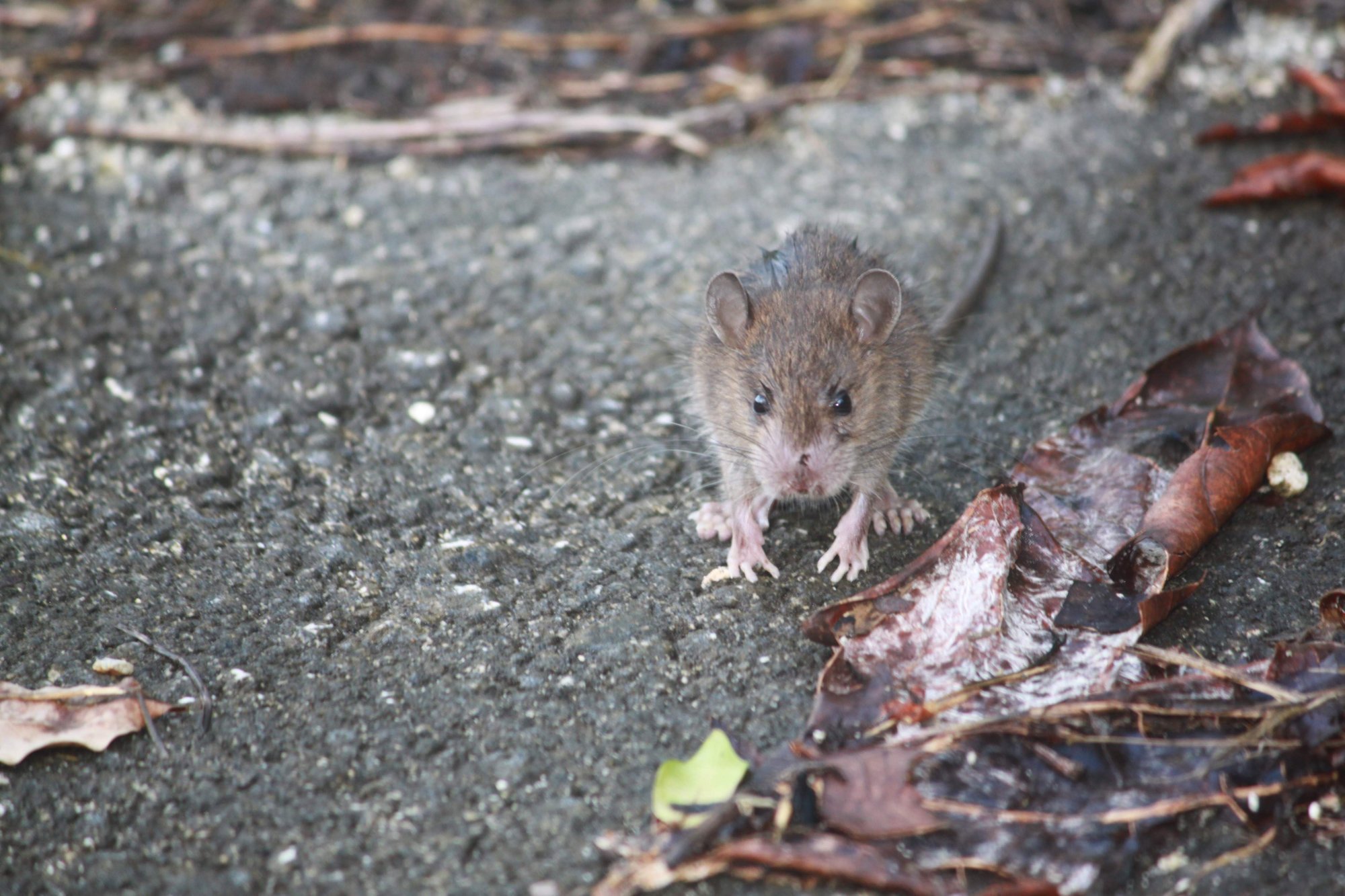
Non-native wild black rat (Rattus rattus diardii) on the island of Rota (Luta in the local Chamorro language; U.S. Commonwealth of the Northern Mariana Islands, western Pacific). Rats are Pacific island land snail predators. Photo: Hernani Oliveira
From a pragmatic perspective, understanding the biology of the different rodent species can be useful for understanding their effects on native species and their control. Non-native rodents can harm not just land snails but birds and other wildlife, as well as spread deadly diseases to humans (e.g. rats can contaminate water sources with their urine, leading to leptospirosis). Therefore many conservation organizations such as Island Conservation and government agencies direct a great deal of effort toward rodent control on islands. Note that introduction of classic rodent predators such as cats creates additional problems on islands, since cats also eat native birds, lizards, and invertebrates, just like the rats do, and are difficult to control once introduced. Cats do not stay in one place. They reproduce and spread throughout the forest.
The likely first rodent introduction to Pacific Islands was the Polynesian (or “Pacific”) rat, Rattus exulans. This is the smallest of the three rat species introduced to Pacific Islands. It is native to the Indo-Malaysian region, but is not native to any Pacific Islands. It was spread initially during voyages of early Micronesian and Polynesian people. For example, it may have occurred in the Mariana Islands for at least 3500 years, where it was introduced accidentally by the Chamorro people. Polynesian rats live in many different habitats including ground and trees, but are relatively poor swimmers. They are omnivorous, and eat a variety of invertebrates, threatened vertebrates such as ground-dwelling birds and lizards, and seeds of now-rare native trees.
Norway or brown rats, Rattus norvegicus arrived on many Pacific islands in the 1800s. They are the largest of the three introduced rat species and were originally from Mongolia. Norway rats are poorer climbers than the other two introduced rat species, and will nest in ground burrows. They are excellent swimmers compared to the other two rat species and can even seek food in the intertidal zone. Norway rats have been devastating to many ground-nesting birds especially.
Perhaps the most destructive rodent for native snails on islands has been the black rat, roof rat, or ship rat, Rattus rattus. Some populations of these rats have been established on islands for so long that they have genetically differentiated from other populations (e.g. the pictured Rattus rattus diardii from the island of Tinian). Black rats are larger than Polynesian rats and are excellent climbers. That latter fact has meant that a single black rat in a tree full of partulid tree snails or Hawaiian achatinelline tree snails, can wipe out most of a tree snail colony in one evening, leaving the forest floor littered with rat-eaten dead shells. Black rats have been shown to be responsible for the dramatic decline of many birds on islands, possibly escalating in the 1800s. Black rats can eat a variety of foods, meaning that they can maintain their own populations when one food source decreases.
Finally, the house mouse Mus musculus has been spread by humans all over the Pacific and is able to live not just near people, but in grasslands up into the forest, to high elevations. Although rats receive more attention, mice may be just as destructive to native ecosystems by eating small prey and seeds of native plants. It should be noted that most Pacific island land snails are small-bodied. We may never know how mice have influenced the decline of tiny native land snails, especially leaf litter-dwelling snails.
Sources and further reading:
Atkinson, I.A.E. and T.J. Atkinson. 2000. Land vertebrates as invasive species on islands served by the South Pacific Regional Environment Programme. pp. 19-84 In: G. Sherley, Ed., Invasive species in the Pacific: a technical review and draft regional strategy. South Pacific Regional Environment Programme (SPREP), Apia, Samoa.
Cowie, R.H. 2001. Invertebrate invasions on Pacific Islands and the replacement of unique native faunas: a synthesis of the land and freshwater snails. Biological Invasions 3: 119-136.
Cowie, R.H. 2001. Can snails ever be effective and safe biocontrol agents? International Journal of Pest Management 47(1): 23-40.
Cowie, R.H. and F.G. Howarth 1998. Biological control: disputing the indisputable. Trends in Ecology and Evolution 13(3): 110.
Gerlach, J. et al., 2021. Negative impacts of invasive predators used as biological control agents against the pest snail Lissachatina fulica: the snail Euglandina ‘rosea’ and the flatworm Platydemus manokwari. Biological Invasions 23: 997-1031.
Island Conservation; see for more about the NGO Island Conservation’s work on island rat eradication.
Lowe, S., Browne, M., Boudjelas, S., and M. DePoorter. 2000. 100 of the world’s worst invasive alien species—a selection from the global invasive species database. Invasive Species Specialist Group (ISSG), IUCN Species Survival Commission, Auckland.
Régnier, C., Fontaine, B., and P. Bouchet. 2009. Not knowing, not recording, not listing: numerous unnoticed mollusk extinctions. Conservation Biology 23: 1214-1221.
All extinct: Hawaiian Carelia leaf litter snails
Lele ka hoaka.
(In Hawaiian: The spirit has flown away. The glory of the land has departed.)
- from ʻŌlelo Noʻeau
When Europeans first reached Hawaii in the late 1700s, the largest ground-dwelling land snails were 21 species in the genus Carelia, nearly all of which lived on the island of Kauai. These snails ate fungus from decaying leaves on the forest floor and likely were important for the health of the Hawaiian rainforest. By the mid-20th century, deforestation, fires, and predation by introduced rats had killed the remaining Hawaiian Carelia.
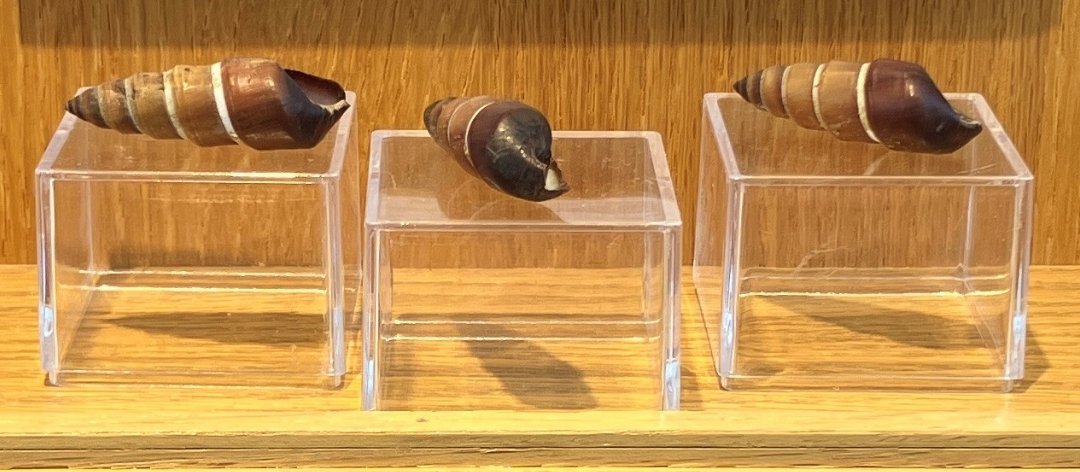
Carelia cumingiana, Kauai, Hawaiian Islands (PRI 96964) on display at the Museum of the Earth. Carelia cumingiana, like the other Carelia species, is now extinct. It was last seen alive in 1930.
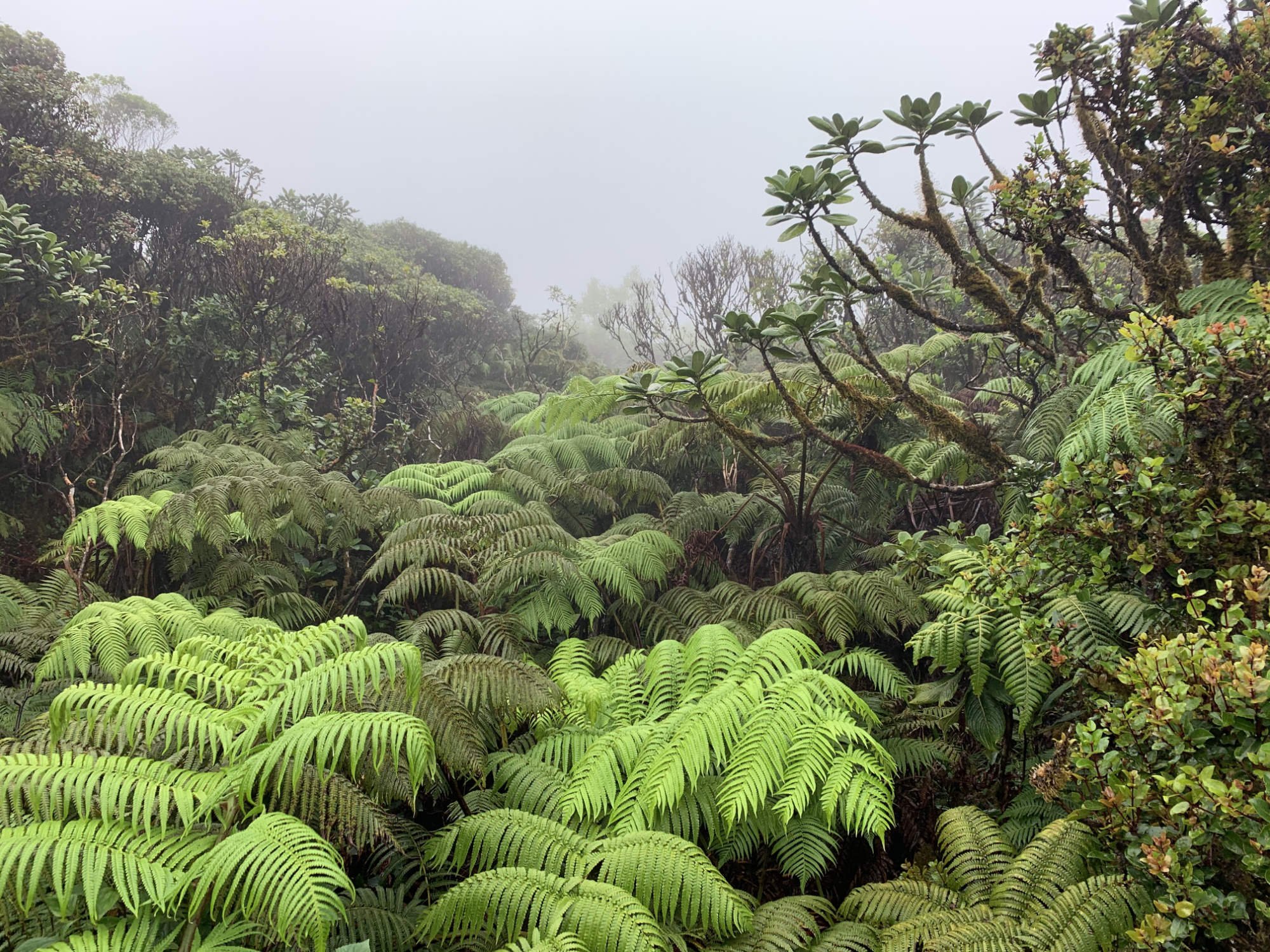
Hawaiian native rainforest. Photo: David R. Sischo, Hawaiʻi Division of Forestry and Wildlife
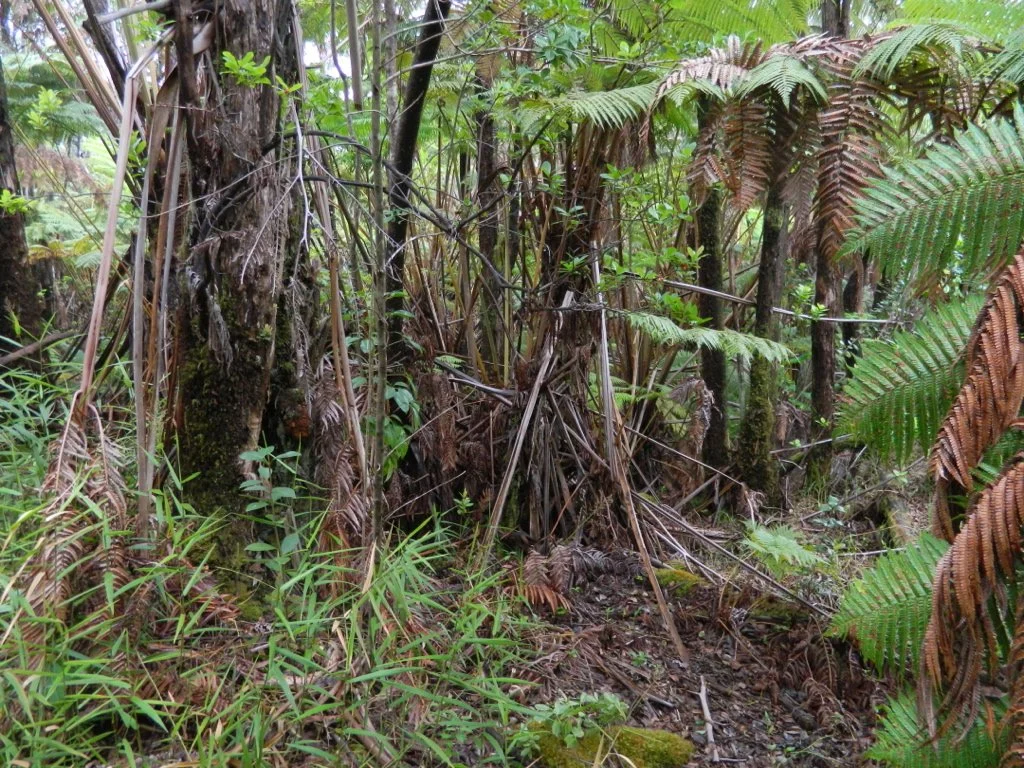
Hawaiian forest floor, showing the leaf litter (dead wet leaves) habitat that many amastrid snails like Carelia would enjoy. Photo: Rebecca Rundell
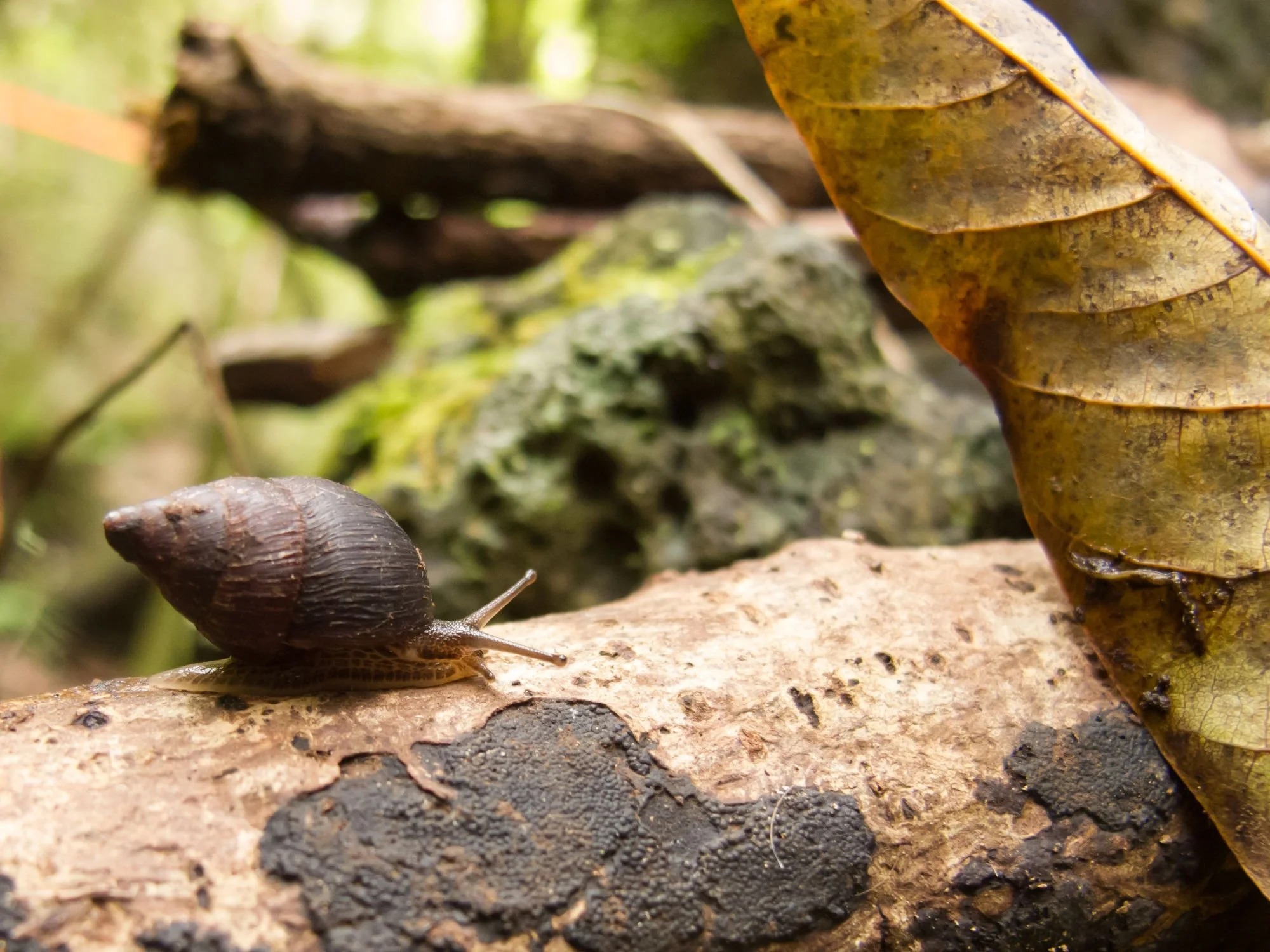
Although Carelia land snails are now extinct, there are a few other members of their land snail family Amastridae are still surviving in small pockets of rainforest. This includes Amastra intermedia, pictured here. Photo: David R. Sischo, Hawaiʻi Division of Forestry and Wildlife
Carelia is a genus of ground-dwelling snails in the Pacific-endemic family Amastridae. Amastridae is not just endemic to the Pacific, but completely unique to the Hawaiian Islands! Amastridae were about half of Hawaiian land snail diversity with 325 species, and many of the rest are in the family Achatinellidae. There are just a few Hawaiian amastrid species that still survive, and they are part of captive breeding efforts in Hawaii, including at the Bishop Museum and the Snail Extinction Prevention Program (SEPP) in the Hawaiʻi Division of Forestry and Wildlife.
Carelia was a spectacular group of amastrid land snails, because their shells were so sturdy and long. Some of the longest land snails on Pacific Islands were Carelia, especially Carelia turricula, which could reach about 80 mm in shell height.
Although 20 Carelia species lived on Kauai, there is one species recorded from the small island just to the North of Kauai, called Niihau (Carelia sinclairi). The fact that all of these species evolved here, on an island only 1450 km2 (550 mi 2) is remarkable.
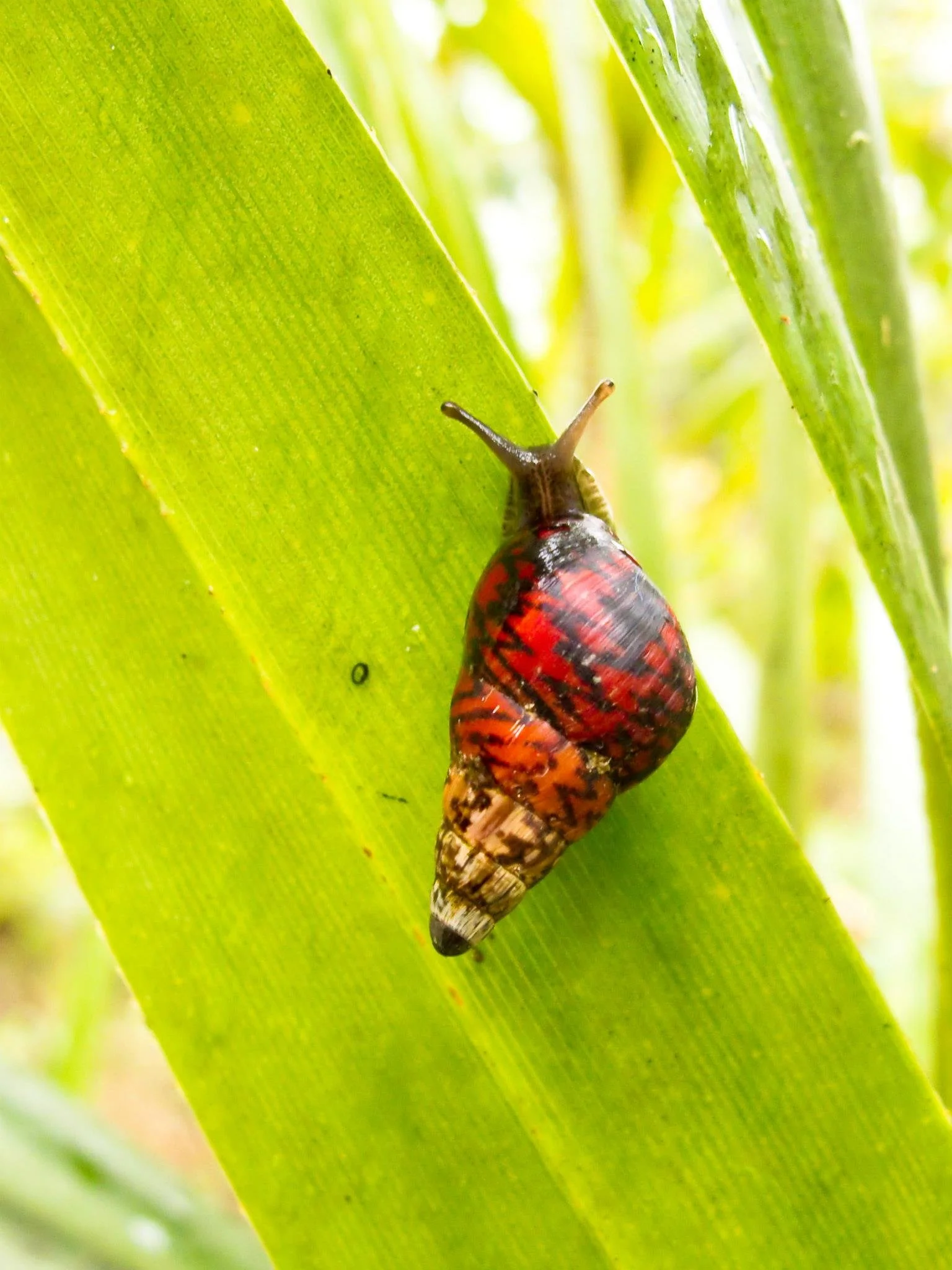
The endemic and spectacular Hawaiian amastrid Laminella sanguinea from the island of Oahu in the Hawaiian Islands. Photo: David R. Sischo, Hawaiʻi Division of Forestry and Wildlife
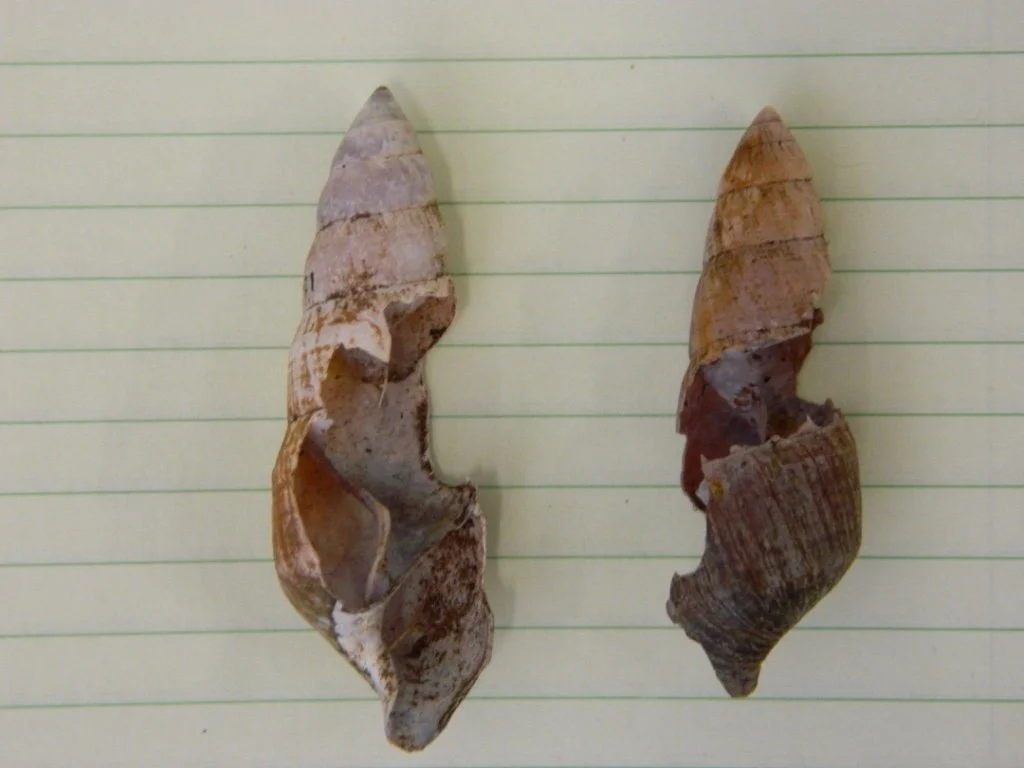
In these Carelia turricula specimens from the Bishop Museum Malacology Collections, you can see the rat chew marks from rat predation events that were obviously fatal to these two leaf litter-dwelling snails. Photo: Rebecca Rundell
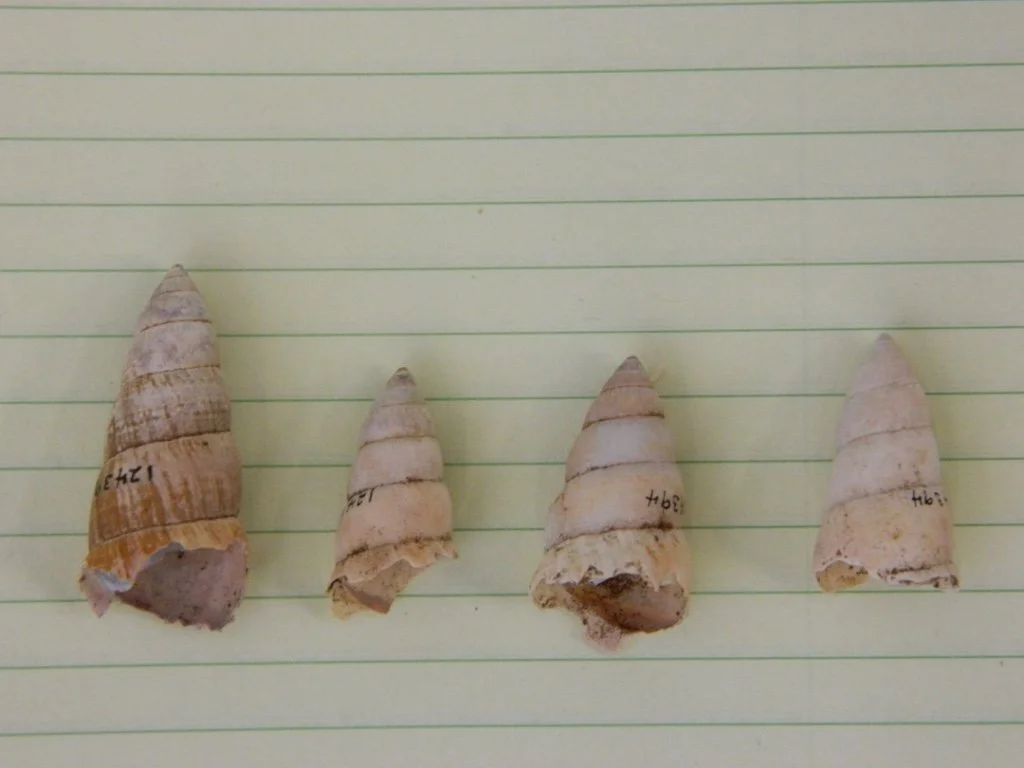
Rats ate the bodies of these Carelia land snails, mainly leaving behind the sturdy apex of the shell and jagged rat chew marks. Dead shells can remain in the leaf litter and soil for decades. This can give us clues about what used to live there. These specimens are curated at the Bishop Museum Malacology Collections in Honolulu, Hawaii. Photo: Rebecca Rundell
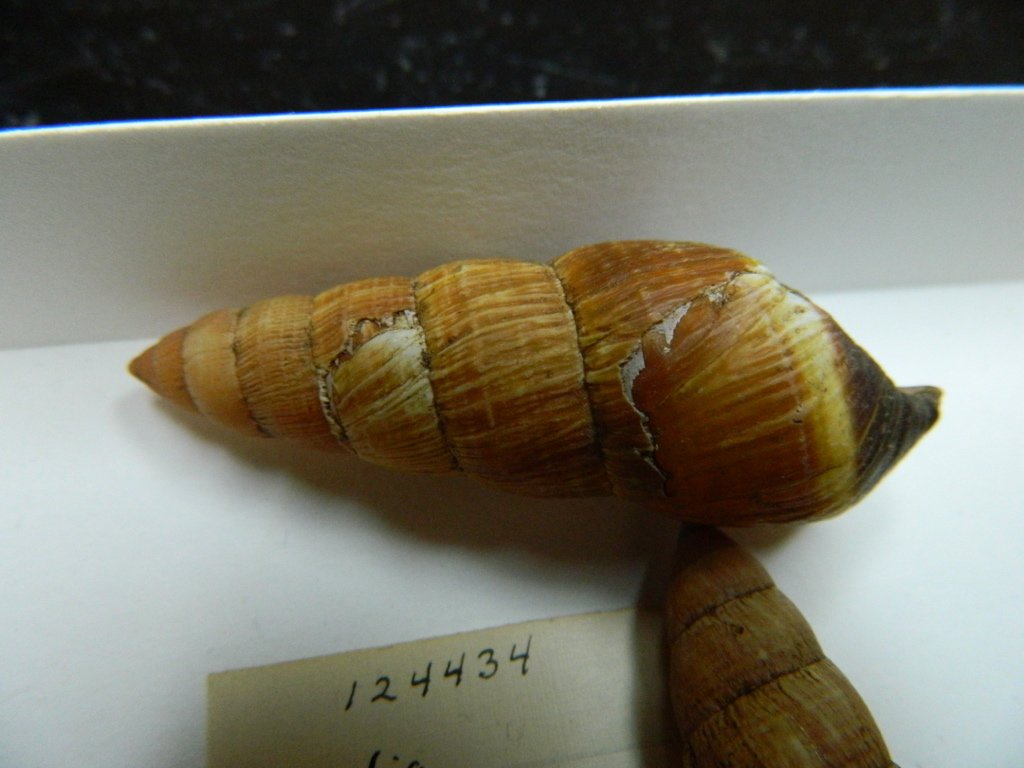
Carelia turricula was the largest Hawaiian Carelia, reaching 80 mm in shell height. This snail’s height helped it survive rat chews on its shell (note shell repair scars) but eventually a rat killed it. Specimen from the Bishop Museum Malacology Collections in Hawaii, BPBM 124434. Photo: Rebecca Rundell
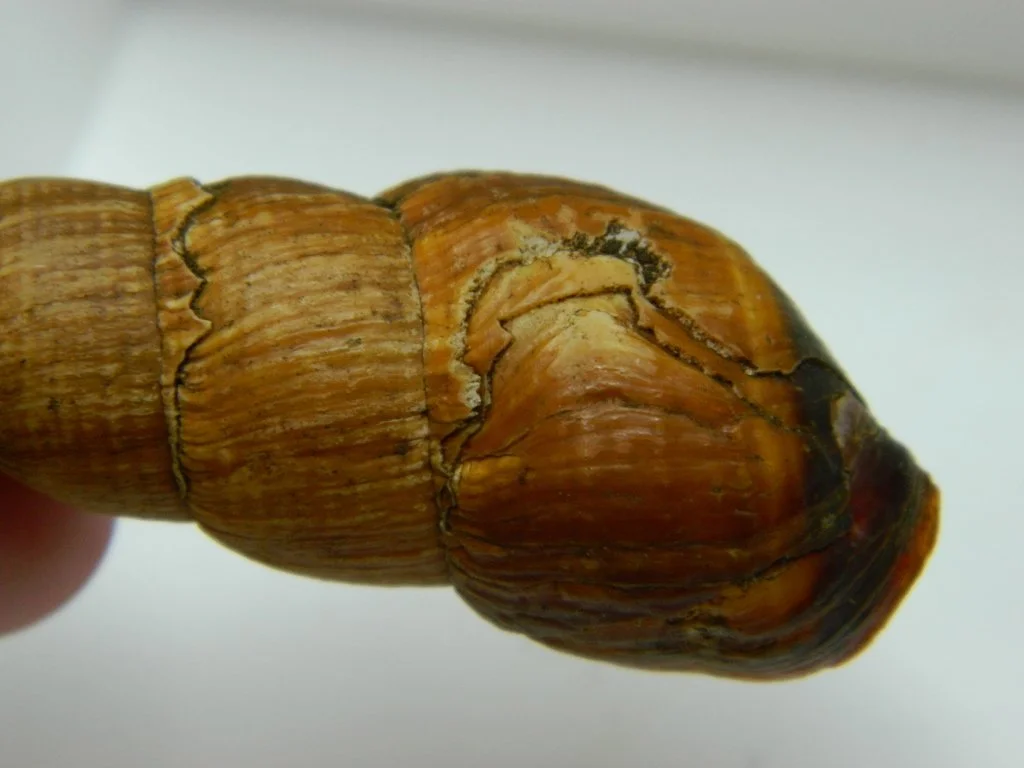
A Carelia shell with multiple rat attacks and heal marks, where the snail made more shell material over time to try to protect its body. Specimen is from the Bishop Museum Malacology Collections. Photo: Rebecca Rundell
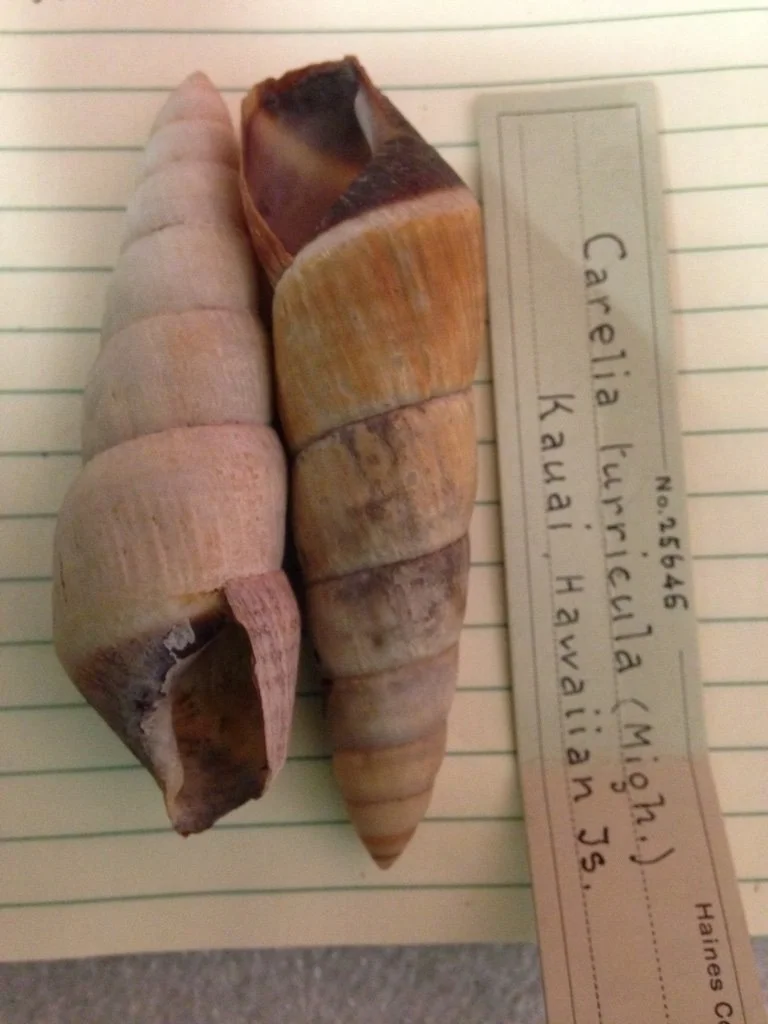
Carelia turricula specimens from the American Museum of Natural History Division of Invertebrate Zoology (Mollusca Collections). The longest shell pictured here is about 80 mm long – quite extraordinary for a Pacific island land snail! Unfortunately, Carelia turricula is now extinct. Photo: Rebecca Rundell
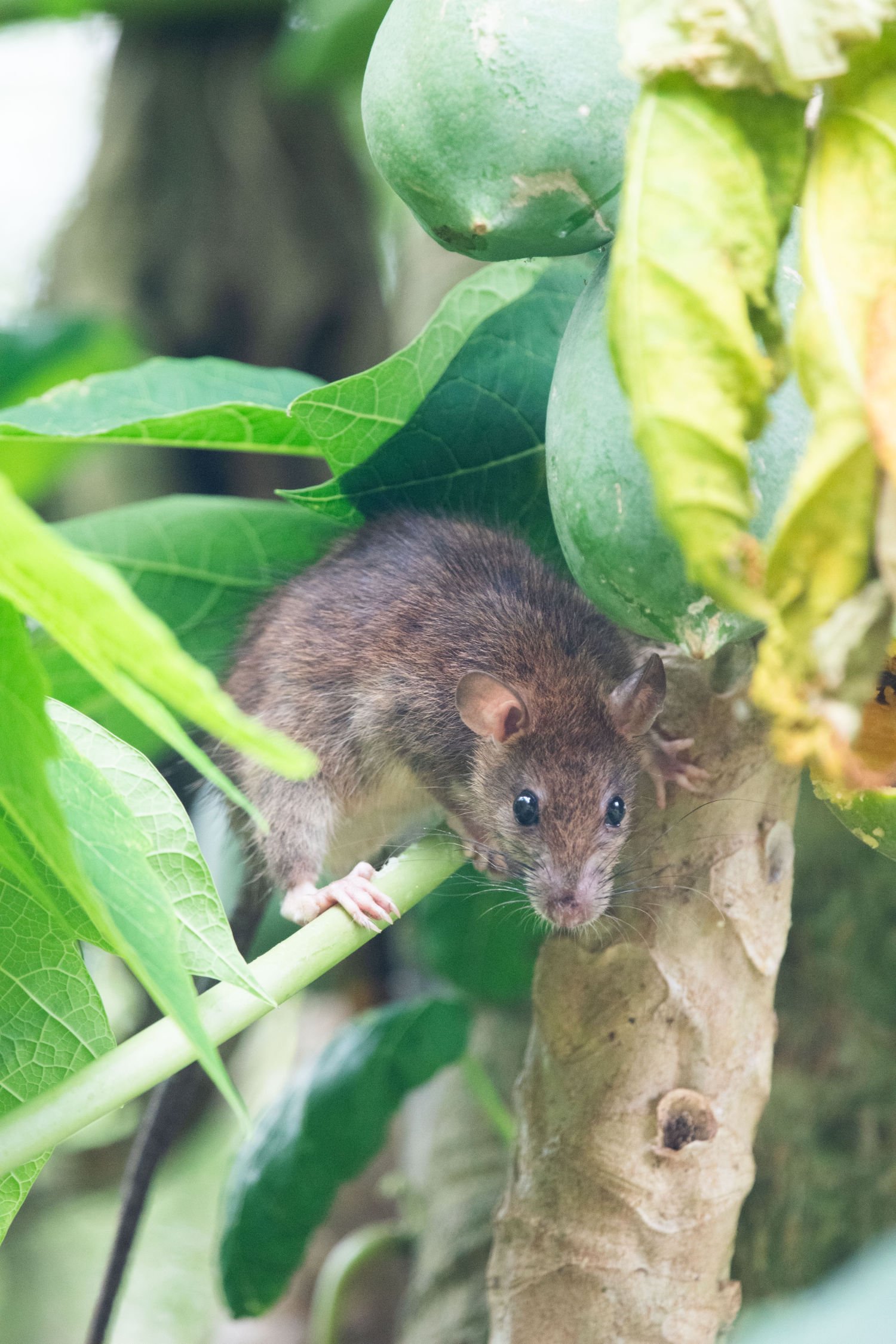
Non-native wild black rat (Rattus rattus diardii) on the island of Tinian (U.S. Commonwealth of the Northern Mariana Islands, western Pacific). Rats are Pacific island land snail predators. Photo: Kaeli Swift
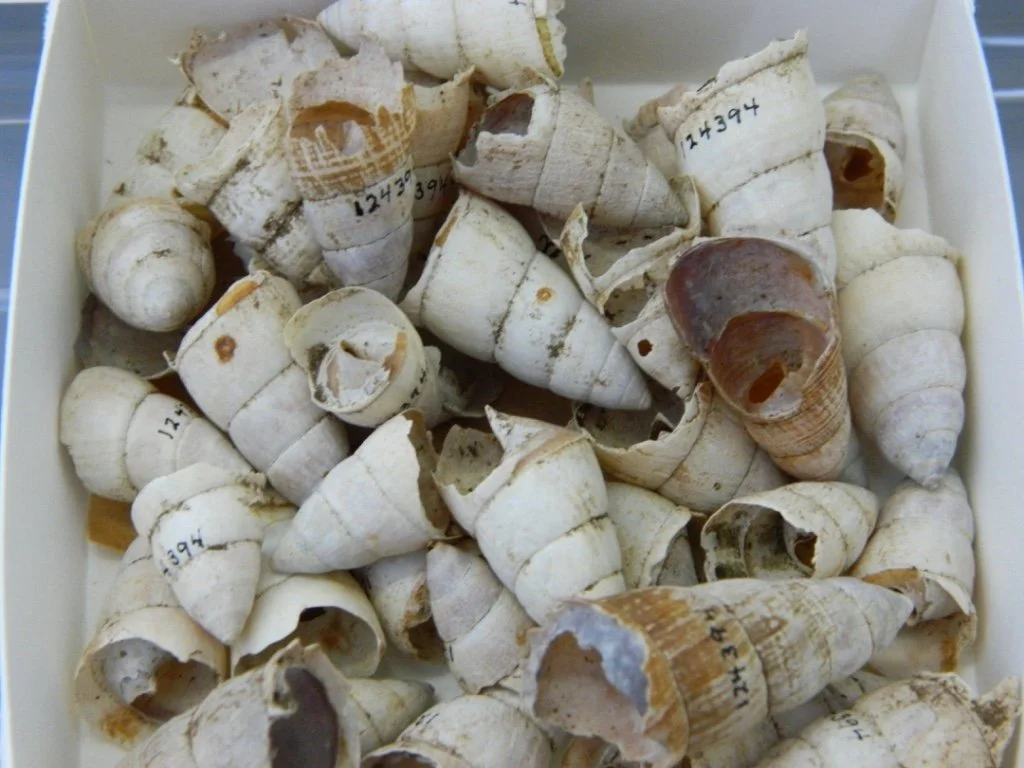
A picture is worth a thousand words. Rats killed all of these Carelia snails, and their dead skeletons lingered on the forest floor for a long time after that. Specimens are from the Bishop Museum Malacology Collections in Honolulu, Hawaii. Photo: Rebecca Rundell
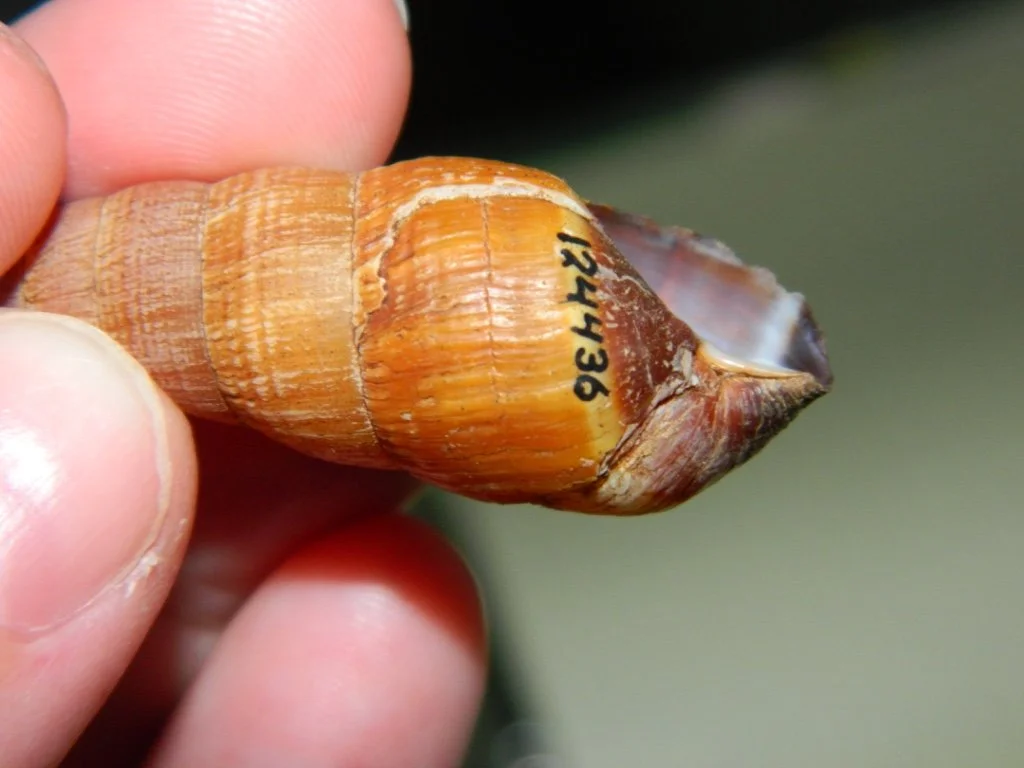
Carelia turricula was the largest Hawaiian Carelia, reaching 80 mm in shell height. This snail’s height helped it survive rat chews on its shell (note shell repair scars) but eventually a rat killed it. Specimen from the Bishop Museum Malacology Collections in Hawaii, BPBM 124434. Photo: Rebecca Rundell
He aliʻi ka ʻāina, he kauā ke kanaka.
(In Hawaiian: The land is a chief; man is its servant. We have to take care of the land.)
- from ʻŌlelo Noʻeau
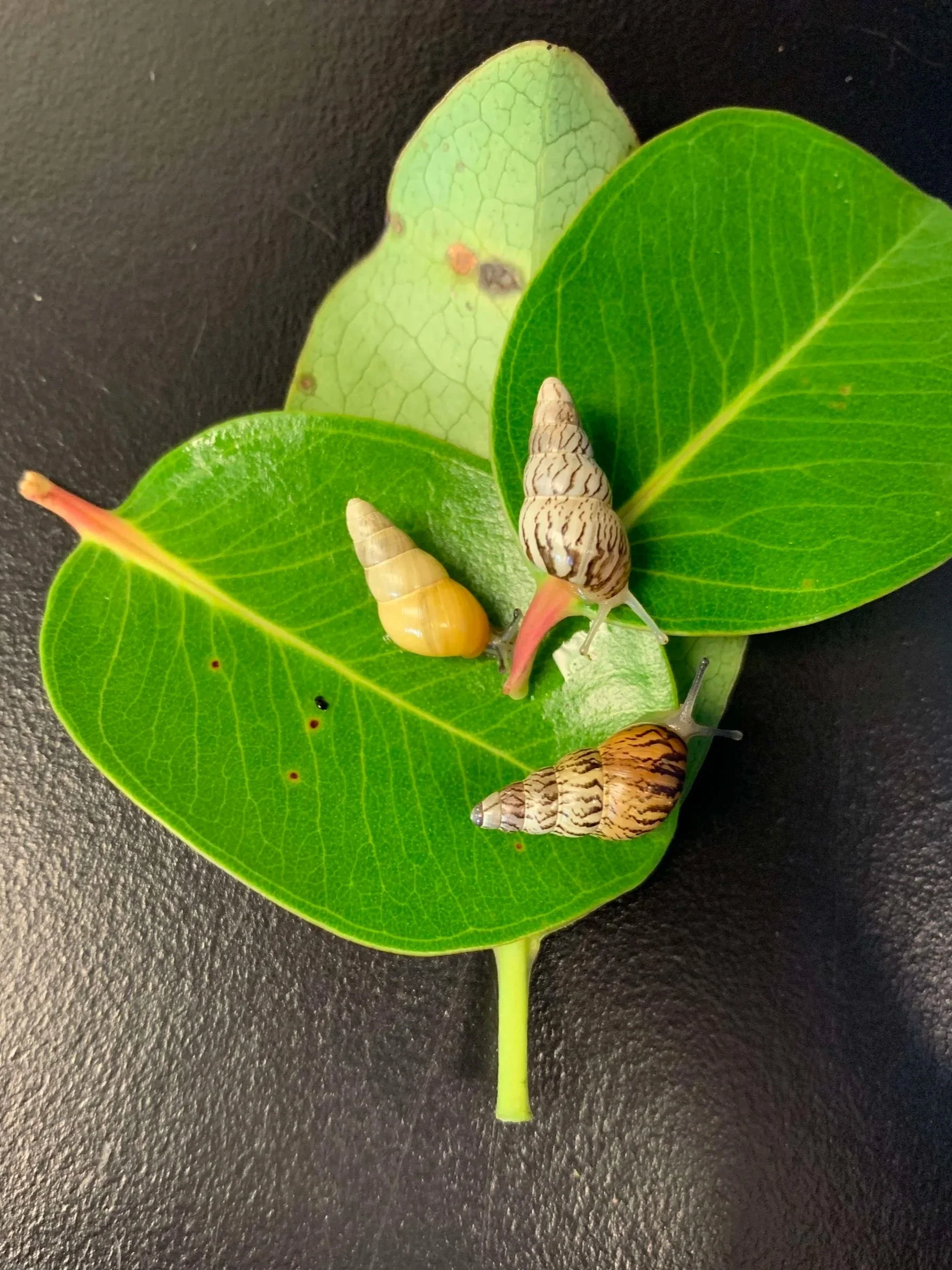
Laminella venusta, an endemic Hawaiian amastrid land snail. Photo: David R. Sischo, Hawaiʻi Division of Forestry and Wildlife
Acknowledgments:
I am grateful to David R. Sischo, Wildlife Biologist and Program Coordinator for the Snail Extinction Prevention Program (SEPP) in the Hawaiʻi Division of Forestry and Wildlife for sharing his beautiful photos of Hawaiian land snails. It takes patience and skill to capture great land snail photos, especially in the wild. These images help bring the animals alive and give us hope to save the snails. I thank Melanie Hopkins and the Collections Management Staff of the American Museum of Natural History Invertebrate Zoology Division (New York City), Rüdiger Bieler and Jochen Gerber of the Field Museum of Natural History Division of Invertebrates (Chicago, Illinois), and Norine Yeung of the Bernice Pauahi Bishop Museum Malacology Collections (Honolulu, Hawaii) for access to collections under their care. Dr. Yeung also contributes to important efforts in amastrid conservation. I thank Carl Christensen for interesting scientific discussions about Carelia.
Sources and further reading:
Christensen, Charles. 1992. Kauai’s native land shells. Fisher Printing Co., Inc., Honolulu, Hawaii.
Cowie, R.H., Evenhuis, N.L., and C.C. Christensen. 1995. Catalog of the Native Land and Freshwater Molluscs. Backhuys Publishers, Leiden, The Netherlands.
Mollusc Specialist Group. 1996. Carelia cumingiana. The IUCN Red List of Threatened Species 1996: e.T3878A10144285. https://dx.doi.org/10.2305/IUCN.UK.1996.RLTS.T3878A10144285.en. Accessed on 28 May 2025.
Pukui, Mary Kawena. 1983. ʻŌlelo Noʻeau. Hawaiian Proverbs and Poetical Sayings. Bernice P. Bishop Museum Special Publication No. 71. Bishop Museum Press, Honolulu, Hawaii.
Philippines rainforest diversity hotspot
Hundreds of unique rainforest snail species have evolved among the Philippines’ intricate puzzle of islands and lush mountains. Philippines land snails such as those shown here live on trees, limestone rocks, and decaying leaves. These moist forest habitats are difficult to recover once they are lost. Today, Philippines scientists have a great challenge in studying and conserving their diverse rainforest biota, including mammals, birds and frogs, and these less famous but equally extraordinary Helicostyla land snails.
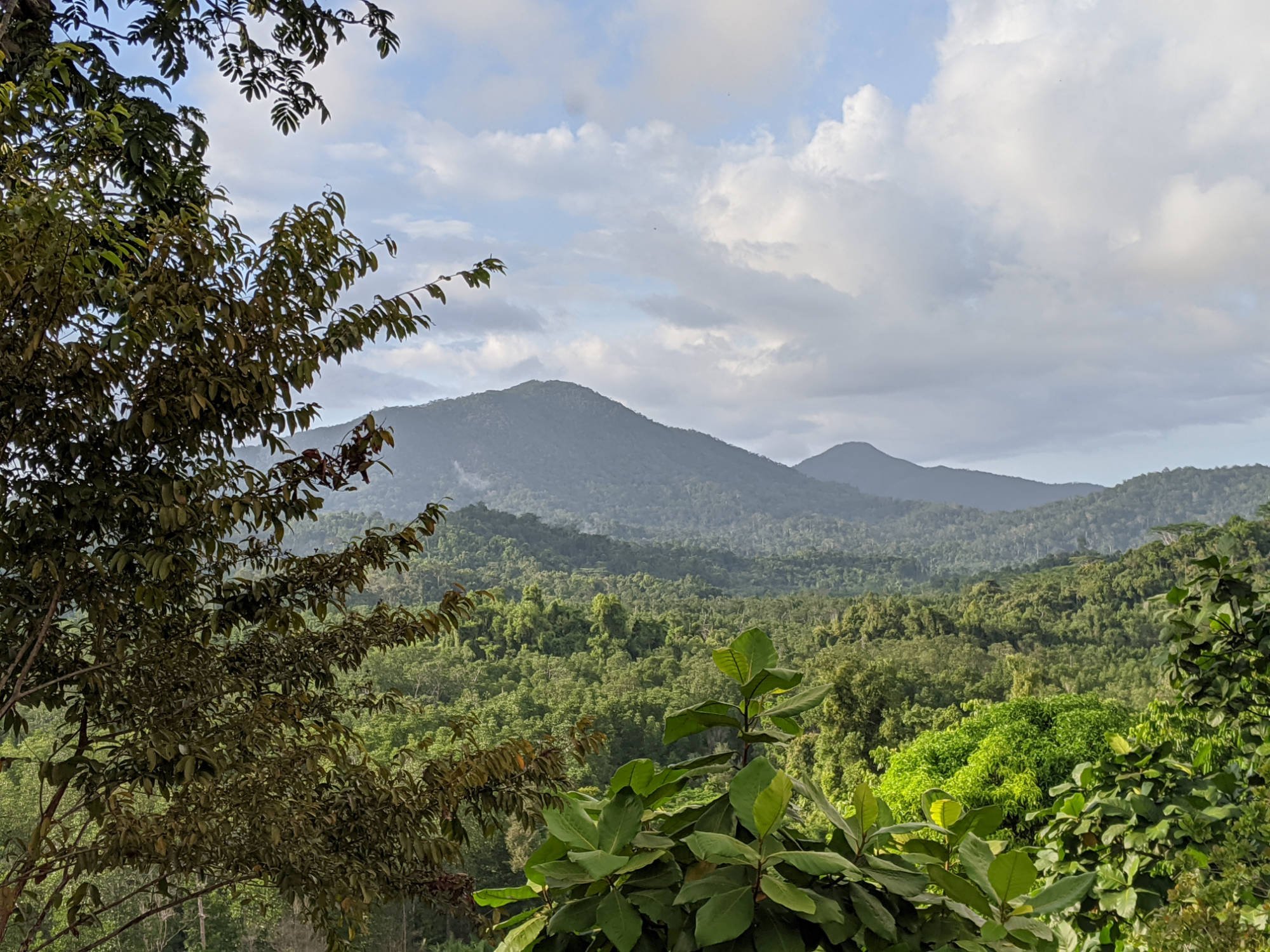
Philippines rainforest, a biodiversity hotspot and home for land snails (island of Palawan, Philippines). Photo: Rebecca Rundell
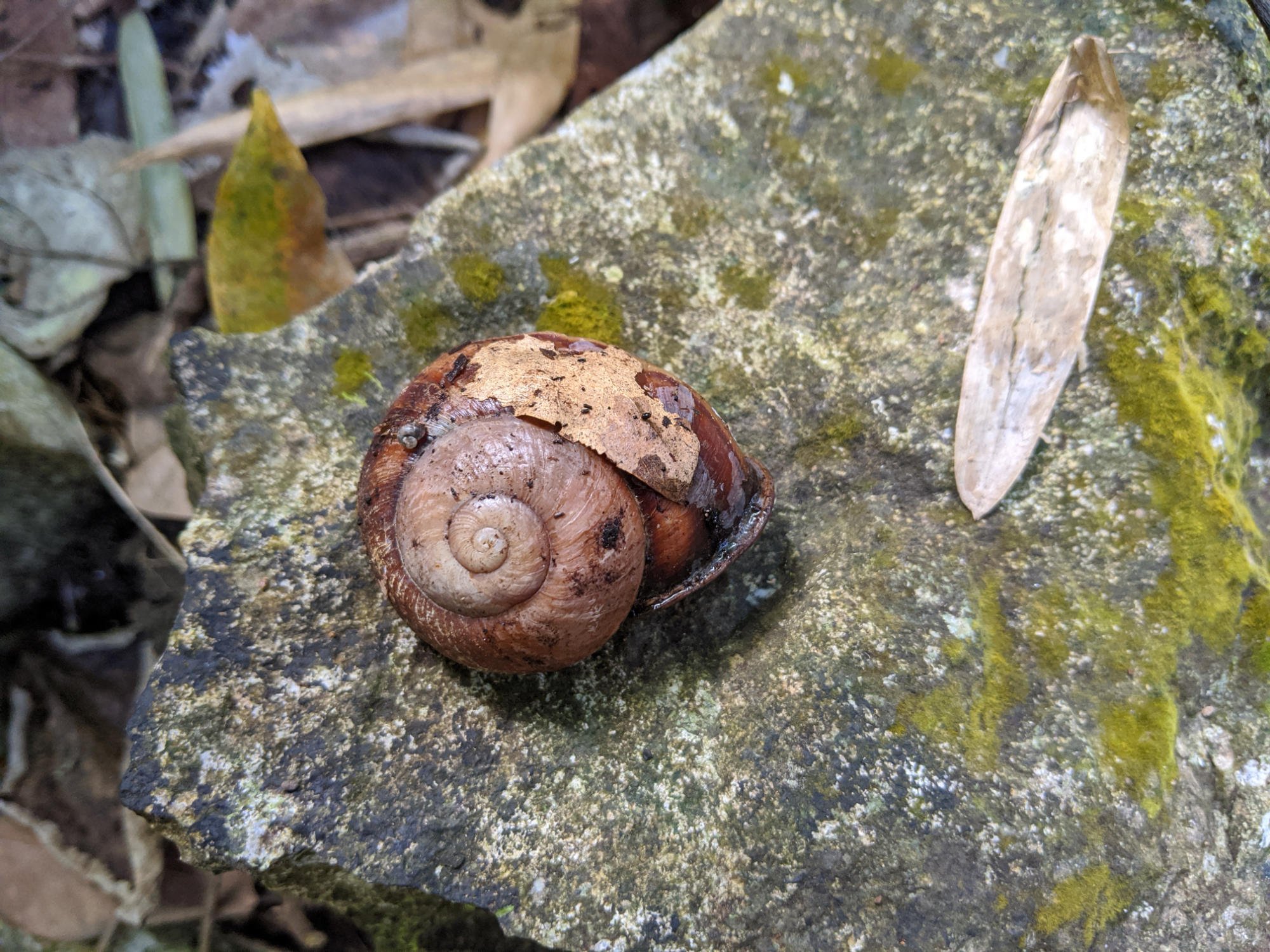
Live Philippines endemic land snail on limestone rock on the island of Palawan. Photo: Rebecca Rundell
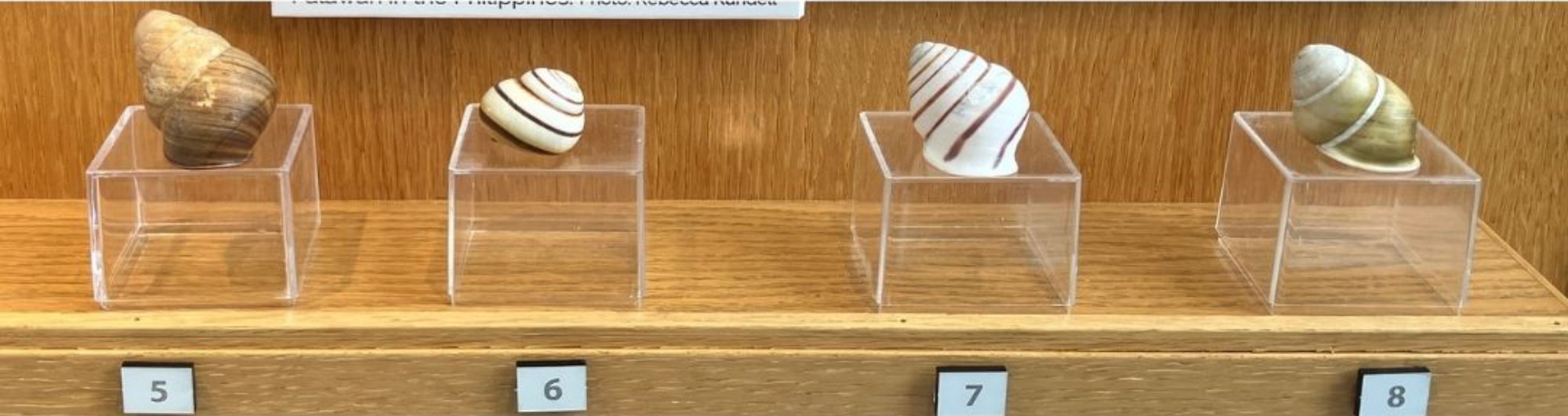
Helicostyla snail shells on display at the Museum of the Earth. These Helicostyla land snails are endemic to the Philippines. Some large shells of Philippines land snail species are sold in the shell trade alongside marine shells, including Helicostyla florida.
5. PRI ID 92831 Helicostyla faunus, Philippines
6. PRI ID 92842 Helicostyla fulgens, Mindoro, Philippines, “H. mirabilis”
7. PRI ID 92830 Helicostyla effusa, Tablas Island, Philippines
8. PRI ID 92832 Helicostyla florida (Camaenidae), Mindoro, Philippines
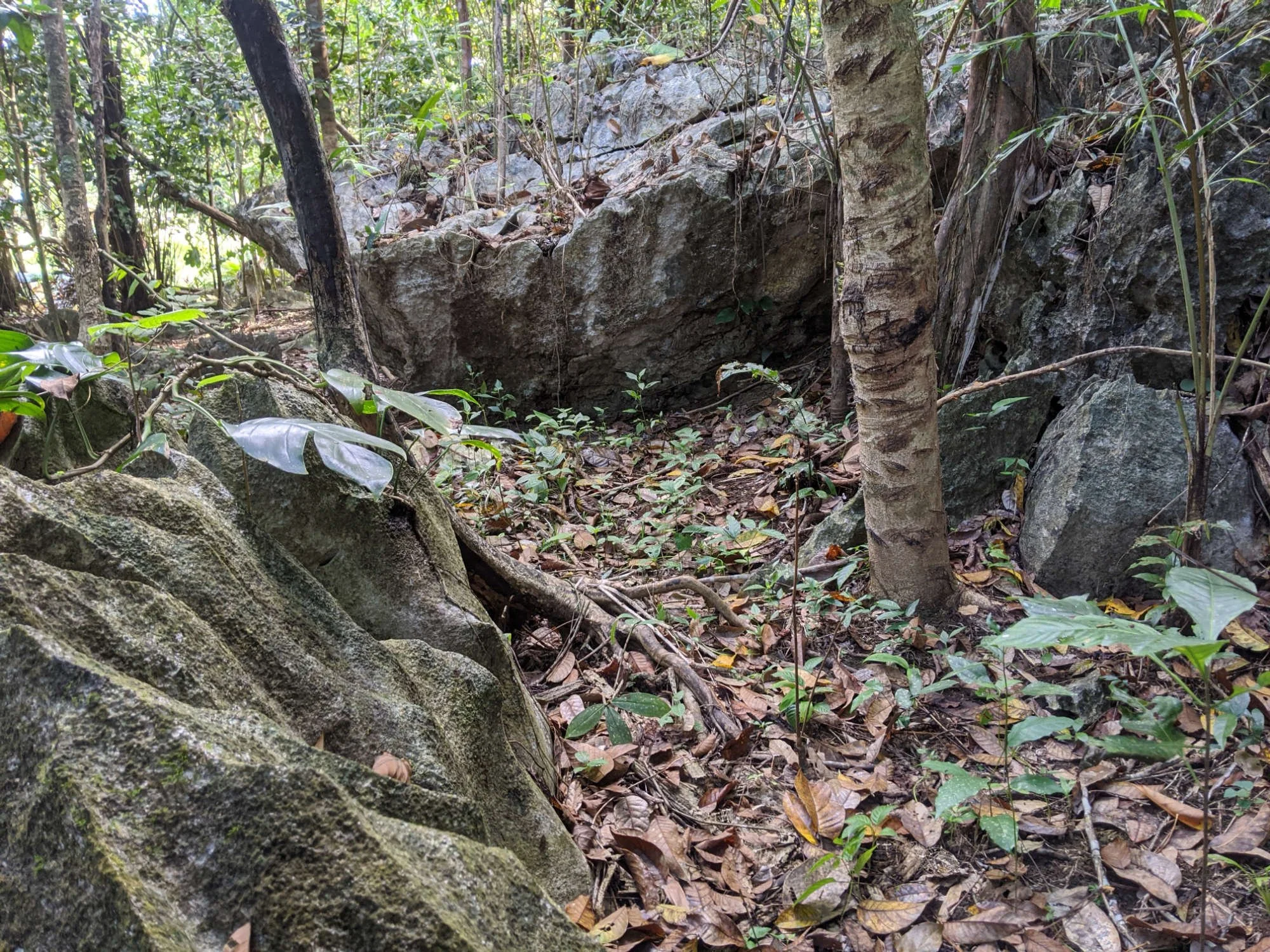
Land snail habitat on Palawan, showing leaf litter and limestone rocks. Many snails like limestone because it is made of the same stuff that snails use to make their shells. Sometimes limestone forest have unique species that are adapted to limestone soils. Photo: Rebecca Rundell.
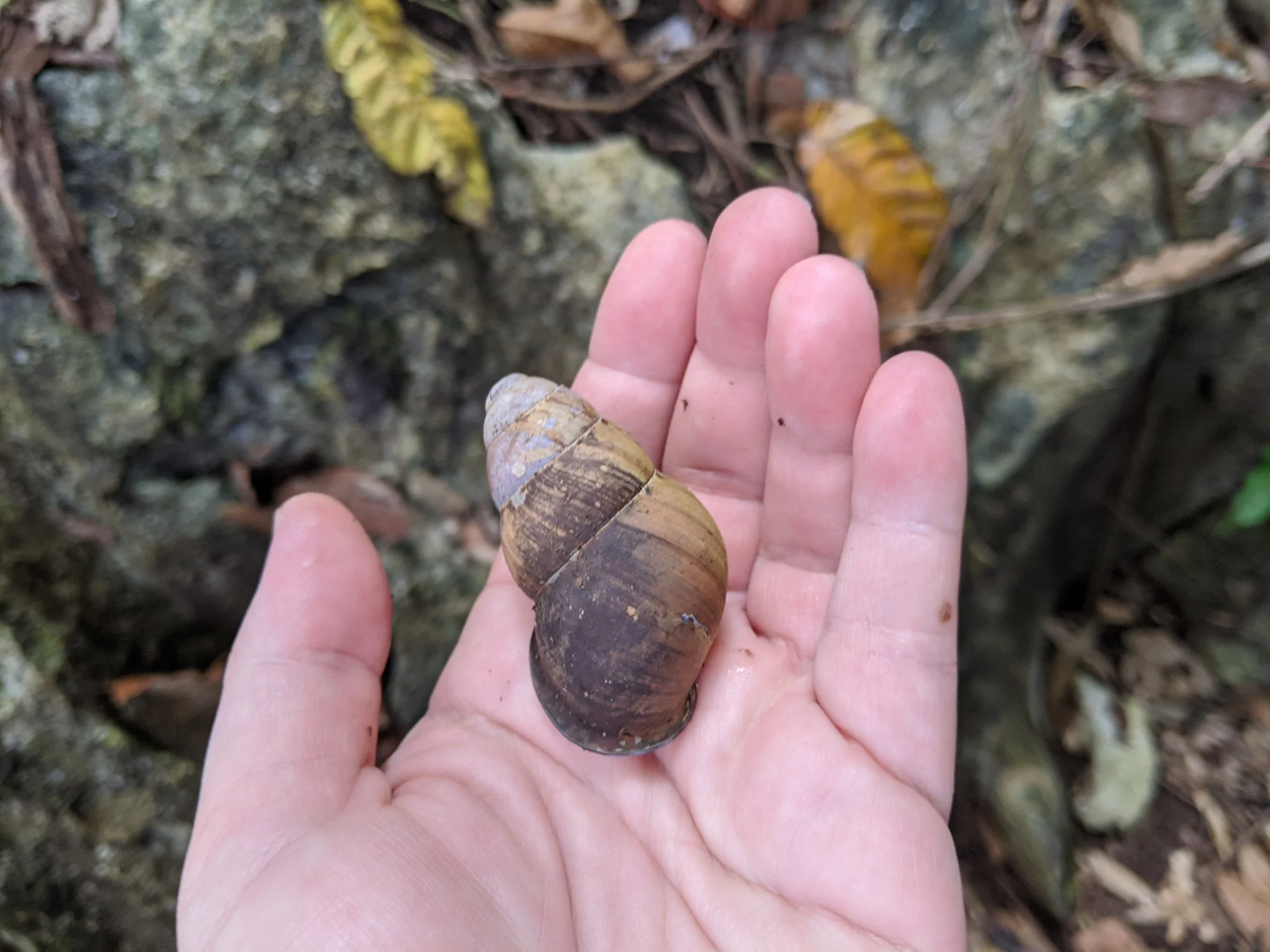
A dead Helicostyla land snail in the limestone forest of Palawan. Land snails leave behind their shells when they die, which helps us understand what species once lived in a place. Photo: Rebecca Rundell
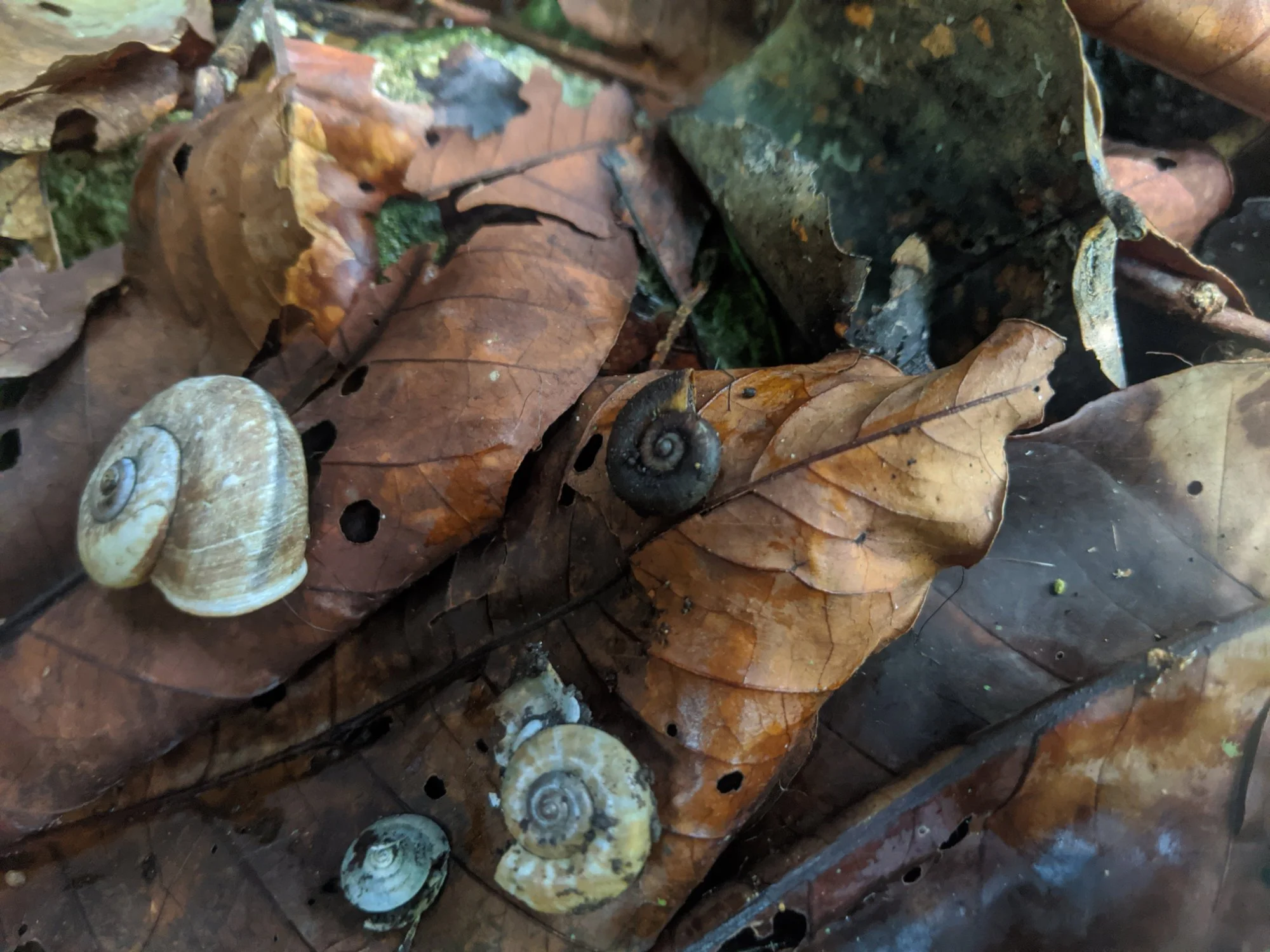
Leaf litter land snails from the island of Palawan in the Philippines. Photo: Rebecca Rundell
Colorful snails of southern Florida and Hispaniola
Hispaniola, Cuba, the Florida Keys, and southern Florida’s hammocks are home to tree snails of the genus Liguus (lig-YOU-us). (Hammock – from the language of the native Seminole people – is a dry or upraised spot in a wetland that was considered good for camping.) Isolation among these tiny forest patches increased snails’ diversity and striking color patterns. There used to be over 100 of these species, with a multitude of color banding patterns, but now just a few remain. Some are protected within Florida Everglades National Park.
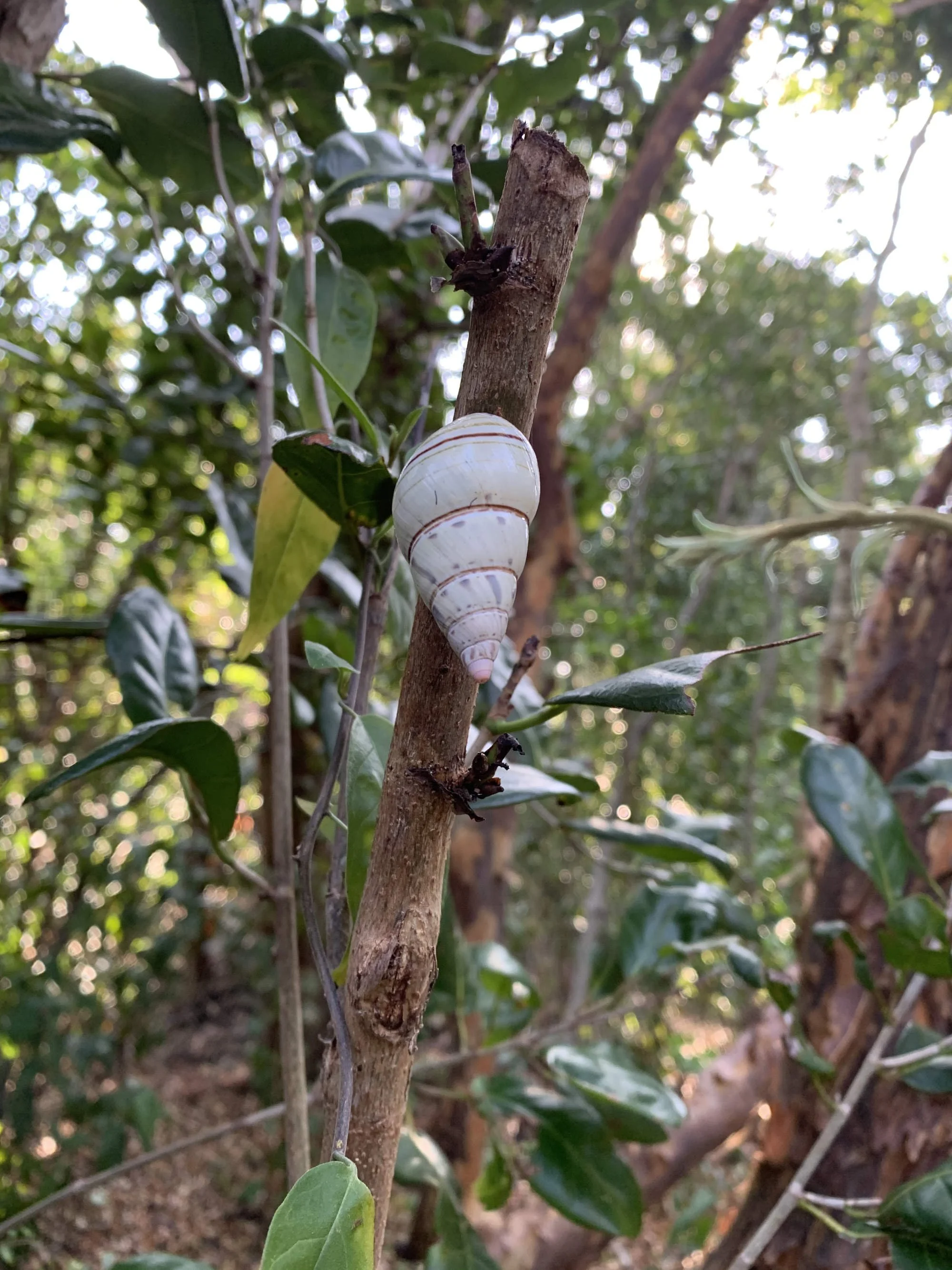
The Florida tree snail Liguus fasciatus variety lignumvitae clinging to a branch in a tropical hardwood hammock. Photo: Tim Collins
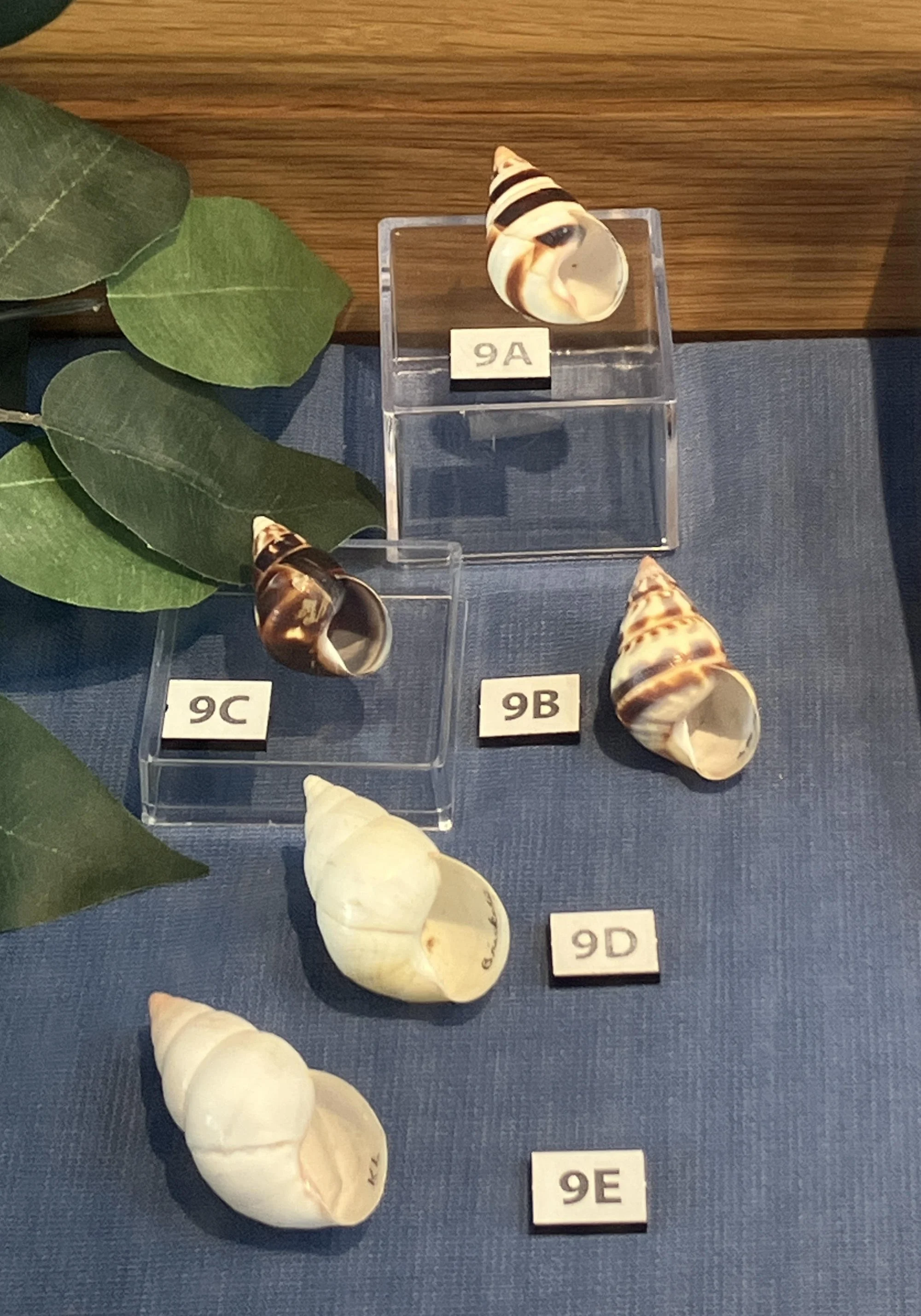
Liguus specimens on display at the Museum of the Earth.
9C. This Liguus fasciatus marmoratus is from Cox Hammock, Dade County, Florida, collected in the early 1900s. (SUNY-ESF’s Roosevelt Wild Life Collections, Karl B. Squires Collection, Syracuse, NY)
9A. This Liguus fasciatus castanaogenatus is from Timm’s Hammock (now Camp Owaissa Bauer), Dade County, Florida, collected in the early 1900s. This species can still be found in this hammock. (SUNY-ESF’s Roosevelt Wild Life Collections, Karl B. Squires Collection, Syracuse, NY)
9B. This Liguus fasciatus versicolor is from Long Pine Key, Hammock 24, Monroe Co., Florida, collected in the early 1900s. (SUNY-ESF’s Roosevelt Wild Life Collections, Karl B. Squires Collection, Syracuse, NY)
9D. This Liguus fasciatus luteus is from Brickell Hammock, Miami, Florida, collected in the early 1900s. This variety is no longer found here. Brickell Hammock is now covered with concrete due to urban development. (SUNY-ESF’s Roosevelt Wild Life Collections, Karl B. Squires Collection, Syracuse, NY)
9E. This Liguus fasciatus lineolatus is from Key Largo, Monroe Co., Florida, collected in the early 1900s. This variety of Liguus still survives on Key Largo. (SUNY-ESF’s Roosevelt Wild Life Collections, Karl B. Squires Collection, Syracuse, NY)
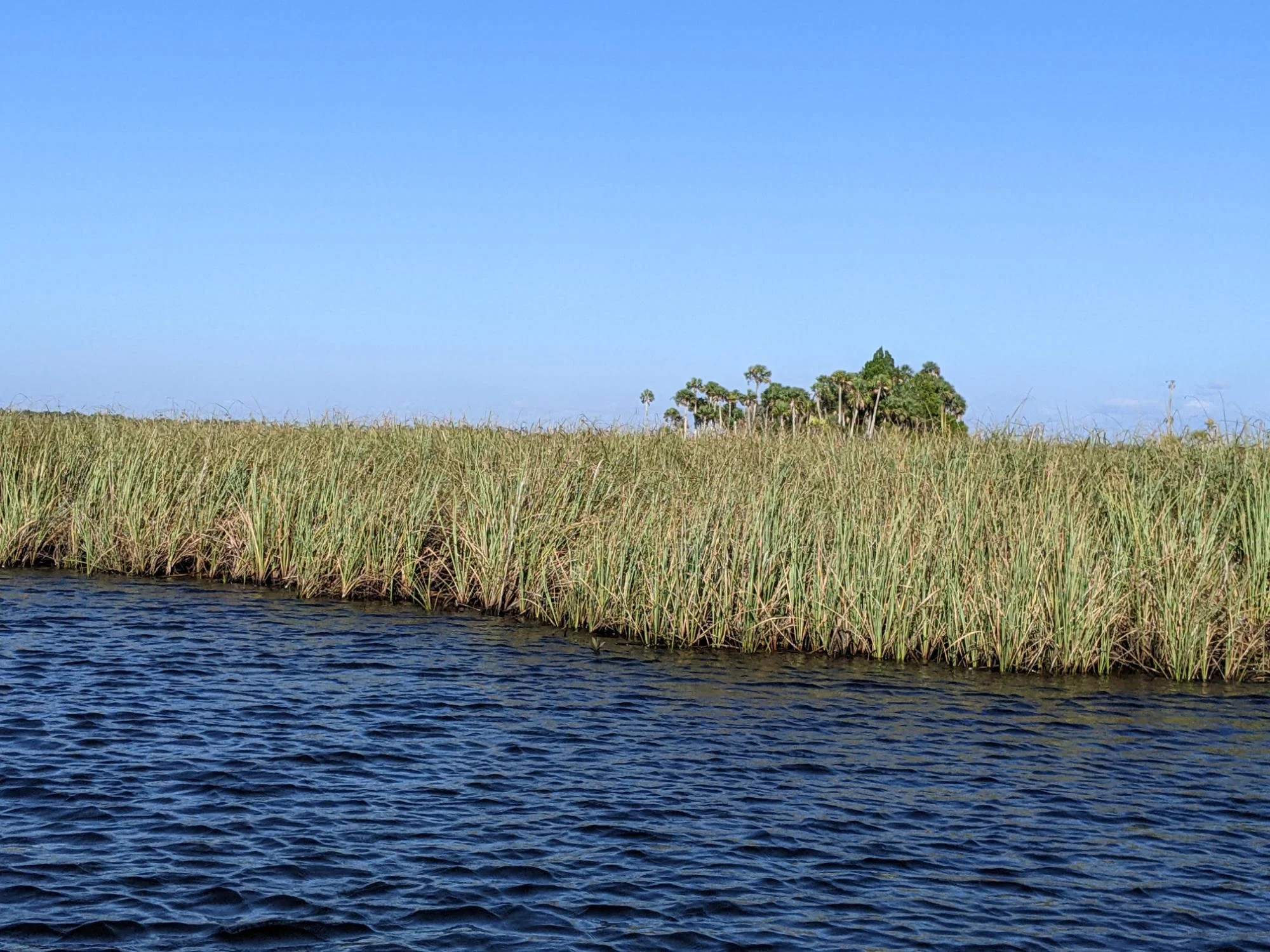
“Islands” of upraised forest patches in Florida called hammocks are important to the evolution of unique color varieties of Liguus Florida tree snails. Photo: Rebecca Rundell
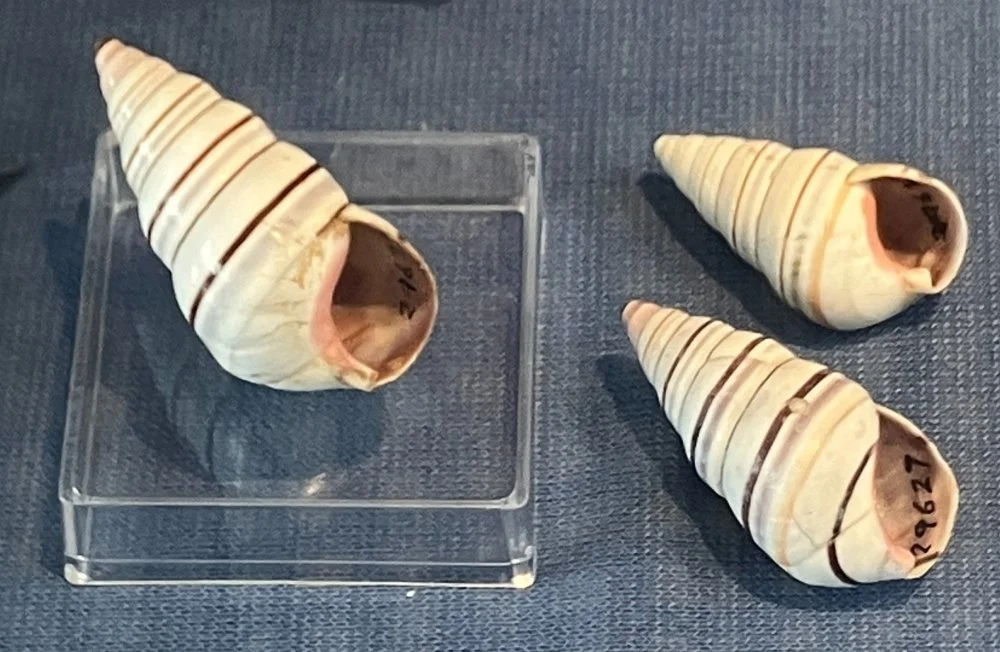
Candy cane snail or maiden Liguus Liguus virgineus (Orthalicidae), Dominican Republic, PRI 90299. Photo from display at the Museum of the Earth.
The candy cane snail Liguus virgineus from Hispaniola (Dominican Republic and Haiti) spends most of its time in trees, but descends to the ground to lay its eggs. Early European explorers brought the shells back to Europe, and it was depicted in scientific illustrations as early as 1684, making it the first Neotropical land snail to be scientifically illustrated. The species has declined in abundance due to habitat destruction and over-collecting for the shell and pet trades. In the 1980s, shells were widely sold in the U.S. for children’s hermit crab homes.
Acknowledgments:
Thank you to Tim Collins (Florida International University) for sharing his expertise on the distributions and conservation of Liguus varieties, and to Paul Callomon (Drexel University/ANSP) for sharing information about Liguus and Karl B. Squires.
Why are some land snails brightly colored?
Shell color and pattern in land snails is probably at least in part due to natural selection (for example, evolution of camouflage from visual predators, or regulating body temperature). But it may also be due to random chance. For example, some land snail species have multiple color forms that occur in the same geographic area, and there appear to be no ecological advantages to one color pattern over another.
In some of the cases that have been researched, color differences (known as polymorphisms) have a relatively simple genetic basis. This made them important in pioneering research in Britain on the evolution and genetics of polymorphisms in the 1950s, which focused on the banded grove snail Cepaea nemoralis. This species was introduced to North America and is commonly found here in Central New York.
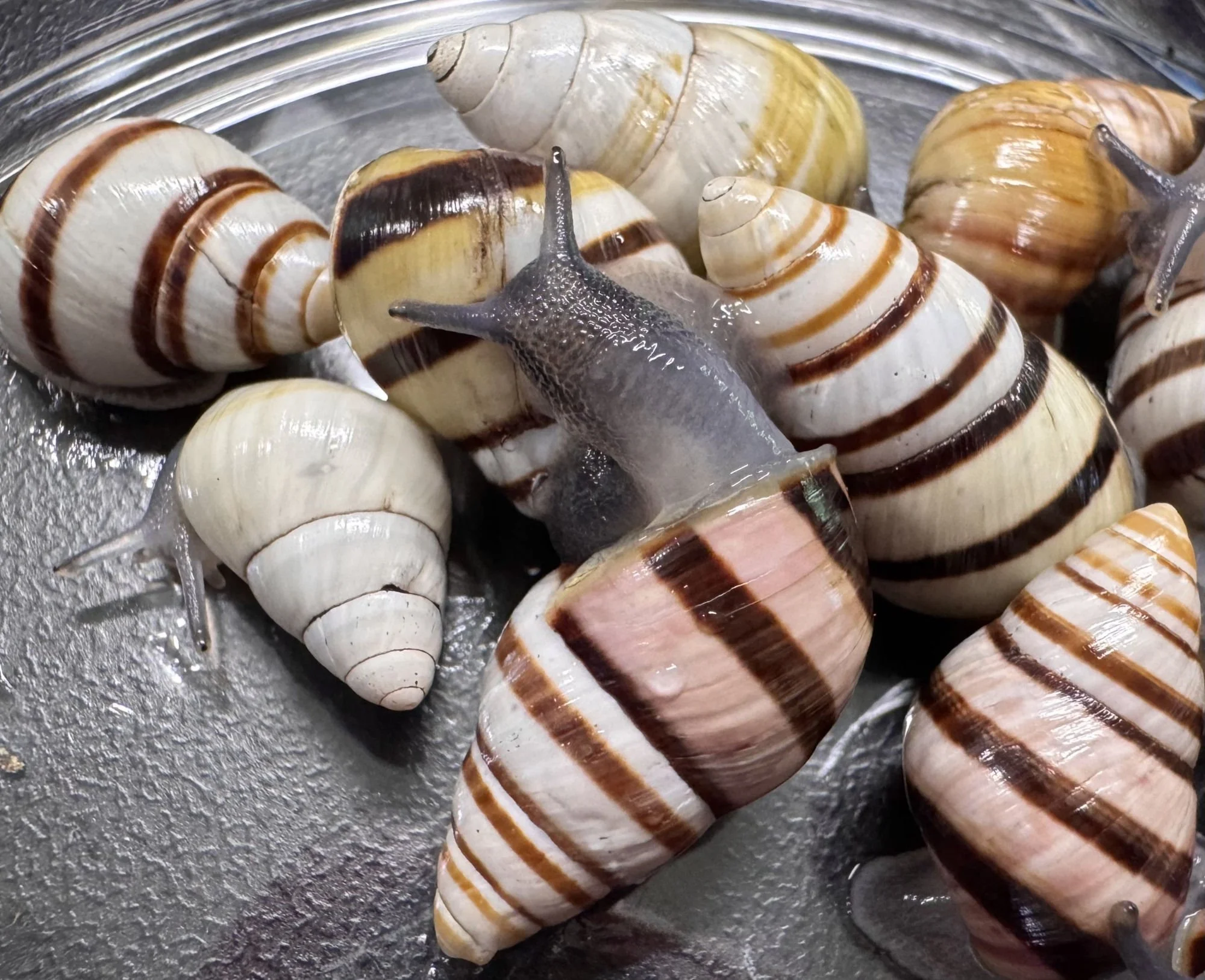
This Hawaiian tree snail species, Achatinella fulgens, shows variation in shell color pattern. Photo: David R. Sischo, Hawaiʻi Division of Forestry and Wildlife
The glittering green Manus Island tree snails
The Manus green tree snail or emerald green snail Papustyla pulcherrima is perhaps the most recognizable land snail in the world, due to its thin bright green outer shell layer. It is known only from the tiny rainforested Manus Island near New Guinea, an incredibly biodiverse place that is considered “a hotspot within a hotspot” because of its multitude of species. These snails are highly valued by local people on Manus Island: they are part of the traditional ceremonial dress, featured on the provincial flag, and fashioned into jewelry. Logging, plantation agriculture, and over-collecting are major threats to this species.
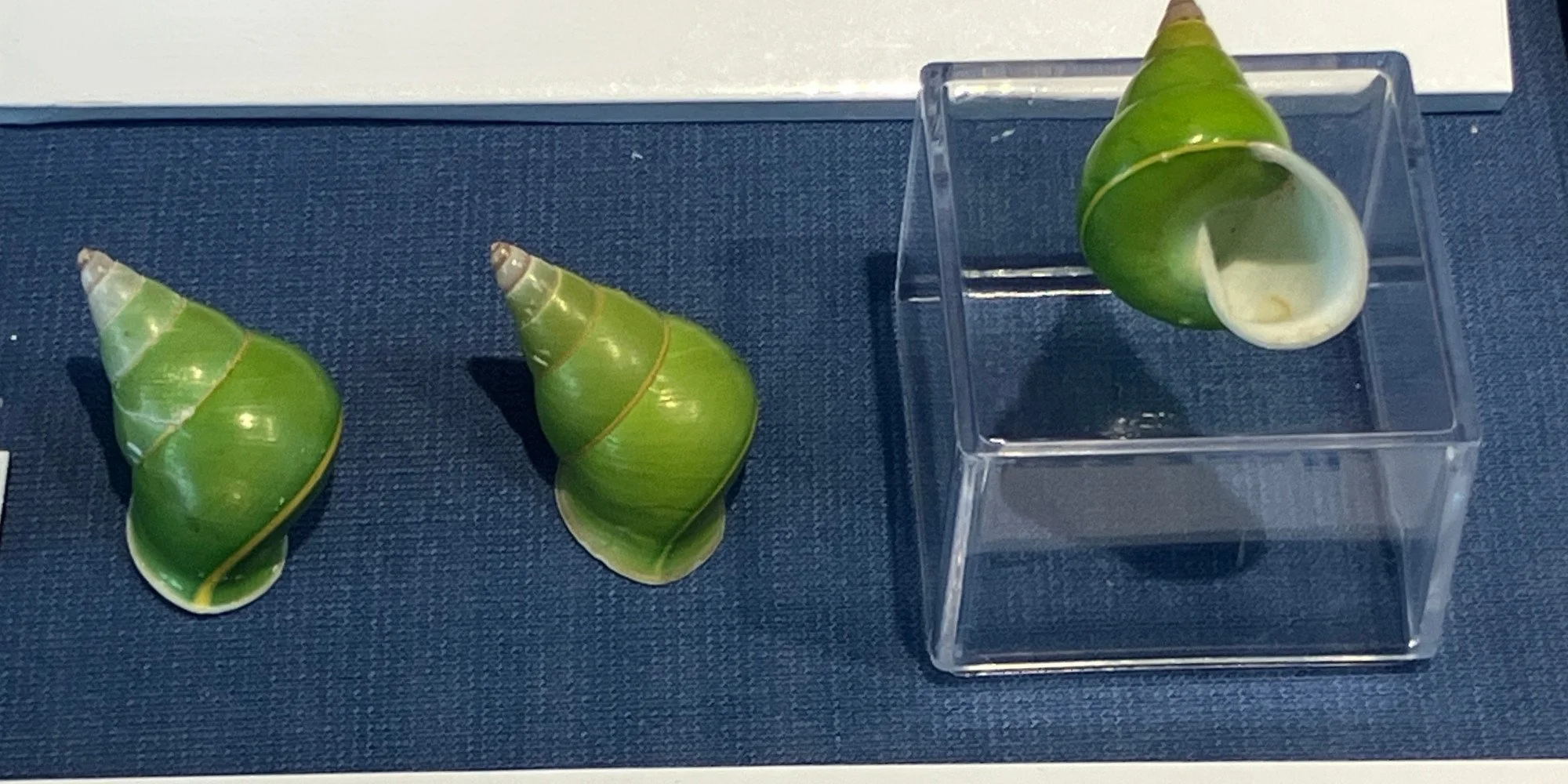
The Manus Island green tree snail Papuina pulcherrima lives only in the forest of Manus Island, New Guinea. (SUNY-ESF Roosevelt Wild Life Collections, Syracuse, NY). Photo from display at the Museum of the Earth.
Cuban painted Polymita
Colorful snails of the genus Polymita are found only in Cuba, where they live on bushes and trees in small patches of coastal forest. There are probably at least six species of Polymita. Cuban scientists are working hard to educate people about these colorful snails and protect them from their main threats, which include habitat destruction, over-collecting, and climate change. Recent research on these snails suggests that their different shell color forms might affect their ability to tolerate heat stress.
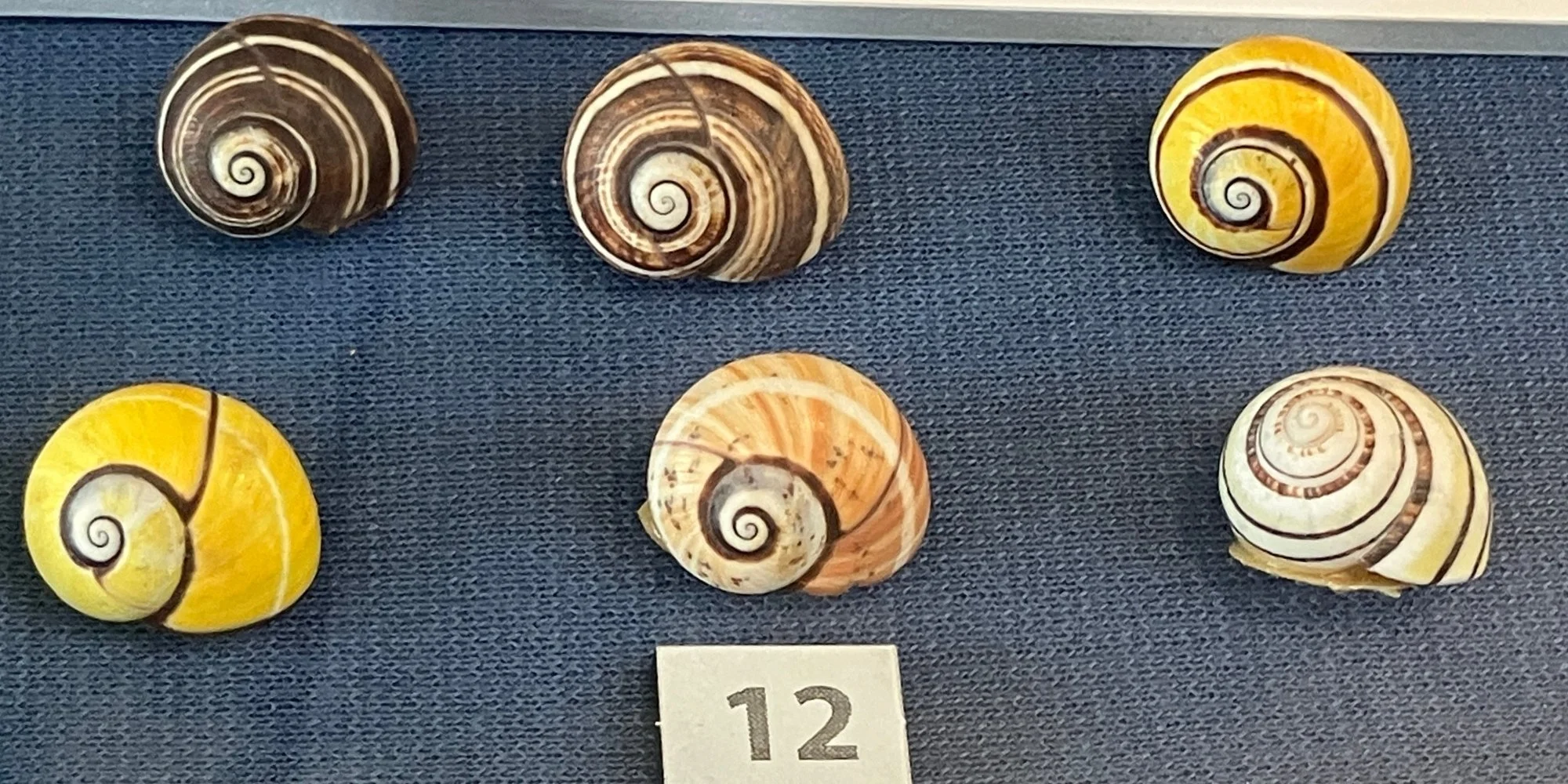
Polymita picta is an imperiled species that has suffered from habitat destruction and over-collecting. It is listed on CITES Appendix I, which helps restrict its trade outside of the country of Cuba, to which it is endemic. Polymita picta is a hermaphrodite (male and female in the same body) and when snails mate, they stab each other with “love darts,” which helps their mating to proceed. Photo from display at the Museum of the Earth.
Sources and further reading on Polymita:
Gordillo-Perez, M.J., Beenaerts, N., Sanchez, D.L., Smeets, K., Arias-Sosa, Y.C., and B. Reyes-Tur. 2025. Shell colour luminance of Cuban painted snails, Polymita picta and Polymita muscarum (Gastropoda: Cepolidae). PLOS One https://doi.org/10.1371/journal.pone.0314008
Main, D. 2020. World’s most beautiful snails threatened by illegal trade. National Geographic 15 July 2020 https://www.nationalgeographic.com/animals/article/cuba-polymita-snails-most-beautiful-shells-endangered
Powell, K. 2021. Shell shock: a biologist’s quest to save the endangered painted snail. Nature 594, 606 (2021) doi: https://doi.org/10.1038/d41586-021-01683-8
Singing jewels of the forest: Hawaiian tree snails
There are 763 known Hawaiian land snail species, most of which occur nowhere else on Earth. Ninety-nine of these snails belong to the subfamily Achatinellinae, tree snails known in Hawaiian as kāhuli. These snails were so abundant on rainforest trees, that native Hawaiians ascribed to them the singing sounds of the local crickets. Some achatinellines stay in one home tree for their entire lives. They do not eat the leaves, but rather glean fungus, algae, and bacteria from the leaf surfaces.
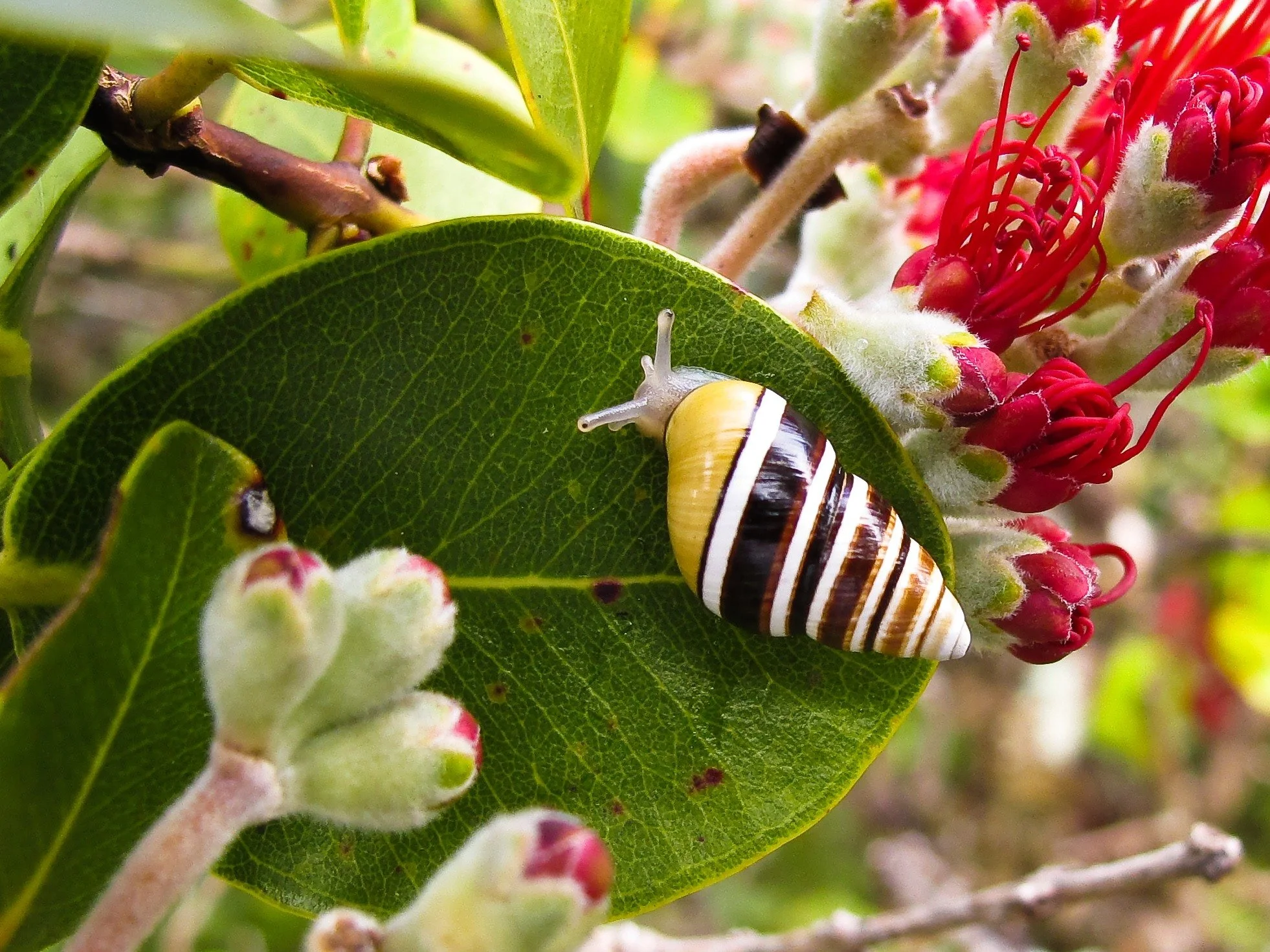
Hawaiian achatinelline tree snail Partulina mighelsiana from the island of Molokaʻi. Photo: David R. Sischo, Hawaiʻi Division of Forestry and Wildlife
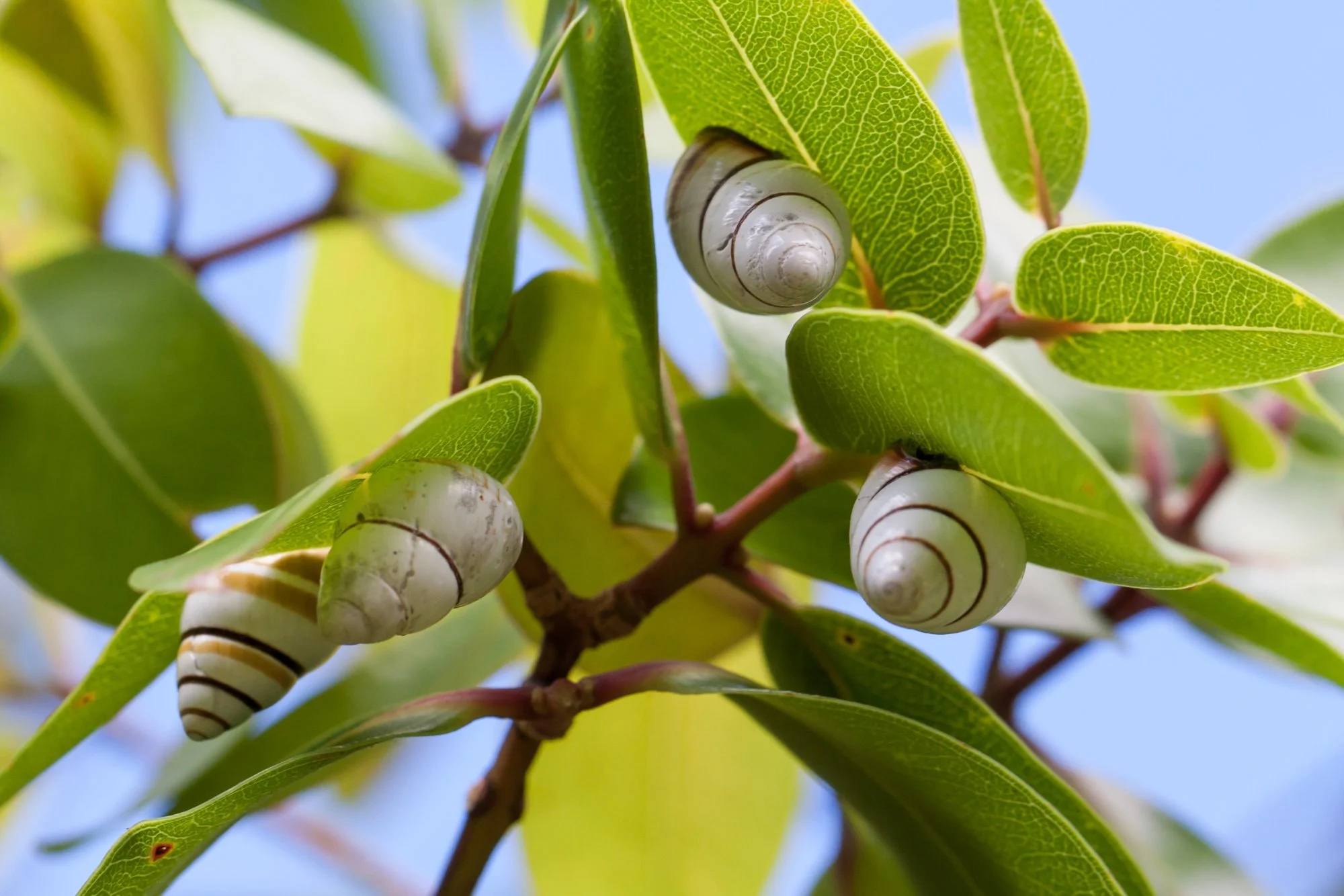
Achatinelline tree snails or kāhuli were once very abundant on Hawaiian rainforest trees, such as this ʻōhiʻa lehua tree (Metrosideros polymorpha). Photo: David R. Sischo, Hawaiʻi Division of Forestry and Wildlife
Approximately 50 achatinelline tree snail species remain, and they are all imperiled. The snails have suffered from habitat loss, invasive predatory rats, over-collection, and the introduction of the predatory rosy wolfsnail Euglandina rosea. Conservation efforts are focused on habitat protection, captive breeding, and education.
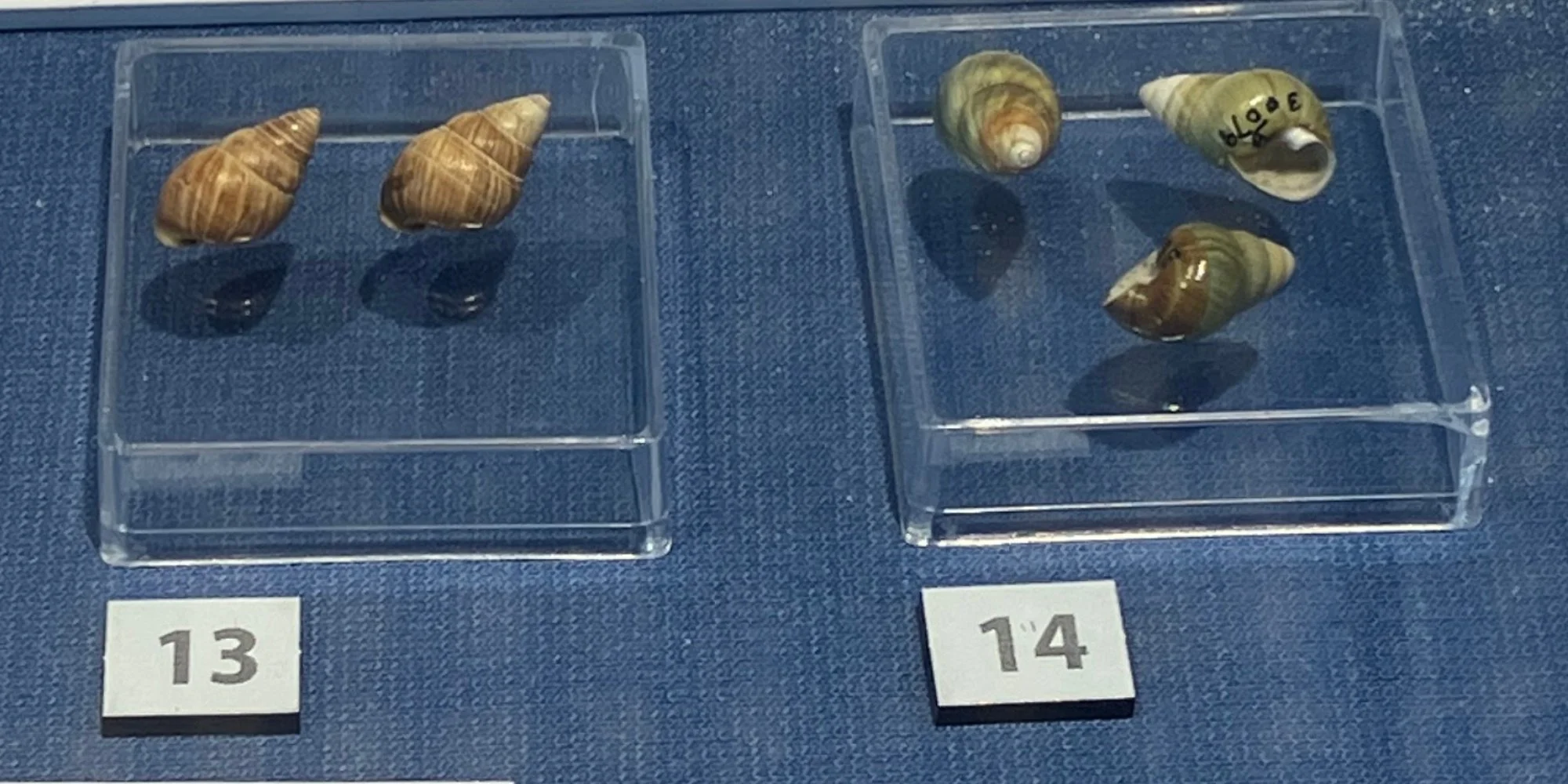
Specimens on display at the Museum of the Earth:
13. PRI 108450 Achatinella apexfulva hanleyana, Honolulu, Hawaii. The Hawaiian tree snail Achatinella apexfulva, including this subspecies Achatinella apexfulva hanleyana, was native to Oahu and is now extinct.
14. PRI 96873 Achatinella vulpina (“A. prasinus”). The Hawaiian tree snail Achatinella vulpina is officially listed as Critically Endangered on the IUCN Red List, but is very likely extinct, since it has not been seen since the 1960s.
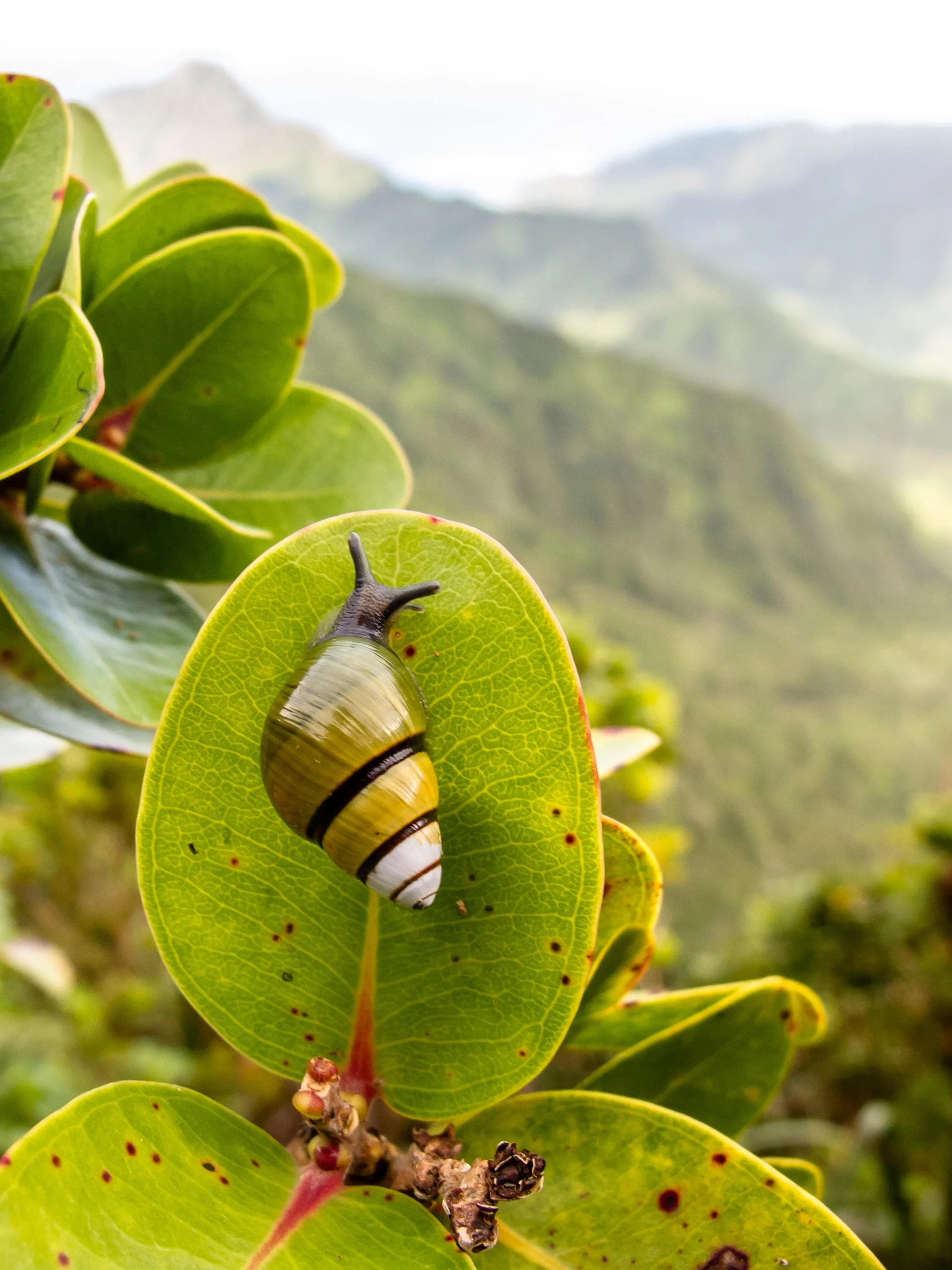
Achatinella sowerbyana, a federally endangered Hawaiian tree snail endemic to the Koʻolau Mountains of Oʻahu. Photo: David R. Sischo, Hawaiʻi Division of Forestry and Wildlife
Achatinellidae (209 species) is one of four land snail families that lives only on Pacific Islands. The others are Amastridae (see the Carelia in this exhibit), Partulidae (also see this exhibit) and Endodontidae (see punctoids and “tiny tigers” in this exhibit). The isolation among Pacific islands helped to fuel this spectacular diversity. Within Achatinellidae, the subfamily Achatinellinae is the 99 large tree-dwellers Hawaiian Islands and includes the genera Achatinella, Partulina, Newcombia, and Perdicella. We refer to this group as the achatinellines. Other achatinellids (members of the broader family Achatinellidae) are smaller-bodied, such as Auriculella or very tiny such as Tornatellides.
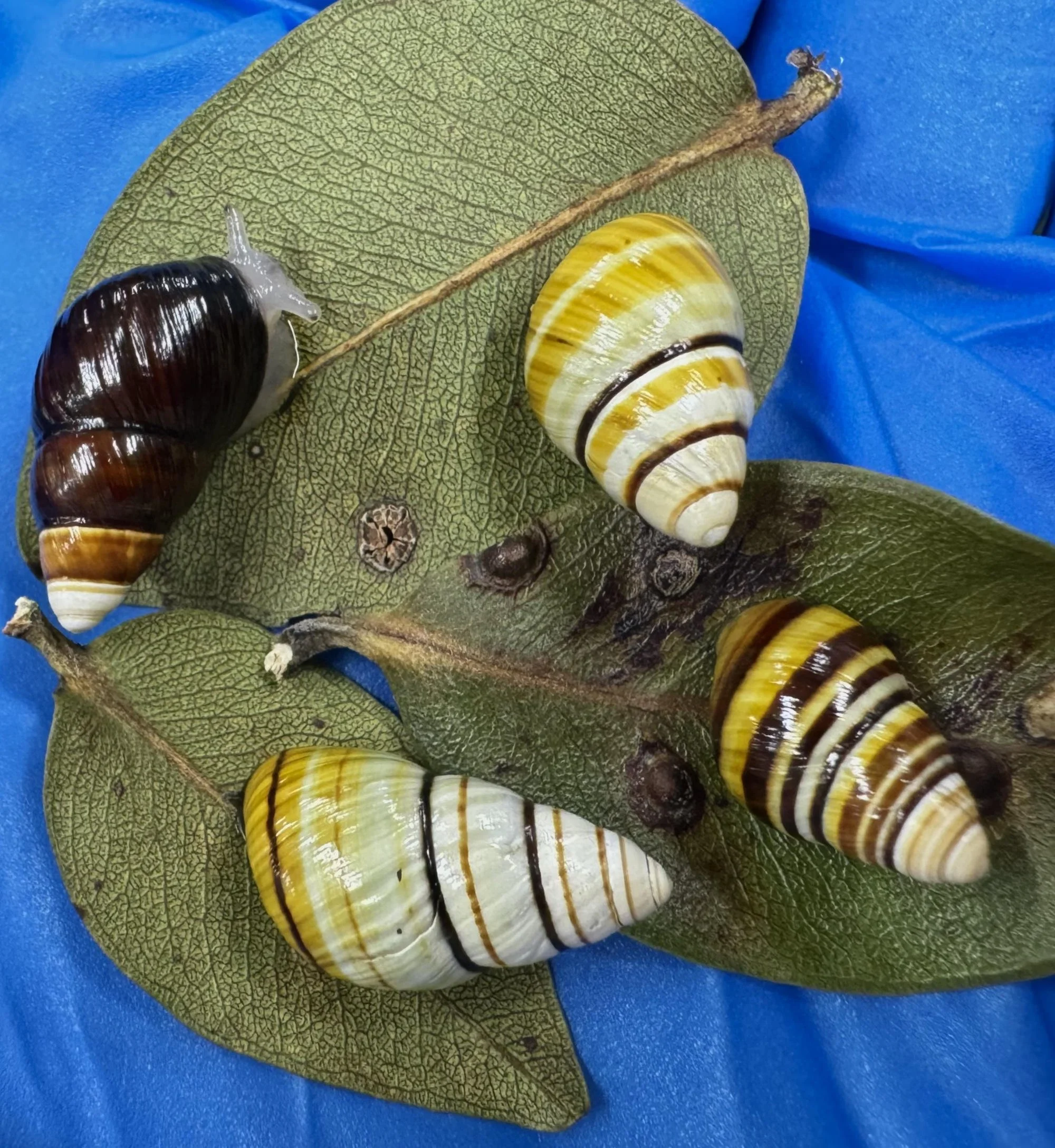
There are many color patterns between the different species of achatinellines, and even within each species. For this reason many subspecies and varieties were also named. Isolation among the many steep valleys and ridges was likely important in the evolution these beautiful color patterns. As achatinellines are declining in the wild, we are also learning more about them, in some cases even discovering species new to science.
There are many color patterns between the different species of achatinellines, and even within each species. For this reason many subspecies and varieties were also named. Isolation among the many steep valleys and ridges was likely important in the evolution these beautiful color patterns. As achatinellines are declining in the wild, we are also learning more about them, in some cases even discovering species new to science.
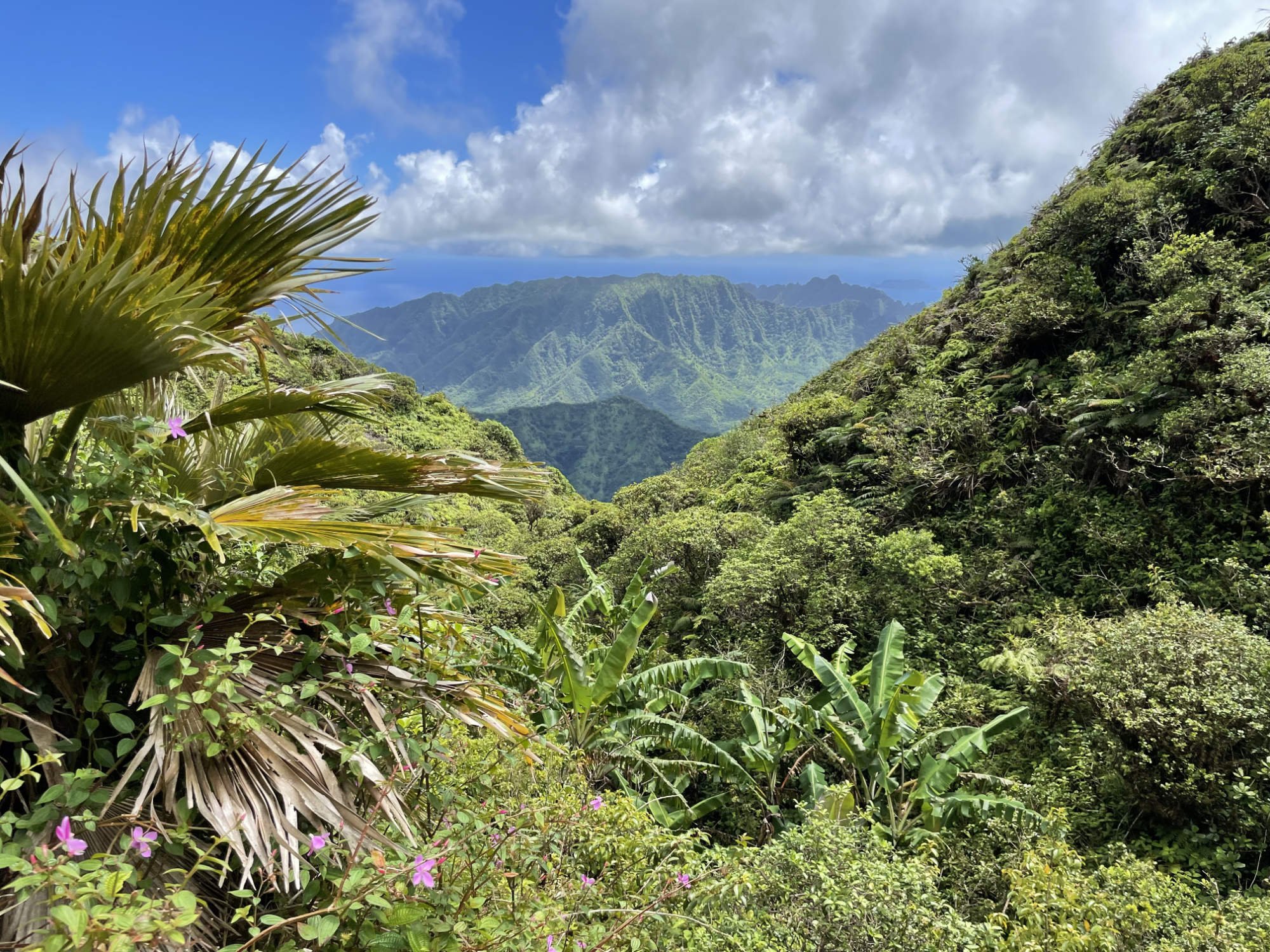
The volcanic geology of the Hawaiian Islands, including different mountain ranges and many steep ridges and valleys within them, have helped to fuel Hawaiʻi’s unsurpassed endemic diversity, especially in land snails like the achatinelline tree snails. Photo: David R. Sischo, Hawaiʻi Division of Forestry and Wildlife
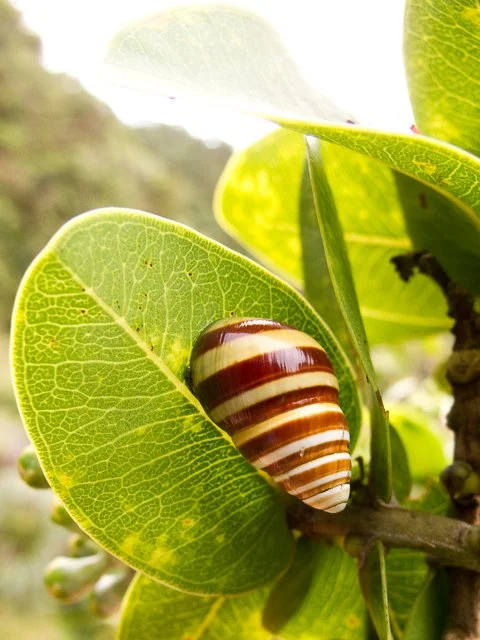
Achatinella livida is an endangered tree snail that is endemic to the Koʻolau Mountains of Oʻahu. It has severely declined due to introduced predators, and is now more vulnerable to events like drought and hurricanes. Photo: David R. Sischo, Hawaiʻi Division of Forestry and Wildlife
For Pacific Island land snails, it is a race against time to both learn as much as we can and also save these peaceful little animals from extinction. Scientists at the Bishop Museum (Honolulu, Hawaii) and the Snail Extinction Prevention Program (SEPP) in the Hawaiʻi Division of Forestry and Wildlife are focusing their attention on the snails, by surveying for snails in the remaining wild habitats, working in the lab to understand their genetics and evolutionary relationships, and by breeding snails in captivity in hopes of increasing their numbers. All of this work is done with special scientific permits and permission from different nature reserves, such as the state’s Natural Area Reserves System (NARS).
The achatinelline tree snails have been declining for over 100 years, but have declined precipitously in recent decades, bringing many remaining species to the brink of extinction. Reasons for this include habitat destruction, introduced predators like rats (Rattus rattus, Rattus norwegicus, and Rattus exulans), Euglandina rosea (rosy wolfsnail), and Jackson’s chameleons (Chamaeleo jacksonii), as well as past over-collecting. Because achatinellines are slow to reach reproductive maturity, and then give birth to only one baby snail or “keiki” at a time, it is more challenging for them to reproduce fast enough to keep up with the rate of predation. Since achatinellines evolved in isolation without rat and snail predators, they do not have adaptations to deal with them.
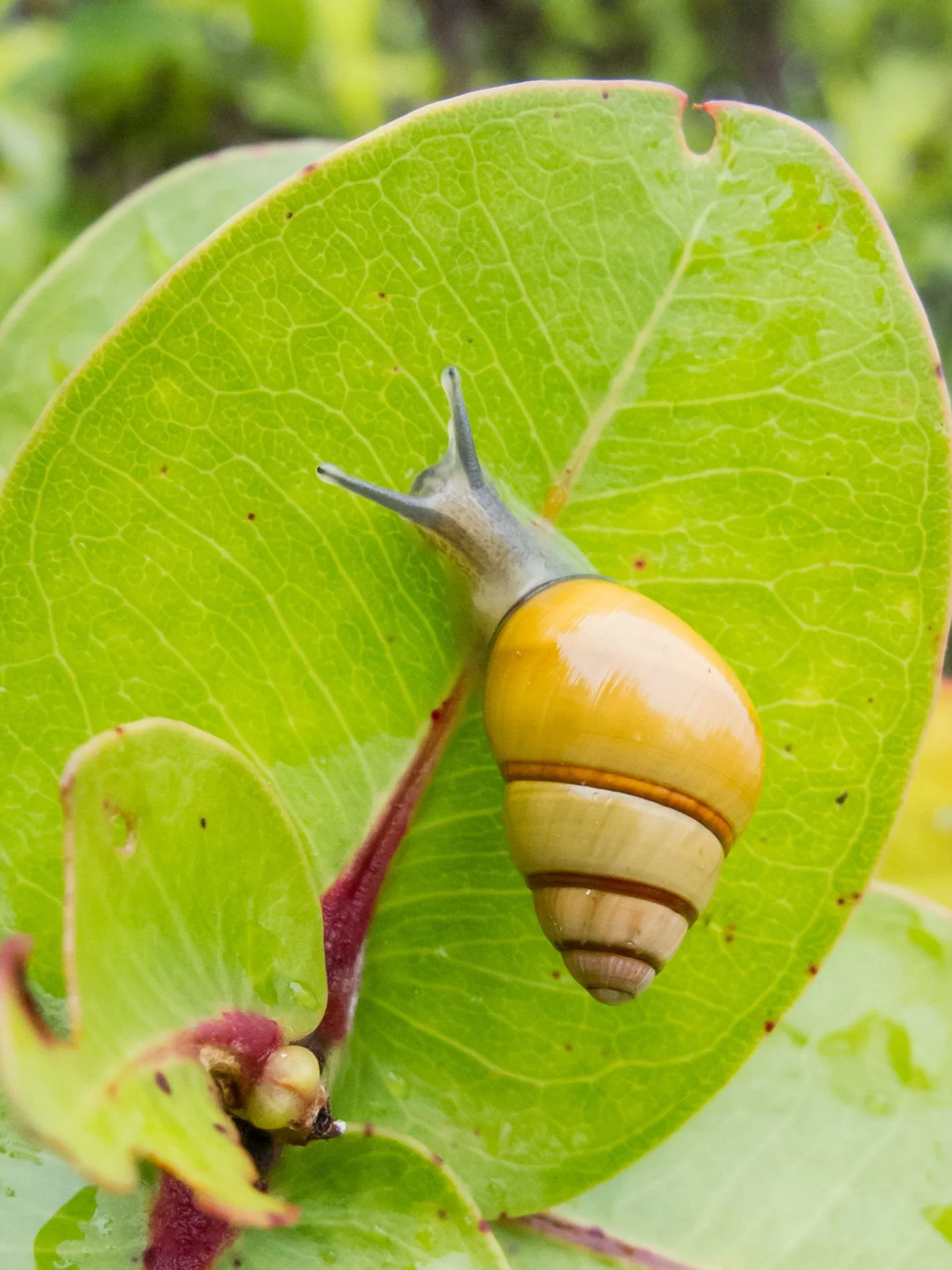
Achatinella lila used to be abundant, but is now known from only two small locations at high elevations in the Koʻolau Mountains of Oʻahu. It is being bred in captivity in hopes of re-introducing it to a predator-proof exclosure in the wild. Photo: David R. Sischo, Hawaiʻi Division of Forestry and Wildlife
Destruction of land snail habitat greatly accelerated Hawaiʻi when land was cleared and changed by western colonists for plantation-style agriculture (e.g. sugarcane, pineapple) and cattle grazing. Native Hawaiian people also suffered additional irrevocable losses during this time. Workers were brought to Hawaiʻi from Asia and elsewhere to labor in back-breaking tropical conditions with little reward. Sugarcane farming was particularly difficult. Laborers and their families have been important to the economic success and culture of Hawaiʻi. Understanding the full history of Hawaiʻi requires grappling with many complex issues, written and oral history, especially as they pertain to past, present and future native Hawaiians and their islands.
You can still see remnants of the sugarcane cash crop in Hawaiʻi, for example in Mauʻi, near the airport. Western-style plantation agriculture and introduced grazers like cattle and goats set the stage for ecosystem degradation and destruction, including diversion of water, removal of native trees and other plants on which snails and other native animals depend, and creating opportunity for invaders such as grasses that pave the way for fires and other invasive species. The infrastructure of roads, housing, and increased population fragmented and degraded many places. These initial acts were the forerunner for the explosive urbanization and resource use that we see today in Hawaiʻi, leaving native forests and wildlife with few places to be, except at high elevations on ridges and mountains.
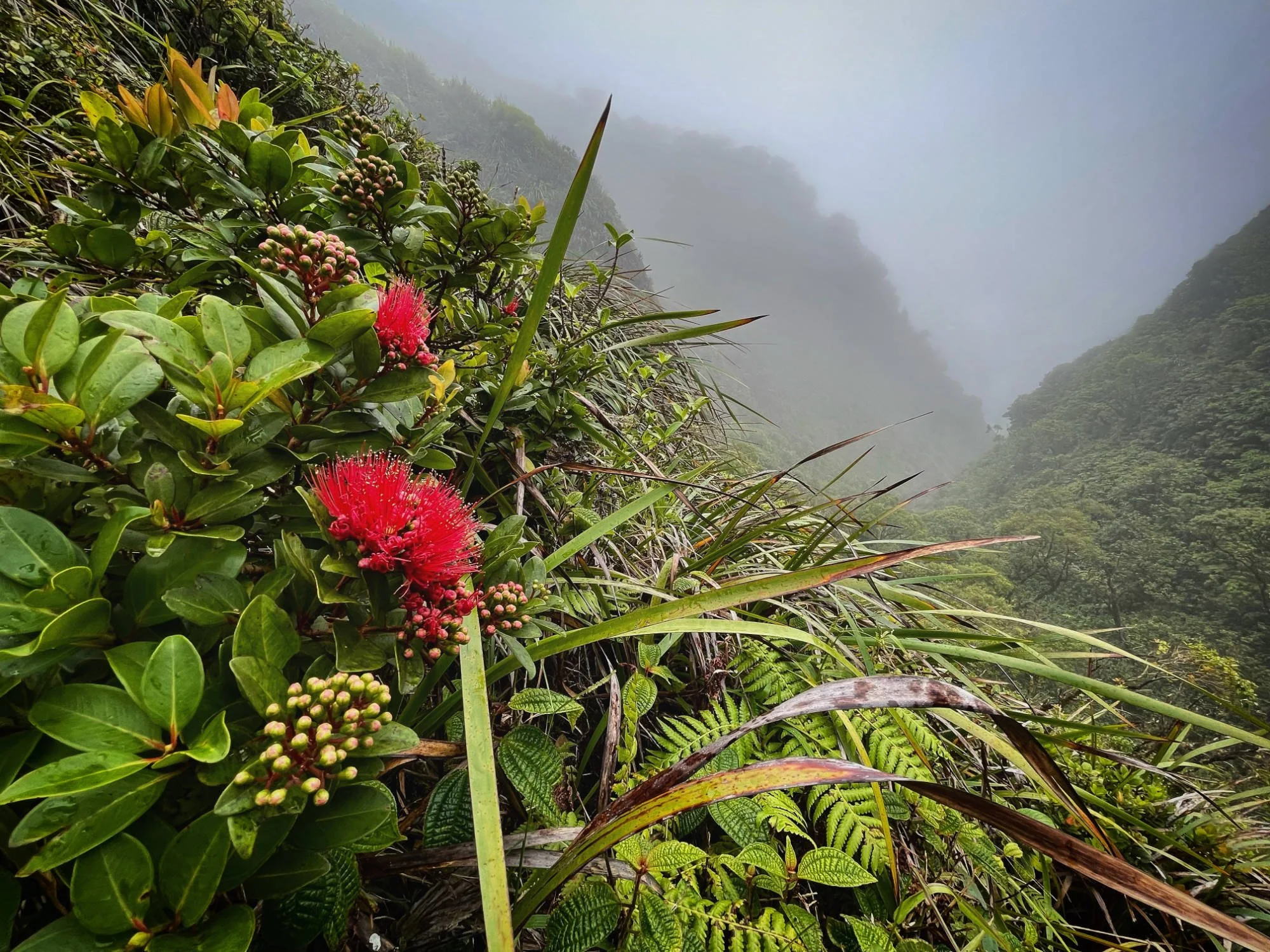
Native Hawaiian plants in the foreground on a Hawaiian high elevation ridge. Photo: David R. Sischo, Hawaiʻi Division of Forestry and Wildlife
Pūʻolo waimaka a ke aloha.
(In Hawaiian: Love brings tears to the eyes.)
- from ʻŌlelo Noʻeau
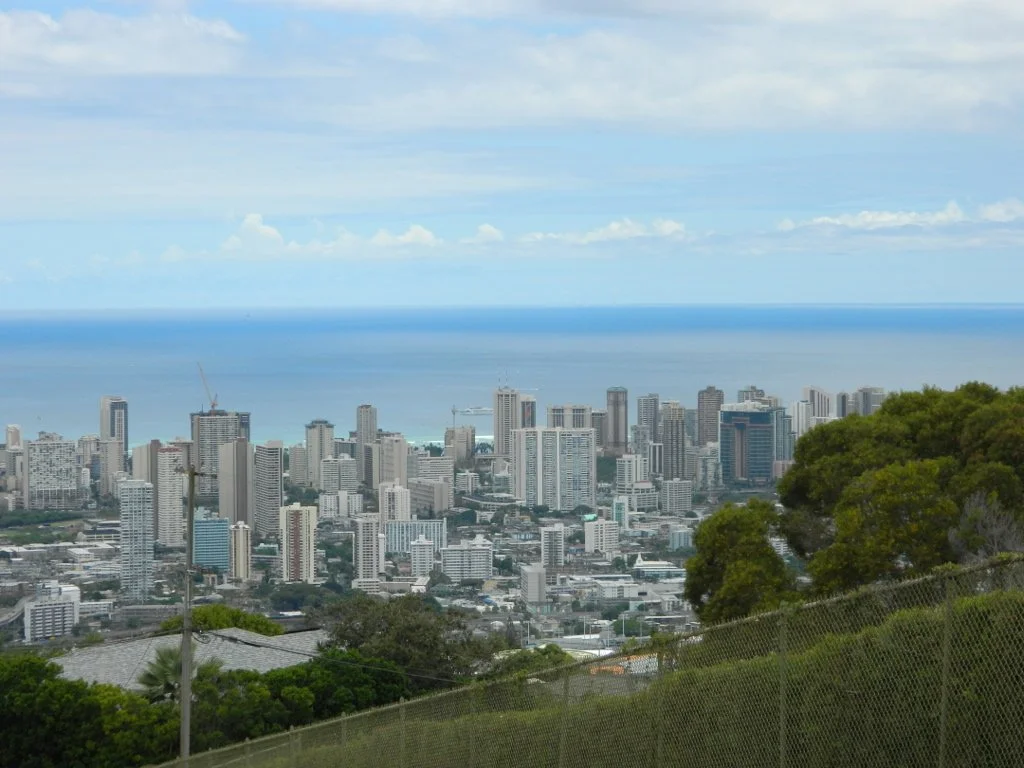
Downtown Waikīkī in Honolulu, Hawaiʻi from Waʻahila Ridge. Photo: Rebecca Rundell
It became clear in the 1980s that some Hawaiian achatinelline tree snails needed to be bred in captivity to keep them from going extinct. This was in part because the wild was not safe for some species anymore, because of threats to the land itself, and because of introduced predators like rats and the rosy wolfsnail Euglandina rosea.
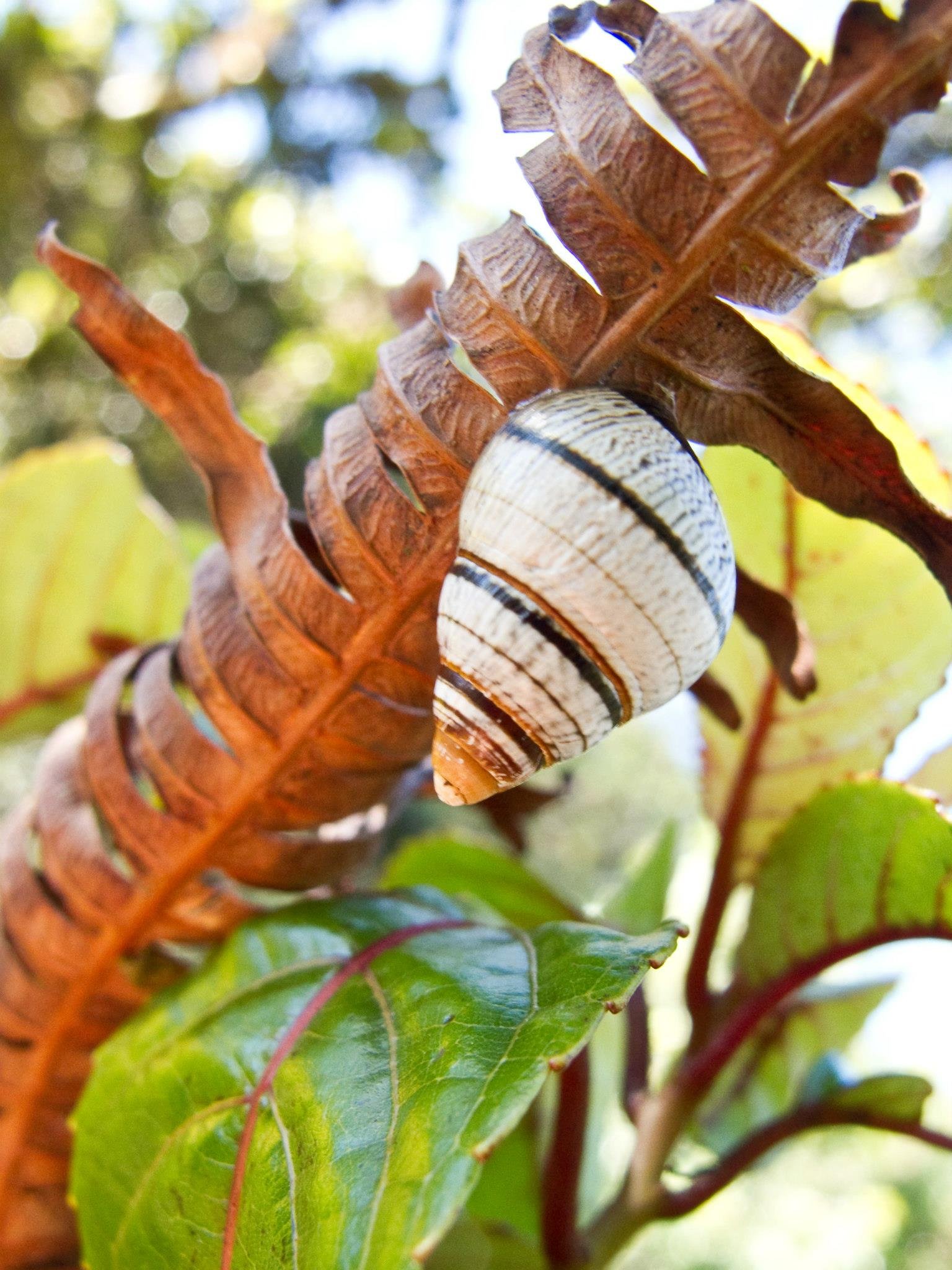
Achatinella mustelina lives in the Waianae Mountains of western Oahu.
University of Hawaiʻi invertebrate biologist Michael G. Hadfield led an effort to protect snail habitats, and list Achatinella species under the U.S. Endangered Species Act. He also initiated the first rigorous captive breeding program for these snails, which has become the Snail Extinction Prevention Program (SEPP) in the Hawaiʻi Division of Forestry and Wildlife, and that is pictured here. SEPP’s work includes regular snail surveys to help document species, threats, and declines, as well as rat trapping. It involves the collaboration and support of many people and organizations in Hawaiʻi and at the federal level.
Captive breeding any endangered species is labor-intensive and challenging. For this reason it is often the last resort in conservation work. Fortunately SEPP has been successful in breeding some species in captivity. Snails are housed in environmental chambers that mimic the temperatures, moisture, and food in the wild habitat.
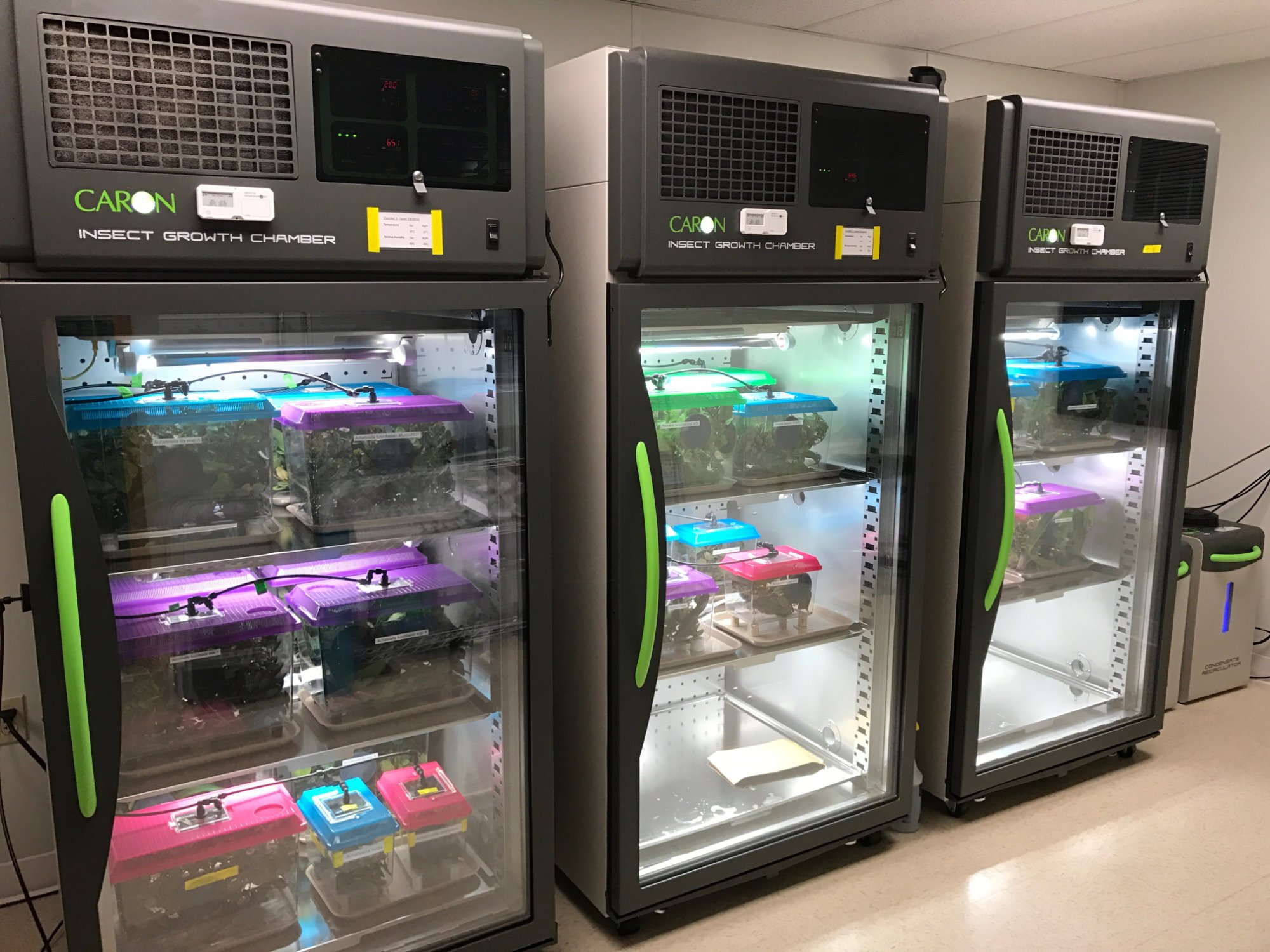
Climate-controlled environmental chambers are life-saving support systems for snails to live and mate in predator-free conditions, and eventually augment wild populations. The snails are meticulously maintained and the facility is permitted as part of the Snail Extinction Prevention Program (SEPP) of the Hawaiʻi Division of Forestry and Wildlife. Photo: David R. Sischo, Hawaiʻi Division of Forestry and Wildlife
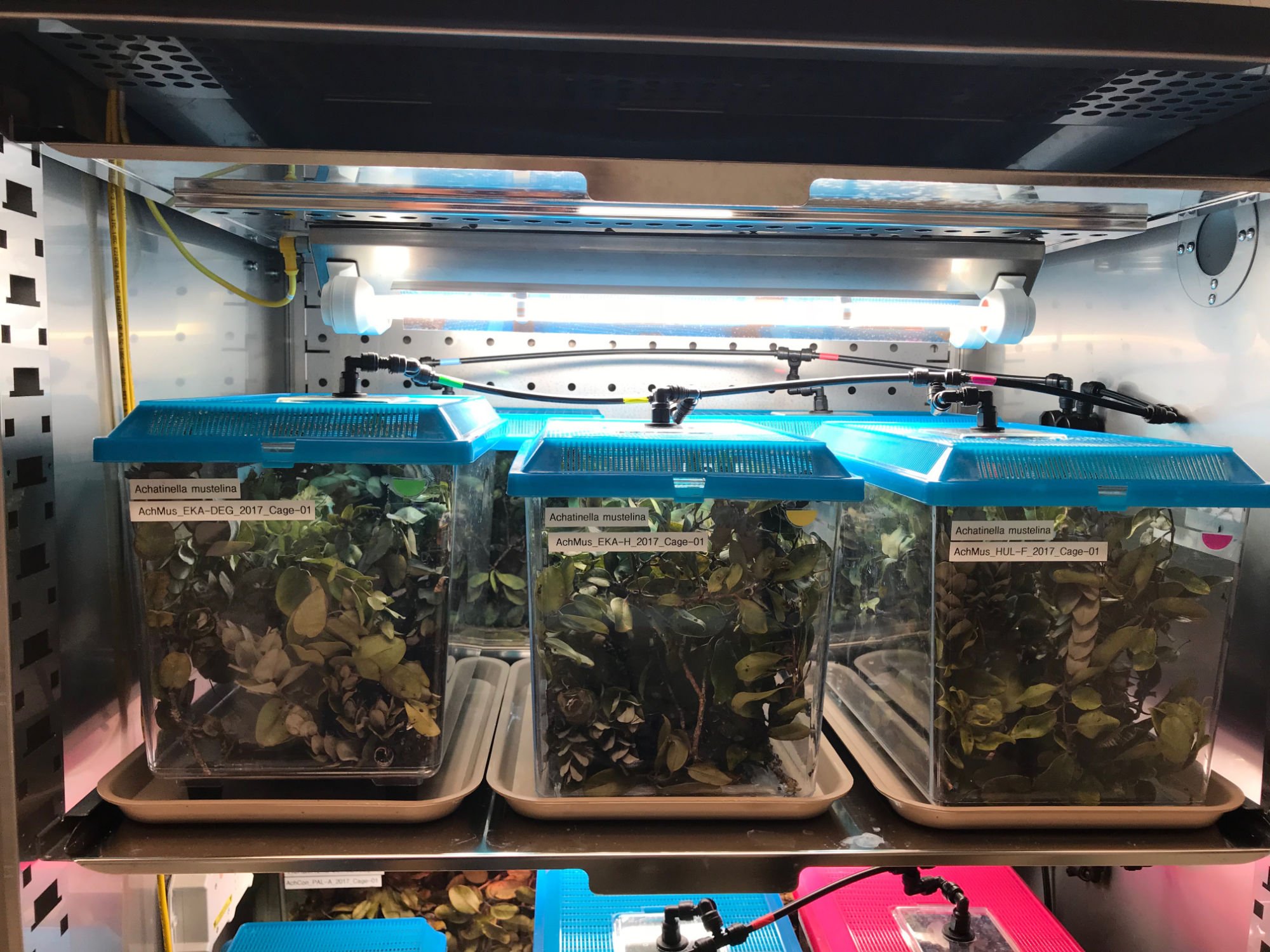
Endangered snails glean fungus, algae, and bacterial films from leaf surfaces in these terraria. When the terraria are regularly cleaned and changed, every snail is counted, and every leaf is searched for potential keiki (babies)! Photo: David R. Sischo, Hawaiʻi Division of Forestry and Wildlife
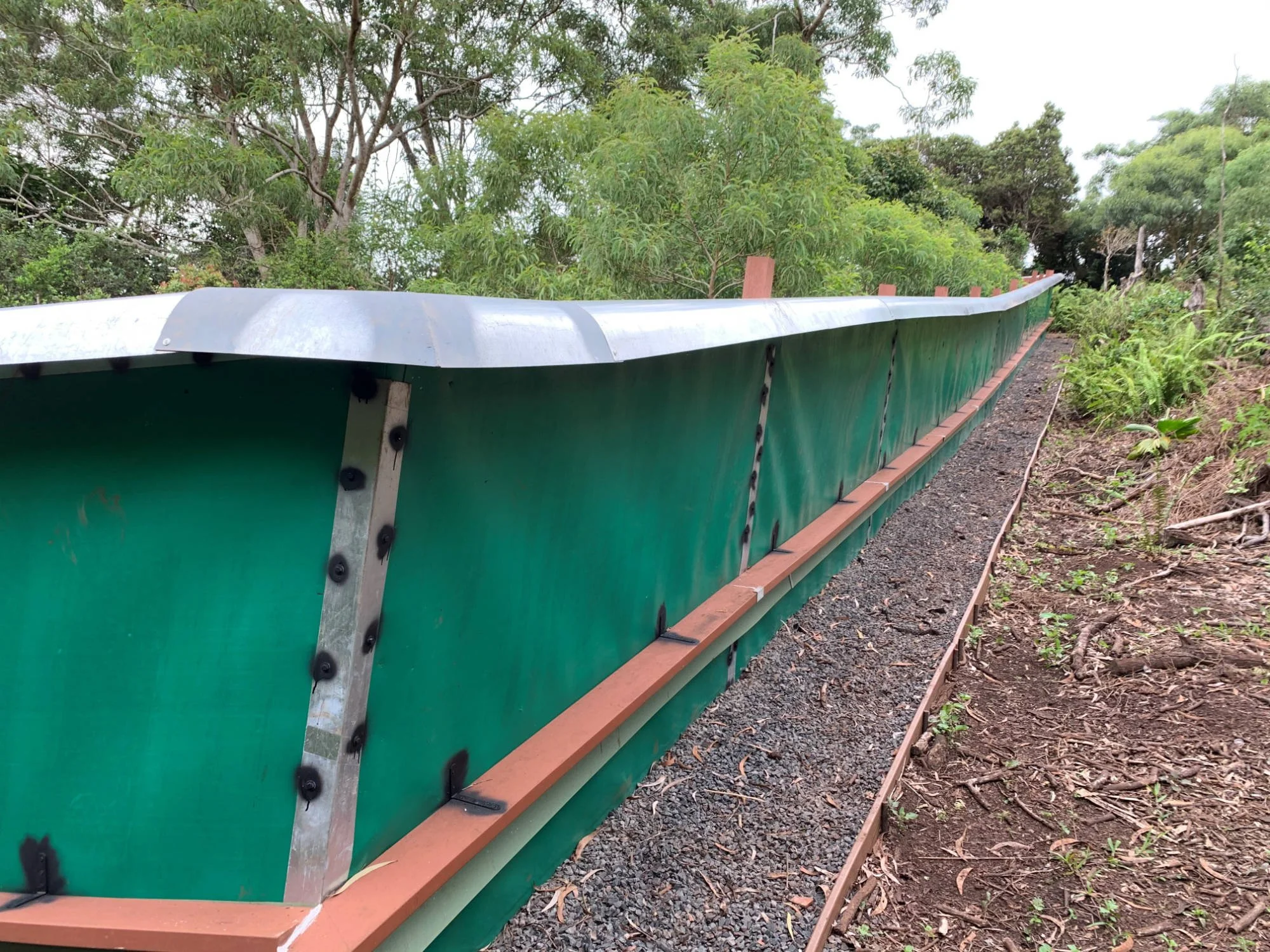
Several remaining achatinelline tree snail populations are protected by “exclosures,” fenced and maintained areas that protect snails from predators as well as goats and pigs that damage habitat. This exclosure protects Achatinella mustelina, and is in the Pahole Natural Area Reserve on Oahu, in the Waianae Mountains. It is near a forested valley that was used for many years in U.S. military live-fire training that sometimes caused wildfires and that left behind unexploded ordnance. Photo: David R. Sischo, Hawaiʻi Division of Forestry and Wildlife
Unfortunately, despite the very best efforts of many people, sometimes species still go extinct. Sometimes their numbers have gotten so depleted in the wild that it is difficult to save them. This was the case for Achatinella apexfulva. The last individuals were brought into captivity for breeding and special care. A. apexfulva eventually had trouble breeding, and the last individual sadly died on New Year’s Day in 2019. The snail was affectionately called “George.” Because of the many threats to Pacific Island land snails, it is possible that many more Pacific land snails will go extinct in our lifetime.
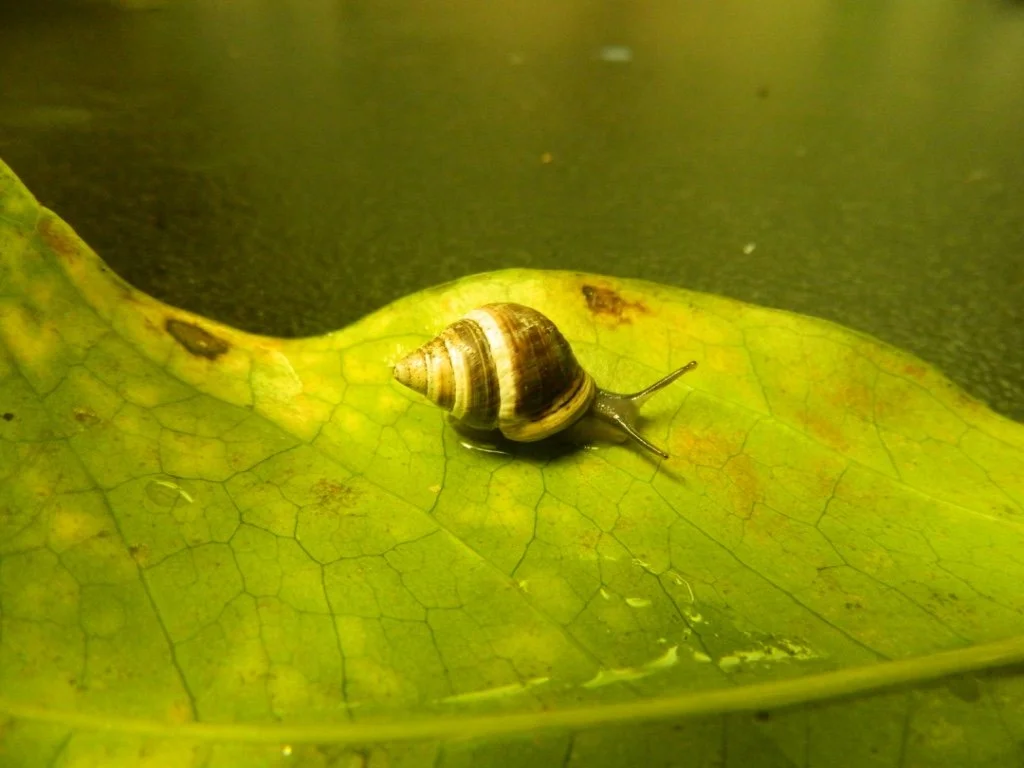
This Hawaiian tree snail was affectionately known as “Lonely George.” George was the last Achatinella apexfulva. The species went extinct with George’s death on New Year’s Day in 2019. Photo: Rebecca Rundell
If you want to help the Hawaiian land snails one good thing to do is to spread the word about them by sharing this exhibit with them and the website of the Snail Extinction Prevention Program (SEPP; Hawaiʻi Division of Forestry and Wildlife), where you can also contribute to their work: https://dlnr.hawaii.gov/ecosystems/sepp/ You can take actions in your own community to help the environment, prevent the spread of invasive species, and work to slow down climate change. Most of all, remember that many dedicated and caring people in Hawaii have already made a big difference, and you can make a difference, too. There is still hope for the snails.
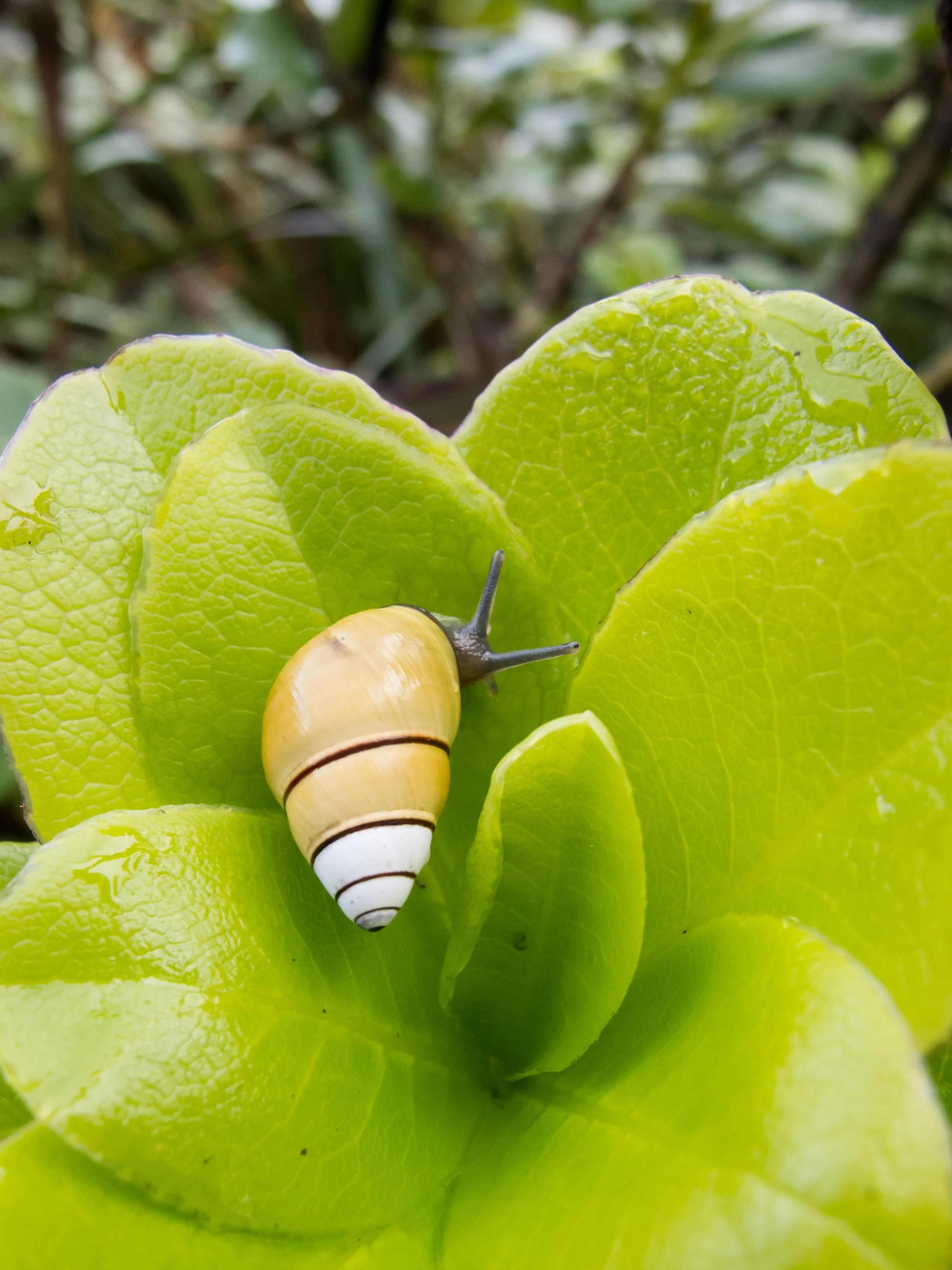
Achatinella sowerbyana tree snail from the island of Oahu. Photo: David R. Sischo, Hawaiʻi Division of Forestry and Wildlife
Acknowledgments:
I am grateful to David R. Sischo, Wildlife Biologist and Program Coordinator for the Snail Extinction Prevention Program (SEPP) in the Hawaiʻi Division of Forestry and Wildlife for his fortitude in meeting the many challenges of snail conservation, and for sharing his beautiful photos of Hawaiian land snails. It takes patience and skill to capture great land snail photos, especially in the wild. These images help bring the animals alive and give us hope to save the snails. Profound thanks to the many biologists and conservationists like David, at the University of Hawaiʻi, Bernice Pauahi Bishop Museum, NGOs, State of Hawaiʻi and at the federal level (including U.S. Fish and Wildlife Service and the U.S. Army) who have dedicated their lives to studying and conserving Hawaiian land snails. Special thanks are owed to Michael G. Hadfield, tireless biologist at the Kewalo Marine Lab of the University of Hawaiʻi. He led the charge for tree snail conservation, training and inspiring generations of students and organizations to understand and protect the spectacular achatinelline tree snails of Hawaiʻi.
Sources and further reading:
Cowie, R.H., Evenhuis, N.L., and C.C. Christensen. 1995. Catalog of the Native Land and Freshwater Molluscs. Backhuys Publishers, Leiden, The Netherlands.
Hadfield, M.G. and D.J. Haraway. 2019. The tree snail manifesto. Current Anthropology 60(20): S209-S235.
Hadfield, M.G., Miller, S.E. and A.H. Carwile. 1993. The decimation of endemic Hawaiian tree snails by alien predators. American Zoologist 33(6): 610-622.
Hadfield, M.G. and B.S. Mountain. 1980. A field study of a vanishing species, Achatinella mustelina (Gastropoda, Pulmonata), in the Waianae Mountains of Oahu. Pacific Science 34(4): 345-358.
Pukui, Mary Kawena. 1983. ʻŌlelo Noʻeau. Hawaiian Proverbs and Poetical Sayings. Bernice P. Bishop Museum Special Publication No. 71. Bishop Museum Press, Honolulu, Hawaii.
https://www.nationalgeographic.com/animals/article/george-the-lonely-snail-dies-in-hawaii-extinction
Shell shape in Caribbean Cerion shows how evolution works
Land snails of the genus Cerion are common on islands in the West Indies. They range from the Florida Keys to the small islands of Aruba, Bonaire, and Curaçao, but most species inhabit Cuba and the Bahamas.
The name Cerion comes from the Latin word for “wax”, because the shells resemble old fashioned bee hives.
Most Cerions inhabit rocks and sparse vegetation on the seashore, where they spend most of their time hanging upside down under leaves or overhangs. After rain or in the evenings, they descend from their perches to scrape and eat fungus off of leaf litter or limestone.
Cerion exhibits extraordinary diversity of shell form. Some Cerions are tall and pencil-thin; others are shaped like golf balls, and one is almost a cube. This diversity led scientists to assign more than 600 species names to Cerion. But the story is probably much more complex than this. It is likely that there are very few true species (groups that cannot reproduce with one another) of Cerion. Multiple shell traits appear to evolve repeatedly, and reappear in a small number of species across the group’s geographic range and through time.
Cerion was a special interest of the famous paleontologist and evolutionary biologist Stephen Jay Gould, who worked on untangling its peculiar evolutionary history over several decades.

Cerion watlingense land snails on tree trunk near the western margin of Storr's Lake, eastern San Salvador Island, eastern Bahamas. Photo by James St. John (CC BY 2.0 license) via Wikimedia Commons.
Live birth and Pacific partulids
Land snails of the family Partulidae live only on Pacific islands. Their name comes from the Latin partus, meaning “given birth to,” in reference to this snail’s peculiar reproduction. Whereas most land snails lay clusters of eggs, partulids give live birth to only one baby snail at a time. This means that they often cannot keep pace with predation by rats and other introduced predators. Nearly half of the 120 partulid species are now extinct. Captive breeding programs at zoos in London and Seattle are working to save some partulid species, and biologists are monitoring other species in the wild.
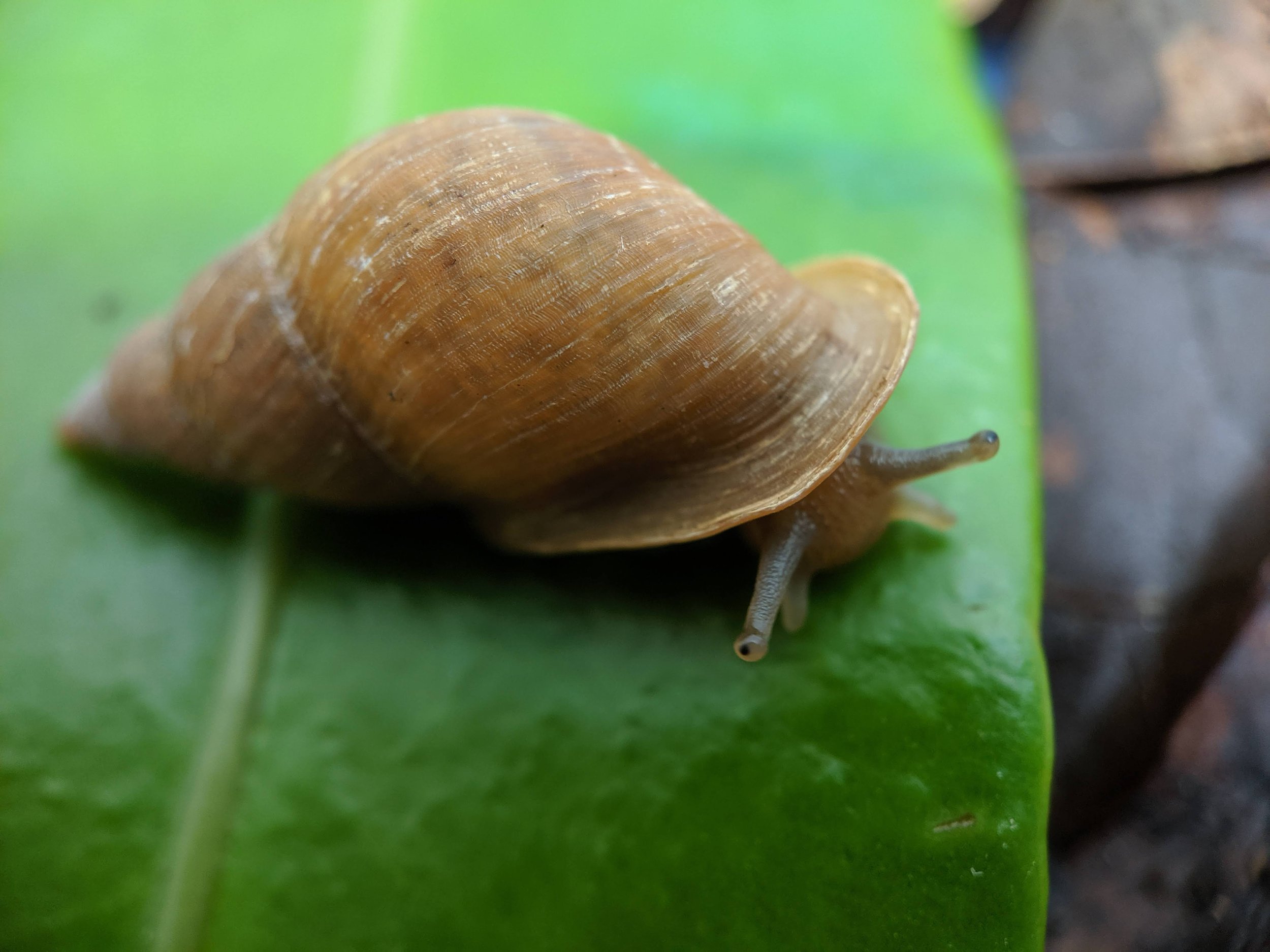
The endangered Palau pandanus tree snail Palaopartula thetis favors pockets of leaf litter in the tall bushy pineapple-like plant called pandanus. Photo: Rebecca Rundell
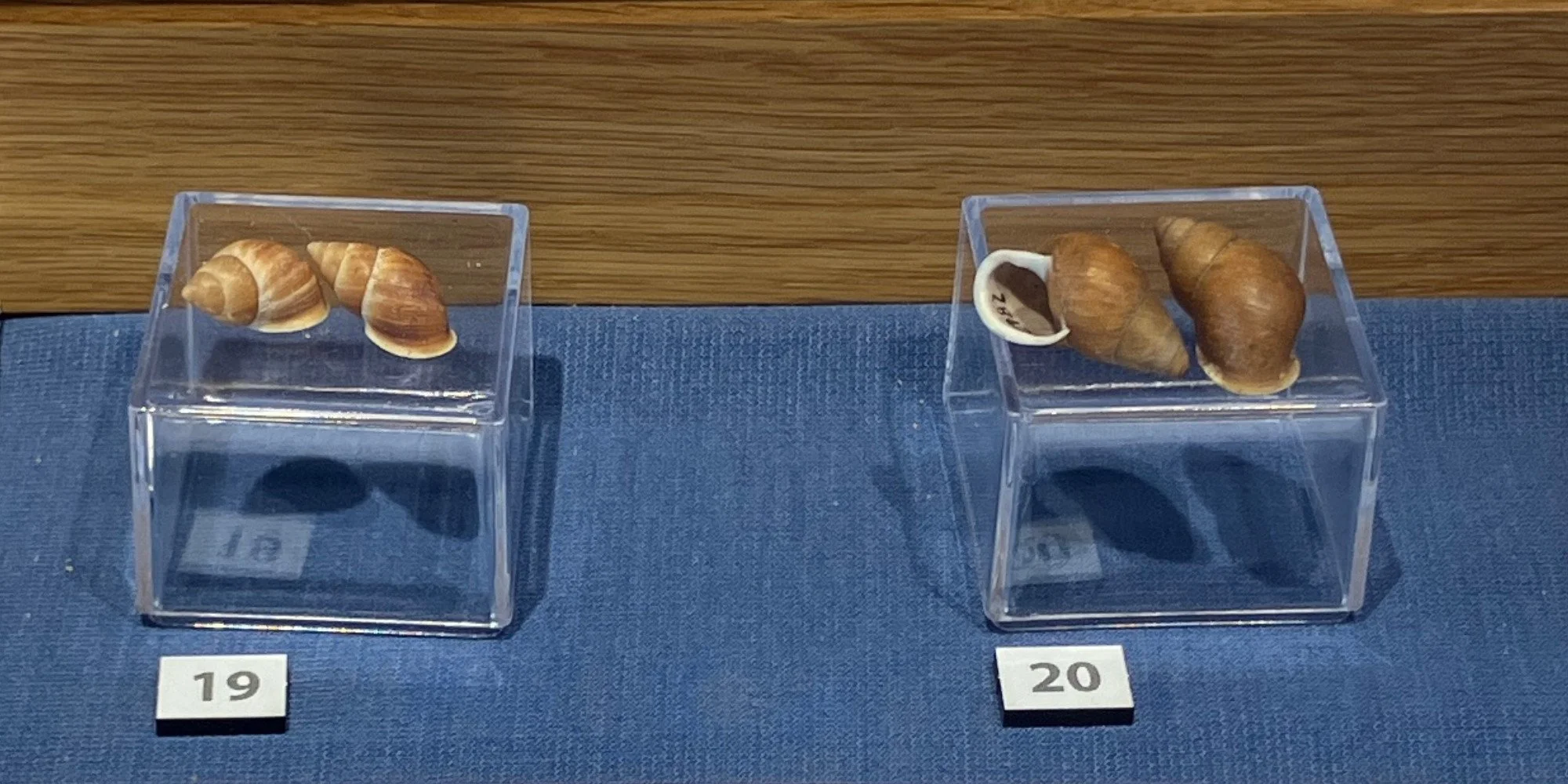
On display at the Museum of the Earth:
Partula planilabrum (PRI 94187) from the East Coast of Tahaʻa in the Society Islands of French Polynesia. This species is now extinct.
Partula guamensis (PRI 94181), the Pohnpei ground Partula snail, from the island of Pohnpei (Federated States of Micronesia) in the Caroline Islands archipelago of the western Pacific. This species is now extinct.
The Partulidae is a Pacific-endemic group, meaning its species are only known from Pacific islands. Many of the species are known only from single islands (single island endemics). Much of partulid endemism is centered in the Society Islands of French Polynesia, which was once home to at least 61 endemic species. Most of these land snails have gone extinct due to invasive predators that were introduced purposely by humans, especially the introduced biocontrol snail, Euglandina rosea (the “rosy wolfsnail”). The rosy wolfsnail was introduced to control the giant African land snail, however it didn’t work and instead became established and ate native snails. Partula planilabrum from this exhibit, a Tahaʻa endemic (Society Islands), is now extinct. It has not been found on Tahaʻa since the rosy wolfsnail was brought to the island prior to 1994.
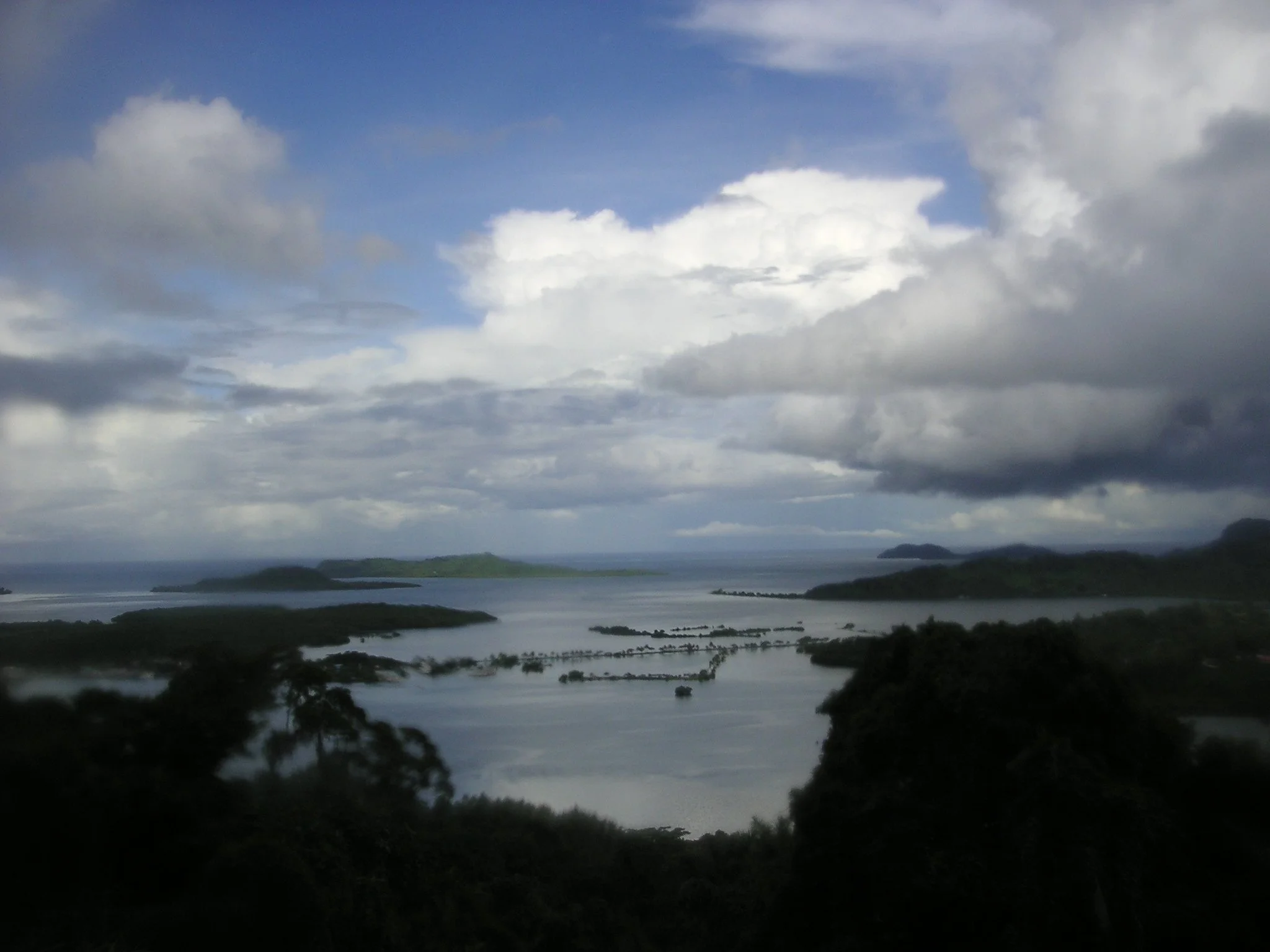
View of Pohnpei (Federated States of Micronesia) from Paipalap (Sokehs Rock) area in 2005. The Federated States of Micronesia (FSM) is one country within the broader Micronesian region of the Pacific. FSM includes the States of Yap, Chuuk, Pohnpei, and Kosrae. Photos: Rebecca Rundell
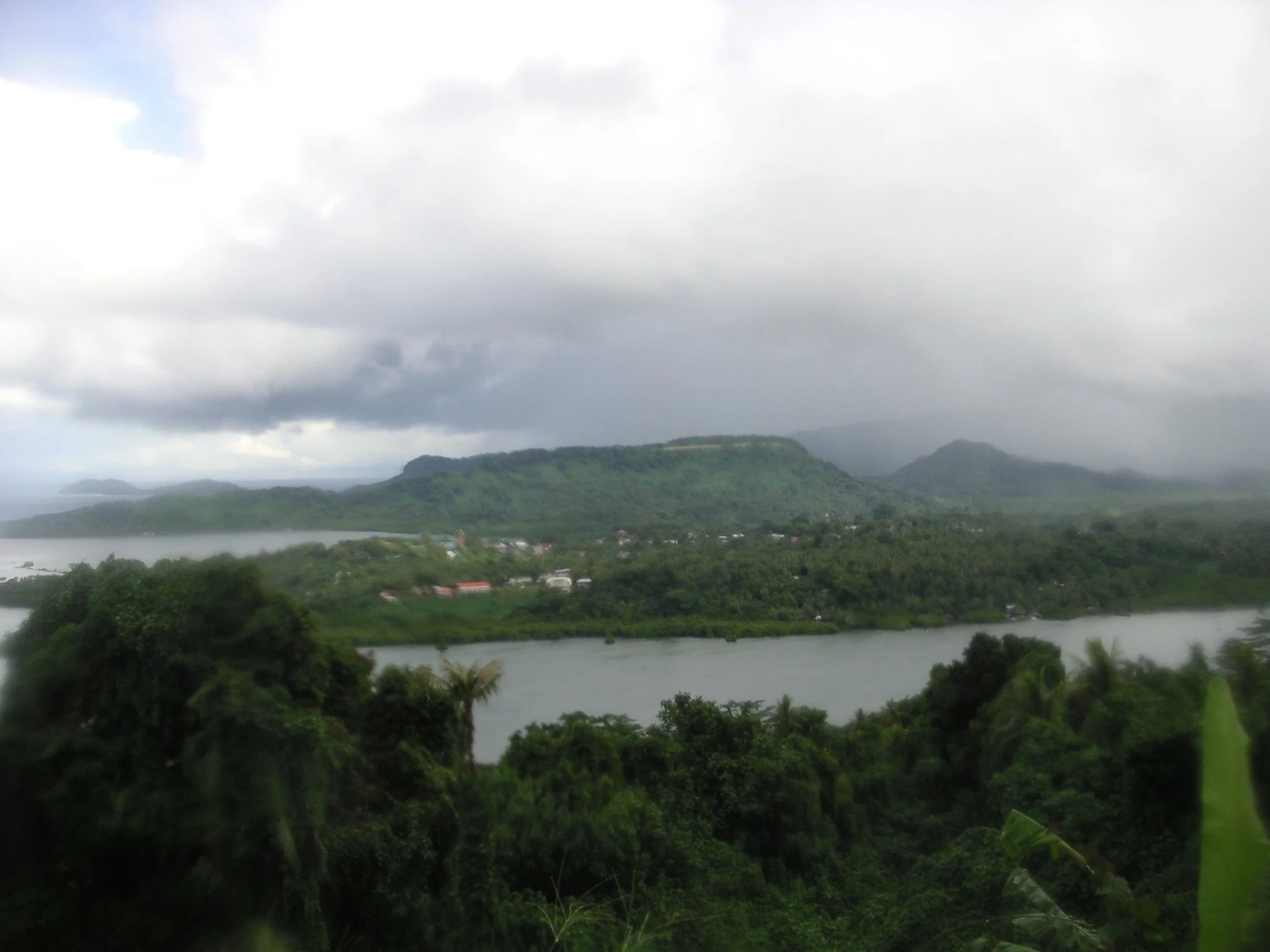
View of Pohnpei (Federated States of Micronesia) from Paipalap (Sokehs Rock) area in 2005. The Federated States of Micronesia (FSM) is one country within the broader Micronesian region of the Pacific. FSM includes the States of Yap, Chuuk, Pohnpei, and Kosrae. Photos: Rebecca Rundell
The Pohnpei ground Partula snail Partula guamensis from this exhibit was endemic to Pohnpei. Despite its name, this snail is not from Guam. Pohnpei is an island in the western Pacific archipelago of the Caroline Islands, and is part of the Federated States of Micronesia. P. guamensis is unfortunately extinct. P. guamensis was fairly unusual among partulids because it lived on the ground in leaf litter rather in trees like many other partulids do (or did).
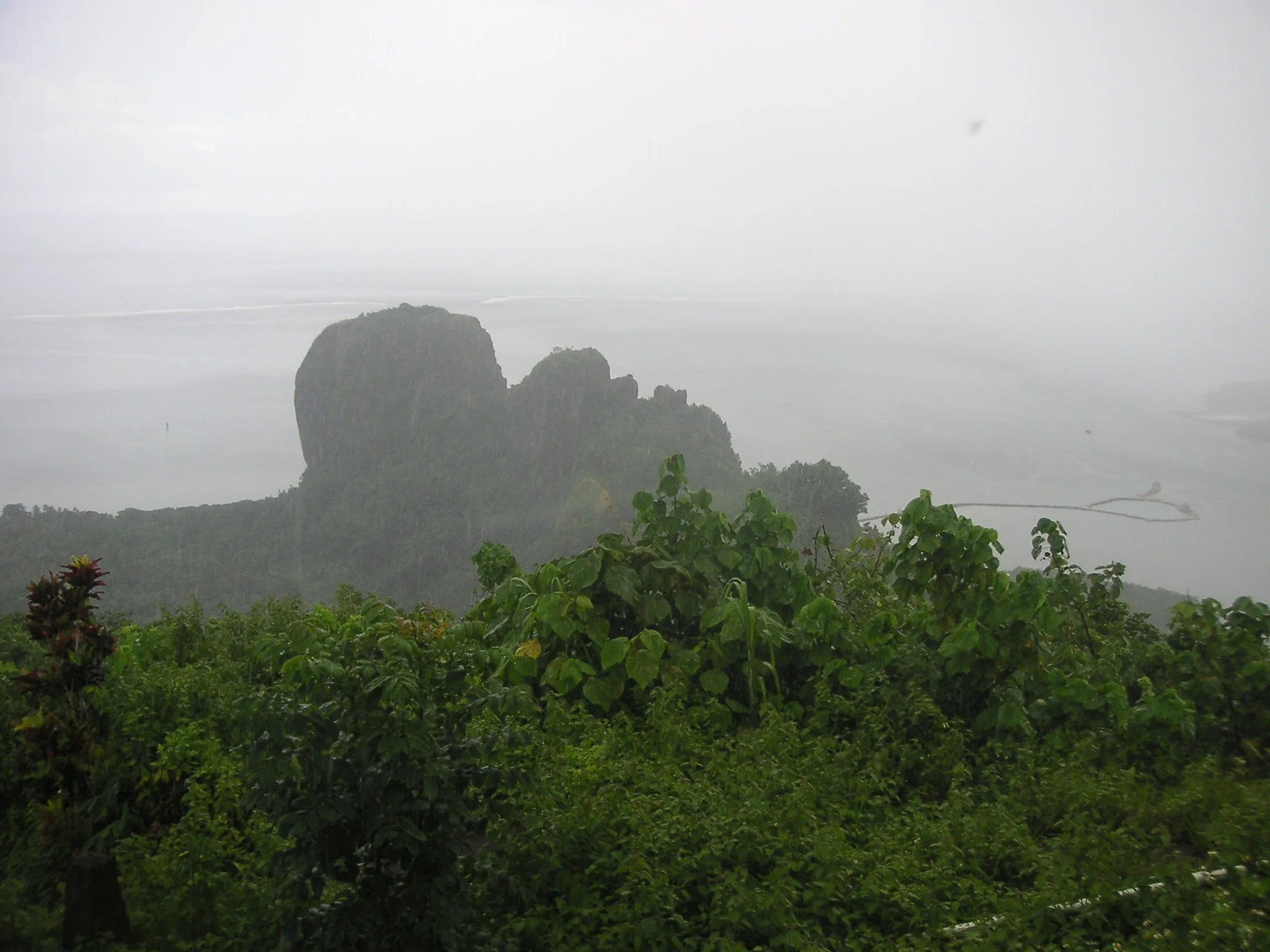
Paipalap (Sokehs Rock), the “great boulder” made of basalt, in Pohnpei (Federated States of Micronesia). Photo: Rebecca Rundell
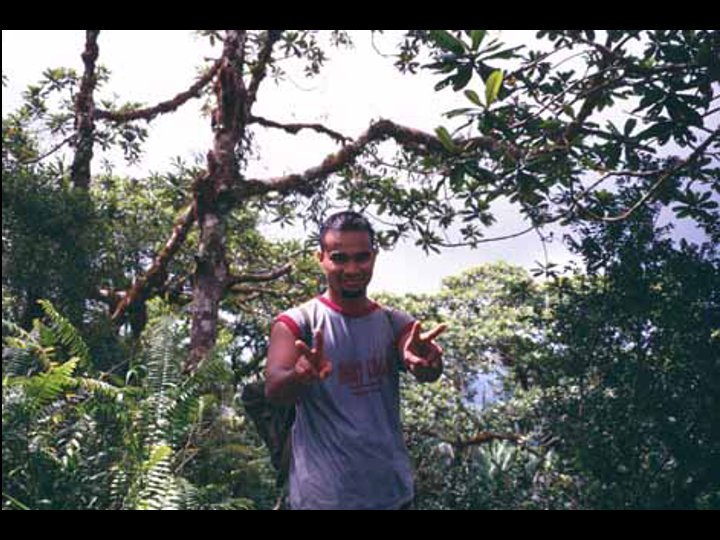
Micronesian biologist Peltin Pelep on a partulid land snail survey in Kitti, Pohnpei in 2005. Partula guamensis was not found on the survey. Photo: Rebecca Rundell
The last live P. guamensis snails were collected in 1936, and despite careful searching since then, no live snails of this species have been found. Introduced predators such as the Polynesian rat Rattus exulans, the black rat Rattus rattus, and the invasive predatory flatworm Platydemus manokwari have likely been important in the extinction of the Pohnpei ground Partula snail. Habitat modification and destruction such as removal of forest for agriculture have also been important extinction causes. The introduced predator the rosy wolfsnail has likely played a role in the extinction of P. guamensis, since it was introduced to Pohnpei in 1960, and has been shown to have devastating effects on partulids elsewhere in the Pacific.
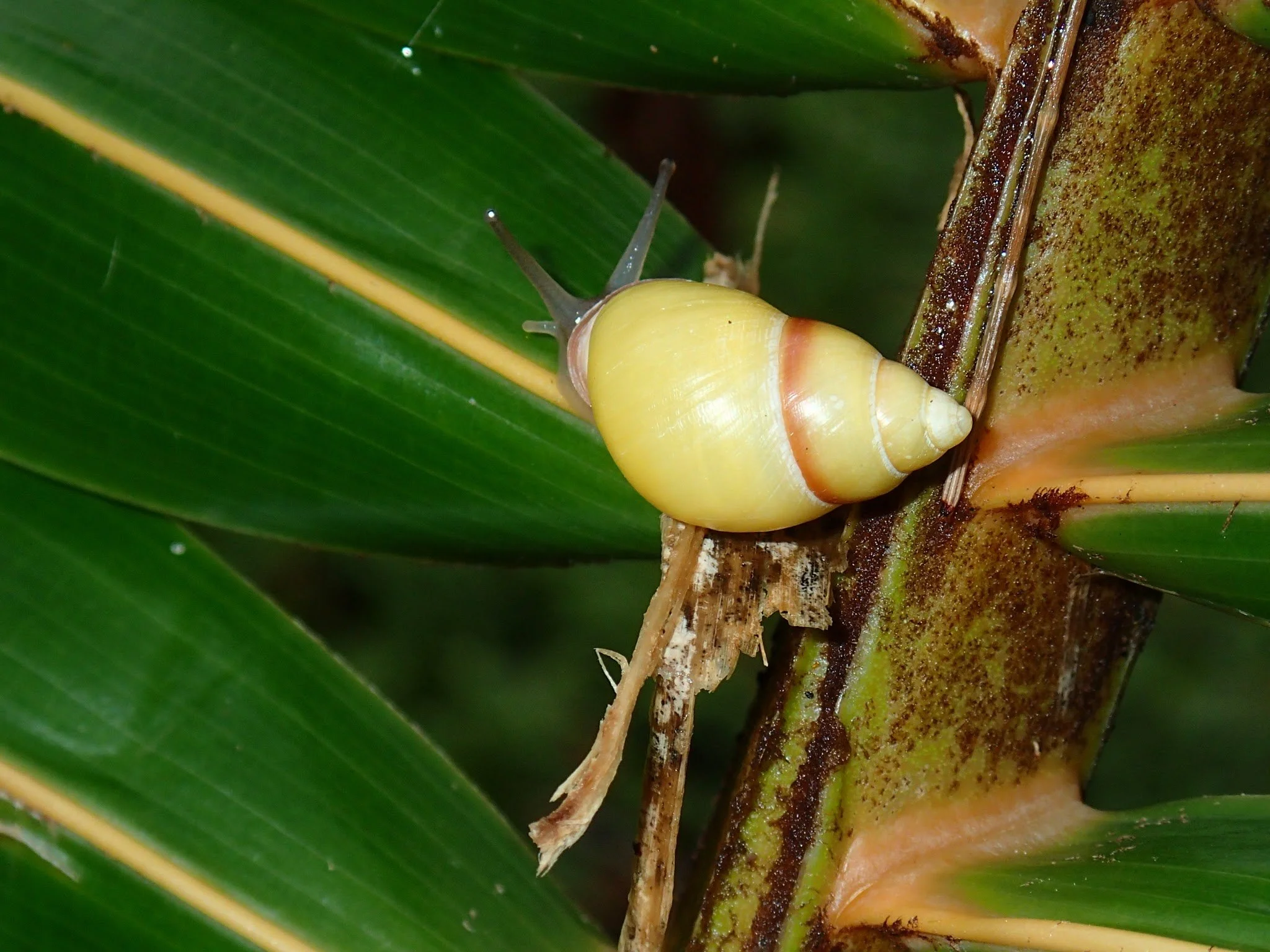
Partula lutaensis (akalehaʻ in the local Chamorro language), is a rare tree snail known only from the island of Rota (U.S. Commonwealth of the Northern Mariana Islands, western Pacific). It is threatened by invasive predators and is the subject of conservation research. Photo: Ann Marie Gawel
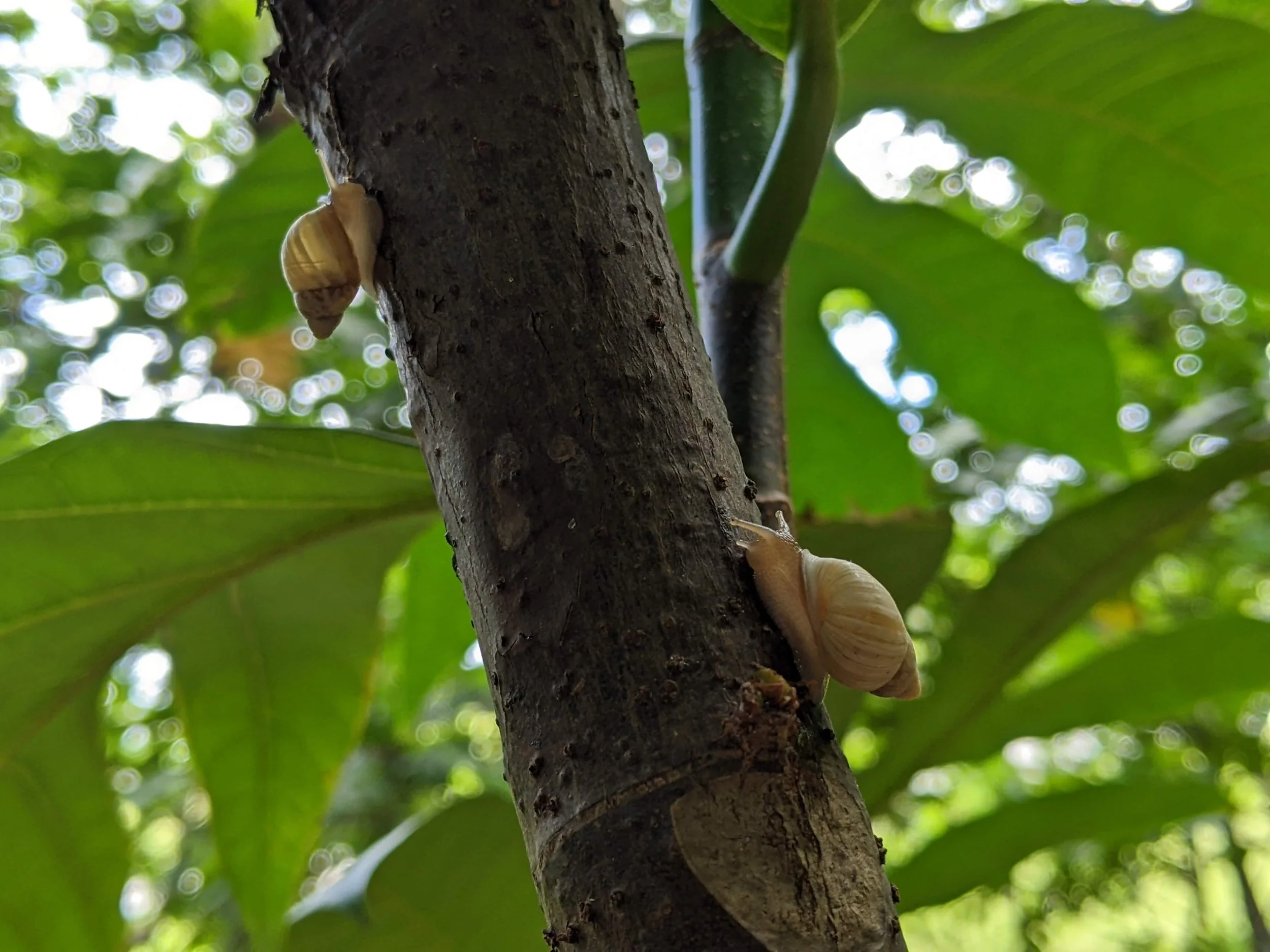
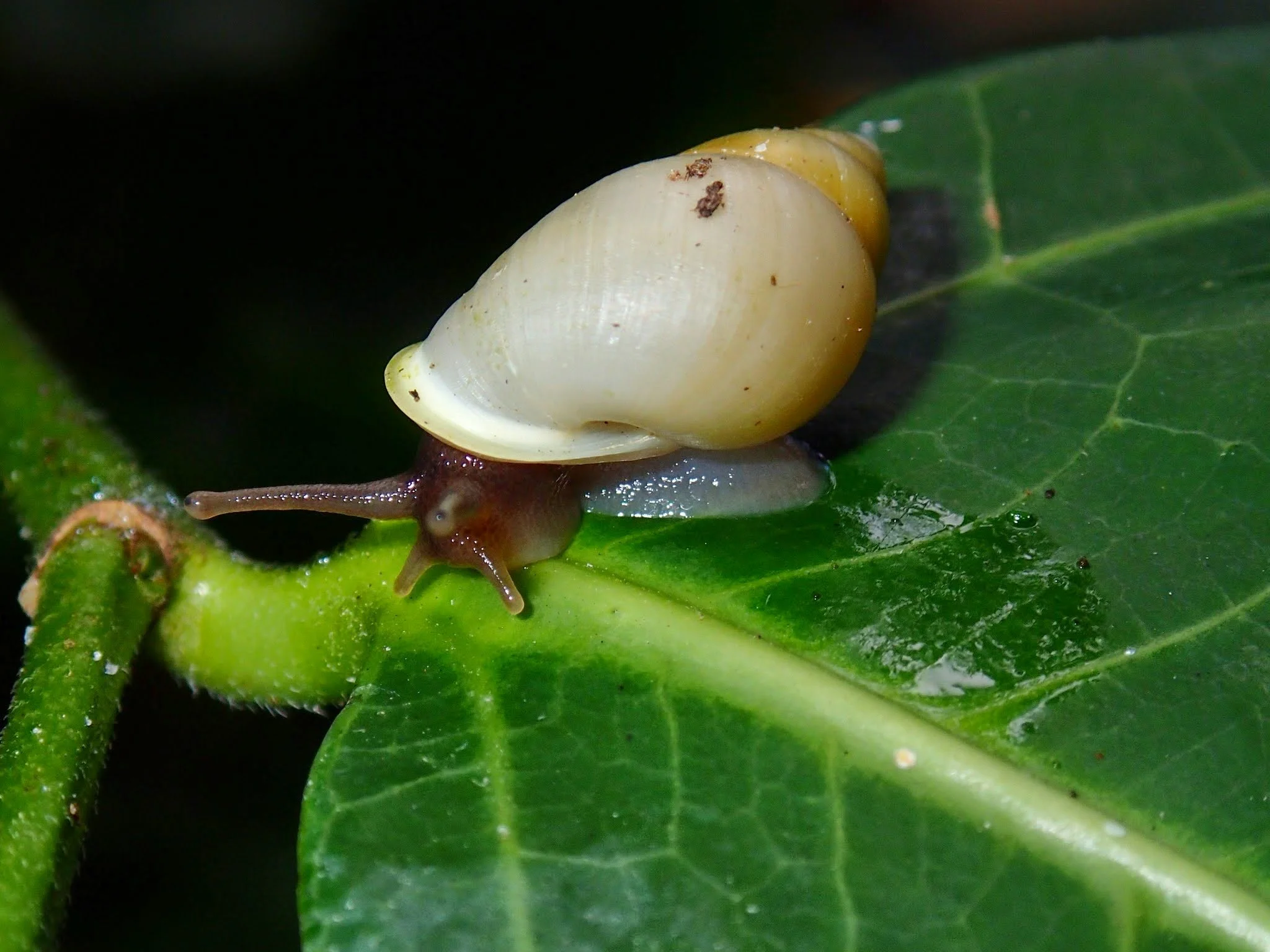
The Guam tree snail Partula radiolata, (akalehaʻ in the local Chamorro language), is a Critically Endangered species found only on Guam (U.S. Territory within the Mariana Islands of the western Pacific). Photo: Ann Marie Gawel
Hope for Pacific partulids
Some of the remaining partulid populations in certain places have been brought into captivity for breeding to help save them from extinction. This has been important because introduced predatory rats, introduced snails, and flatworms threaten partulids in the wild. Partulid captive breeding efforts were started at the Zoological Society of London, and spread to other zoos, such as the Woodland Park Zoo in Seattle. Partulids of the South Pacific Society Islands have been the focus for many of these breeding programs.
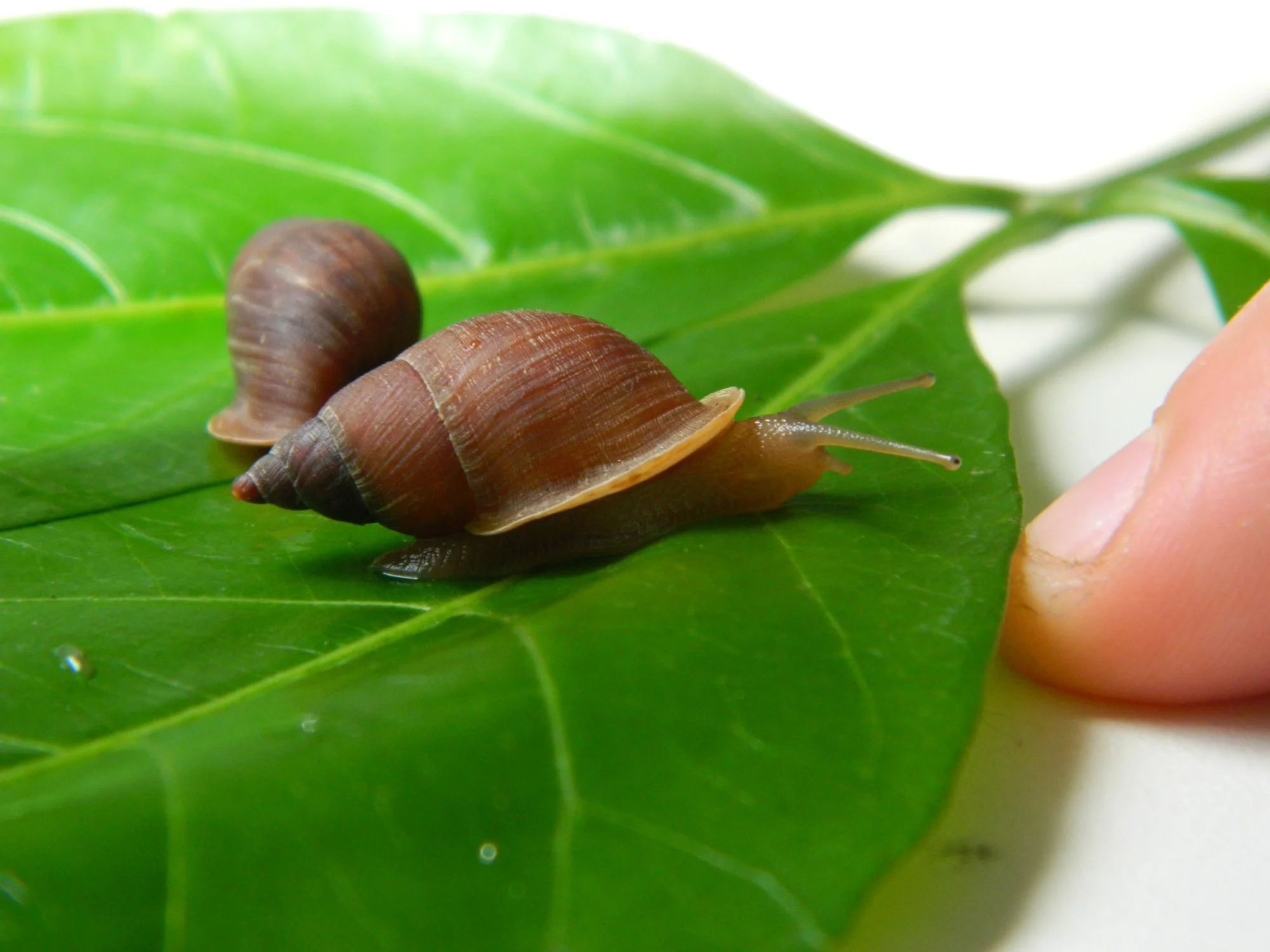
Two Palaopartula thetis land snails from the Republic of Palau. Photo: Rebecca Rundell
Captive breeding is just one piece of the conservation puzzle. We must regularly survey rainforests on Pacific Islands to understand where partulid land snails still survive and where they are declining. Given limited resources to save snails, surveys help us set conservation priorities and understand what we need to do. This can include protecting and restoring native habitats. Many partulid land snail species are still alive and need our help, despite many threats to their survival. Conservation projects are ongoing in the U.S. Territory of Guam, the U.S. Commonwealth of the Northern Mariana Islands, and the Republic of Palau, all in the western Pacific (see below).
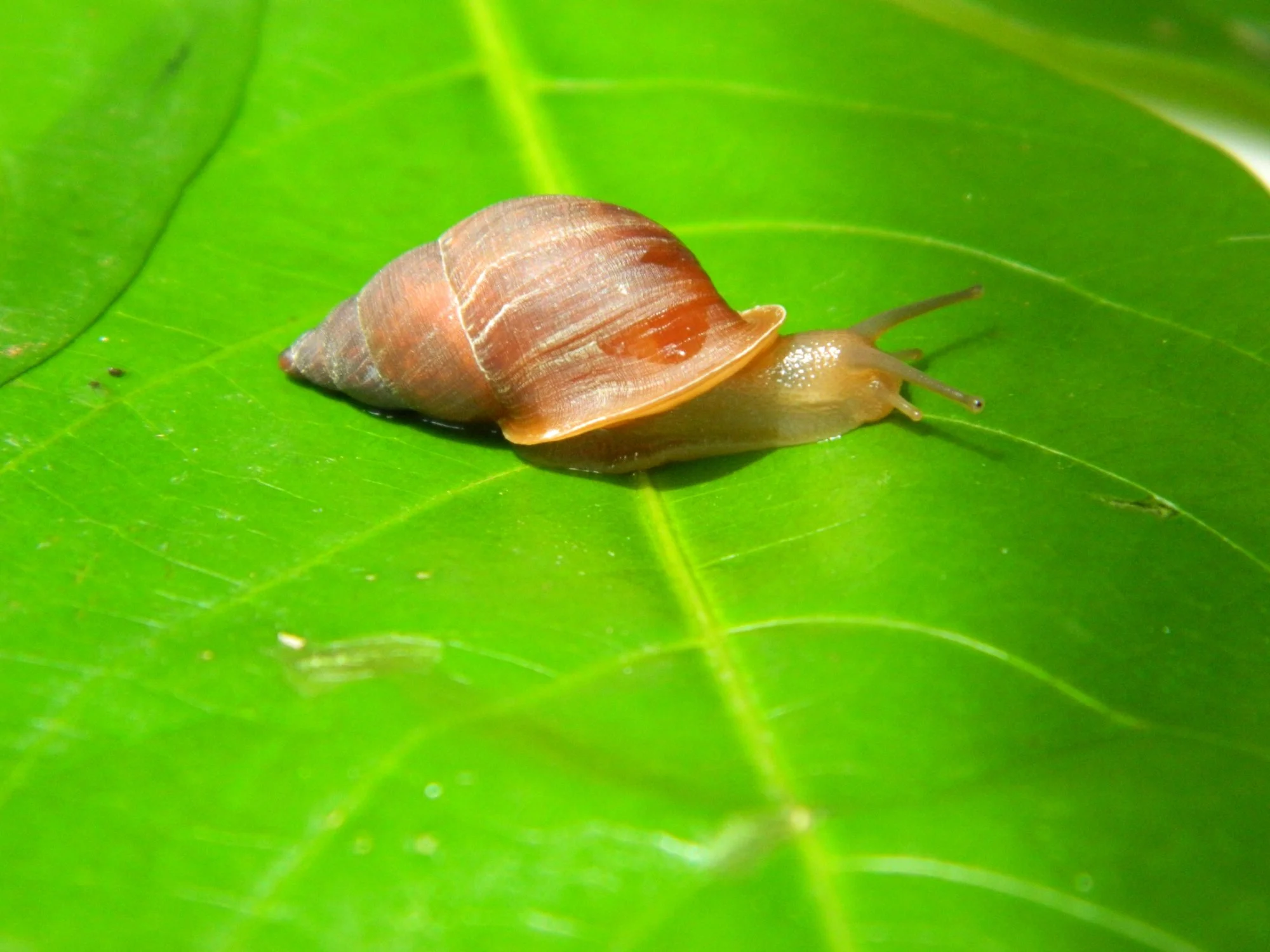
Palau endemic partulid Palaopartula thetis. Photo: Rebecca Rundell
Conserving Pacific partulid species also requires understanding where predators are encroaching. The rosy wolfsnail Euglandina rosea have been devastating for partulids for many years. Now the invasive predatory flatworm Platydemus manokwari is expanding into native rainforests and devouring native partulids. Biologists are tracking this flatworm very carefully.
Because of the introduced predators on Pacific Islands, many native habitats are no longer safe for partulid land snails. This complicates the issue of bringing captive-bred native partulids back into their wild homes. For this reason, some tree snail conservation programs have built fenced-in “exclosures” to protect small patches of forest from predatory rats and rosy wolfsnails, as well as invasive animals like goats, pigs, and cattle that can alter or destroy snail habitat. For more about exclosures, see the section on Hawaiian achatinelline tree snails.
Hope in the Mariana Islands
The U.S. Territory of Guam and the U.S. Commonwealth of the Northern Mariana Islands (CNMI) are part of the Mariana Islands archipelago in the western Pacific. People that live in Guam and CNMI are U.S. citizens and serve in the U.S. military. People from the Mariana Islands (as well as other Pacific islands associated with the United States such as the Federated States of Micronesia, the Republic of the Marshall Islands, and American Samoa) serve in the U.S. military at very high rates. The Indigenous people of the Mariana Islands are Chamorro, and people from neighboring regions and islands of Micronesia also call Guam and CNMI home.
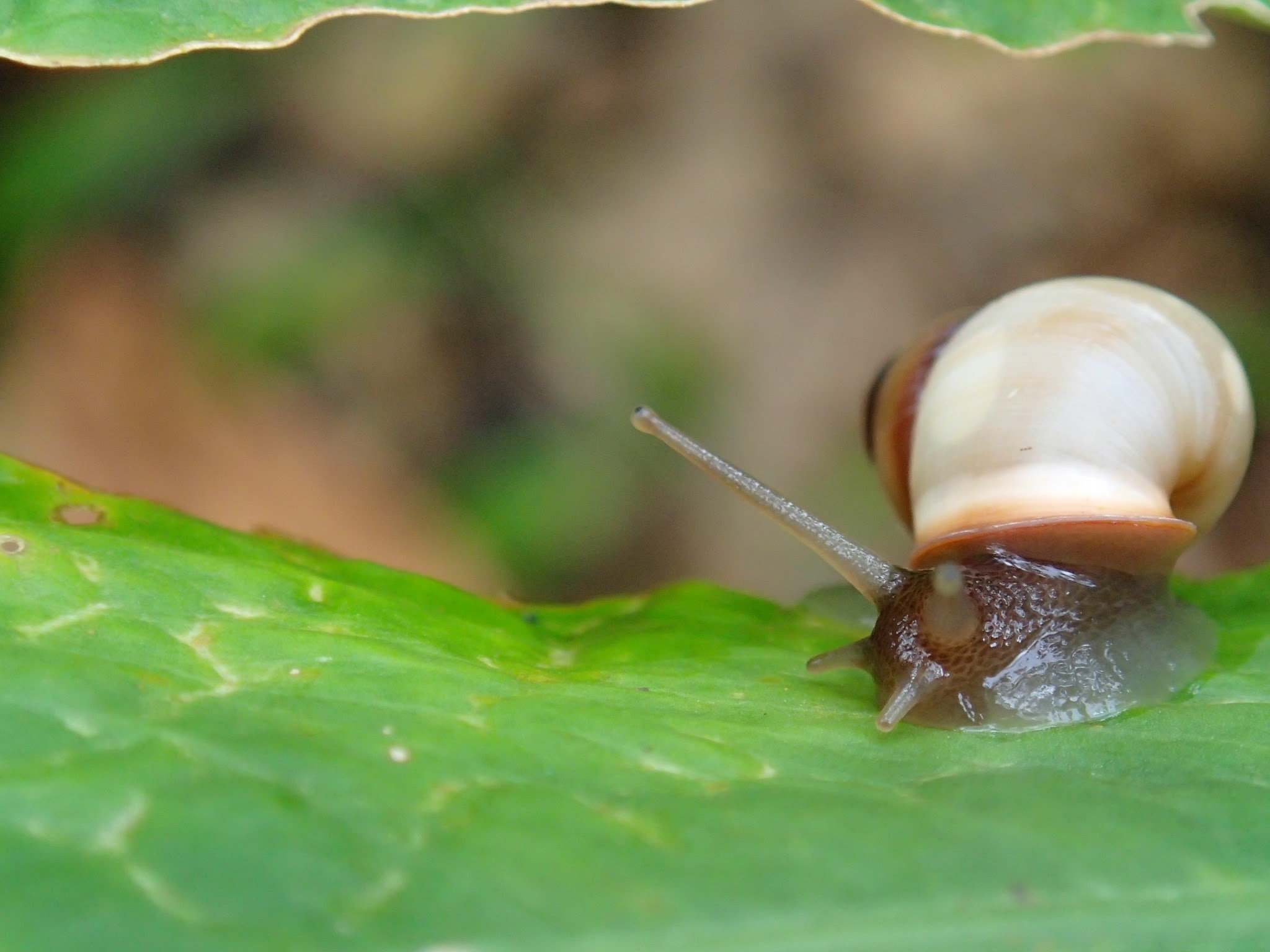
Partula lutaensis, a single-island endemic partulid land snail from Rota (Luta) in the Commonwealth of the Northern Mariana Islands. Photo: Ann Marie Gawel
The biodiversity of the Mariana Islands is extraordinary but has been seriously damaged and changed by occupation during intense, successive rounds of western and Japanese colonialism and war. One well-known example is the introduction of the brown tree snake (Boiga irregularis) during World War II, which caused any remaining native birds of Guam to go extinct or decline precipitously. You can no longer hear native birds sing on Guam.
Because of the history of species and ecosystem destruction in the Mariana Islands, its remaining biodiversity is precious. This includes native land snails such as partulids, which cling to life in isolated pockets of rainforest habitat on some of the Mariana Islands. Partulids are called akalehaʻ in the local Chamorro language. Akalehaʻ are culturally significant in the Marianas, having been used in handicrafts created by local women. Collection of partulids by people was likely a factor in a few Pacific partulid population declines, however most Pacific partulid species are not used by people. Therefore habitat modification by humans and introduced predators have been stronger causes of partulid extinctions.
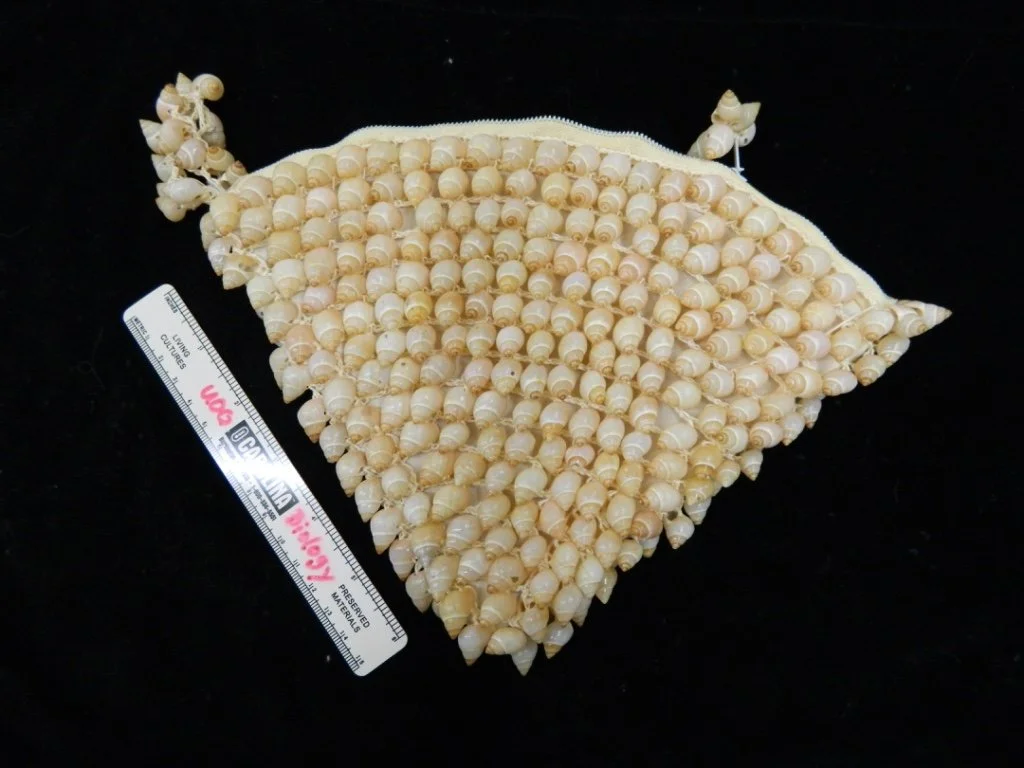
Purse made by local people on Rota (Luta in the local Chamorro language) in CNMI, dating to 1959 or earlier. Partulid tree snails were identified as the Rota variety of Partula gibba, which we now know is a unique, endemic species to Rota, Partula lutaensis. Object is from the Bishop Museum (Honolulu, Hawaiʻi), Old Box 10,522. Photo: Rebecca Rundell
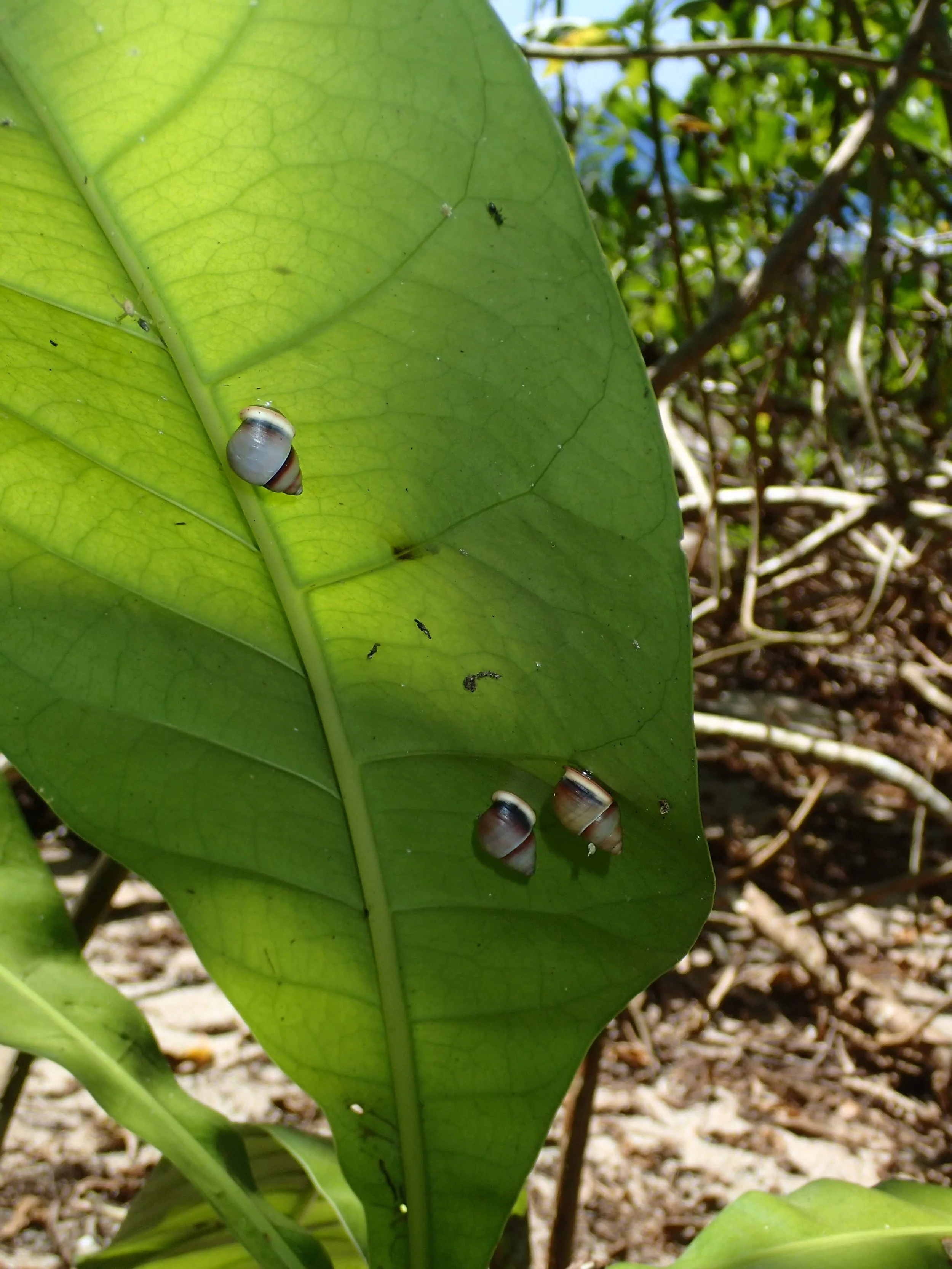
The akalehaʻ Partula langfordi and Partula salifana have already gone extinct in the Mariana Islands in the last century. Samoana fragilis is rare, and is found at a very few places on Rota (CNMI) and Guam. Partula gibba used to be abundant across the islands but is now found only in small numbers at a few sites. The Guam tree snail Partula radiolata is endemic only to the island of Guam and still survives at many rainforest localities.
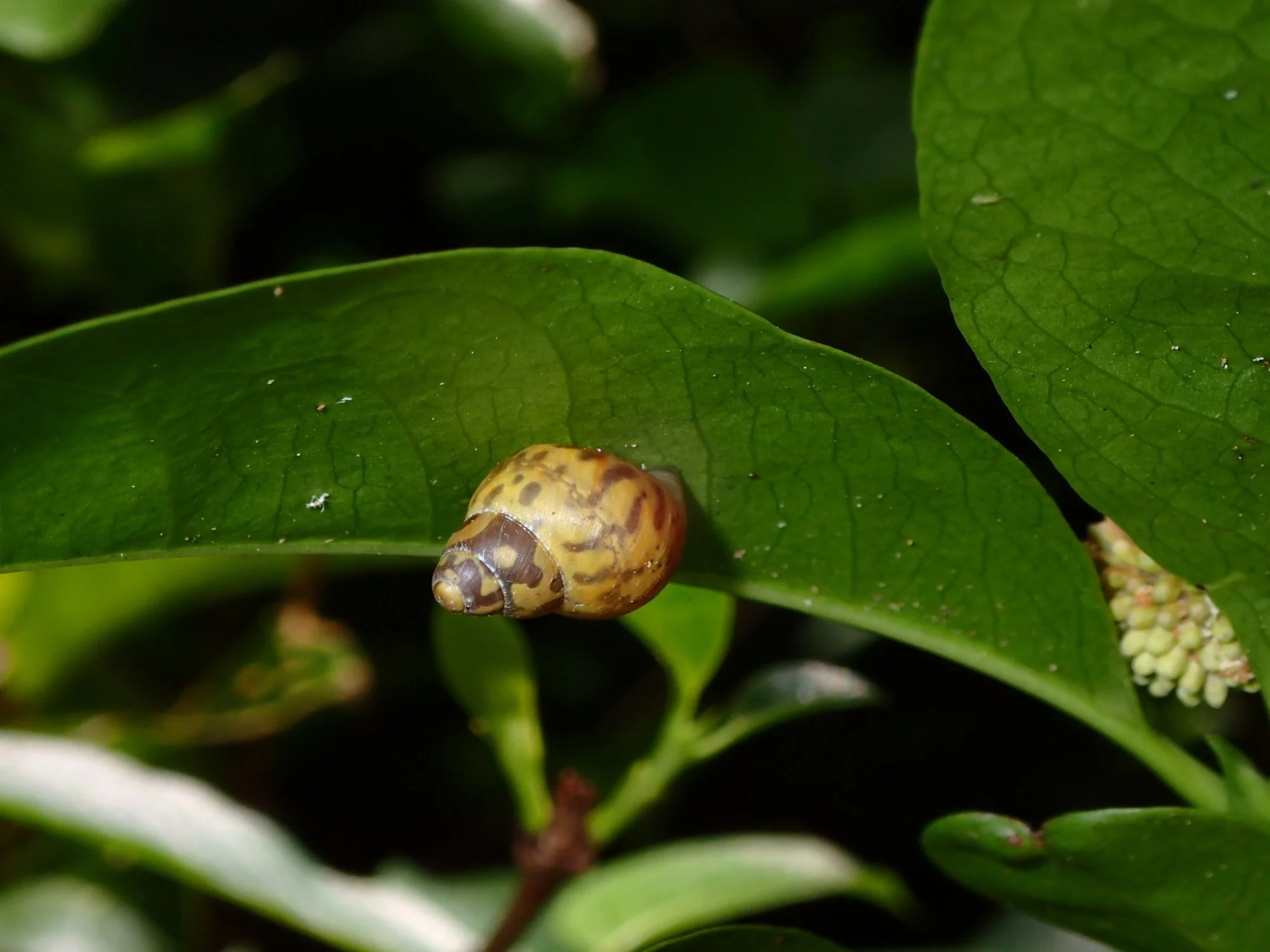
Mariana Islands partulid tree snail Samoana fragilis in the wild. Photo: Ann Marie Gawel
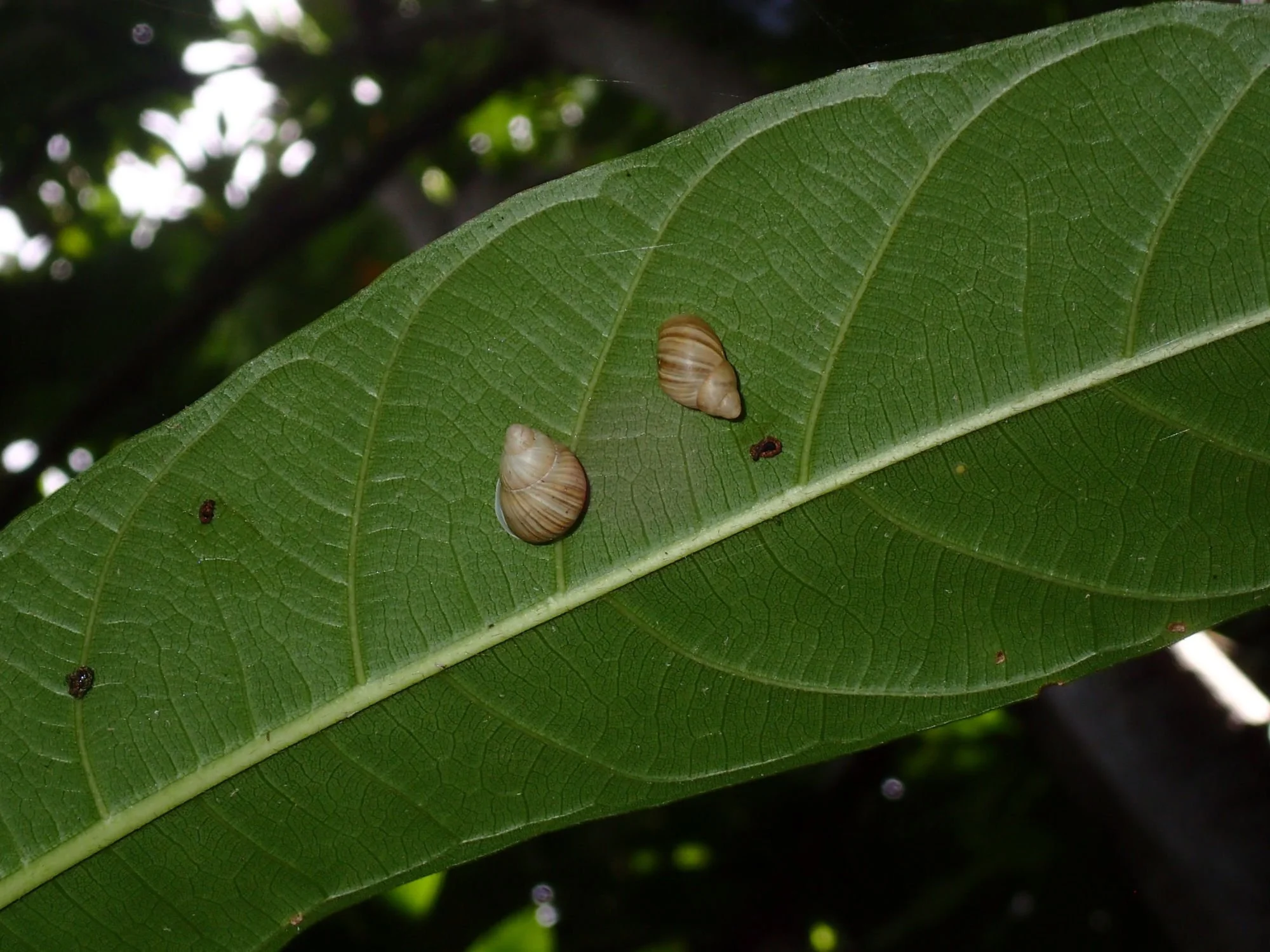
Recently, a “new” species of partulid was discovered on the CNMI island of Rota (Luta in the local Chamorro language). This species is called P. lutaensis, and is known only from Rota (Luta). Partula lutaensis was previously assumed to be Partula gibba. This example shows how even as land snails are declining everywhere in the Pacific, we still have so much to learn about them.
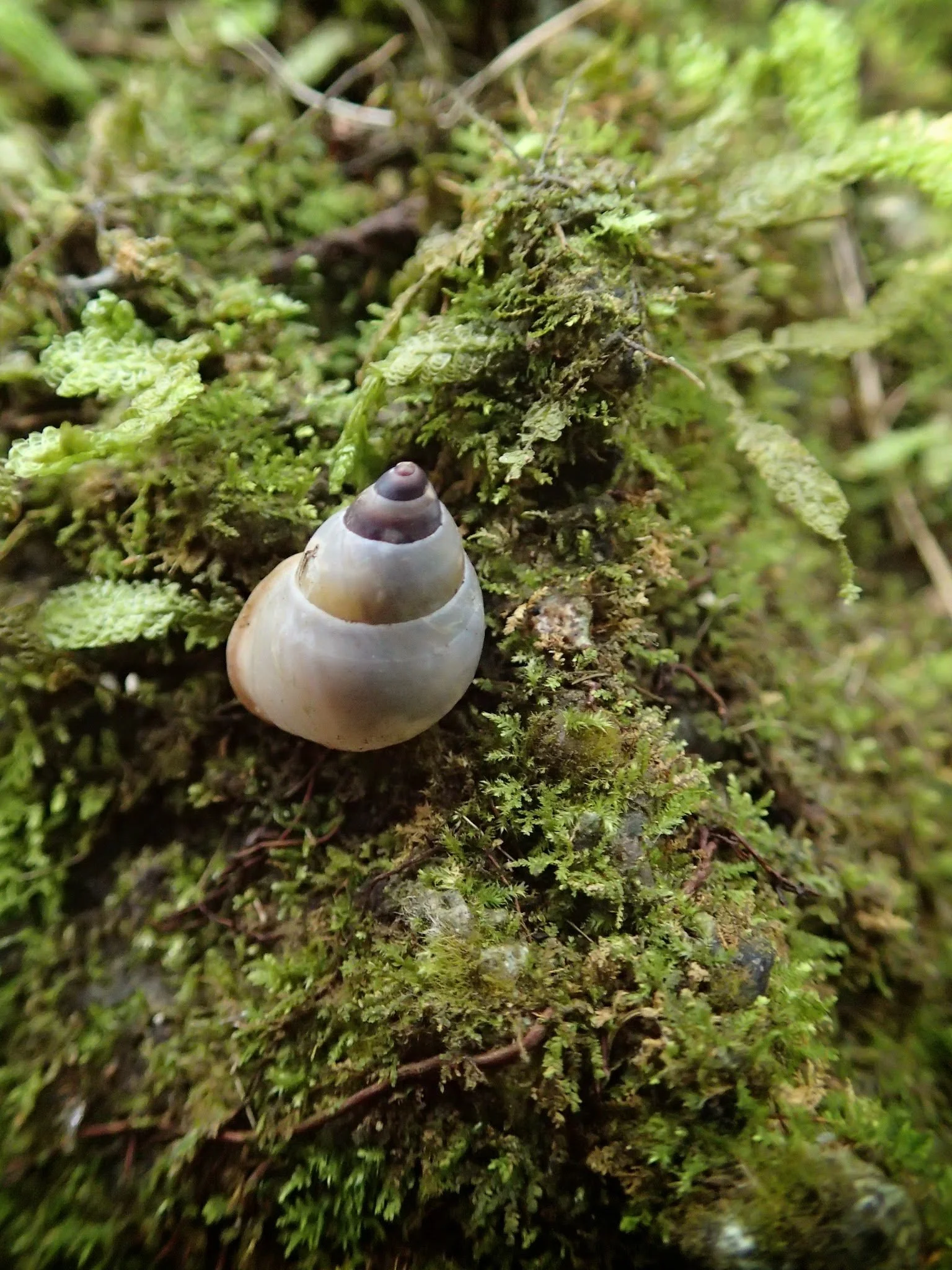
Partula lutaensis, a single-island endemic partulid land snail from Rota (Luta) in the Commonwealth of the Northern Mariana Islands. Photo: Ann Marie Gawel
Partula lutaensis, a single-island endemic partulid land snail from Rota (Luta) in the Commonwealth of the Northern Mariana Islands. Photo: Ann Marie Gawel
One hope for Guam and CNMI partulids is that some of them have legal protected status under the U.S. Endangered Species Act. This helps to foster responsibility by the U.S. Department of Defense, U.S. Fish and Wildlife Service, National Park Service and other conservation organizations to prevent these species’ extinction. Elsewhere in the Pacific, the conservation status of species can be evaluated (e.g. by the IUCN Red List), but there may not be legal protection for the species themselves. This depends on the will of the country and the people there. In cases where species do not have legal status, local community involvement, and the protection, conservation, and restoration of native habitats is especially important.
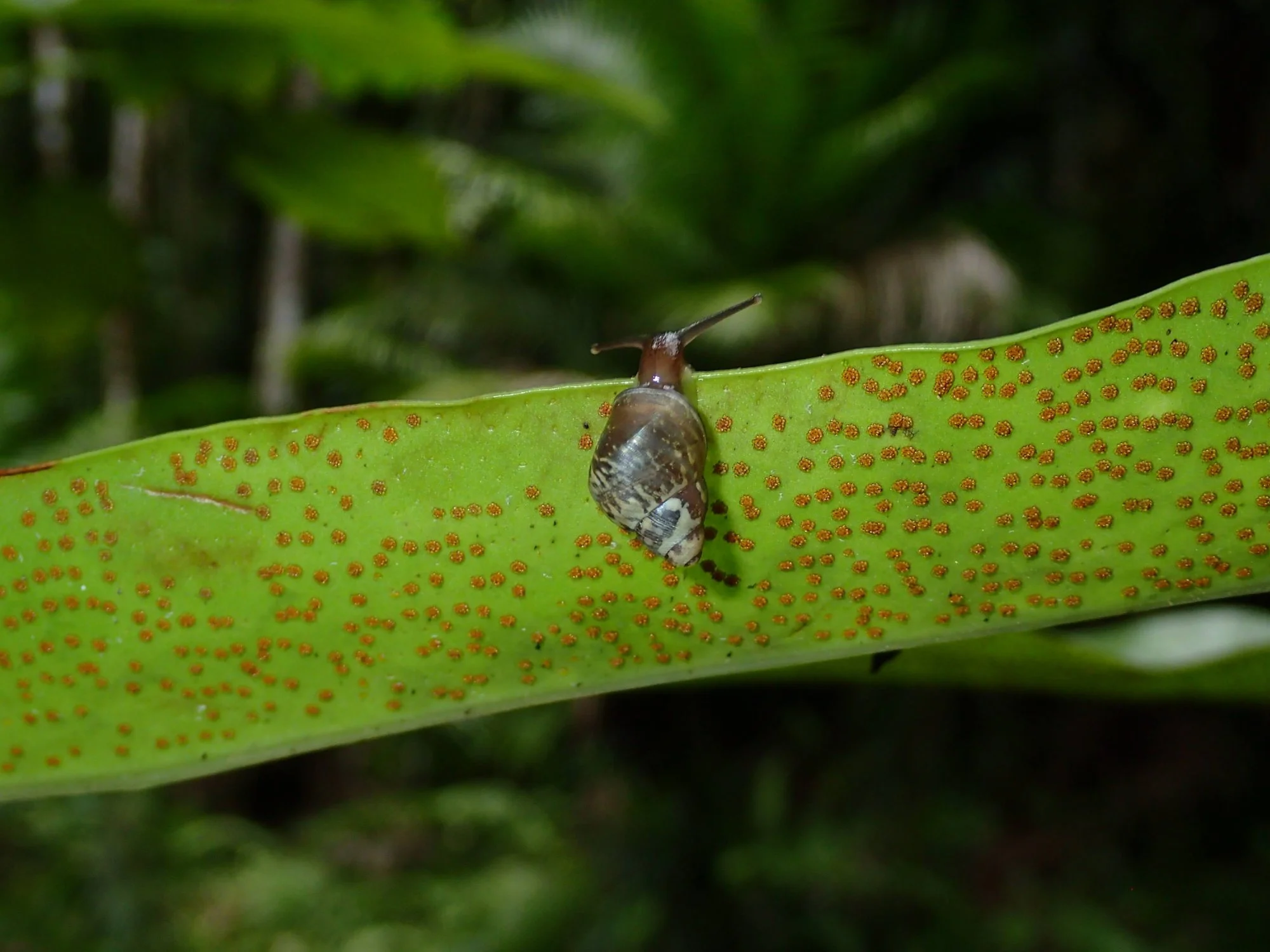
A dark form of the Mariana Islands partulid tree snail Samoana fragilis in the wild. Photo: Ann Marie Gawel
On the Mariana Islands (Guam and CNMI), the tree snails Partula radiolata, P. gibba, and Samoana fragilis are all listed under the U.S. Endangered Species Act (ESA). P. lutaensis is not currently listed. Listing a species under the ESA can be a long process. Biodiverse islands that are U.S. Territories, part of the U.S. Commonwealth, or U.S. states (in the case of Hawaiʻi), also present challenges to the legal protections required by the ESA. This is because funding is limited for preventing ESA-listed species extinctions, and there are so many island species that are not only unique to very small areas (endemic), but are also on the brink of extinction, sometimes with only a few individuals remaining. Many of these species are charismatic vertebrate animals such as birds, that tend to get more attention. Some of these species are so reduced in numbers that they require captive breeding to save them, which can be very difficult and expensive. The more we study and conserve partulids in their wild habitats, the better chance we have of avoiding having to rely on captive breeding to save them.
Two Guam tree snails Partula radiolata resting and avoiding drying out during the day, on the underside of a leaf in a patch of Guam’s remaining native rainforest. The Guam tree snail is endemic only to the island of Guam. Photo: Ann Marie Gawel
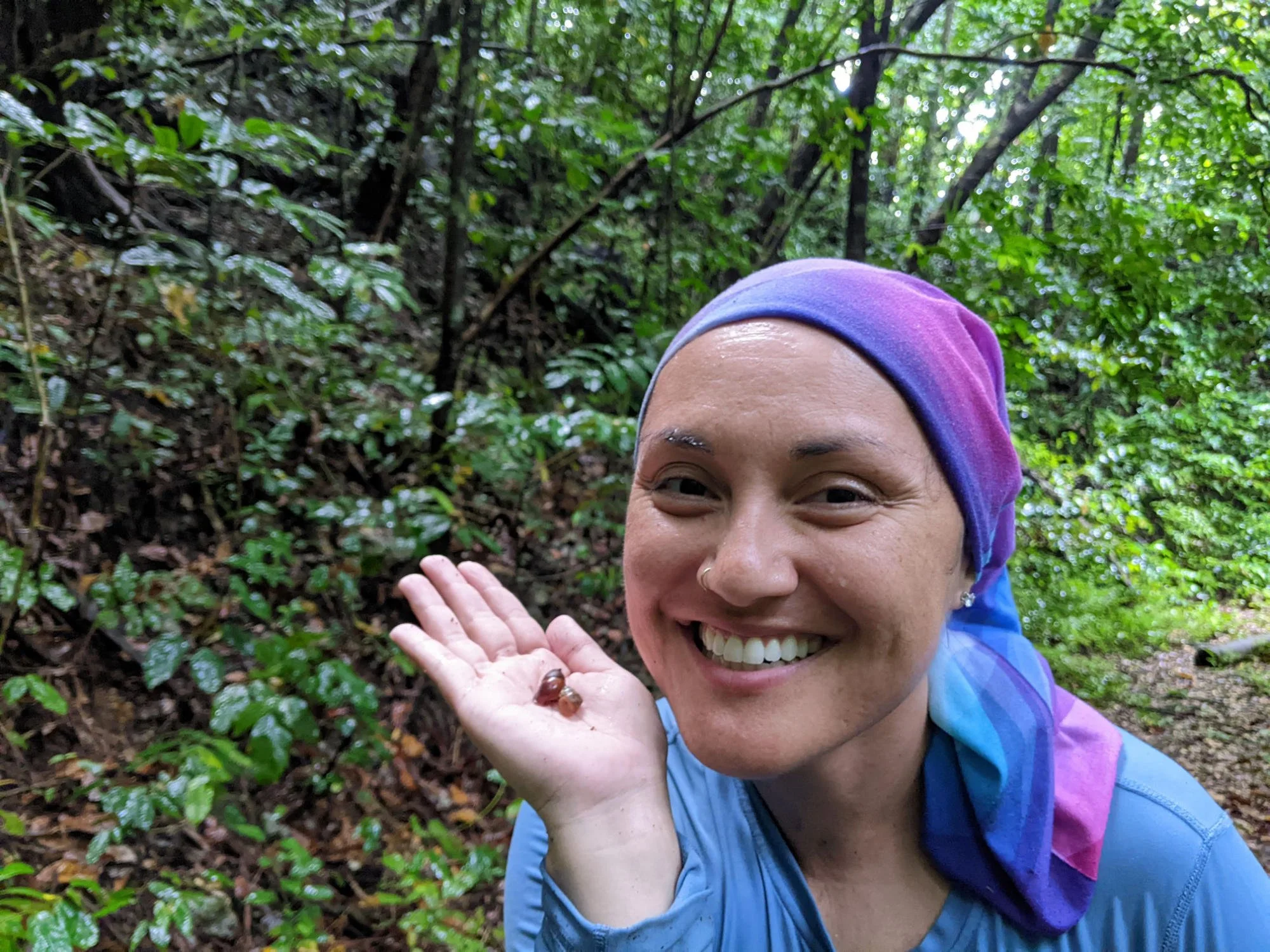
Conservation scientist Dr. Ann Marie Gawel holding Micronesian partulids. Photo: Rebecca Rundell
Micronesian American conservation scientist Dr. Ann Marie Gawel is working with biologists at the University of Guam to study ecological differences among the Mariana Islands partulid tree snails, the akalehaʻ. This involves detailed field research at remote locations that is authorized through special scientific permits. She is also using shells in museum natural history collections to understand past distributions of species. This is useful in documenting species declines and understanding where habitat might be restored in the future.
Conservation science involves using many forms of evidence to help solve problems. In addition to relying on field (outdoors)-based research and natural history collections in museums described above, Dr. Gawel is also hoping to use traditional ecological knowledge to inform partulid conservation. This involves combining evidence from handicrafts preserved at the Bishop Museum (Honolulu, Hawaiʻi) and on Guam, with interviews of Indigenous people of the Marianas Islands, the Chamorro and Refaluwasch people. Memories, photographs, and written materials are valuable for improving our understanding of human relationships with the land snails and forests. They are also helpful for reconstructing past abundance and geography of species occurrences.
Partula lutaensis, a single-island endemic partulid land snail from Rota (Luta) in the Commonwealth of the Northern Mariana Islands. Photo: Ann Marie Gawel
Dr. Gawel is studying the invasive species that co-occur with the akalehaʻ (partulid tree snails). Although rats can be somewhat-controlled in some places in the Mariana Islands, e.g. by the invasive brown tree snake on Guam, or through trapping, the rosy wolfsnail and New Guinea flatworm Platydemus manokwari, are much more difficult if not impossible to control. Any poison that would reduce these invasive invertebrate predators could also harm native snails. Therefore Dr. Gawel is seeking to understand the ecological preferences of these predators at different locations and how that might relate to akalehaʻ abundance in different places.
Emerging threats to akalehaʻ in the Mariana Islands include further spread of Platydemus manokwari, which might be further facilitated by accidental transport and climate change, as well as increased military construction on or near the few remaining habitats for the snails.
The Guam tree snail Partula radiolata is endemic only to the island of Guam. Photo: Ann Marie Gawel
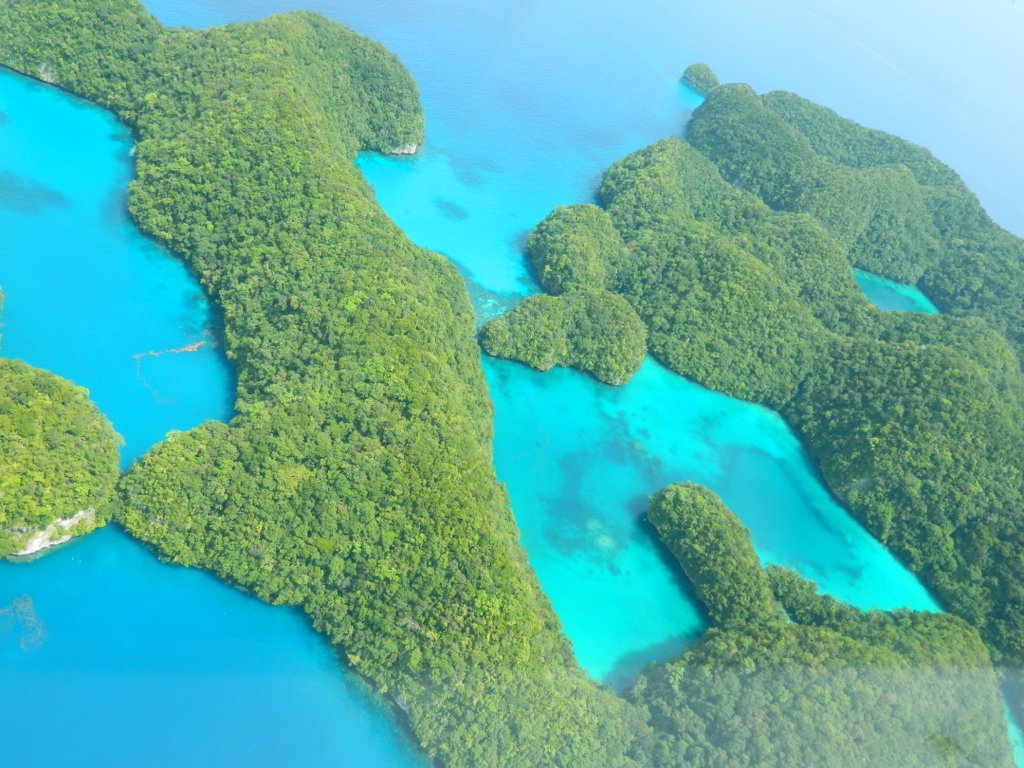
Islands in the Republic of Palau from above. Photo: Rebecca Rundell
Hope in Palau
Palau is an independent nation formally called the Republic of Palau. The Palauan name for the archipelago is Belau. Like many island nations, Palau has a long colonial and wartime history that has profoundly affected its people, as well as its land, sea, and biodiversity. Palau was previously colonized by Spain, Germany, Japan, and the United States. Although Palau is now independent, it maintains a relationship with the United States through the Compact of Free Association (COFA). As is true in Guam and the Commonwealth of the Northern Mariana Islands, and other areas administered by COFA, Palauan citizens serve in the U.S. military. Like people anywhere, but especially on isolated islands, Palauans depend on their environment, the land and sea and its species and ecosystems to survive and thrive.
Charles “CJ” Paulino, Eurich Patacsil (University of Guam graduates), Ann Marie Gawel (SUNY-ESF; American Museum of Natural History), Udoud Masaharu, Phillip Terenciano (Koror State Department of Conservation and Law Enforcement), and Heather Ketebengang (Palau Conservation Society) on Ngermalk, Koror in the Republic of Palau during a partulid tree snail survey. Photo: Rebecca Rundell
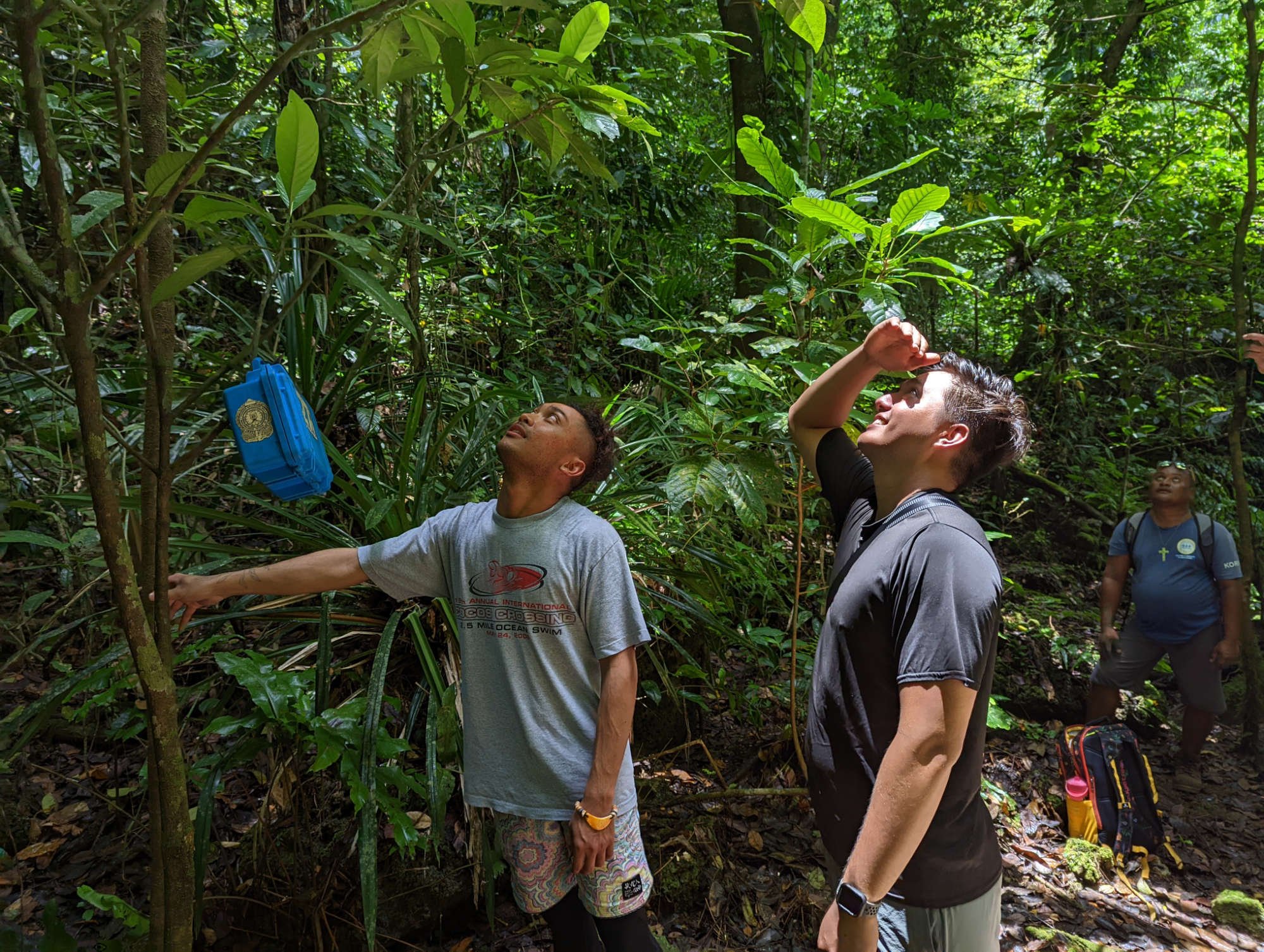
Guamanian conservationists Eurich Patacsil and Charles “CJ” Paulino, with Philip Terenciano in the background (Koror State) looking up into the trees for partulid tree snails. Many partulids also live lower down in the knee-height vegetation. Some partulid species live on the ground. Photo: Rebecca Rundell
Changing land use due to colonization is also relevant to land snail conservation, since land snails are some of the most sensitive animals to changes in the land (especially native forests). Land snails tend to require certain plants species, and moist damp pockets to live. These special places are sometimes called microhabitats. When trees and plants are cut down or burned for agriculture or war, these microhabitats can be damaged or destroyed.
In places where biologists are keeping track of where different land snail species live within islands, the sensitivity of land snails to forest changes can be used by people to tell us when the forest is becoming unhealthy. We can compare documented snail occurrences to present occurrences and notice species declines. But unfortunately in the past (and often still today), snails will decline or disappear when land use changes, before anything is done to prevent the loss of species. A dramatic example of this is on the Palau island of Peleliu (Beliliou in Palauan), where a violent and deadly battle in World War II occurred, which involved burning most of the native forest. Tragically, many Japanese and American soldiers died in this battle, and Indigenous Palauans were displaced from their home island. Partulid tree snails that used to live there before the war, have not been found alive after the war, likely due to the loss of trees and vegetation that were burned by American flamethrowers.
Palau pandanus tree snail Palaopartula thetis. Video: Rebecca Rundell
Palau pandanus tree snail Palaopartula thetis. Video: Rebecca Rundell
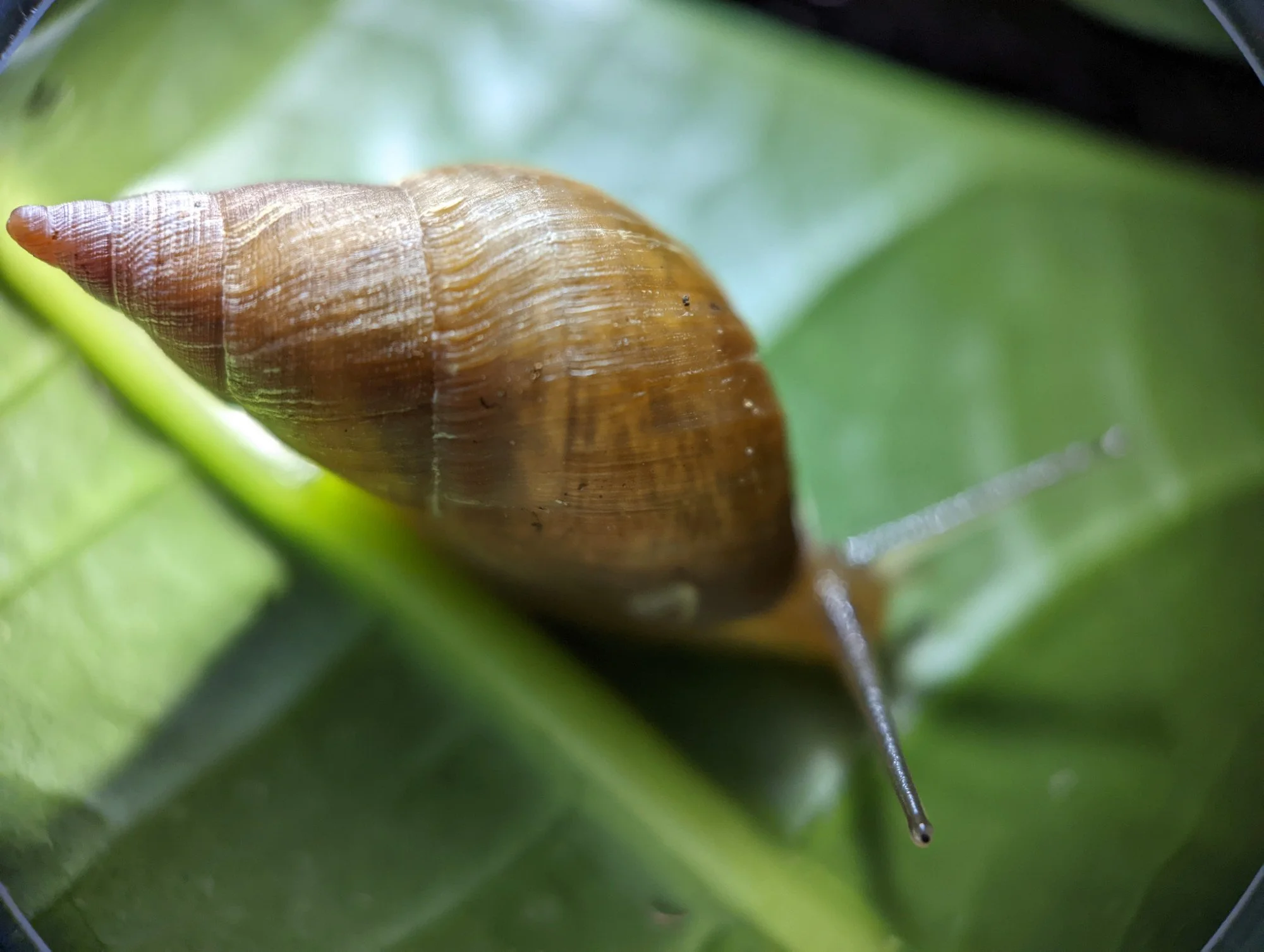
Palau pandanus tree snail Palaopartula thetis. Photo: Rebecca Rundell
Palau has four endemic partulid species: Palaopartula leucothoe (“white Palau tree snail” named for its shell coloration), Palaopartula calypso (“great Palau tree snail”), Palaopartula thetis (“Palau pandanus tree snail”), and Sphendone insolita (“Palau rock snail”). They are considered evolutionarily distinct from all other Pacific partulids. P. leucothoe is critically endangered and possibly extinct. P. calypso is critically endangered and is so far known from only a very small area of limestone rainforest in Palau’s Airai State. P. thetis the pandanus tree snail is known from multiple localities in Koror and Airai States, and in certain places elsewhere on the island of Babeldaob, however in the places where it lives, it occurs in low abundance in small patches of forest. It is considered endangered. Sphendone insolita is listed on the IUCN Red List as vulnerable, however it is found so rarely in isolated localities that it warrants special protection.
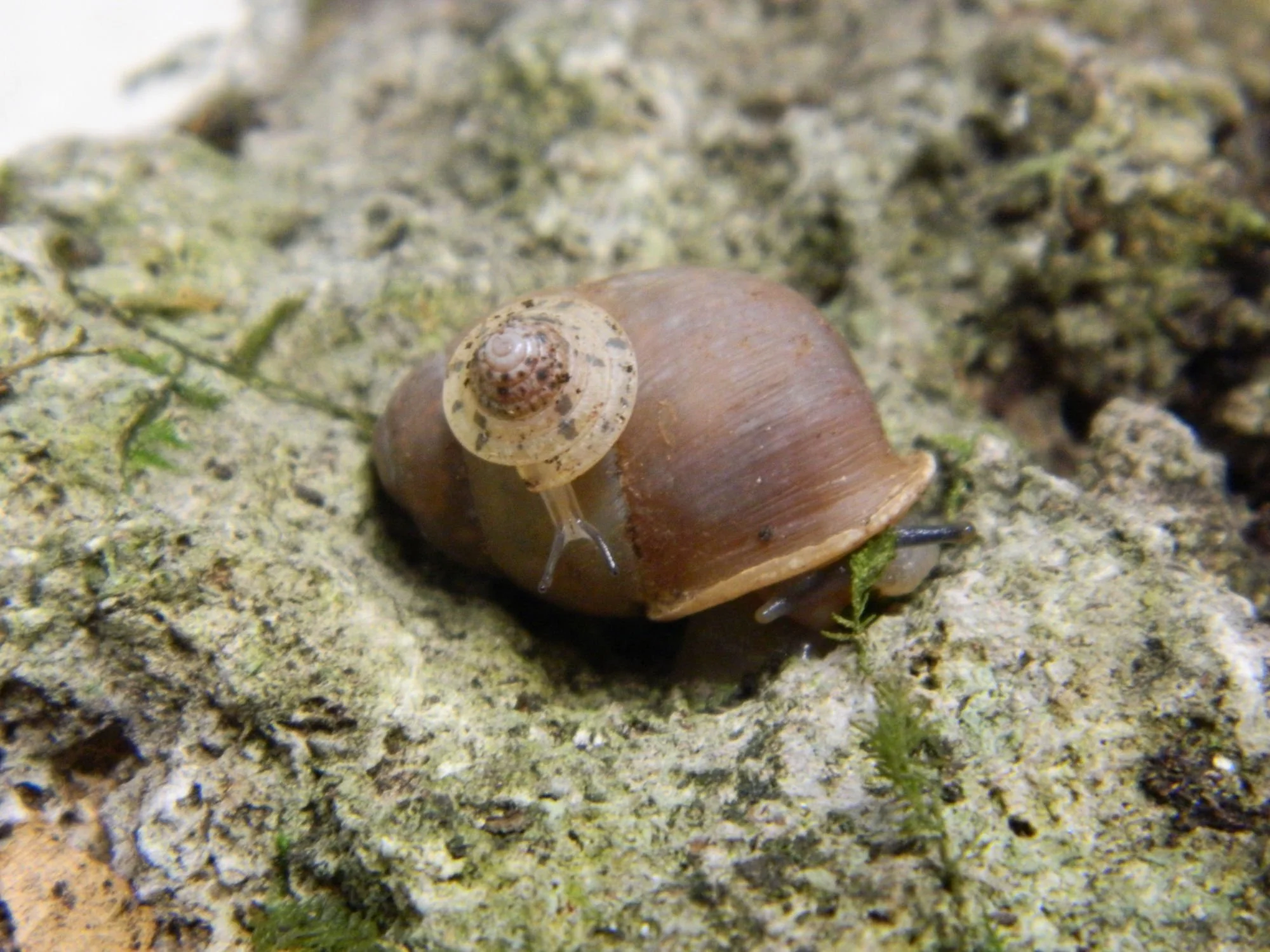
A live Sphendone insolita partulid in the Rock Islands of Palau, with a trochomorphid Videna pagodula cruising on its shell. Sphenodone insolita is unique among partulids because it lives and eats underneath rocks. It is very shy and does not poke its head out very far from its shell. Its shell is protective and appropriately shaped for fitting in the tight spaces between limestone rocks. V. pagodula has a shell shaped like a pagoda. The markings on it are actually the animal’s body showing through its translucent shell. Photo: Rebecca Rundell
Threats to partulid species in Palau include habitat modification (e.g. cutting of pandanus plants, palms, and forest), limestone mining, and transport of non-native predatory land snails (Euglandina rosea) and flatworms (Platydemus manokwari, the New Guinea flatworm). Things you can do to support the tree snails include learning about them, protecting native forest and plants, and leaving snails where they are if you find them. You can also contact Rebecca Rundell if you find a partulid, and write down where and when you saw it. This will help us protect the snails.
Palau partulids like the Palau pandanus tree snail P. thetis live in “colonies” within the forest, which are isolated little patches. Partulids do not move around much and often stay in one tree or one small area for their entire lives, very similar to how people like to live in one tiny village or family compound. This lack of mobility means that cutting down a few small palms or pandanus plants can matter a lot to the species. Using comparisons of snail counts from many decades ago compared to today, we know that P. thetis has declined dramatically in numbers. That means that remaining Palau pandanus tree snails are especially precious to care for. The fact that we know P. thetis has declined is worrying, because it is the more “commonly” seen partulid of all the Palau partulids.
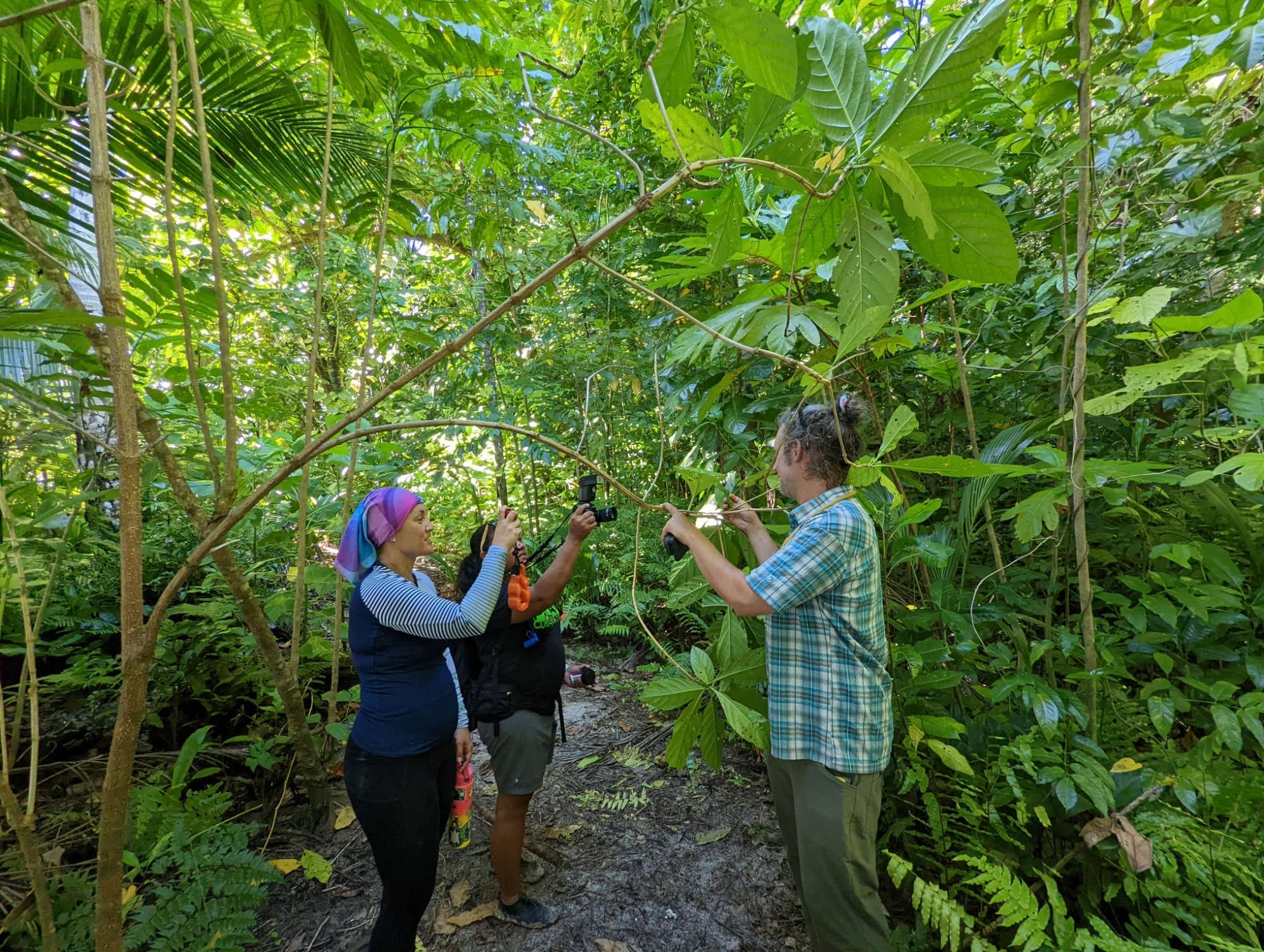
Ann Marie Gawel, Heather Ketebengang, and Jesse Czekanski-Moir (left to right) celebrating and admiring having found a live Palaopartula thetis snail in some coastal vegetation in the Rock Islands of Koror State, Palau. Photo: Rebecca Rundell
Palau pandanus tree snail Palaopartula thetis crawling. Note the flexibility of its body as it hauls its large protective shell around. The pronounced “lip” around the shell opening signifies that this snail has reached full adulthood. Video: Rebecca Rundell
The Palau pandanus tree snail can live on a variety of plants, and at different elevations. Some colonies are found right at the edge of Rock Islands in sandy soil, and others are found higher up in limestone karst forests. Palau pandanus tree snails have been found on pandanus, young palm trees, rebotel, ferns, and other vegetation and trees, including on bark and in bunches of wet dead leaves (“leaf litter”) that are stuck in the crevices of tree and plant branches. This snail does not eat live leaves directly, instead it grazes on the algae, bacteria, fungi and lichen that lives on leaf surfaces and in the leaf litter. Like many tree snails it “cleans” the leaves and also likely helps spread around fungal spores that can help with decomposition and forest health.
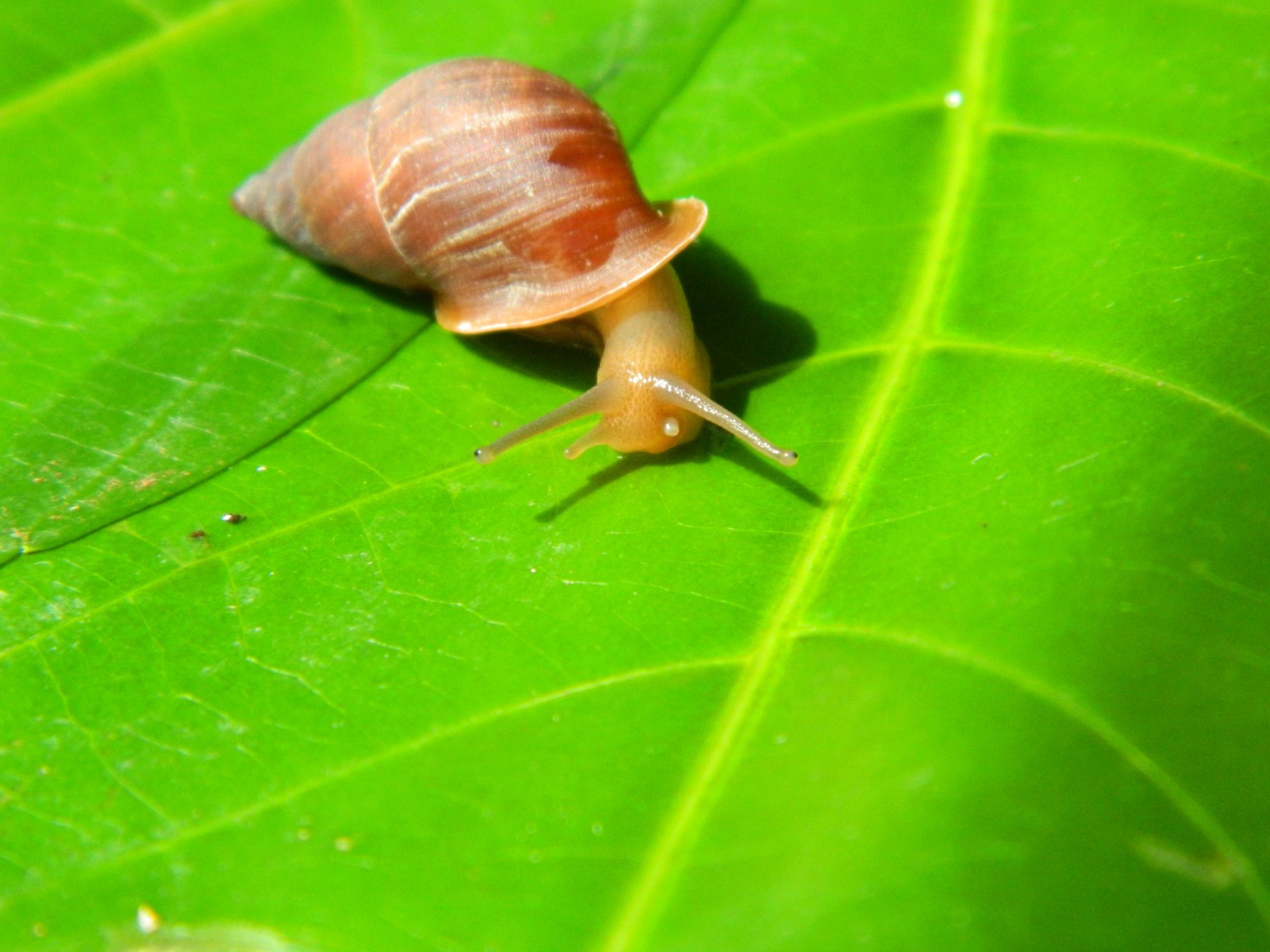
Palaopartula thetis, a Palau endemic partulid. Photo: Rebecca Rundell
The Palau pandanus tree snail was named for the native pandanus plant that occurs on many islands, especially in Koror State. Even though pandanus leaf edges are sharp, this partulid does not seem to mind. Pandanus also collect clumps of wet leaf litter between their long leaves. P. thetis likes to feed on this and hide in it. The Palau pandanus tree snail is often found stuck to the underside of leaves during the day and likely emerges at night or when it rains to feed, mate and give birth.
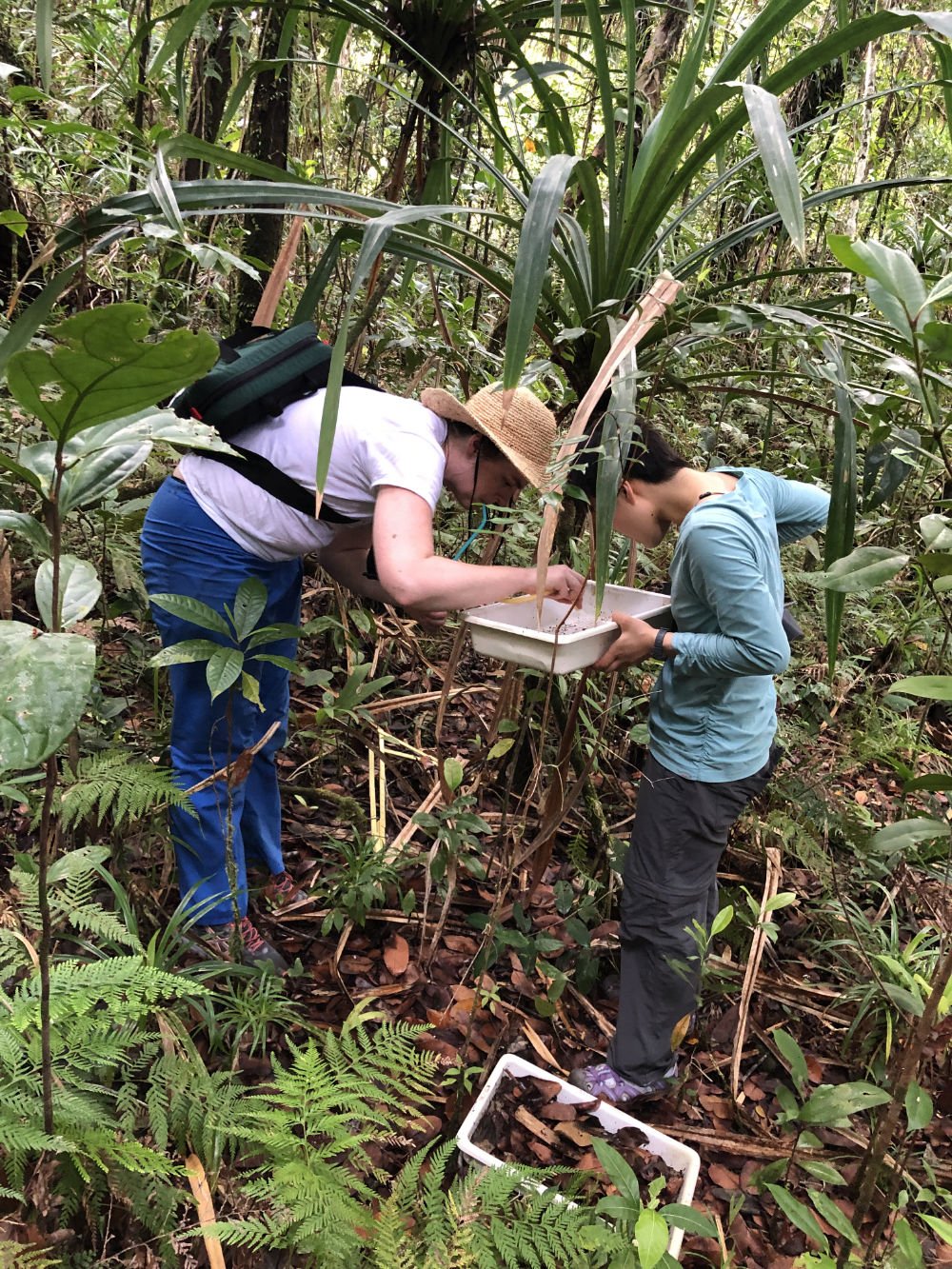
SUNY-ESF field course students Kaitlin “Kraitlin” Knutson and Shengpei Wang looking for snails in a native pandanus plant in Ngardok Nature Reserve in Palau. Pandanus provides important habitat for land snails like partulids. Photo: Anuschka Faucci
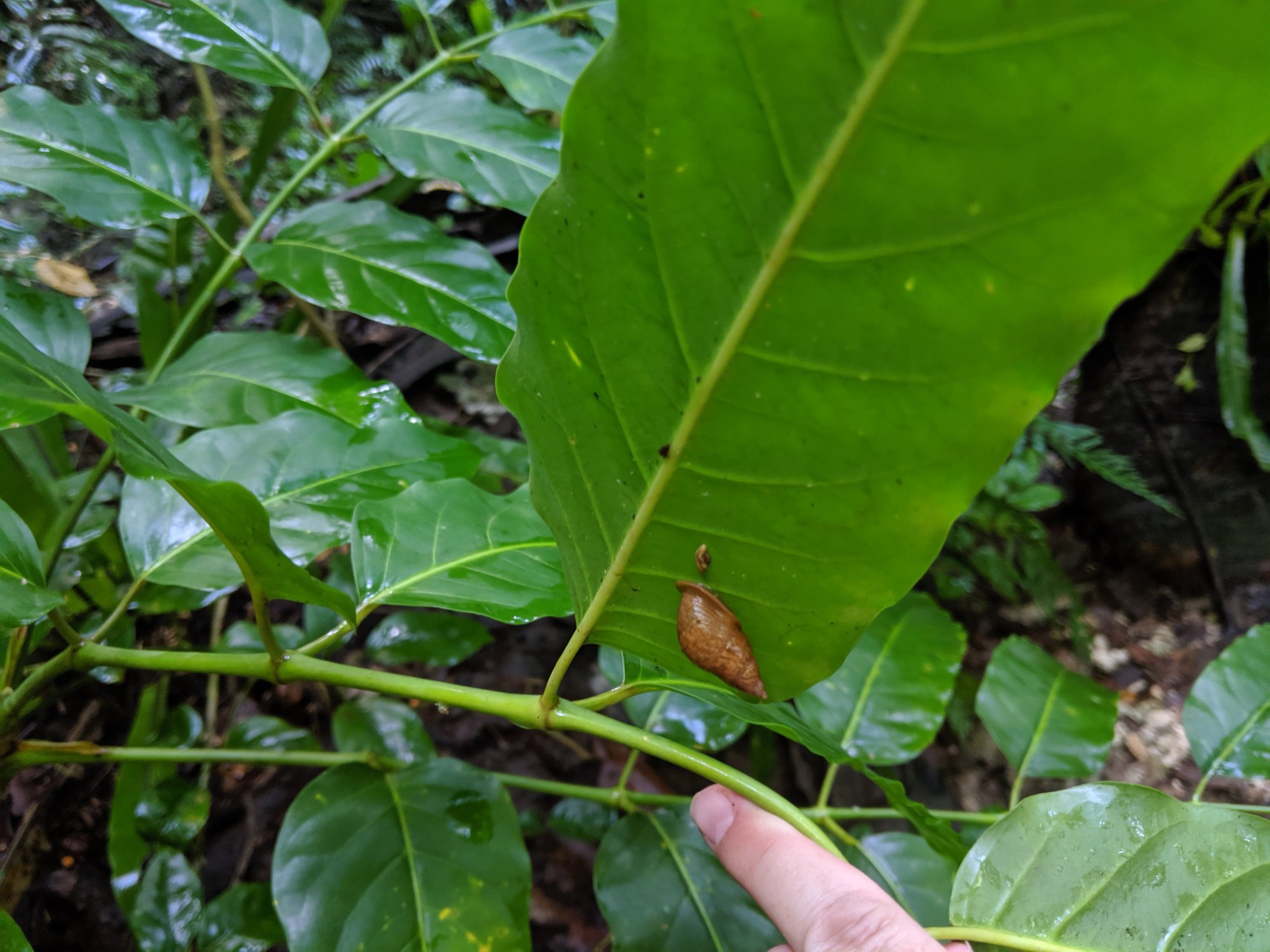
A resting Palaopartula thetis on the island of Ngeruktabel, a Rock Island in Koror State in Palau. The little glob near the snail is its poop. Photo: Rebecca Rundell
Since 2003, Rebecca Rundell and her field assistants, lab members, and colleagues in Palau, especially from the Palau Conservation Society (PCS; e.g. biologist Heather Ketebengang) , have been looking for land snails and studying them. This has included making special note of Palau partulids, because they have become rare or extinct on so many islands in the Pacific.
Starting in 2018, with help from Koror State, Island Conservation, Palau Conservation Society, Coral Reef Research Foundation, and college students from SUNY-ESF, we surveyed the Koror State Rock Islands of Ngeanges and Ulong for partulids. This focused on P. thetis, but other native snails, too, such as large round cinnamon bun-shaped trochomorphid land snails.
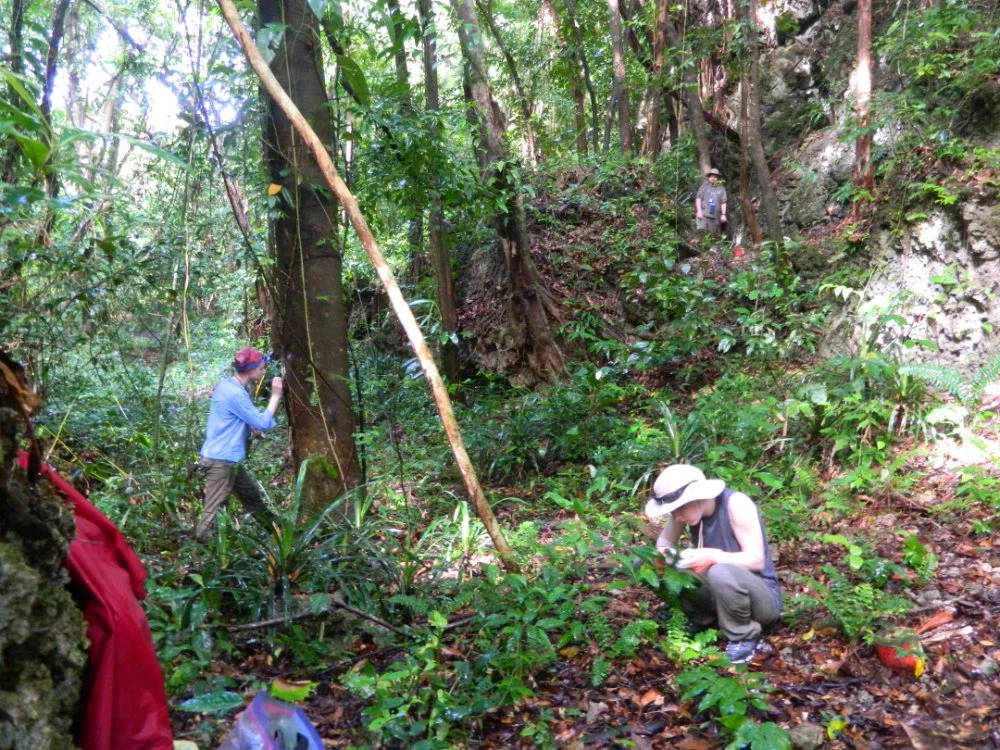
SUNY-ESF students Teresa Rose Osborne (left), Mallow Thomas, and Zakery Ward surveying for Palau rainforest land snails on trees, leaf litter, and rocks.
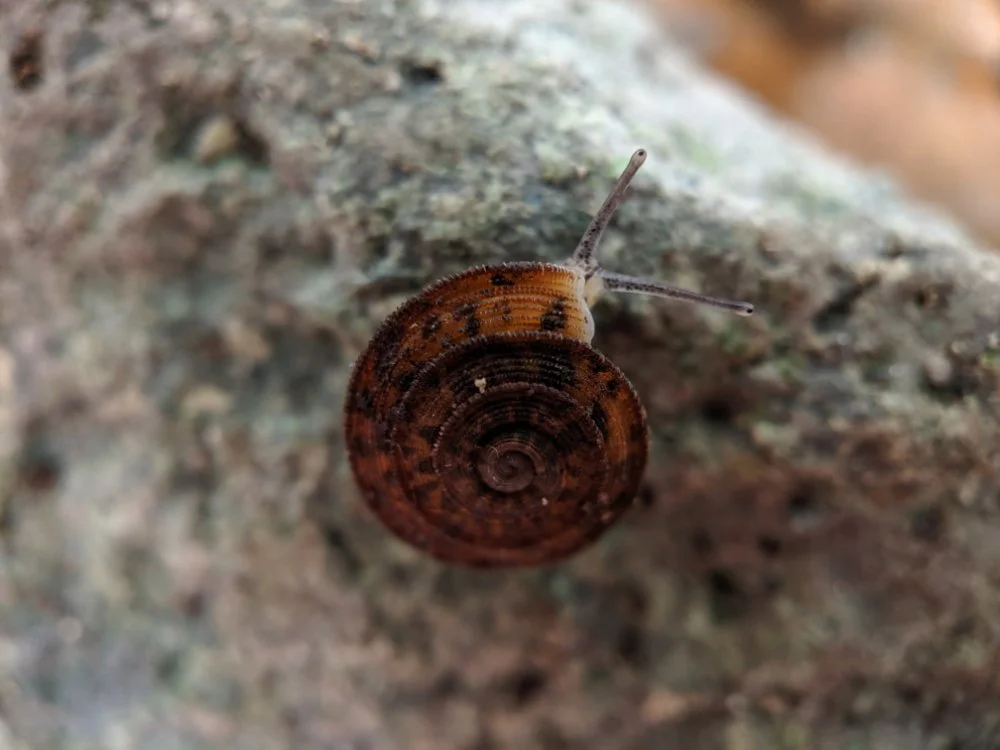
An endemic trochomorphid land snail in Palau. Like the partulids, trochomorphids are threatened by rat predation in the Pacific. Photo: Rebecca Rundell
Koror State has been working with Island Conservation to see if rats could be eradicated from certain isolated islands. Rats are major bird, egg, and nestling predators, and so removing rats could help improve the prospects for native Palauan birds. Rats are also a nuisance to people and can spread diseases. Coincidentally, removing rats could also help native snails! Rats have caused land snail species declines across the Pacific. We know that rats eat snails in Palau, because we find rat chew marks on dead shells in the forest.
The team’s goal is to count snails before rat eradication efforts, so that later, after the rats have been removed, we can return again and again and see if partulid numbers are slowly increasing.
This type of project can be challenging, especially for the Palauan staff such as the Koror Rangers and Conservation Officers. Rats are good at hiding, and may stowaway on boats that come to shore on islands. Rats could jump off the boats and start a new rat population all over again. Therefore enforcement of biosecurity procedures as well as monitoring for any rats is a long-term effort.
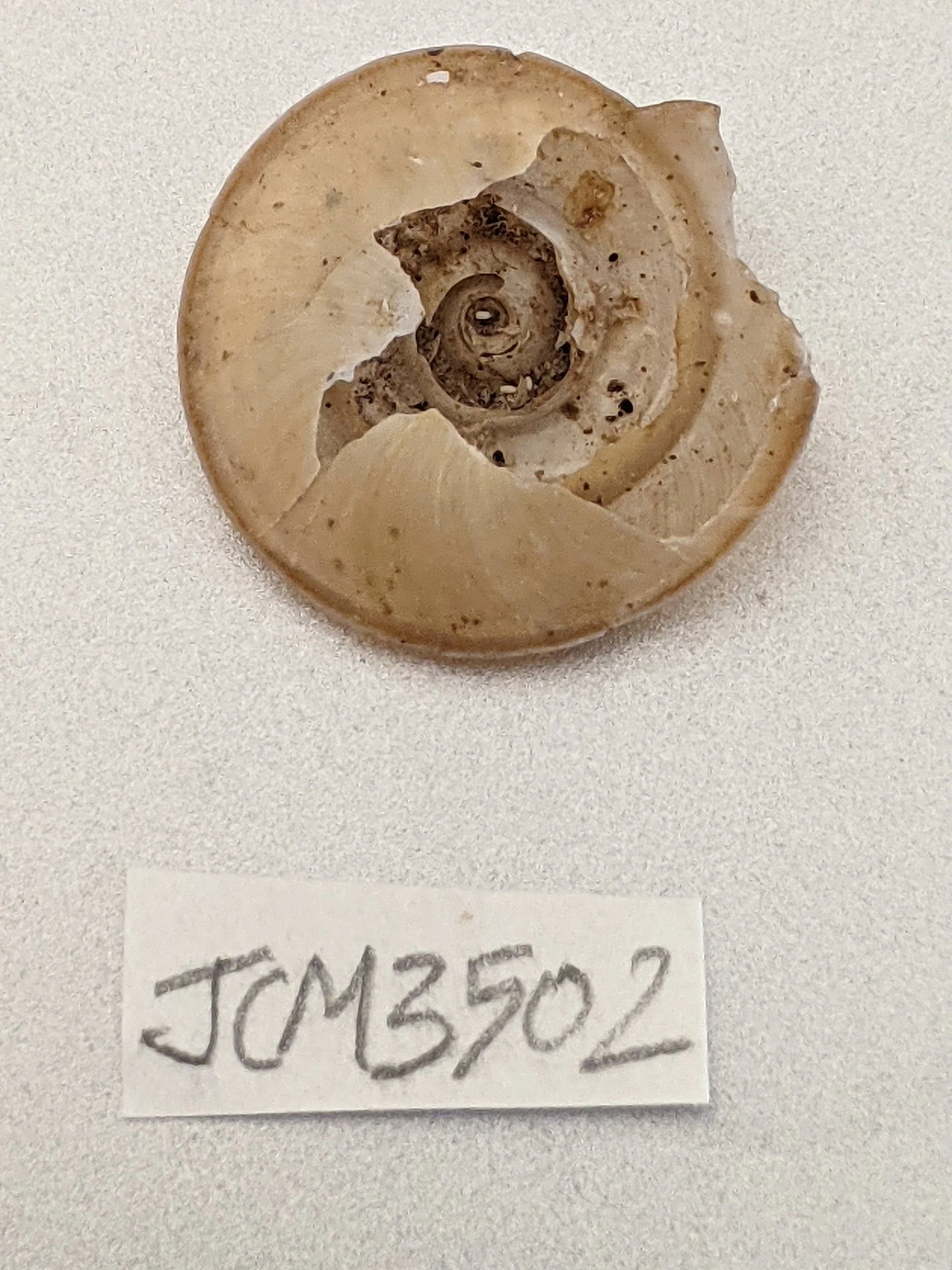
A Palau trochomorphid land snail that has been killed by a rodent. Photo: Jesse Czekanski-Moir
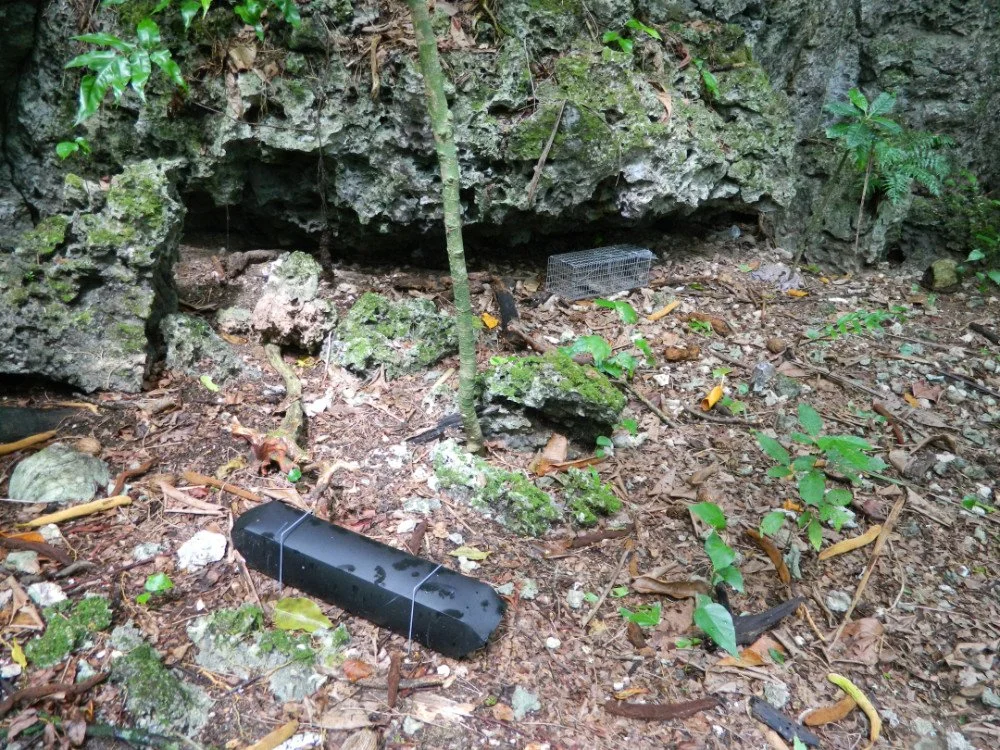
Traps used for rat monitoring in Koror State, Palau. This photo also shows land snail habitat, which includes the dead leaves (“leaf litter”) and limestone karst rocks. Photo: Rebecca Rundell
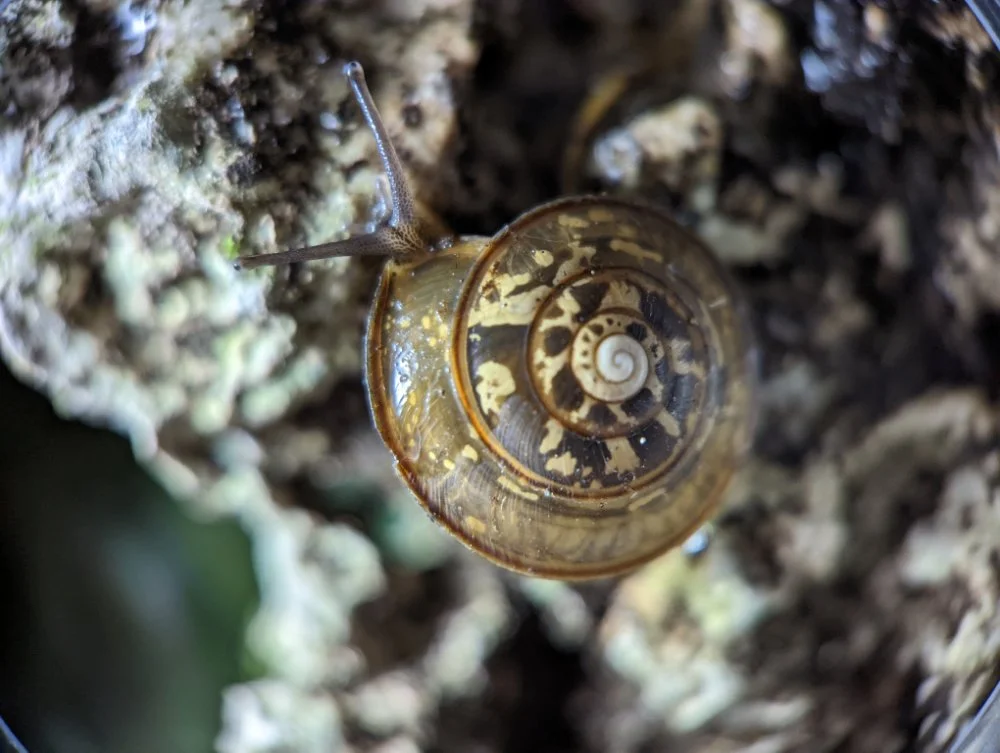
Ground-dwelling trochomorphid snail Videna electra from Koror State, Palau. Note that the spots are the snail’s body showing through the shell. Trochomorphids are sometimes eaten by invasive rats, because they are large and bite-sized like partulids. Photo: Rebecca Rundell
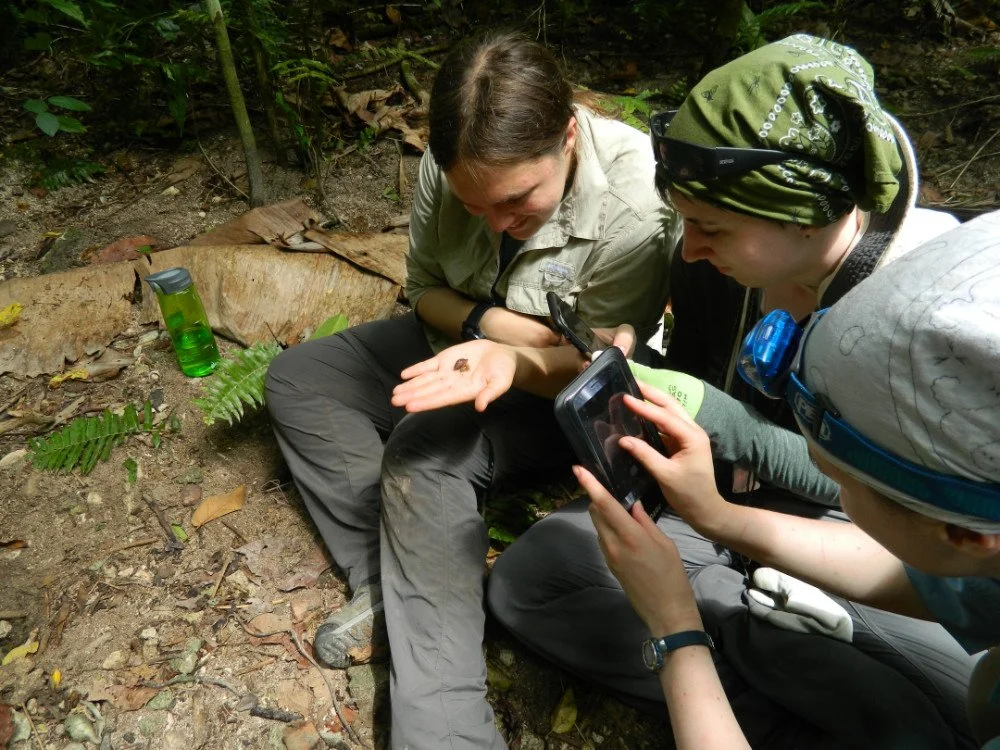
SUNY-ESF students Audrey Sellepack, Mallow Thomas, and Teresa Rose Osborne working on a pre-rat eradication partulid survey in Ngeanges, a Rock Island in Koror State in Palau. Photo: Rebecca Rundell
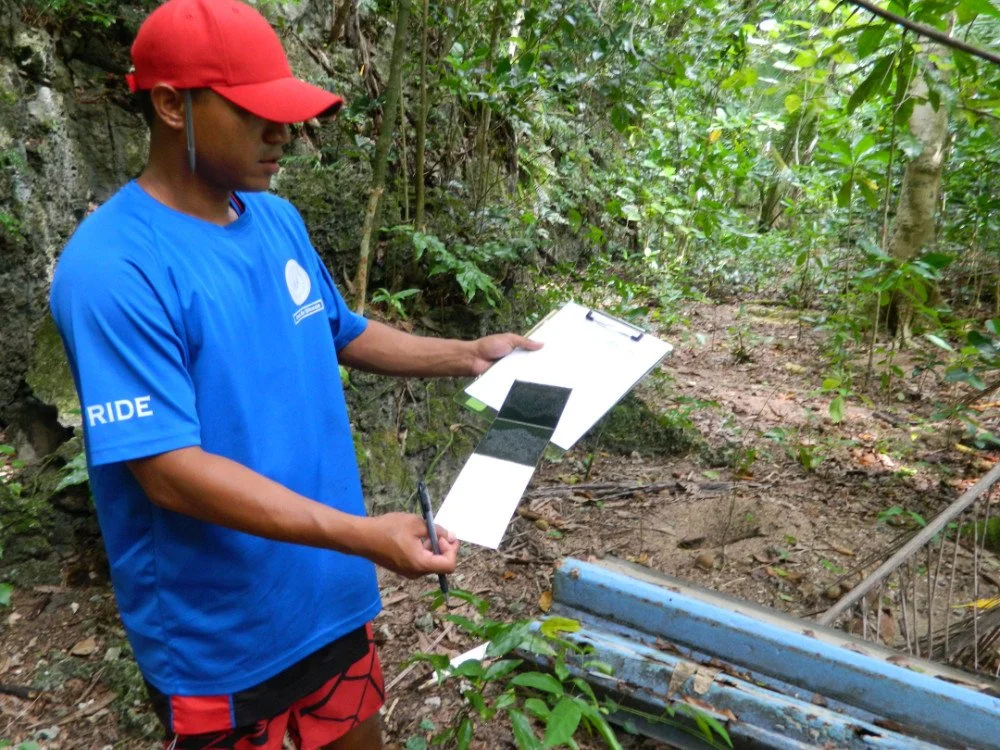
Koror State Conservation Officer showing paper used to help monitor for rats after eradication from Ngeanges in Palau. Photo: Rebecca Rundell
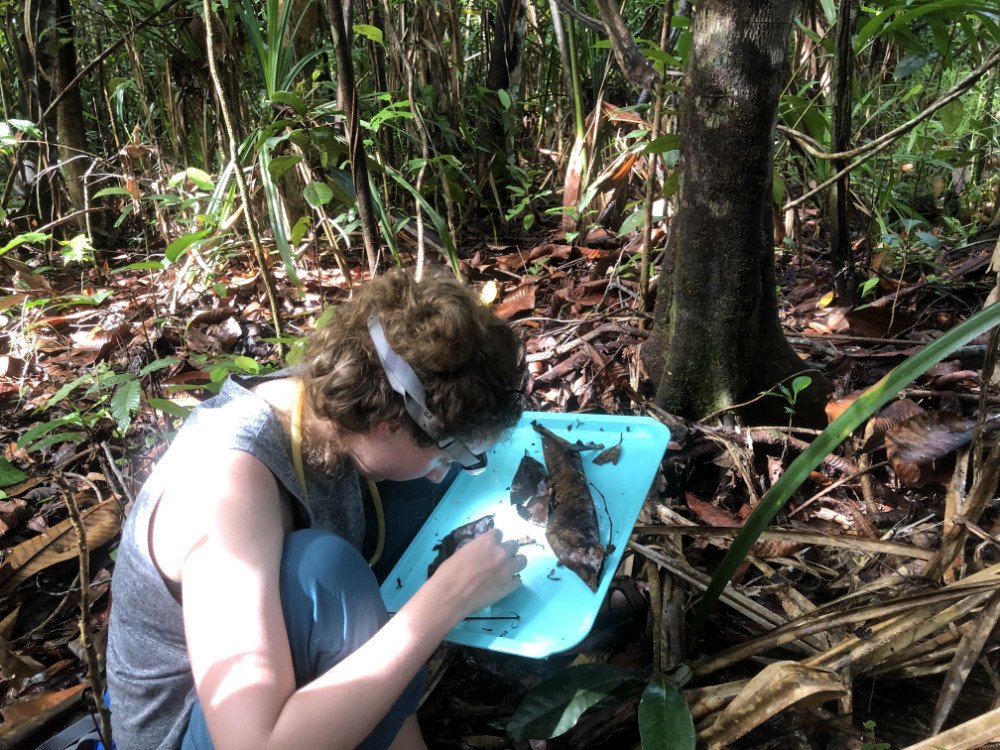
SUNY-ESF student Nicki McCoy searching the leaf litter in Palau for land snails. Photo: Anuschka Faucci
Conserving habitat for snails is also important. Land snails like leaf litter and native vegetation near island edges, similar to the ground-dwelling megapode birds that also live there. This may look “messy” to some people, but it is a matter of survival for Palau’s native animals. It is a true island paradise for them.
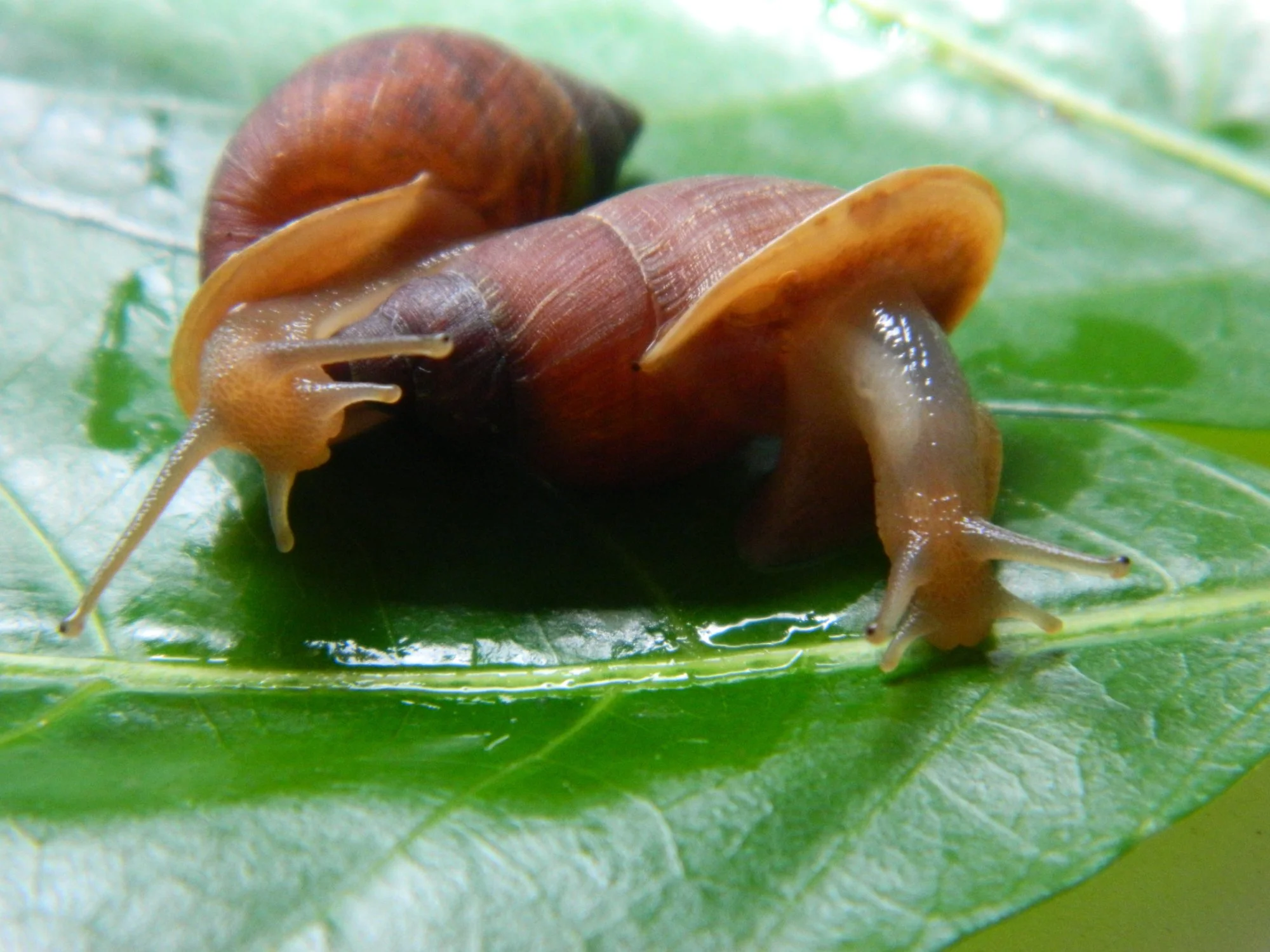
Two Palaopartula thetis Palau pandanus tree snails. Photo: Rebecca Rundell
Acknowledgments:
Ann Marie Gawel contributed to this exhibit, and her conservation research on Mariana Islands partulids and introduced species is ongoing. Dr. Gawel is the Eleanor J. Sterling Postdoctoral Fellow at the American Museum of Natural History. Dr. Gawel’s website is here. Dr. Gawel’s snail conservation research in Guam was supported by the Smith Fellowship through the Society for Conservation Biology. Dr. Gawel also works on the board of the Marianas-based conservation non-profit Tåno, Tåsi, yan Todu (TTT), and organization that builds local capacity for Indigenous-based and community-led conservation education and forest restoration.
Curt Fiedler, Alex Kerr, and Barry Smith at the University of Guam also lead and collaborate on partulid research in the Mariana Islands. Biologists at the U.S. Commonwealth of the Northern Mariana Islands (CNMI) Department of Lands and Natural Resources (Division of Fish and Wildlife), University of Hawaiʻi, State of Hawaii, and U.S. Fish and Wildlife Service have also collaborated in partulid research in the Marianas (e.g. Michael G. Hadfield, Brenden Holland, Steve Miller, and David Sischo). The U.S. Fish and Wildlife Service, National Park Service, and U.S. Navy support research and protection of endangered partulids on Guam and the U.S. Commonwealth of the Northern Mariana Islands.
On Palau, Rebecca Rundell thanks the Palau Conservation Society, the Palau Bureau of Agriculture, Department of Conservation and Law Enforcement (Koror State), the state governments and conservation officers of Koror, Airai, Peleliu, and Ngatpang; Lolita Gibbons-Decherong, Heather Ketebengang, Joel Miles, Pat and Lori Colin, Gerda Ucharm, Mathew Mesubed (Coral Reef Research Foundation), Ann Marie Gawel, Jesse Czekanski-Moir, Morgan Bullis, Teresa Rose Osborne, and the SUNY-ESF Palau field course students, “Invertebrate Conservation in Palau: From Ridge to Reef” (Instructors: Jesse Czekanski-Moir, Rebecca Rundell, Anuschka Faucci, and Carla Atkinson). We gratefully acknowledge the non-profit organization Island Conservation and their staff, as well as the company Solar Pacific. Ann Marie Gawel and Rebecca Rundell thank Norine Yeung at the Bernice Pauahi Bishop Museum in Honolulu, Hawaiʻi for access to partulid specimens and Micronesian handicrafts under their care.
Ann Marie Gawel and Jesse Czekanski-Moir helped review text on partulids for this exhibit, but Rebecca Rundell takes responsibility for any errors.
Sources and further reading:
Cowie, R.H. 1992. Evolution and extinction of Partulidae, endemic Pacific island land snails. Philosophical Transactions of the Royal Society of London B. 335: 167-191.
Cowie, R.H., Rundell R.J., Mika, F. and P. Setu. 2002. The endangered partulid tree snail Samoana thurstoni on Olosega and the land snail diversity of the Manuʻa Islands, American Samoa. American Malacological Bulletin 17(1/2): 37-43.
Johnson, M.S. 1987. Chirality and shape in Partula suturalis. Evolution 41(3): 672-675.
Lee, T., Li, J., Churchill, C.K.C., and D. Ó Foighil. 2014. Evolutionary history of a vanishing radiation: isolation-dependent persistence and diversification in Pacific Island partulid tree snails. BMC Evolutionary Biology 14: 202.
Gerlach, J. 2022. Partula planilabrum. The IUCN Red List of Threatened Species 2022: e.T16341A221485863. https://dx.doi.org/10.2305/IUCN.UK.2022-2.RLTS.T16341A221485863.en. Accessed on 24 May 2025.
Partula planilabrum on the IUCN Red List of Threatened Species
Gerlach, J. et al., 2021. Negative impacts of invasive predators used as biological control agents against the pest snail Lissachatina fulica: the snail Euglandina ‘rosea’ and the flatworm Platydemus manokwari. Biological Invasions 23: 997-1031.
Gerlach, J. 2024. Sphendone insolita. The IUCN Red List of Threatened Species 2024: e.T102425661A102425705. https://dx.doi.org/10.2305/IUCN.UK.2024-1.RLTS.T102425661A102425705.en. Accessed on 25 May 2025.
Hadfield, Michael G. 2015. The occurrence of the endangered tree snail Partula gibba in the Mariana Islands, with a focus on Pagan Island. Bishop Museum Bulletins in Zoology 9: 147-167.
National Park Service. 2025. Creating a sanctuary: protecting snails and restoring ecosystems at war in the Pacific National Historical Park. https://www.nps.gov/articles/protecting-snails-and-restoring-ecosystems-at-war-in-the-pacific.htm
Ó Foighil, D. & Gerlach, J. 2024. Partula guamensis. The IUCN Red List of Threatened Species 2024: e.T16289A112361961. https://dx.doi.org/10.2305/IUCN.UK.2024-1.RLTS.T16289A112361961.en. Accessed on 24 May 2025.
Partula guamensis on the IUCN Red List of Threatened Species
Ó Foighil, D. & Rundell, R.J. 2022. Palaopartula calypso. The IUCN Red List of Threatened Species 2022: e.T16285A118335562. https://dx.doi.org/10.2305/IUCN.UK.2022-2.RLTS.T16285A118335562.en. Accessed on 25 May 2025.
Ó Foighil, D. & Rundell, R.J. 2022. Palaopartula leucothoe. The IUCN Red List of Threatened Species 2022: e.T16291A118335812. https://dx.doi.org/10.2305/IUCN.UK.2022-2.RLTS.T16291A118335812.en. Accessed on 25 May 2025.
Ó Foighil, D. & Rundell, R.J. 2022. Palaopartula thetis. The IUCN Red List of Threatened Species 2022: e.T16294A118336035. https://dx.doi.org/10.2305/IUCN.UK.2022-2.RLTS.T16294A118336035.en. Accessed on 25 May 2025.
Pelep, P.O. and M.G. Hadfield. 2011. The status of the endemic snails of the genus Partula (Gastropoda: Partulidae) on Pohnpei, Federated States of Micronesia. Micronesica 41(2): 253-262.
Seattle’s Woodland Park Zoo Partula Snail Conservation: https://blog.zoo.org/2014/02/bringing-tahitian-snails-back-from.html
Zoological Society of London Partula Snail Conservation: https://www.zsl.org/what-we-do/projects/partula-snail-conservation
Snails hate salt! How did they get to an island in the middle of the ocean?
Land snails are famous for being slow, but they can get around! They don’t have wings like birds or bats, but land snails can accidentally fly, float, or hitchhike to islands. Even though these are rare events by human lifetime standards, over millions of years those few successful drifting survivors have evolved into thousands of species, completely unique to those islands (“endemic species”).
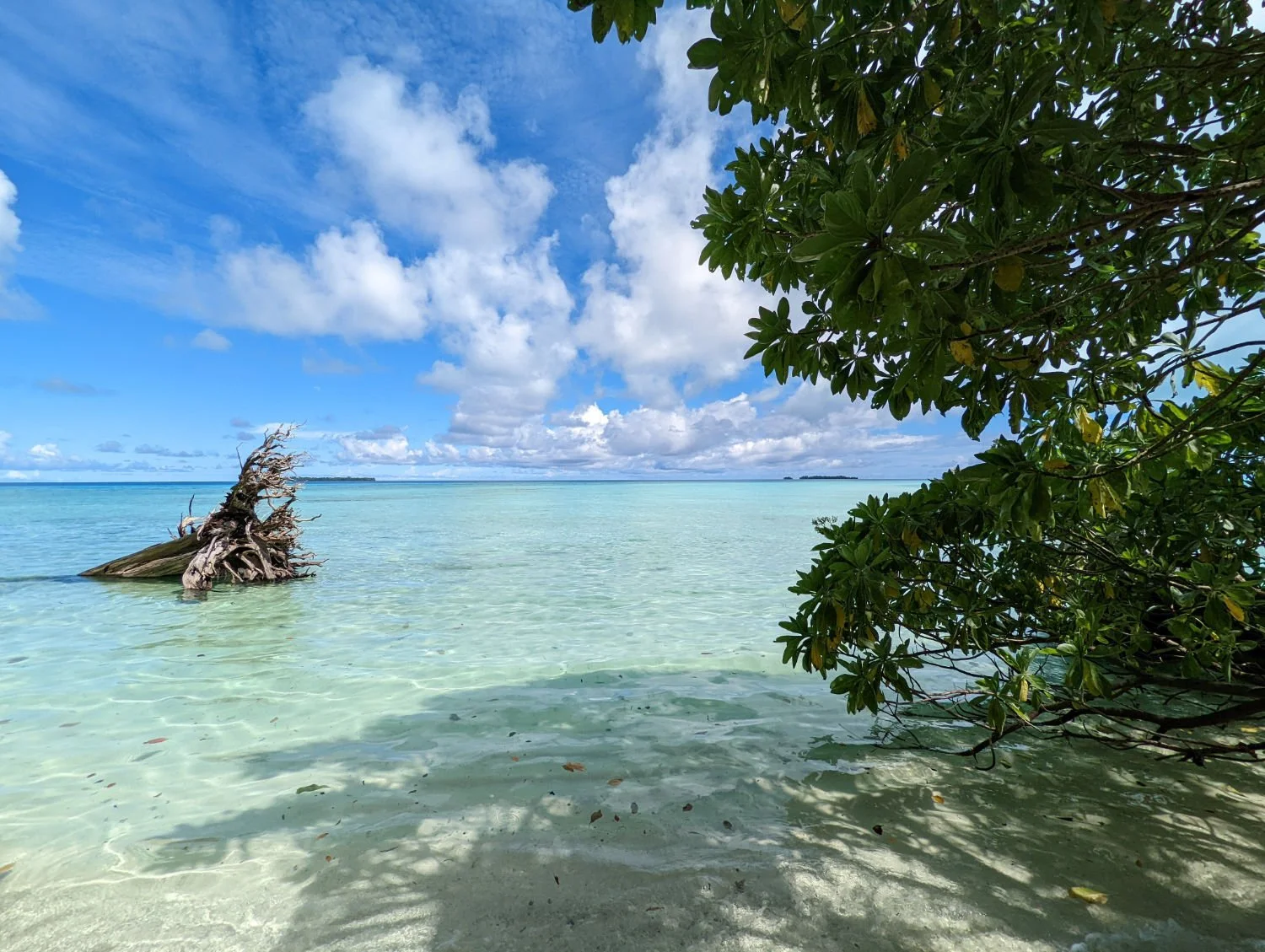
Driftwood near a Palau island in the western Pacific. Land snails can accidentally disperse between these remote islands. Photo: Rebecca Rundell
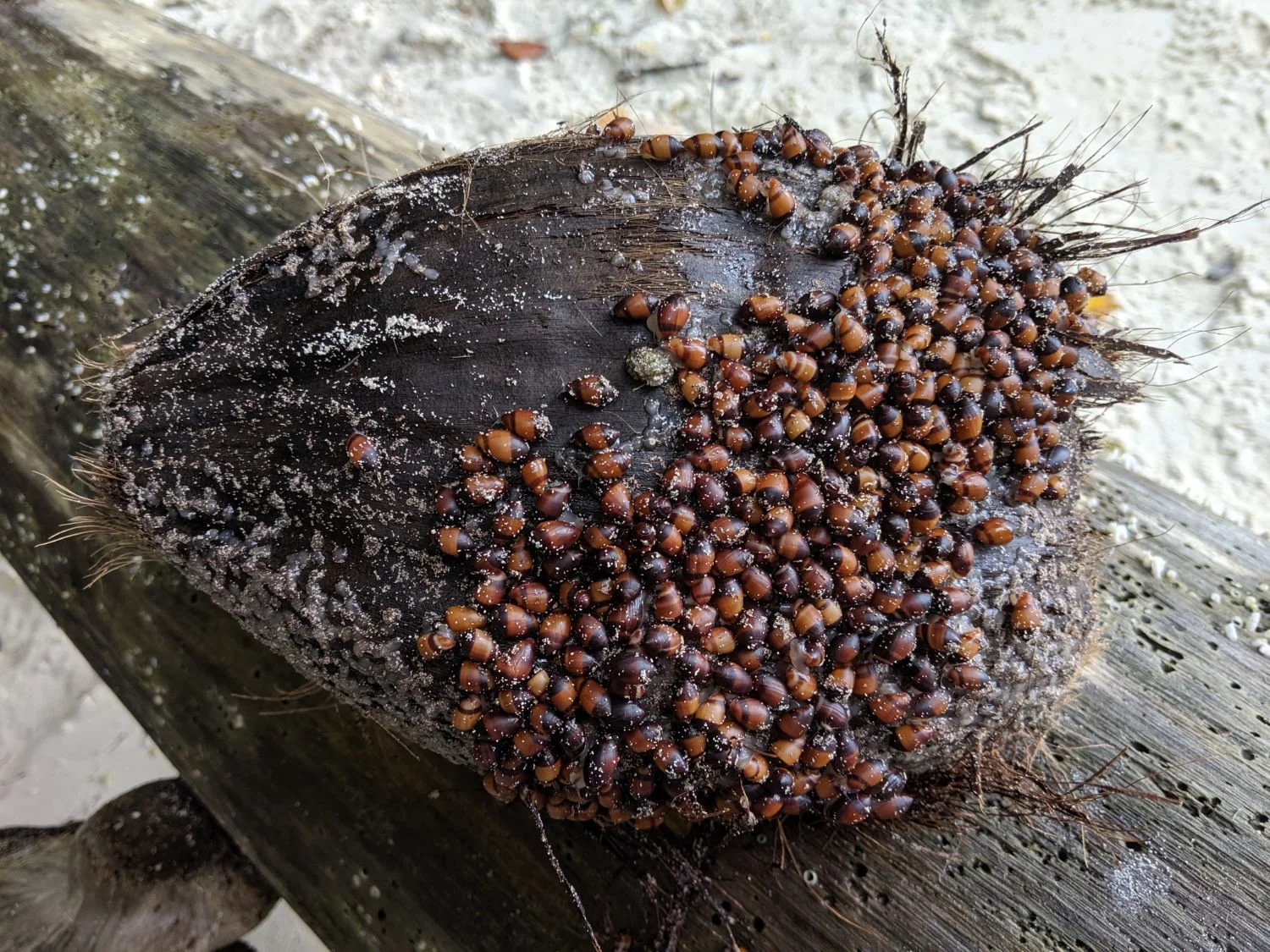
Melampus land snails grazing on a coconut that has washed up on a beach in the Ngerukeuid islands of the Republic of Palau. Photo: Rebecca Rundell
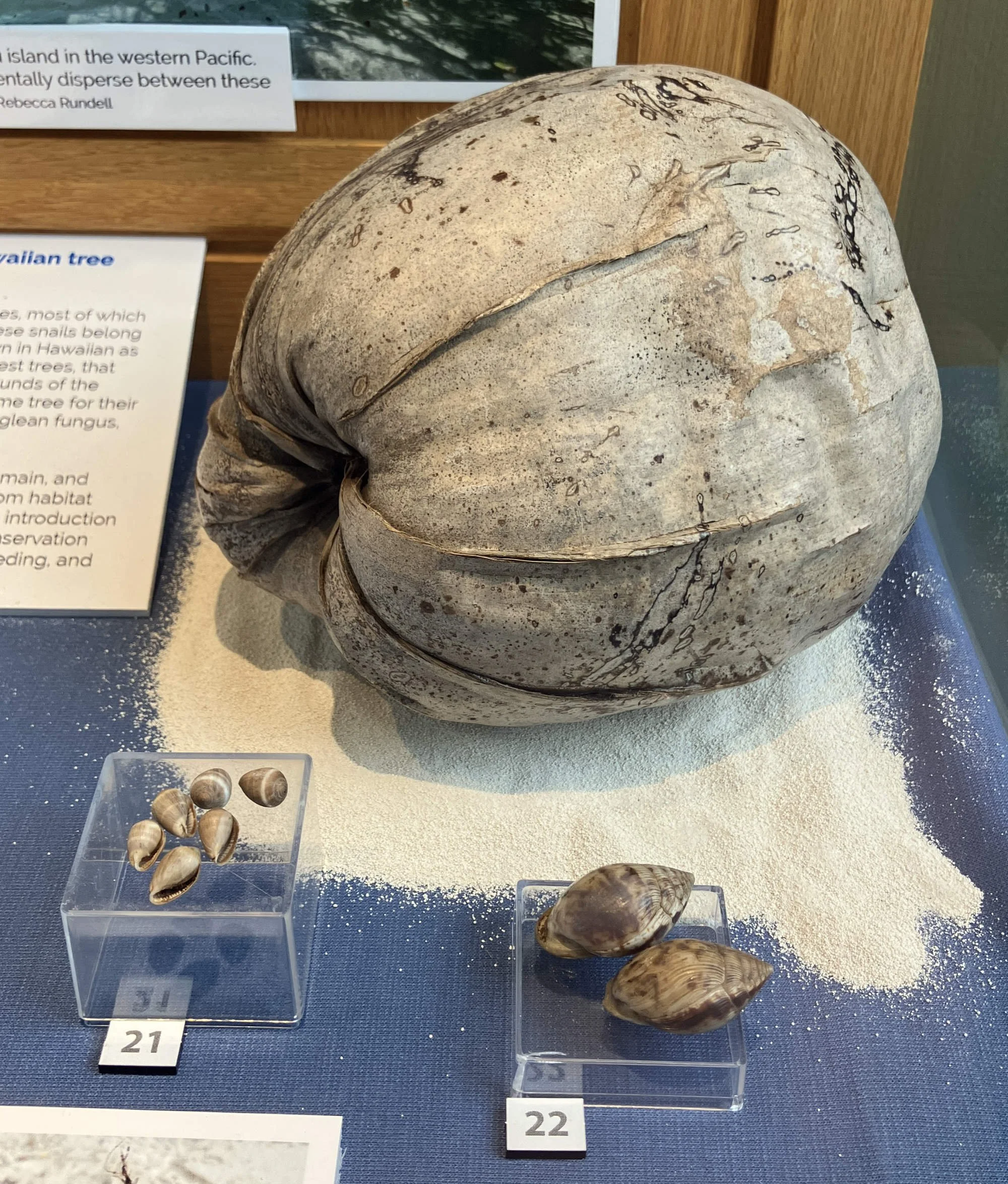
Tiny snails can be picked up and blown by the wind during a typhoon. Floating can happen on chunks of coastal soil and vegetation that break off during storms, or on coconuts or driftwood. Land snails such as the Pythia and Melampus land snails are known to float long distances riding on a coconut. Snails like these have very large geographic ranges, encompassing multiple archipelagos, in contrast to other island land snails that are endemic to single islands. Darwin and other scientists have also documented cases where land snails were accidentally dispersed by getting stuck to a bird’s foot or feathers.
Image to the right: specimens on display at the Museum of the Earth; (21) PRI 95979 Melampus (Ellobiidae) and (21) PRI 96138 Pythia pantherina (Ellobiidae). Ellobiid land snails like Pythia and Melampus species are found across different Pacific archipelagos. Unlike many other land snails, which tend to be endemic or unique to individual islands, these ellobiid land snails have wide geographic ranges because they are able to tolerate periodic submersion in saltwater during their long-distance transport on floating vegetation, wood, or coconuts. Other land snails may survive dispersal less often, yet even very rare events across thousands or millions of years can result in the beginnings of evolutionary diversification.
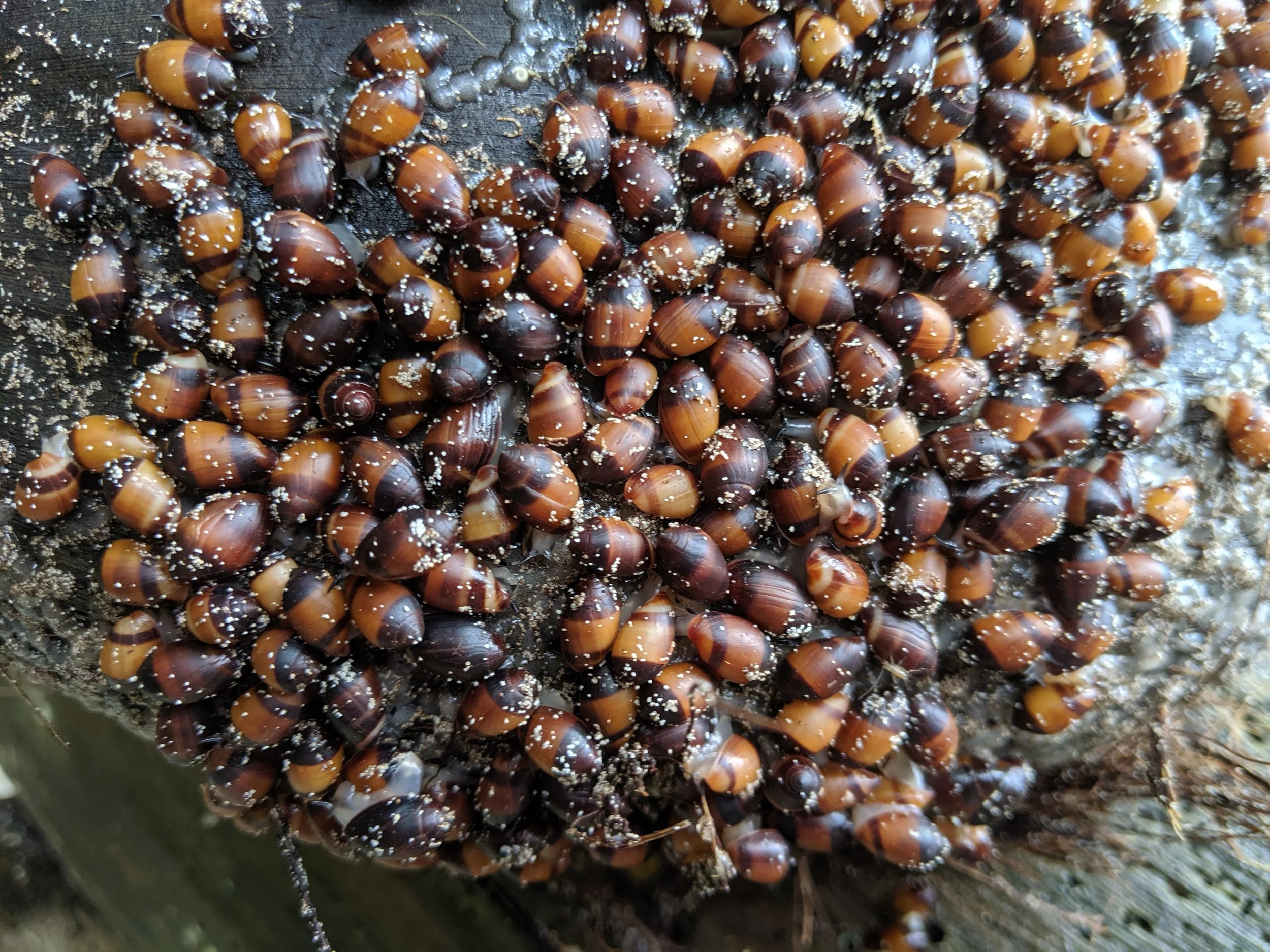
Close up of Melampus land snails hitching a ride on a coconut (Ngerukeuid islands, Republic of Palau). Photo: Rebecca Rundell
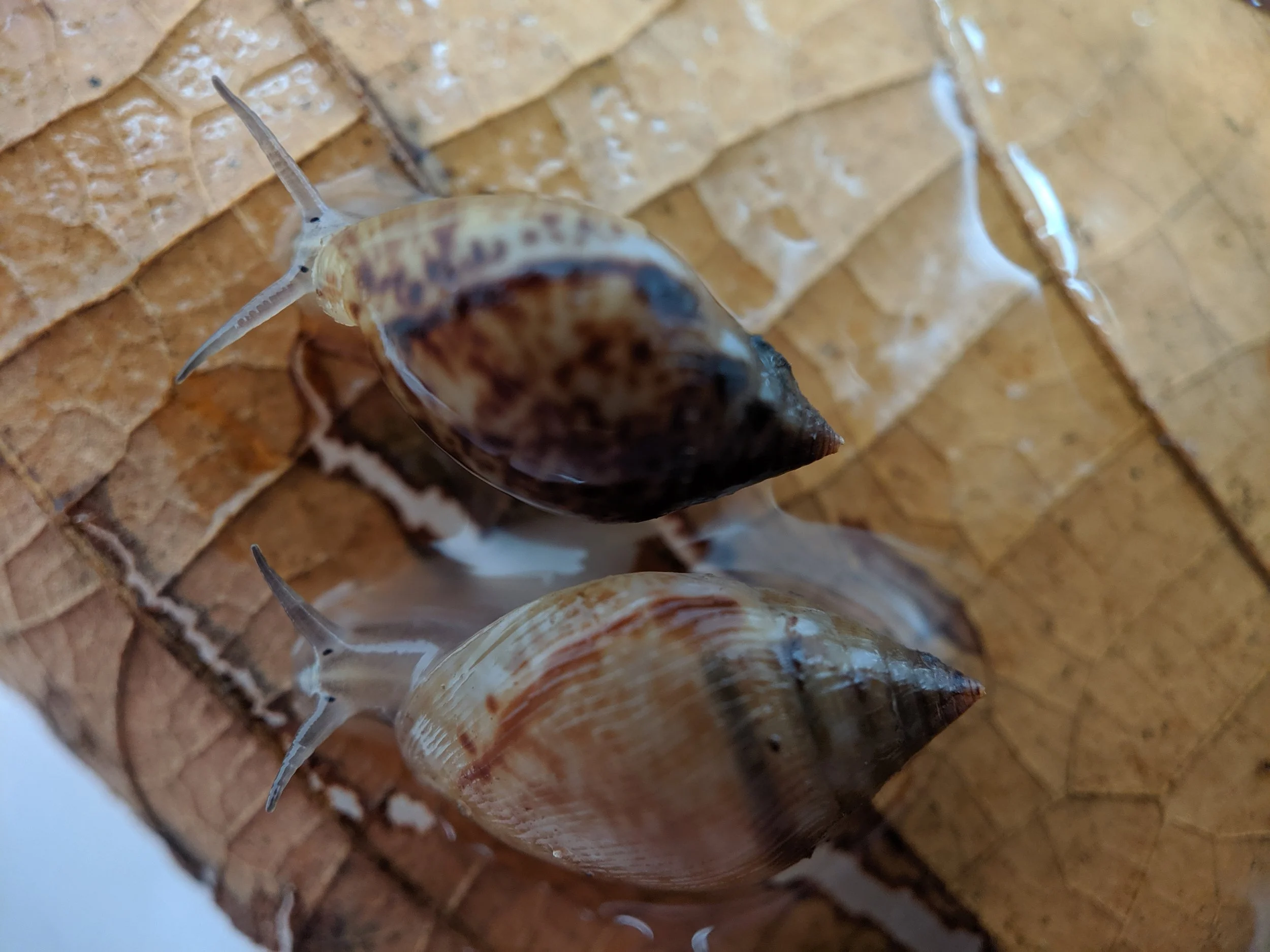
Two Pythia scarabaeus land snails from Palau. They are fairly resistant to seawater now and then, and therefore sometimes can drift between islands on a piece of floating vegetation. Pythia are native land snails that are commonly found in the leaf litter near betelnut trees, but can also be found under rocks and other damp places. Photo: Rebecca Rundell
Tiny tigers: Palau’s punctoid rainforest snails
Punctoid land snails are among the most beautiful and rare land snails on the planet. Over 550 species of these minute snails (often < 12 mm) have evolved across dozens of Pacific archipelagos. These snails exist on exceptionally small scales, living within the leaf litter and limestone rubble of Pacific island rainforests. Because of their small size and because of the faraway places they live, very little is known about their biology.
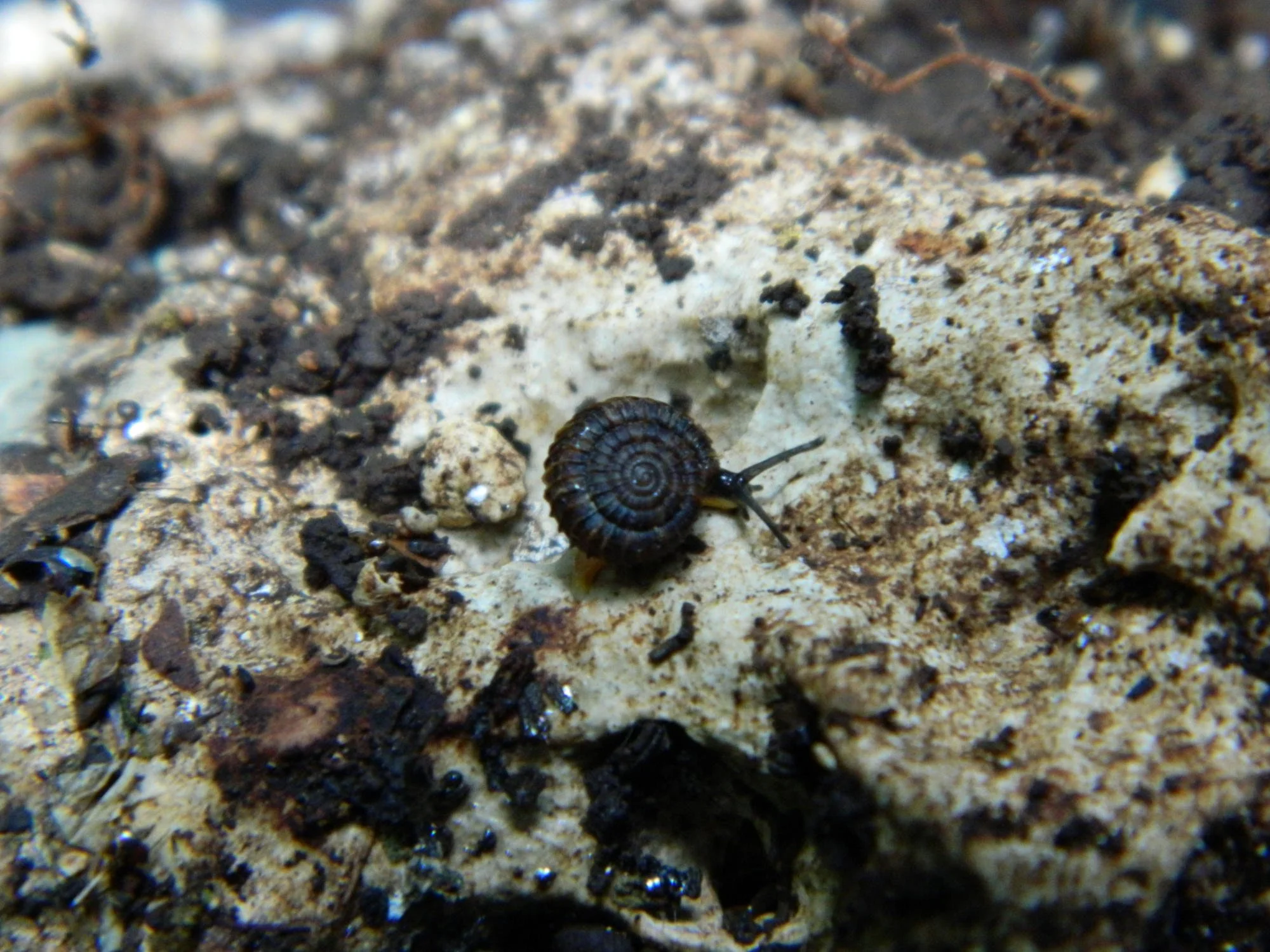
Semperdon kororensis land snails from the island of Ulong in the Republic of Palau. Photos: Rebecca Rundell
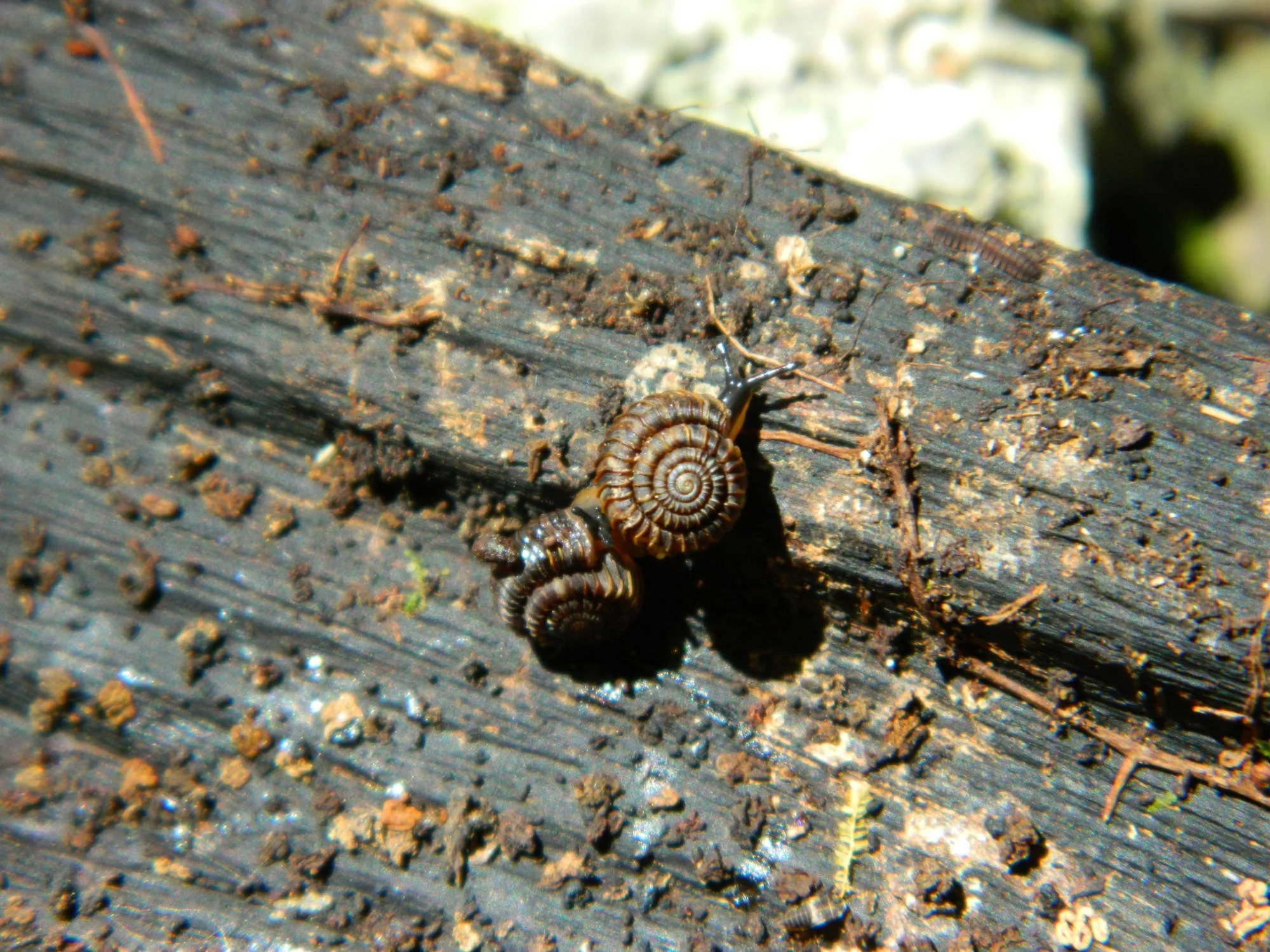
Semperdon kororensis land snails from the island of Ulong in the Republic of Palau. Photos: Rebecca Rundell
It is likely that punctoids feed on fungi and decaying organic matter on the forest floor, similar to other snail species that live in similar habitats. Punctoid land snails possess exceptionally colorful and diverse shell shapes. In life, many punctoid species display striking color patterns, from the tiger stripes of the genus Aaadonta (Endodontidae) to the mottled brown and gold mosaics of the genus Semperdon (Charopidae).
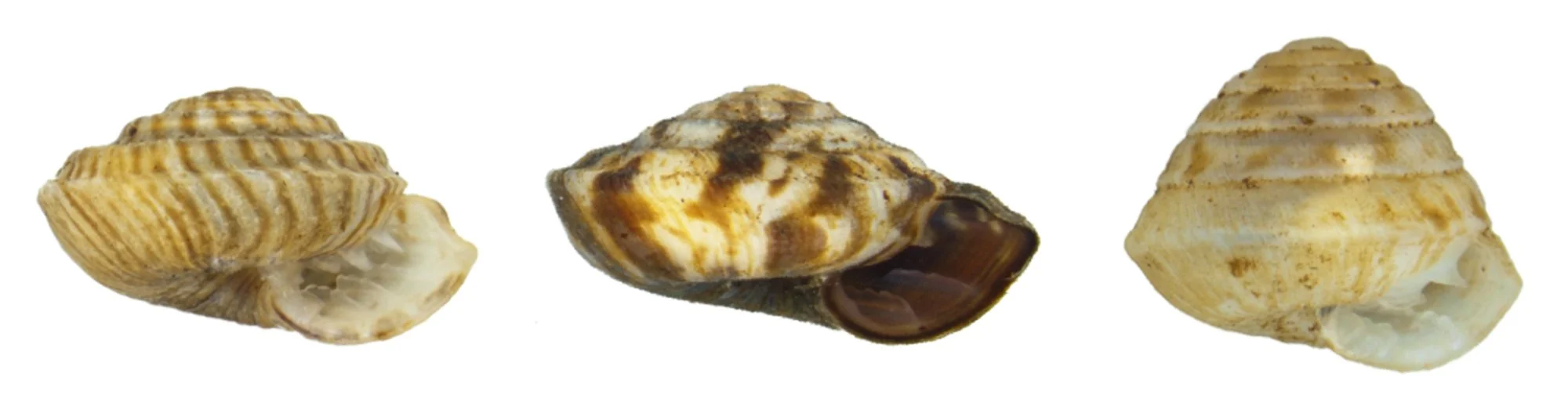
Aaadonta constricta constricta (left), Aaadonta irregularis (center), Aaadonta fuscozonata fuscozonata (right) (Stylommatophora: Endodontidae).
Punctoid shells are also interesting in the varying number and arrangement of projections blocking entrance to the shells’ interior known as apertural barriers. These barriers may serve a function for the snails, blocking predators from entering the shell or as a cue to other snails to recognize members of the same species. Studying the ecological function of shell structures like these helps biologists understand how and why we see a diversity of shell shapes in nature.
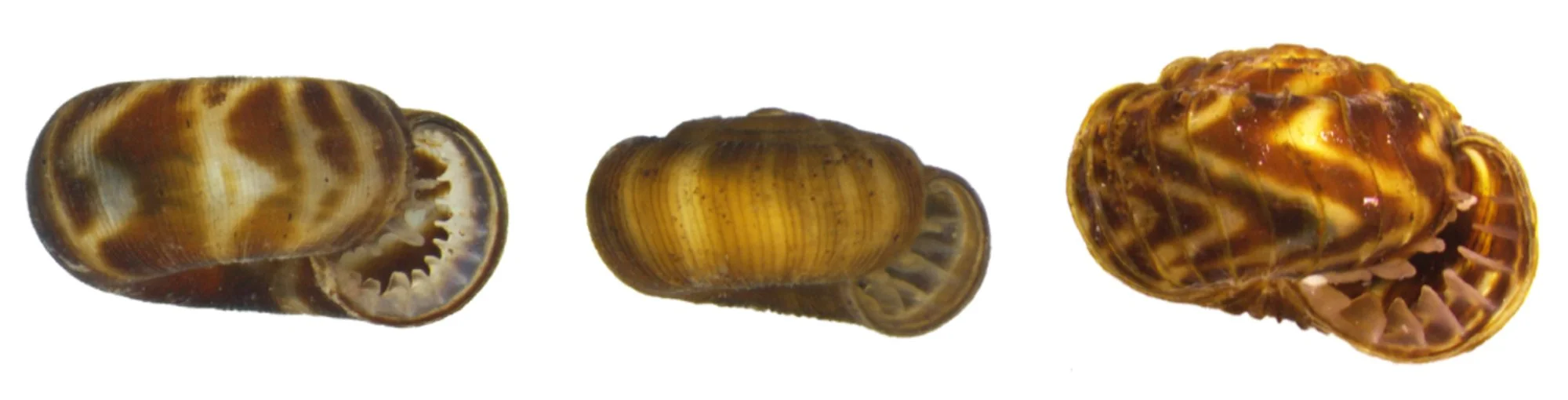
Semperdon xyleborus (left), Sempderon uncatus (center), Semperdon kororensis (right) (Stylommatophora: Charopidae)
Punctoid text was contributed by Morgan Bullis (National Malacology Specialist at the Animal and Plant Health Inspection Service, USA).
Palau’s little stars: diplommatinid land snails of the rocks and leaves
The Belau archipelago (Republic of Palau) has a diverse land snail fauna. Most of the species that live there live nowhere else on Earth. The large partulid snails are discussed elsewhere in this exhibit. But most snail species are tiny and inconspicuous. The snails featured here are too small to show as exhibit specimens in a glass display case, but when you look closely you will see how extraordinary they are.
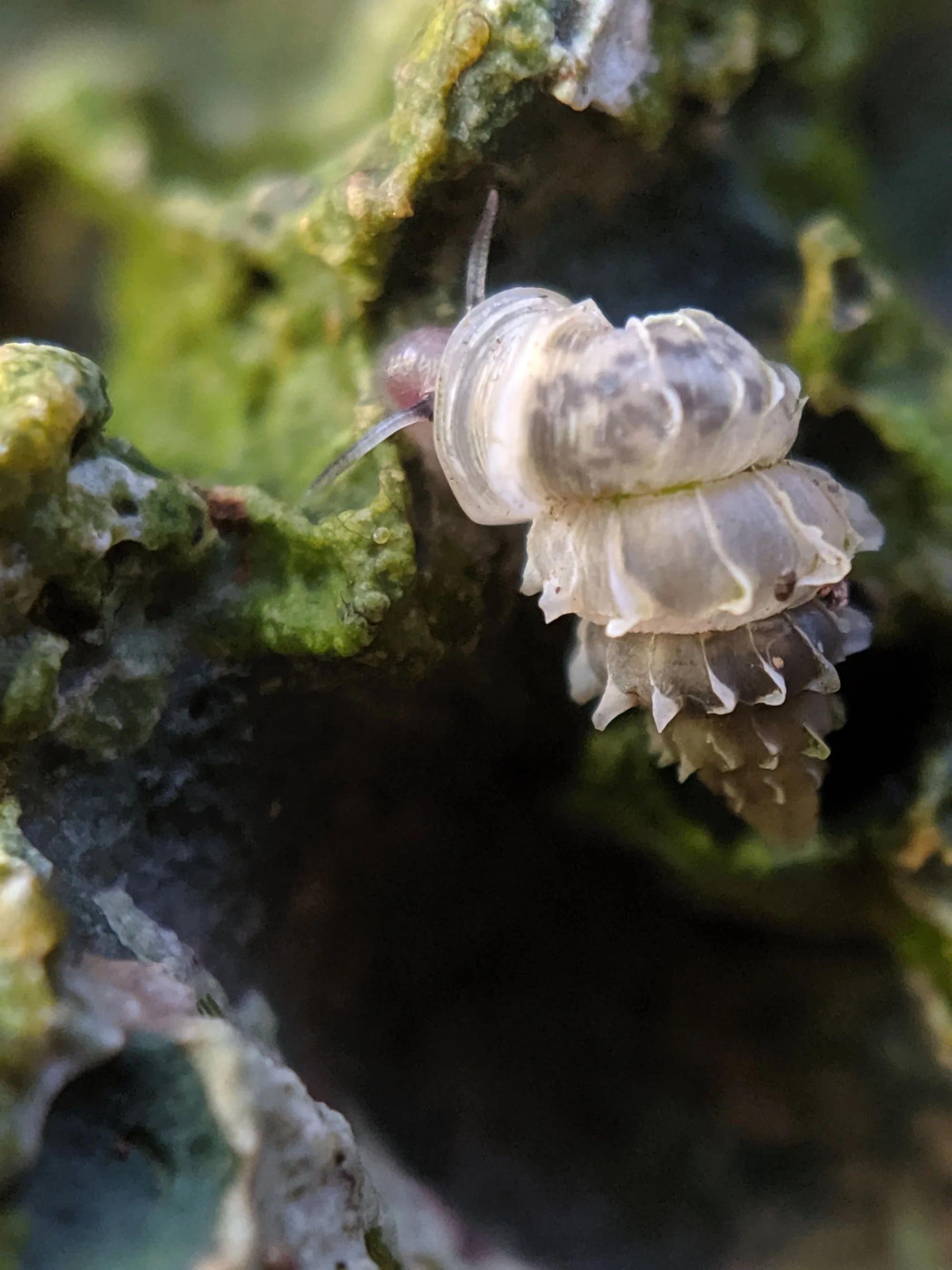
Many diplommatinid land snails in Palau live on limestone rocks. Photo: Jesse Czekanski-Moir
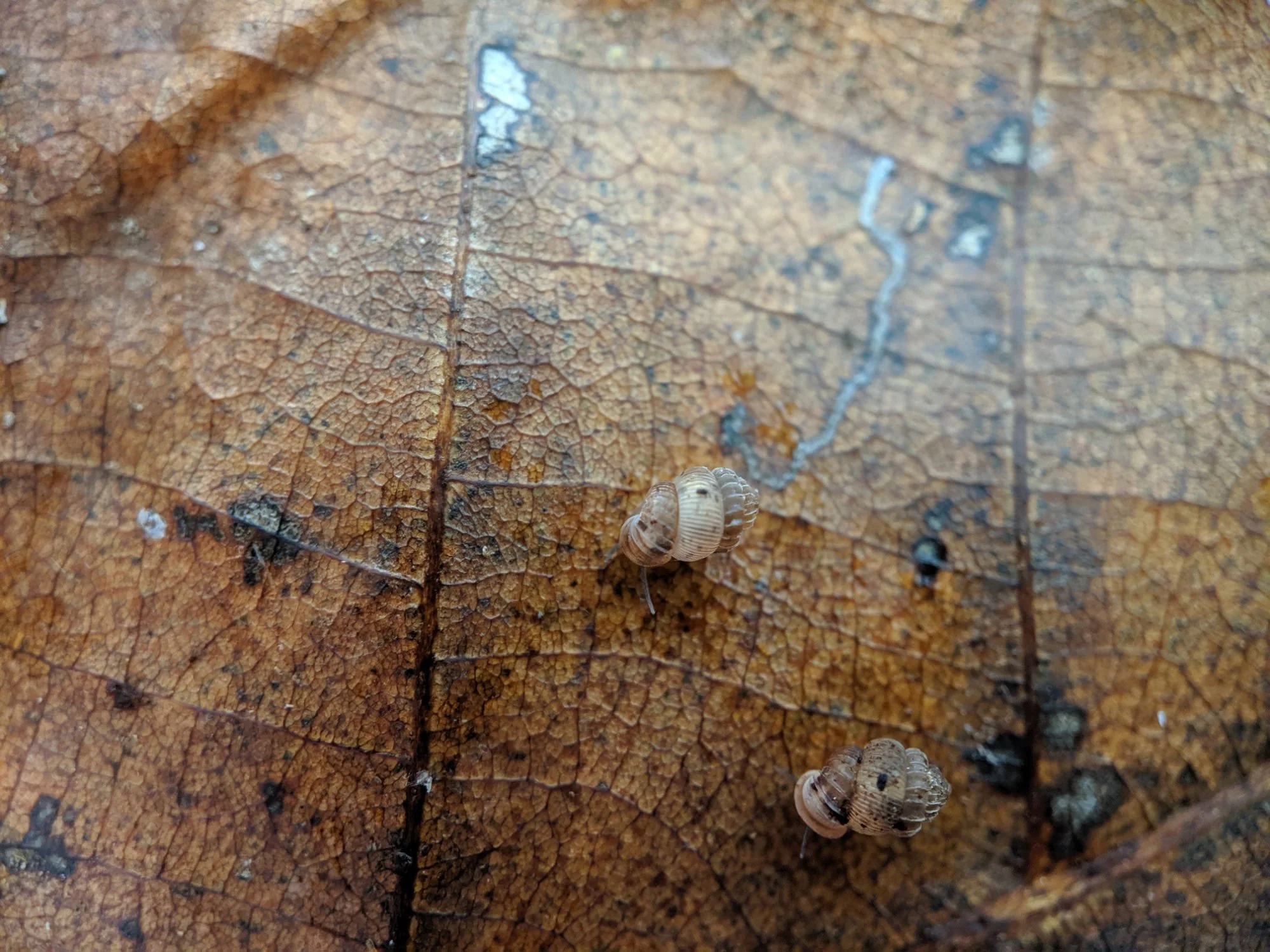
Other diplommatinid land snails in Palau live on dead leaves. Photo: Rebecca Rundell
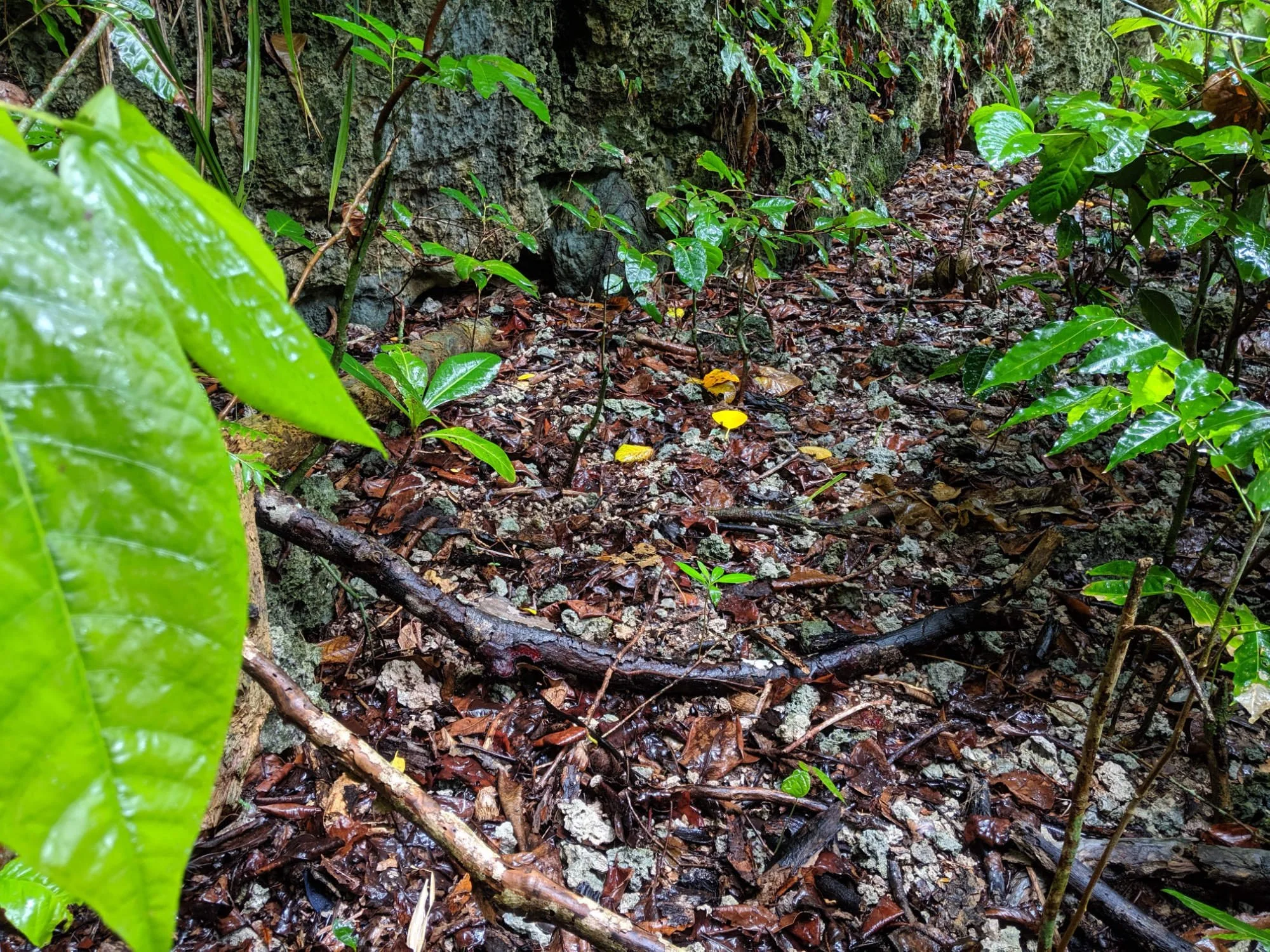
Palau is a tropical snail paradise! Endemic diplommatinid land snails live in all of these habitats: limestone boulders and cliffs, leaf litter, and limestone rubble. Many other snails also live on the live vegetation and bark. Photo: Rebecca Rundell
In Palauan, land snails are called ngetmakl. This is something that moves slowly and licks as it goes! That describes land snails perfectly. Land snails like the Diplommatinidae pictured here graze on the surfaces of limestone rocks and leaf litter, eating fungus, lichen, and bacterial films. They are detritivores, which is common among land snails. They are important in nutrient cycling in a healthy rainforest.
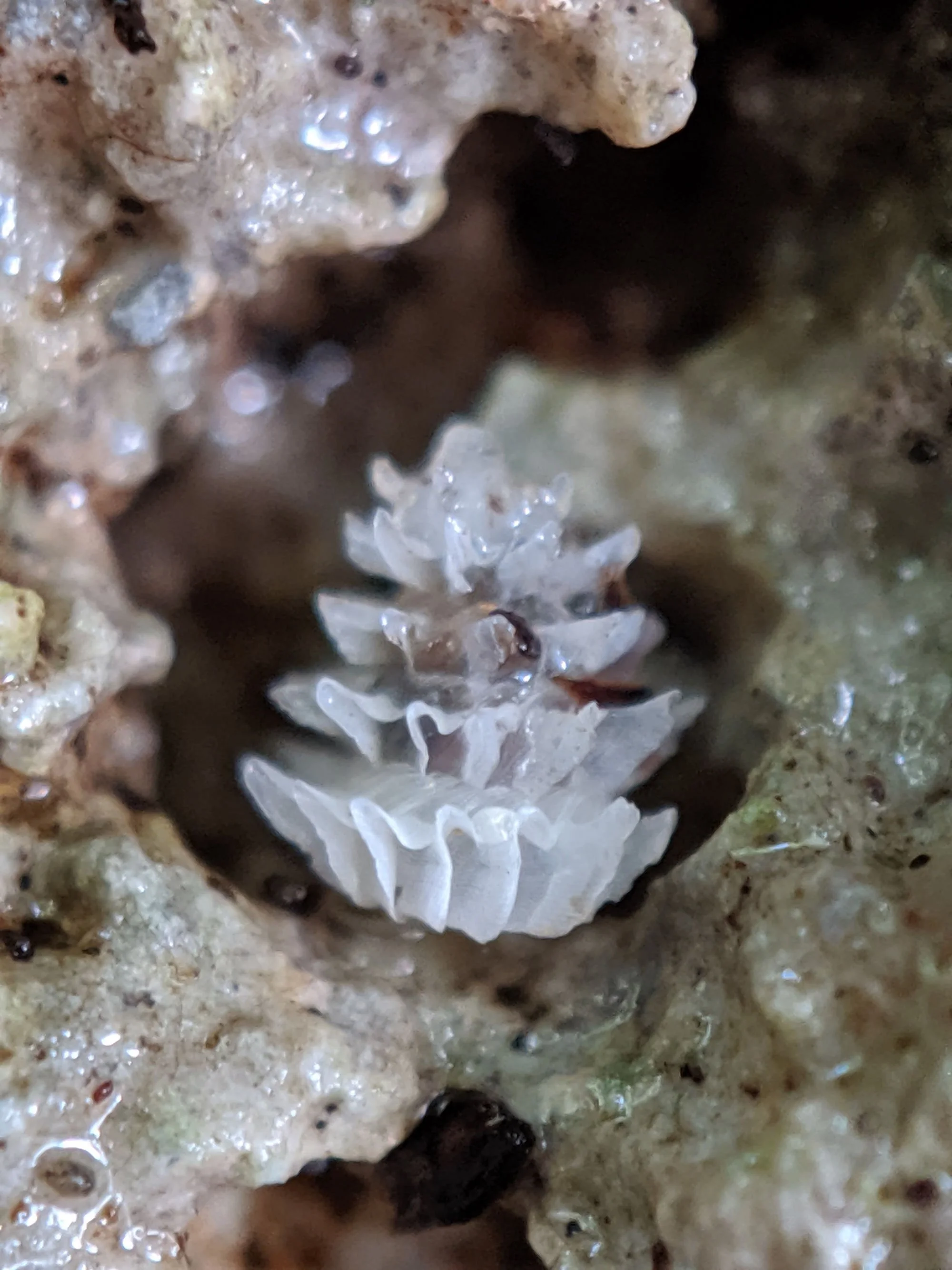
Hungerfordia land snails can fit their tiny shells into English muffin-style nooks and crannies of limestone karst, where they hide and feed on fungi and lichen. Despite their beautiful shell sculpture, they can be very cryptic on the rocks. Photo: Jesse Czekanski-Moir
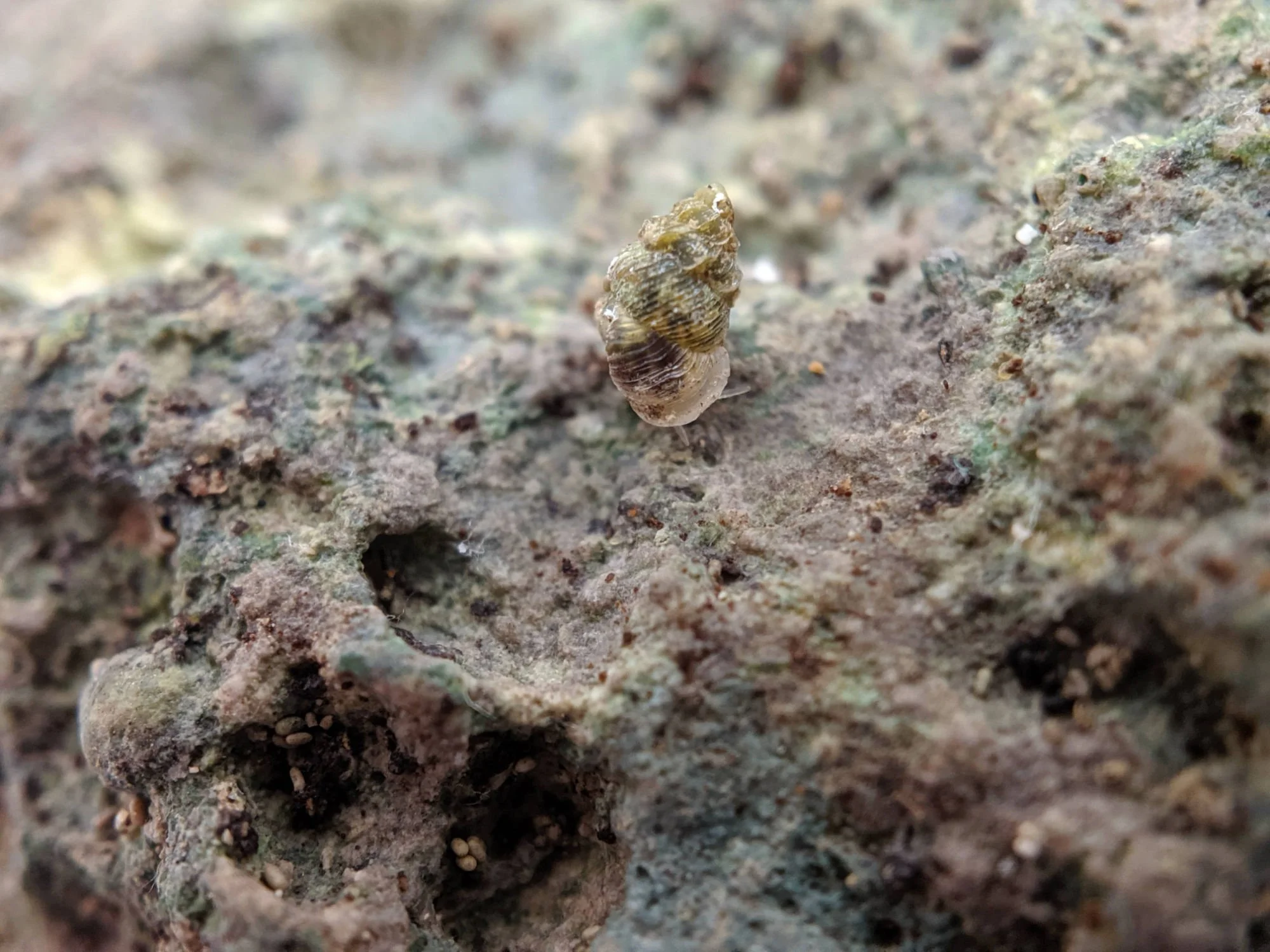
This rock-dwelling diplommatinid is feeding on fungus and lichen on limestone karst in Palau. Photo: Rebecca Rundell
Palau is an exciting place to do research on land snails, because there are many new species to discover, and the people in Palau really care about their environment. There is a lot of hope for Palau to remain a wonderful place to be for Palauans and their wildlife.
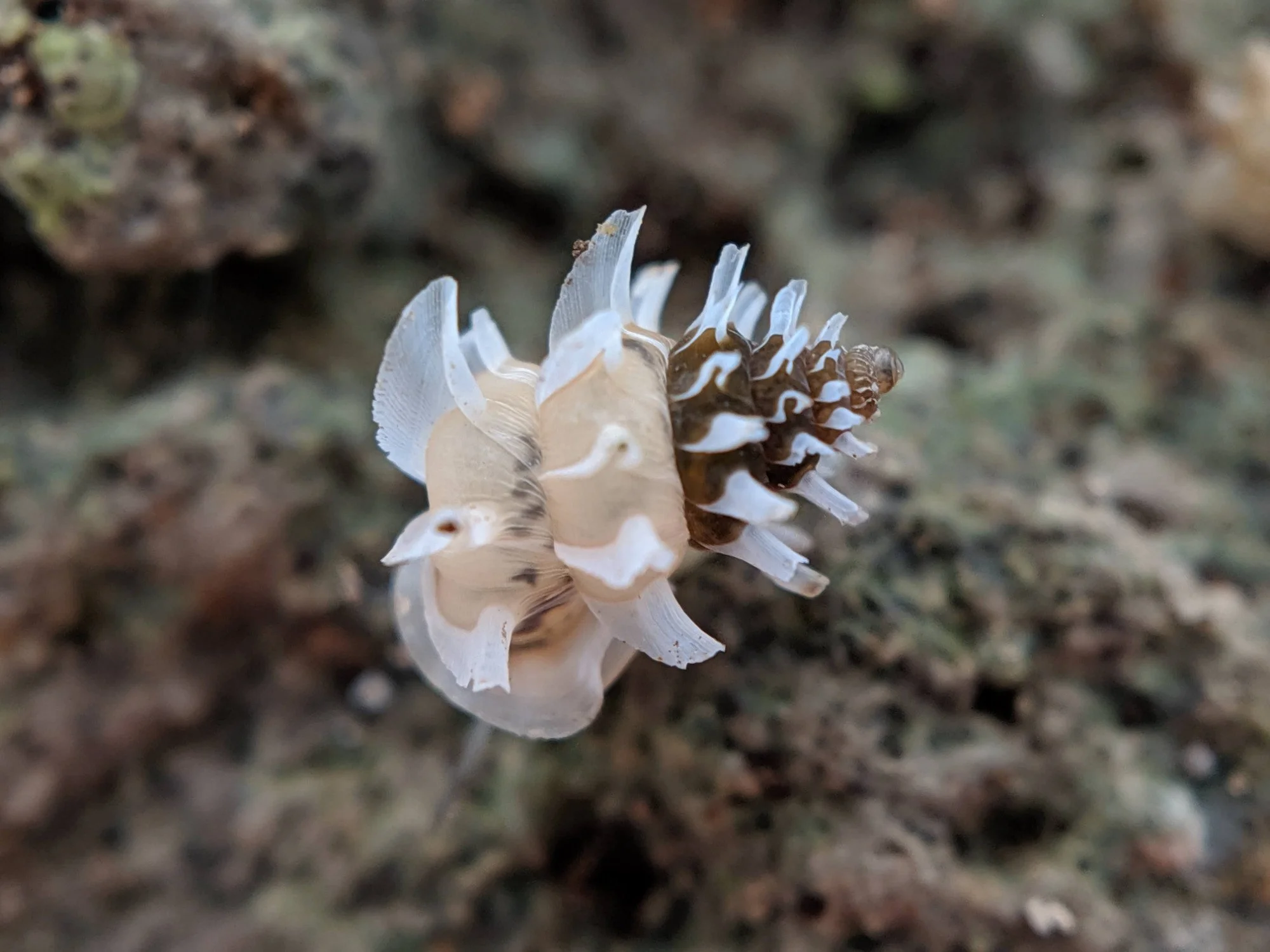
A Hungerfordia diplommatinid species, “little star snail” in Palau. Photo: Rebecca Rundell
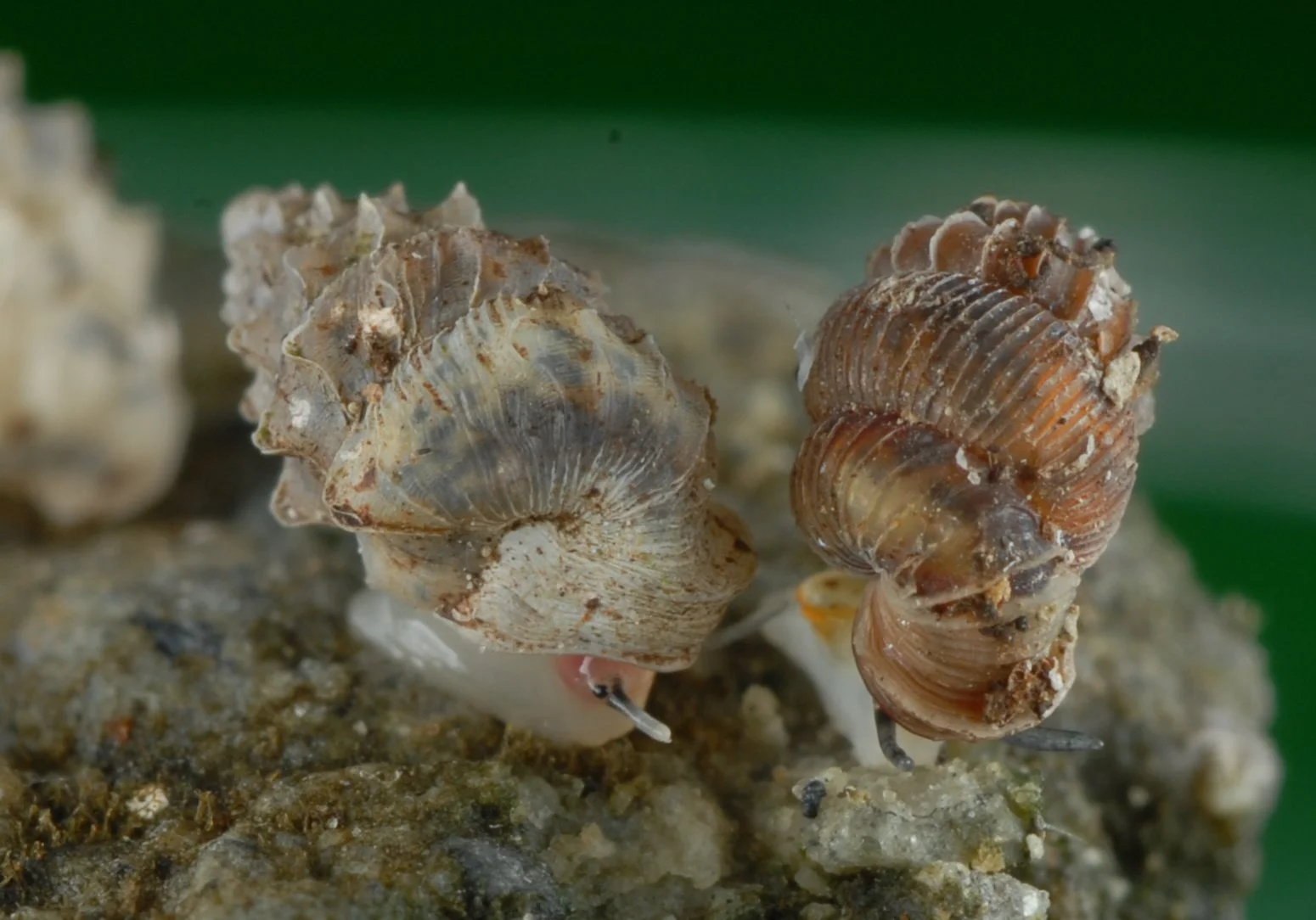
Two different endemic diplommatinid species feeding and interacting in Palau, one of the best places on Earth. Photo: Jesse Czekanski-Moir