

Chittenango Land Snails
New York State’s rarest land snail, the Chittenango ovate amber snail, lives amongst the rocks, dead leaves, and vegetation at the edge of Chittenango Falls in central New York’s Chittenango Falls State Park. Video credit: Connor Jacobs
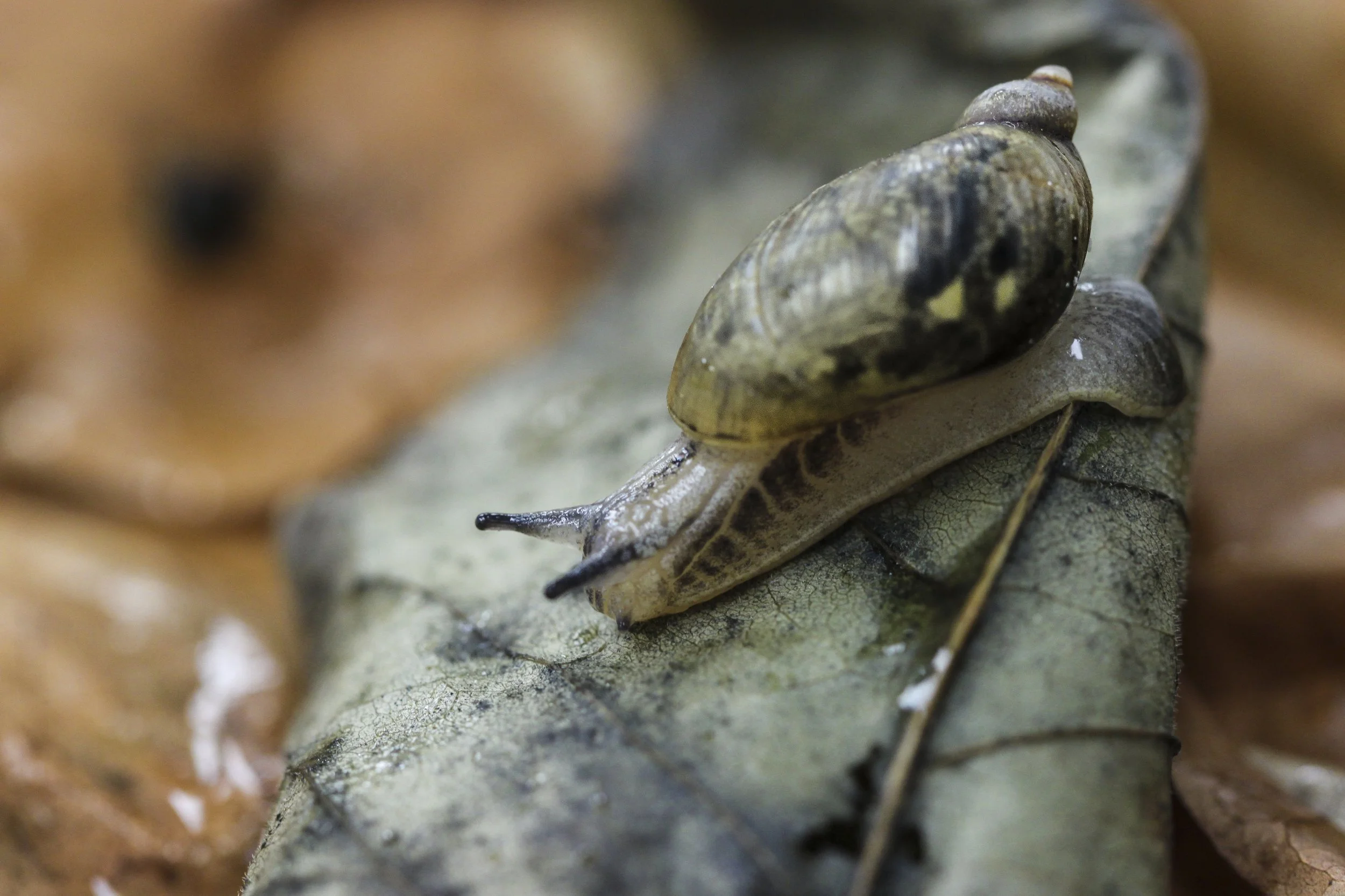
Adult COAS feeding on the fungus of a dead leaf. Note that the shell is actually a translucent amber color, and the black and brown speckles are the body showing through the shell. One of COAS’s special features is its black tail marking. Photo: Jessica Suarez
New York’s Rarest Snail Species!
New York State is home to at least 125 species of land snails. Land snails are important parts of local ecosystems, cycling nutrients and serving as food for other animals. All but one New York State snail also occurs in other neighboring states. It is the Chittenango ovate amber snail (Novisuccinea chittenangoensis, or “COAS” or “Chitt”) that is the one New York State land snail that occurs nowhere else on Earth. Unfortunately, COAS is also very rare. COAS lives only in Chittenango Falls State Park in Central New York’s Madison County. Fewer than 50 individual snails live there, on the ground among rocks, dead leaves, and vegetation. The tiny geographic range size of COAS means that the species is threatened by rock slides, flooding, warming climate, trampling by people, and invasive plant species in the habitat.
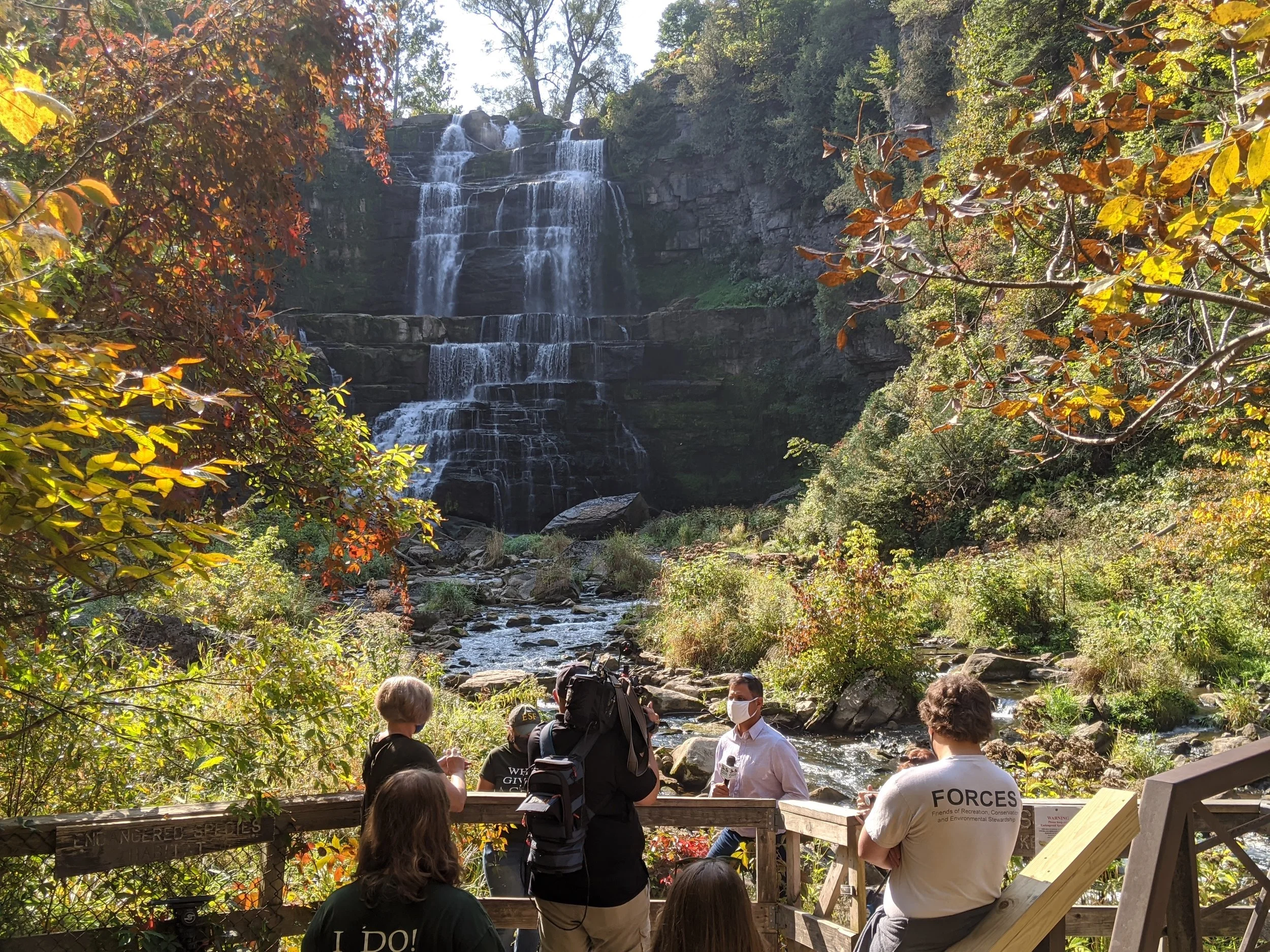
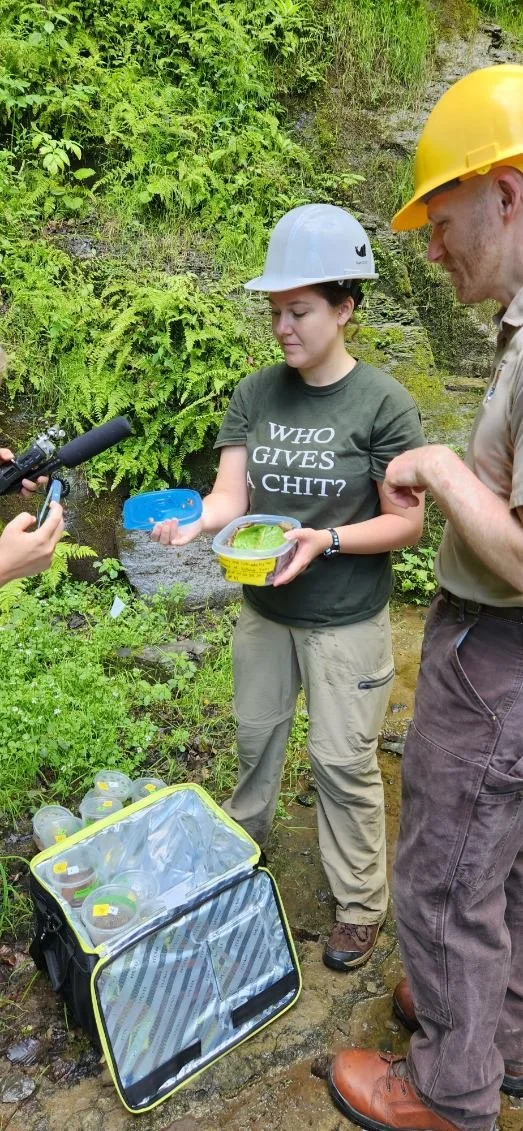
Volunteers and media gather outside the habitat at Chittenango Falls State Park in the Great Lakes region of central New York in celebration of a release of captive-bred land snails into the wild, in order to share information with the public. Photo: Rebecca Rundell
SUNY-ESF conservation staff Cody Gilbertson talks about the Chittenango ovate amber snail with David Figura for NY Upstate Outdoors.
A wild Chittenango ovate amber snail with its unique i.d. number, crawling wild and free in its habitat. Video credit: Alyssa Whitbread
COAS is considered Endangered in New York State and federally Threatened.
That means that the snail’s numbers are very reduced and COAS is at risk of becoming extinct. We are working hard to try to save this species from this precarious situation. If you see threatened species in the wild it is important to keep your distance and give them space to live. For land snails that means obeying any signs that protect a certain area. Snails are very small and can be accidentally trampled underfoot.
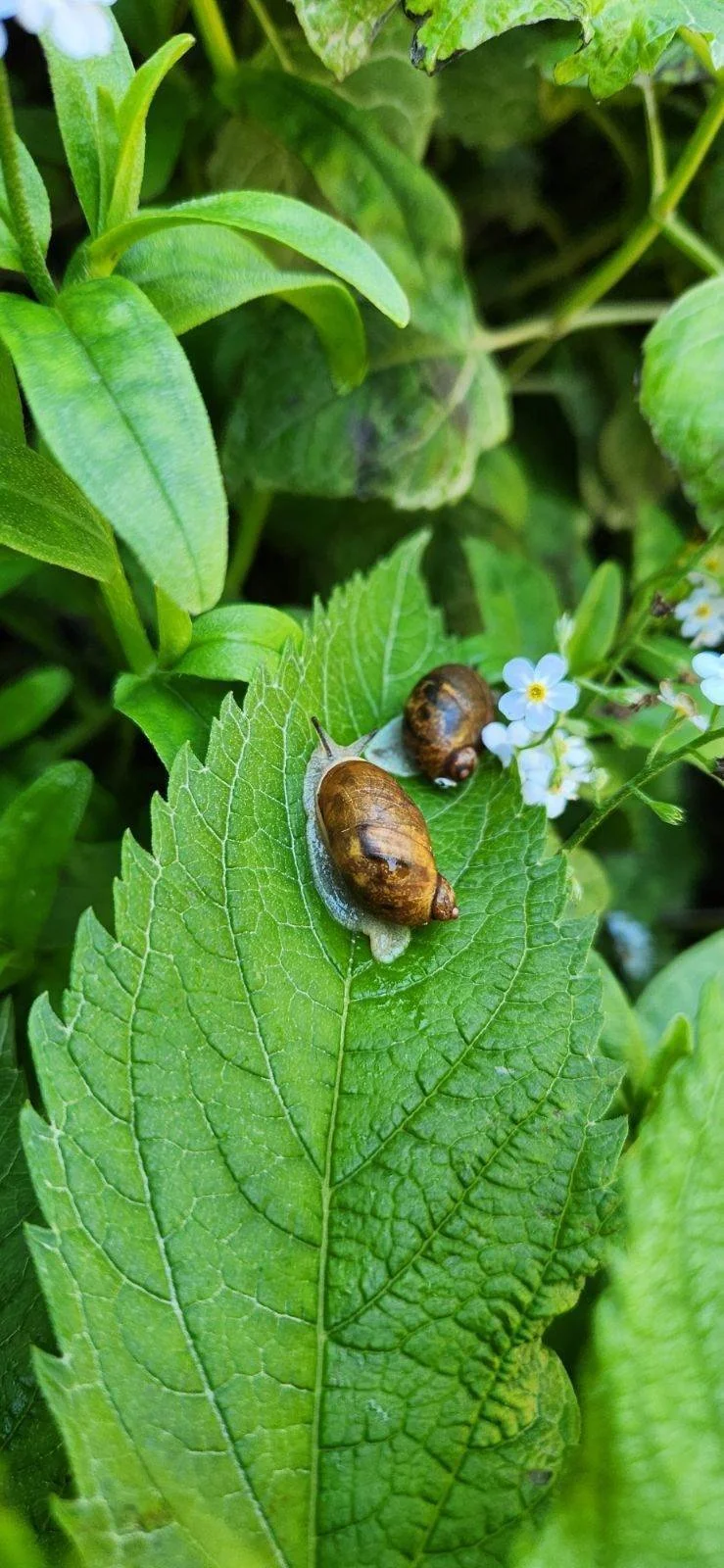
Chittenango ovate amber snails being released into their wild habitat at Chittenango Falls State Park. Note the white “bee tag” barely visible in the upper snail. A unique number helps us monitor each snail and know how long it has survived in the wild. Photo: Jessica Suarez
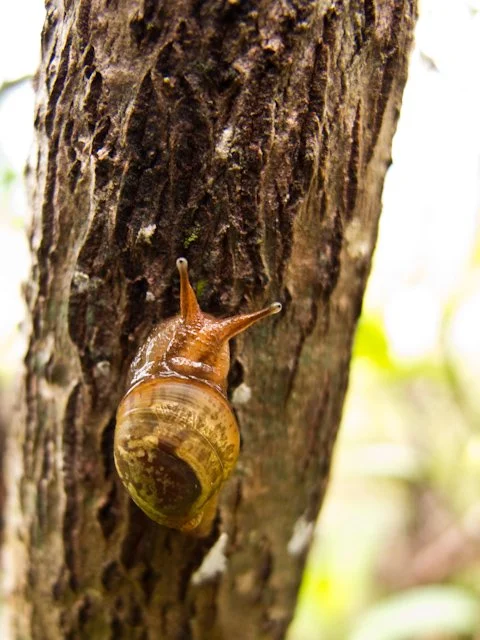
Hawaiian rainforest-dwelling endemic succineid land snail. Although Succineidae occur worldwide, there are many endemic species that are adapted to different types of habitats. Many of them, like this succineid, are under threat from habitat modification, introduced predators, and climate change. Photo: David R. Sischo, Hawaiʻi Division of Forestry and Wildlife
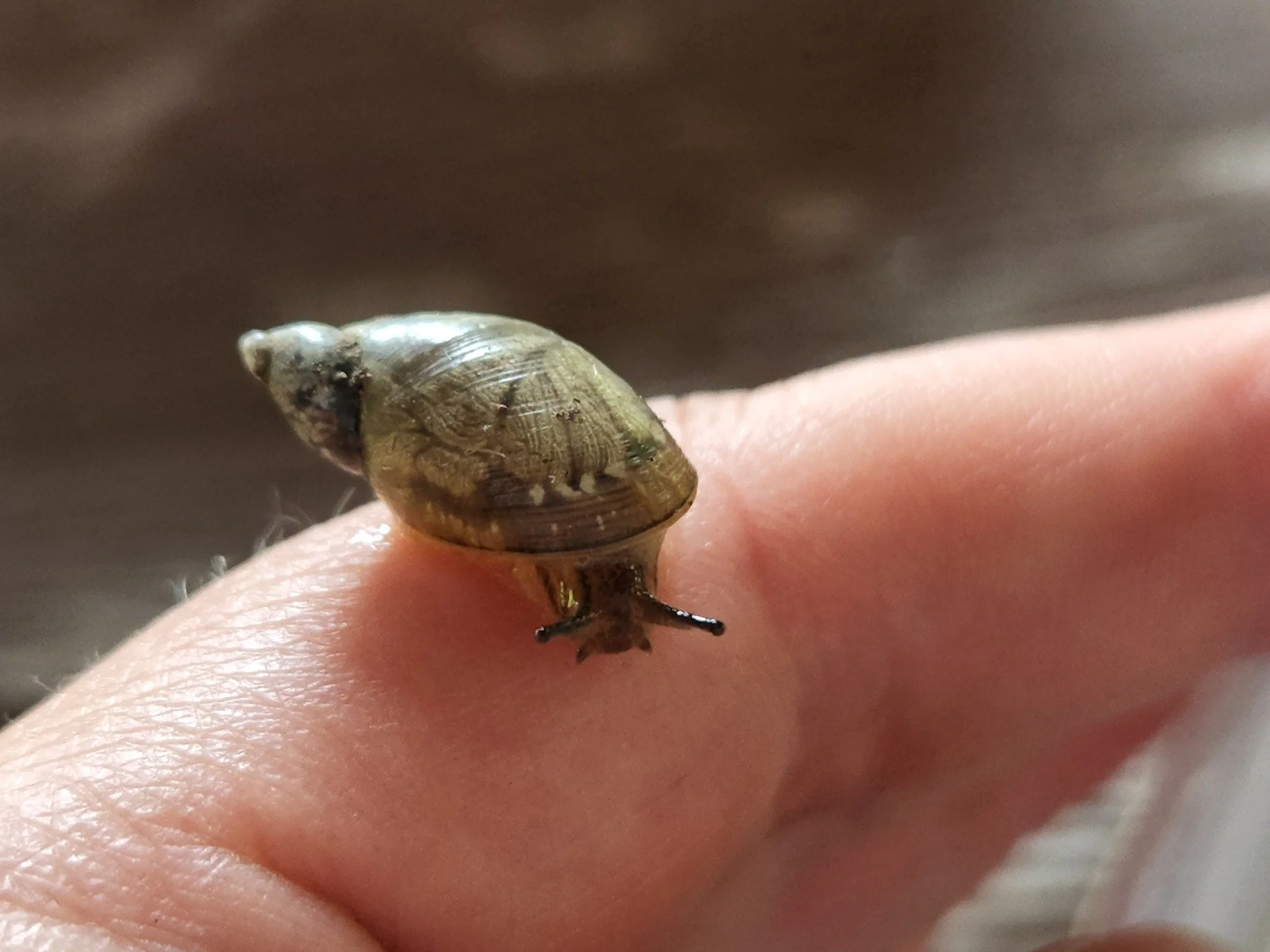
Adult Chittenango ovate amber snail on a finger in the captive breeding lab at SUNY- ESF in Syracuse, NY. Photo: Cody Gilbertson
The Chittenango ovate amber snail is part of a large, global land snail family called the Succineidae (pronounced “suk-sin-AY-id-ee”; singular: “suk-sin-AY-id”). They are named after the Latin succinus, meaning “of amber.” Amber snails have a golden translucent shell. Their body markings and coloration show through the shell, giving each species its distinct patterns. The shell is not very strongly coiled and therefore often gives the appearance of a flat “hat.” Succineids that are adapted to dry areas have more strongly coiled protective shells, whereas species that live in the wettest rainforests, for example the Hawaiian island of Kauai, have a small flat disc-like shell and do not retract fully into their shells.
Worldwide many succineids, including the Chittenango ovate amber snail, rely on “riparian” habitats. Riparian habitats are transition zones between bodies of water and the land, such as vegetation and loose rocks along riverbanks. Extensive modification of these environments for agriculture and development has threatened these important transitional habitats. When natural habitats are degraded or changed, the native species that rely upon them can be negatively impacted.
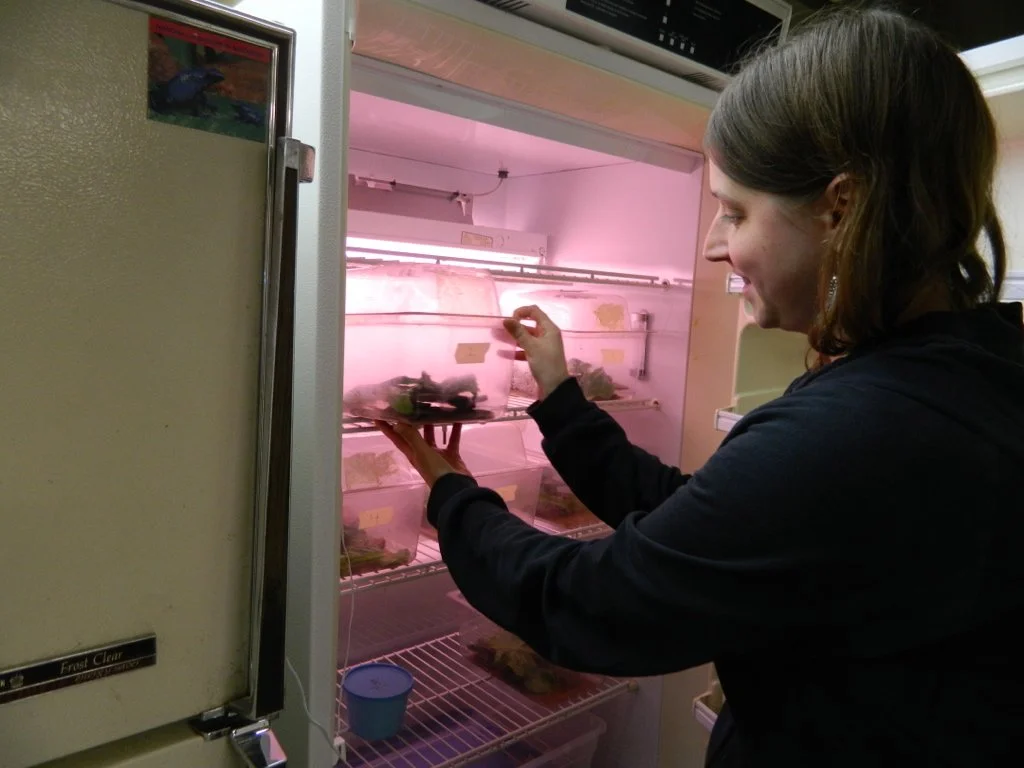
Given the small number of Chittenango ovate amber snails remaining in the wild, COAS is being raised in captivity to augment its numbers. Because COAS only lives in one place on Earth, a catastrophic event could cause the species to go extinct. Therefore the captive breeding colony also serves as an important back-up population. Dr. Rebecca Rundell at State University of New York College of Environmental Science and Forestry (SUNY-ESF) in Syracuse, New York leads and collaborates with a group of students and colleagues who have pioneered the raising of these snails in captivity. They work in partnership with the U.S. Fish and Wildlife Service, the Great Lakes Restoration Initiative of the EPA, the New York State Department of Environmental Conservation, New York State Office of Parks, Recreation and Historic Preservation (NYS OPRHP, “Parks”), the Rosamond Gifford Zoo in Syracuse, and the Seneca Park Zoo in Rochester, as well as many dedicated community volunteers and students.
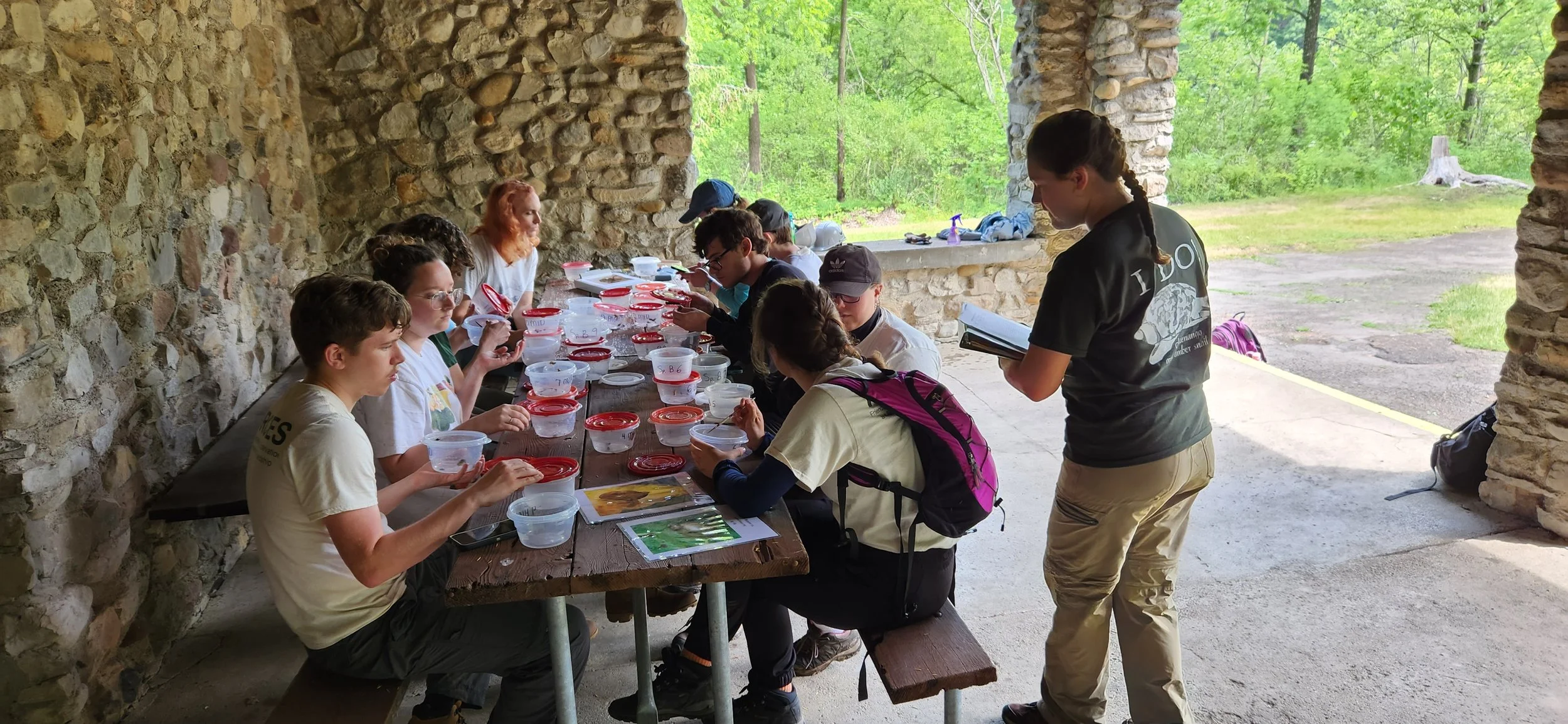
Every summer, project members called the “Snailblazers” carefully survey the snail’s habitat in Chittenango Falls State Park in order to estimate the wild population size. Meanwhile, Parks staff work on removing invasive plants and managing the habitat for the benefit of unique species like COAS. Most recently, project members are working on translocated habitats at other Central NY waterfalls, in hopes that another wild population can help keep the species safe.
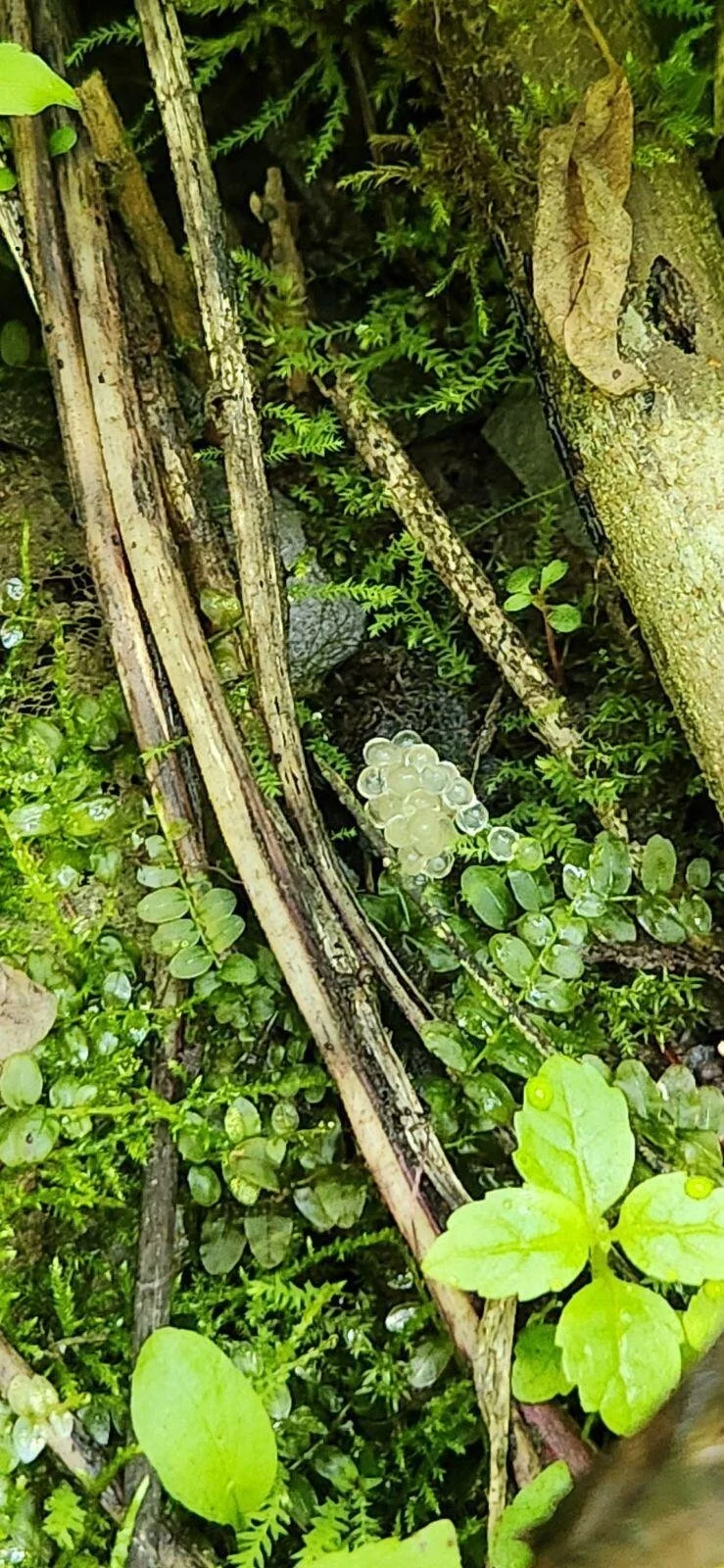
The food that COAS relies on is directly connected to the quality and care of its only habitat at the Falls. Most land snails are “detritivores,” meaning that they eat decaying vegetation (“leaf litter”), fungus, and bacteria. Parks staff work hard to make sure that the habitat remains in its natural state, and in return, COAS improves its habitat by existing there. Land snails are an important connection in the nutrient cycle in the forest. Land snails are also eaten by mother birds, since the calcium source from the shell can help with their babies’ eggshells.
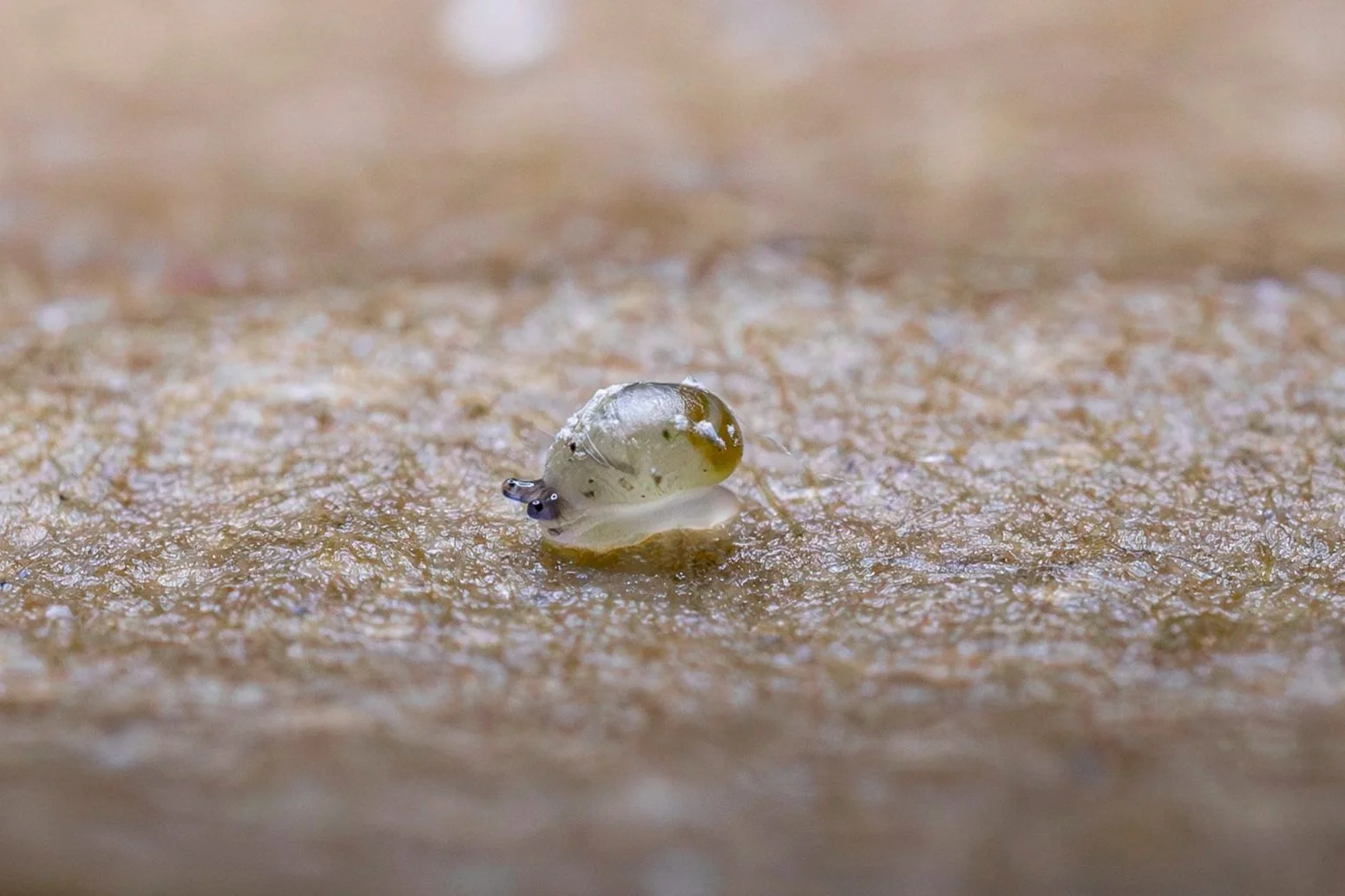
A Chittenango ovate amber snail (“COAS”) hatchling at 2 weeks old and 2 mm in shell length. This baby snail was raised in the captive breeding facility at SUNY-ESF i Syracuse, NY.
COAS take about 10-12 months to reach maturity (about 12 mm in shell length) and 2 years to reach 21 mm, which is their full adult size. Photo: Connor Jacobs
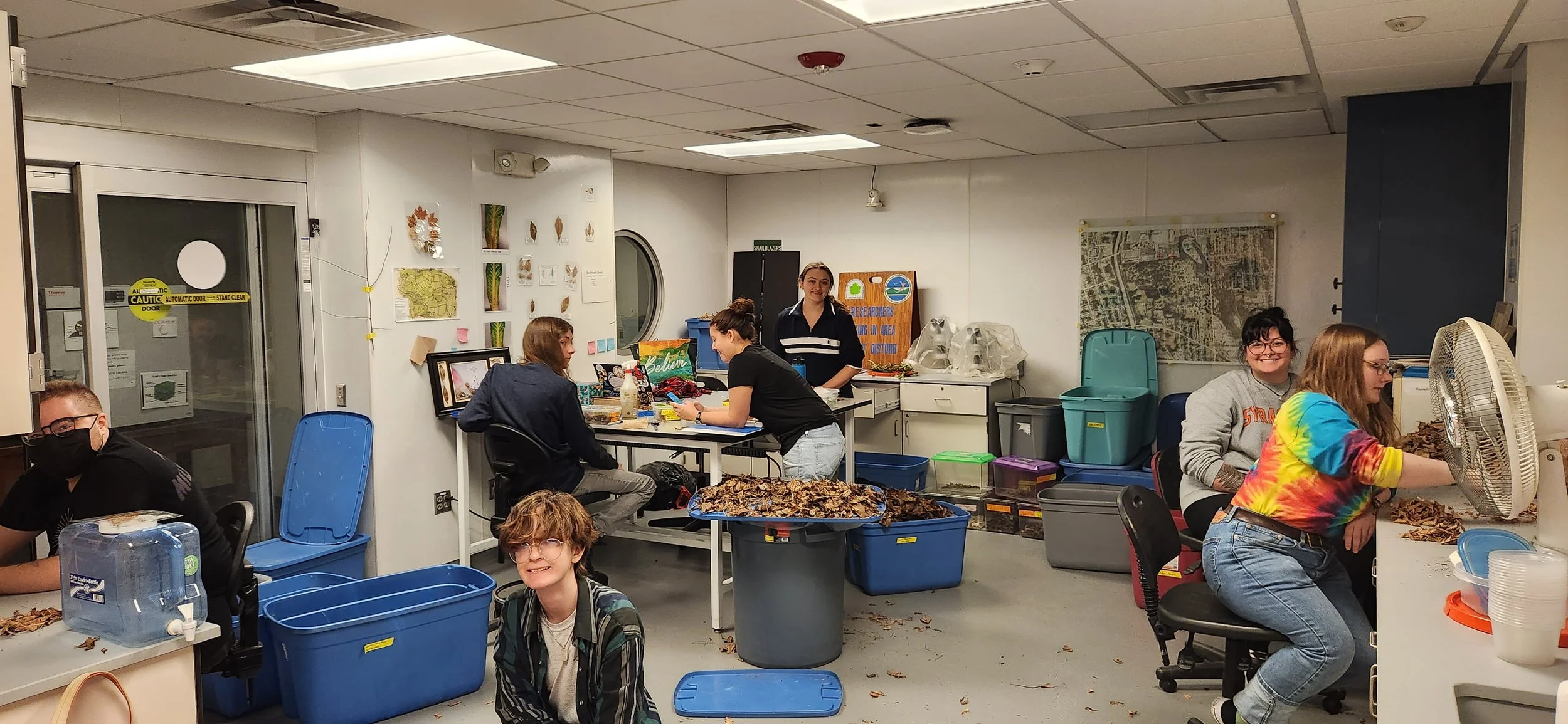
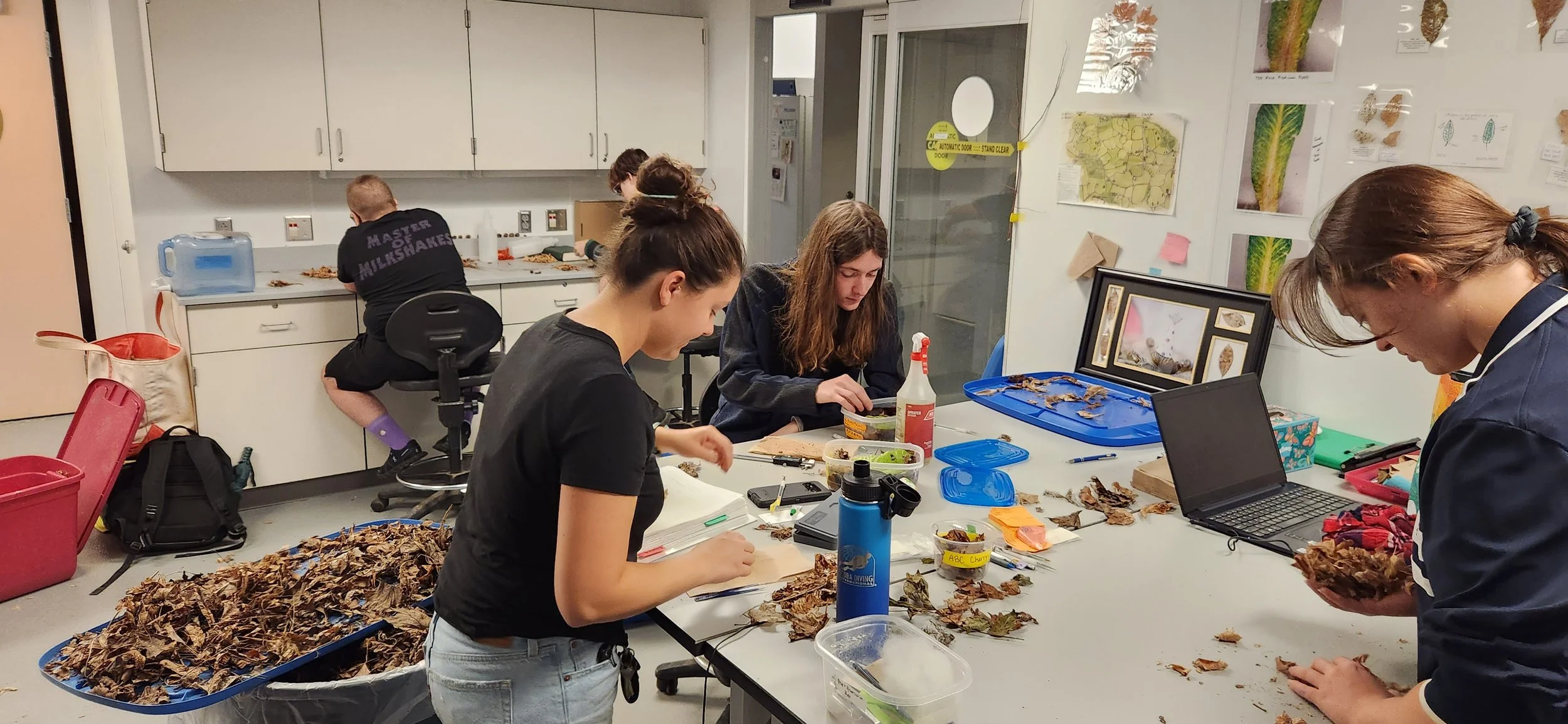
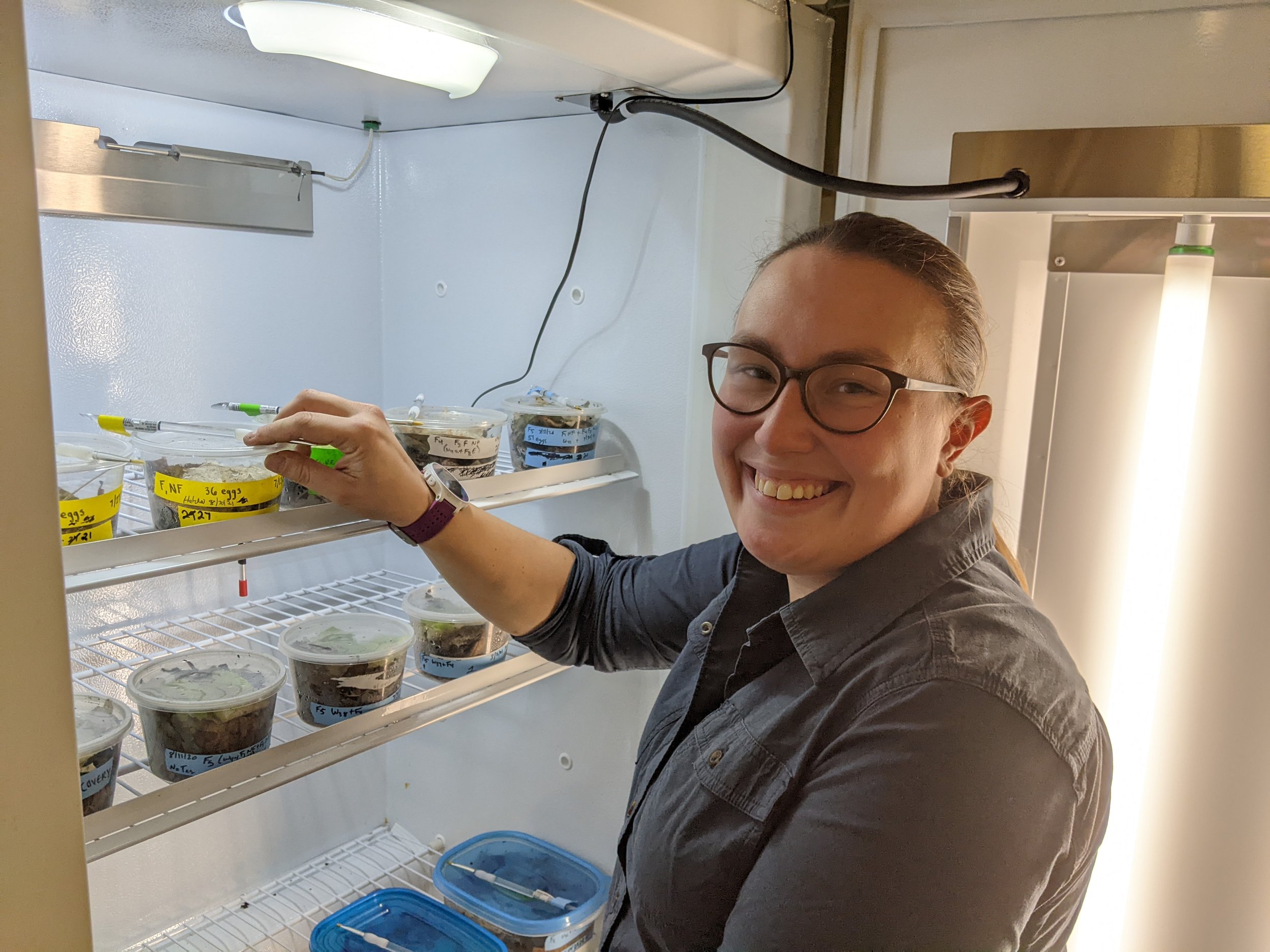
Conservation lab crew at SUNY-ESF working on leaf-sorting and terraria cleaning, important tasks that help to keep captive-bred snails thriving all winter long. Many SUNY-ESF Environmental Biology students have been involved in this hands-on conservation work in support of the Chittenango ovate amber snail, an endangered species. Photo: Cody Gilbertson
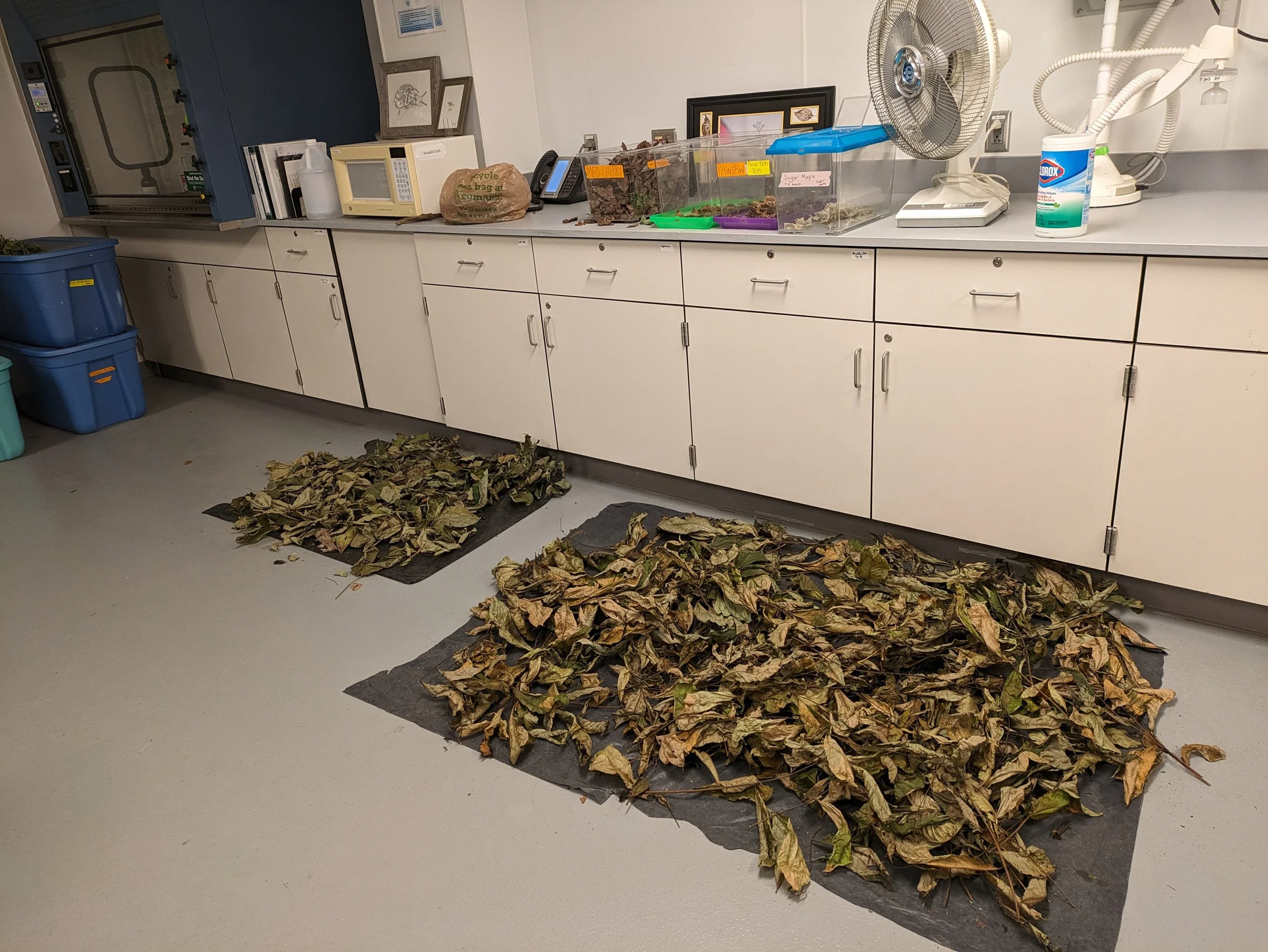
In the captive breeding colony, the SUNY ESF team tries to replicate the snails’ natural diet by collecting the snails’ favorite leaves (such as decaying and sun-bleached maple, cherry, and paw paw leaves), and sorting and drying them. Many student volunteers help to do this every year! SUNY-ESF students are good at plant identification and don’t mind digging through wet leaves in cold weather. We layer the leaves in a moistened “leaf litter lasagna” for the snails, along with extra calcium carbonate powder for snail shell strength.

A captive-bred adult COAS with its unique bee tag number firmly affixed and getting ready to be released in the wild, where we hope it will mate and contribute to the next generation of its species. Photo: Alyssa Whitbread
Chittenango ovate amber snails have both male and female in the same body. They are called “hermaphrodites.” However, the snails still mate with one another. They will lay tiny jewel-like egg clusters that hatch into baby snails. When snails hatch in our captive population, they require a lot of extra care, including careful transfer to new terraria using a paint brush and a microscope. Staff and volunteers on the project need a steady hand and a lot of patience. The work is all worth it though when the snails grow up to be released into the wild.
It is important to remember that the decline of the Chittenango ovate amber snail is part of a broader decline of land snails in North America, and globally. As many as half of North American land snails are imperiled or extinct. Much of this decline is the result of land use changes, starting with widespread modern agriculture that removed native snail habitat. Restoring natural habitats is important for trying to bring back our remaining species. Species diversity supports the health of our environment, and the health of people.
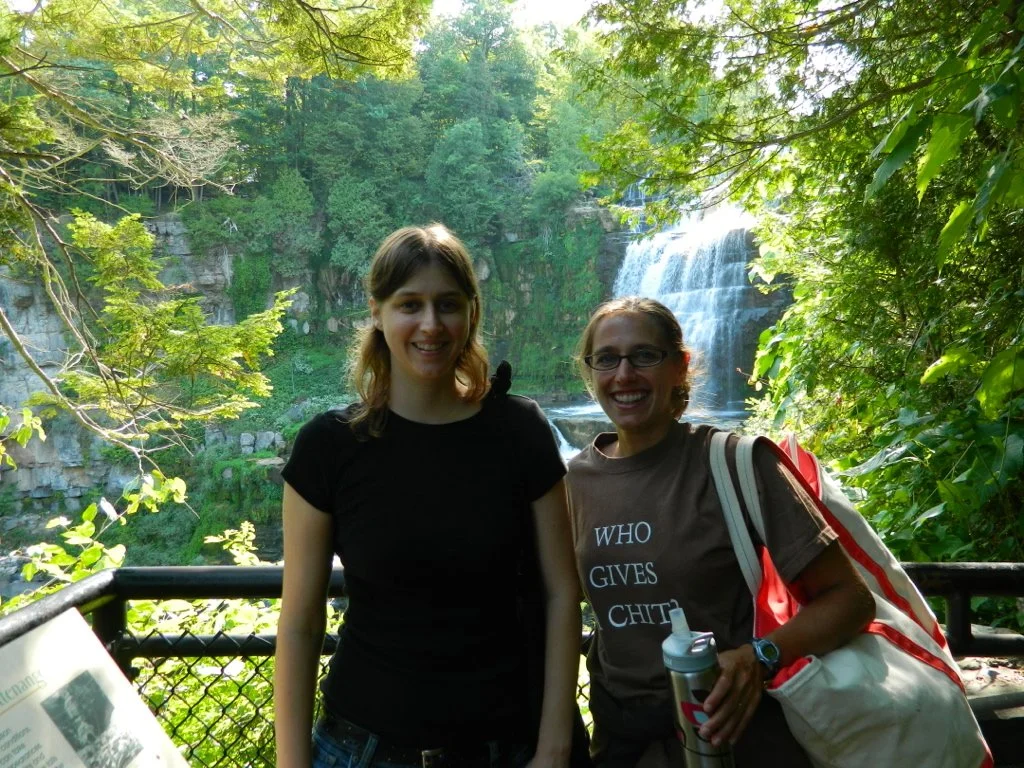
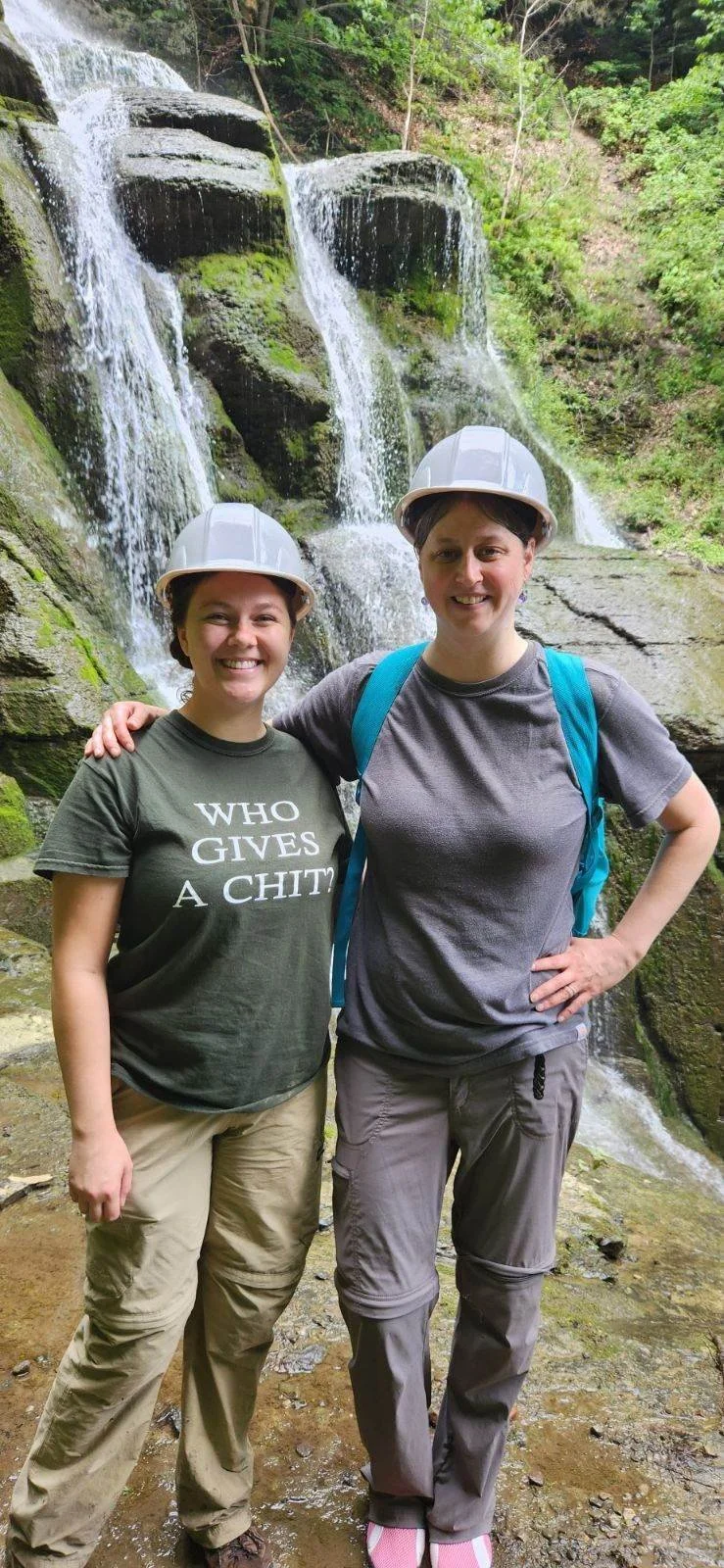
Long-time conservation contributor and technician on the project, Cody Gilbertson (left) with U.S. Fish and Wildlife Service biologist Robyn Niver, at Chittenango Falls State Park.Robyn has been dedicated to the conservation of COAS and other imperiled species in New York State for many years. Photo: Rebecca Rundell
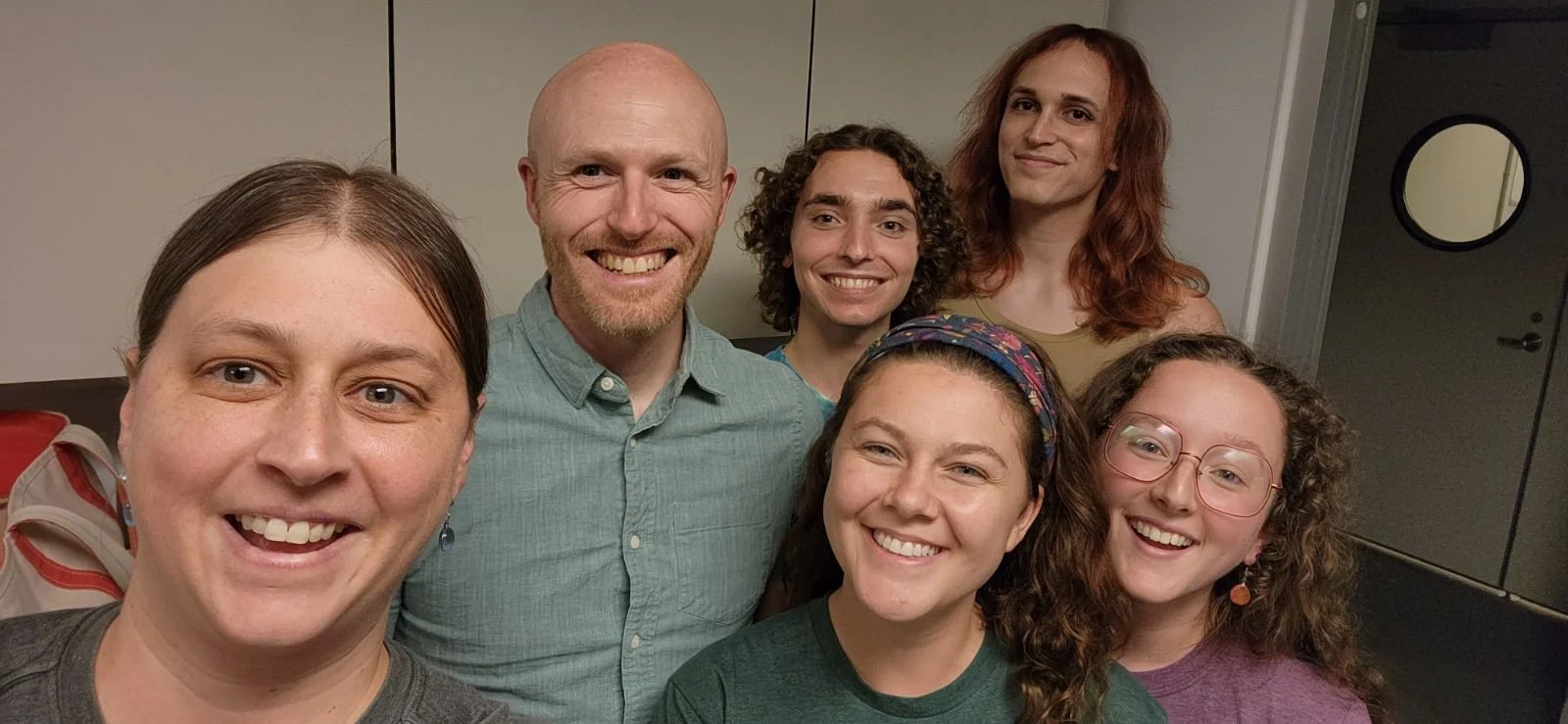
Teamwork makes the conservation dream work! Some of our dedicated COAS contributors in a rare still moment in the lab in Summer 2024: Cody Gilbertson (SUNY-ESF), John Wiley (USFWS Biologist), Alyssa “Ally” Whitbread, Nicki McCoy (front), and Ryan Steinhauer, Morgan Bullis (back). Photo: Cody Gilbertson
Please see the Island Evolution and Conservation exhibit within “Marvelous Mollusks” for more information about major threats to land snails and related conservation projects, including other captive breeding efforts.
Check out some of the stories below that follow the hopeful conservation journey of the Chittenango ovate amber snail:
For more information on contributing directly to the conservation of the Chittenango ovate amber snail, please connect with the Rosamond Gifford Zoo’s Friends of the Zoo Program, which helps support the work of our team, the “Snailblazers”:
https://www.rosamondgiffordzoo.org/conservation/saving-species/
Direct QR code:

Donate to the Rosamond Gifford Zoo to support the Chittenango Ovate Amber Snail!
Acknowledgments For Chittenango Land Snail Section:
The dedicated partners involved in this project are the key to its success, and we are grateful to them all, including the U.S. Fish and Wildlife Service, NYS Department of Environmental Conservation (DEC), the Great Lakes Restoration Initiative of the EPA, New York State Office of Parks, Recreation and Historic Preservation (NYS OPRHP, “Parks”), the Rosamond Gifford Zoo in Syracuse, and the Seneca Park Zoo in Rochester. Additional partners and contributors are involved through County and State Parks. We have gratitude for key staff among our partners, including but not limited to: John Wiley, Robyn Niver (USFWS), Kathleen O’Brien, Annie Stupik (DEC), Tom Hughes, Delaney Kalsman, Michael Serviss, Ethan Winter, Amy Kochem (Parks), Ted Fox, Janet Gramza, Tamara Singer, Travis Pyland and Staff at Rosamond Gifford Zoo. Thank you to Kim Schulz (Director, CIRTAS) for her support of our project and captive breeding lab space at SUNY-ESF. We thank present and past SUNY-ESF staff and faculty for their important contributions to the continuity of this project, including but not limited to: Sue Benoit, Lauren Van Derzee, John Stella, Jonathan Cohen, James Gibbs, Jacqui Frair, Cody Gilbertson, Alyssa Whitbread, Nicki McCoy, Ryan Steinhauer, Morgan Bullis, Emlyn Clark, Ashton Yost, and Neil Ringler. We thank the many FORCES interns through Parks, as well as numerous dedicated and talented SUNY-ESF Environmental Biology students who have worked in the lab over the past decade. We thank students of Rundell’s Invertebrate Zoology and Evolution courses who have volunteered many hours in leaf collection and sorting for the captive colony. Thank you to Tarryn Mento, Jessica Suarez, WAER, and other media for using your voices to help uplift this humble snail. Rebecca Rundell takes responsibility for any errors above, or unintentional omissions in acknowledgments. The findings and conclusions in this exhibit represent those of Rundell and do not necessarily represent the views of the U.S. Fish and Wildlife Service.
Additional sources and further reading:
Chittenango Falls State Park (Fenner, New York). https://parks.ny.gov/parks/chittenangofalls/details.aspx
Snail information through the NYS Department of Environmental Conservation. https://dec.ny.gov/nature/animals-fish-plants/chittenango-ovate-amber-snail
Campbell, S.P., Frair, J.L., Gibbs, J.P., and R.J. Rundell. 2015. Coexistence of the endangered, endemic Chittenango ovate amber snail (Novisuccinea chittenangoensis) and a non-native competitor. Biological Invasions 17(2): 711-723.
Clark, E.B., Gilbertson, C.R., Bullis, D.A., Kalsman, D., Hughes, T., O’Brien, K., Niver, R., Wiley, J., and R.J. Rundell. 2022. Conservation strategies for New York State’s Chittenango ovate amber snail. Tentacle, The Newsletter of the IUCN/SSC Mollusc Specialist Group, No. 30, March 2022, pp. 11-16. https://www.hawaii.edu/cowielab/issues.html
Gilbertson, C.R., Rundell, R.J., and R. Niver. 2019. Determining diet and establishing a captive population of a rare endemic detritivore, the endangered Novisuccinea chittenangoensis (Pilbry, 1908) (Pulmonata: Succineidae). Journal of Molluscan Studies 85: 41-47.
Lydeard, C. et al. 2004. The global decline of nonmarine mollusks. BioScience 54(4): 321-330. https://academic.oup.com/bioscience/article/54/4/321/284125
McMillan, M.A., Nekola, J.C., and D.W. Larson. 2003. Effects of rock climbing on the land snail community of the Niagara Escarpment in Southern Ontario, Canada. Conservation Biology 17(2): 616-621. https://www.jstor.org/stable/3095379?seq=2
Régnier, C., Fontaine, B., and P. Bouchet. 2009. Not knowing, not recording, not listing: numerous unnoticed mollusk extinctions. Conservation Biology 23: 1214-1221. https://conbio.onlinelibrary.wiley.com/doi/10.1111/j.1523-1739.2009.01245.x
Rundell, R.J., Holland, B.S., and R.H. Cowie. 2004. Molecular phylogeny and biogeography of the endemic Hawaiian Succineidae (Gastropoda: Pulmonata). Molecular Phylogenetics and Evolution 31(1): 246-255. https://www.sciencedirect.com/science/article/abs/pii/S1055790303003051