

How You Can Help Insects
Despite the coming insect apocalypse, it is not all doom and gloom. There are several simple things that you can do to help!

Learn more about insects and share what you learn with others. People tend to care more about things that they know about.

Shrink your lawn! Lawns are terrible places for virtually any wildlife. Every bit of lawn you rewild can provide a vital habitat in your back yard, plus it is less lawn maintenance for you.

Use more native plants in landscaping and gardening. Native plants support native insects and a healthy food web.

Limit your use of pesticides. Pesticides aren’t always necessary and always make sure you use the product as labelled.

Turn off unnecessary outdoor lights. Lights negatively impact nocturnal insects. Plus, many of these lights just waste energy and radiate much of their light to outer space.

Do what you can to fight climate change. Climate change will dramatically affect insects globally. So, let’s try to minimize the harm!
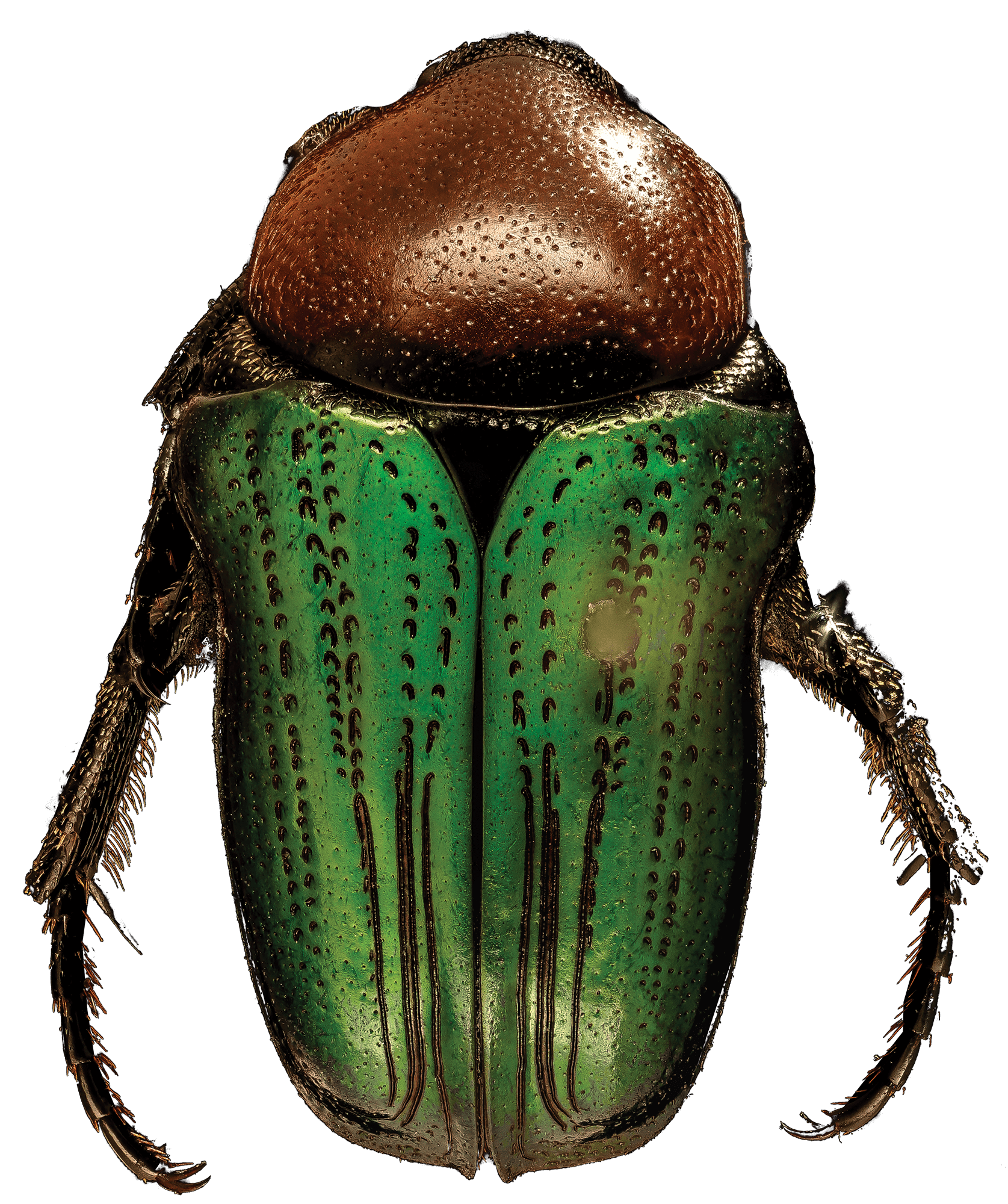
Flower Chafer Beetle
Leucocelis amythystina
Did You Know 🔍
Consider planting native plants that bloom in each season, or at least in spring, summer, and fall, to support pollinators, as some species are active for a couple months each year, while others are active year round.
iNaturalist - We need your data!
Using the app iNaturalist, you can contribute to the science of entomology by documenting the insects that you encounter every day.
Scientists use iNaturalist data to discover new species, document changes in distribution, detect invasive species, and deliver new natural history observations. As an added bonus, you can use the app to learn about the species you encounter.
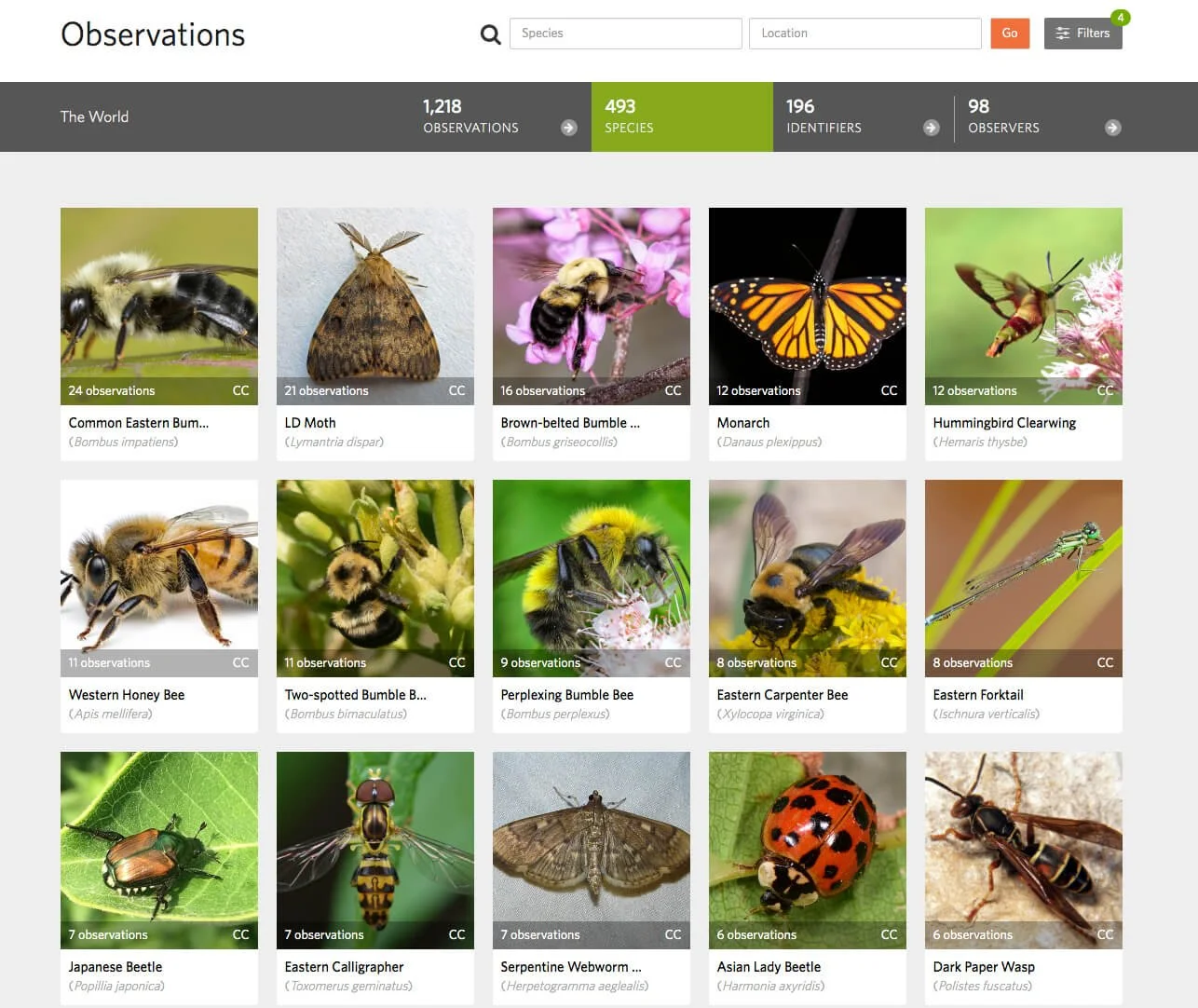
iNaturalist insect observations from the Cayuga Nature Center BioBlitz, summer 2021.
Cayuga Nature Center Bioblitzes
A big part of iNaturalist is the community of users, and sometimes groups of observers will join together to try to identify as many species as possible within a short time period; this is called a bioblitz. The Cayuga Nature Center conducts four bioblitzes per year, one for each season. These events help us build a record of life in our region. As we continue to do them over the years, we may be able to see shifts in biodiversity as our climate and environment changes. Bioblitzes are also a great way to get people engaged in learning about the world around them.
Learn More
Online Resources
Cornell University Insect Collection: https://cuic.entomology.cornell.edu/
Department of Entomology at Cornell: https://entomology.cals.cornell.edu/
Entomological Society of America: https://entsoc.org/
Additional Reading:
Darwin and Insects (via the PRI blog): https://www.priweb.org/blog-post/darwin-and-insects
For insects, the Amazon’s canopy contains a dazzling multiverse (via National Geographic): https://www.nationalgeographic.com/animals/article/for-insects-amazons-canopy-contains-a-dazzling-multiverse
Bugged out! Exhibit displays insect diversity and importance (via Cornell Chronicle): https://news.cornell.edu/stories/2022/03/bugged-out-exhibit-displays-insect-diversity-and-importance
Related Activities & Events:
Insect Activity & Coloring Pages: PDF | 1.48 MB
Darwin Days 2022: https://www.priweb.org/event/darwin-days
PRI BioBlitzes: https://www.priweb.org/science-education-programs-and-resources/bioblitz