

Research
Species Discovery & Taxonomy
The field of taxonomy is focused on classifying, describing, and naming the diversity of life.
For the last 150 years, entomologists have traveled around the world to collect specimens for the CUIC. While many of these specimens already have scientific names, some are new.
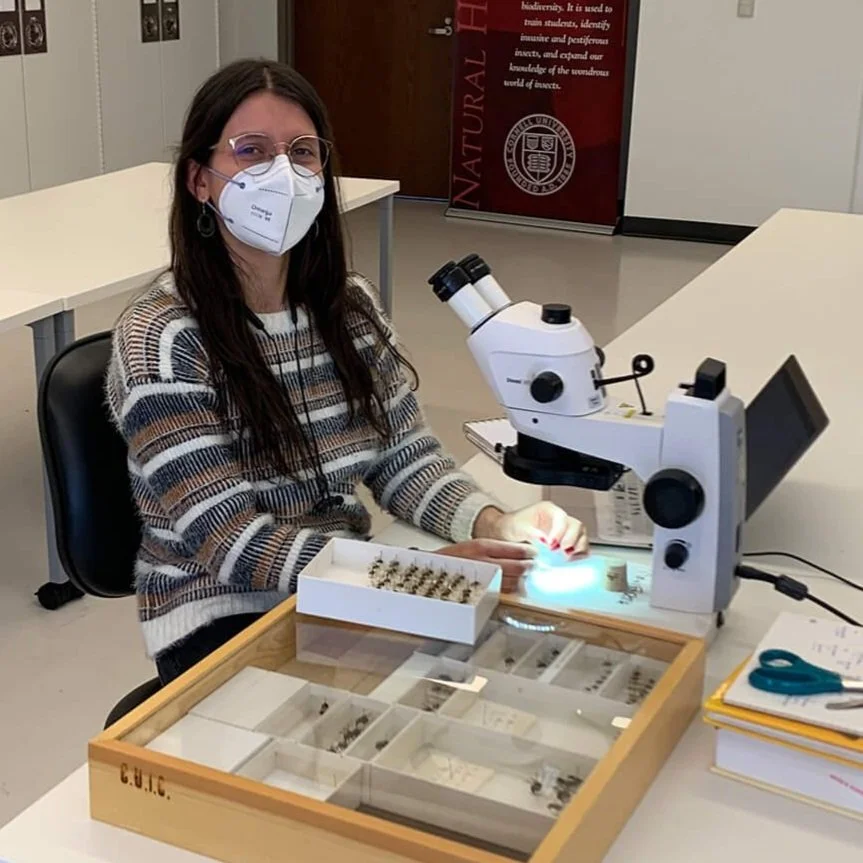
Nathalia Florez Gomez viewing specimens under a microscope at CUIC
An assortment of imaging tools can be used to visualize and measure differences and similarities between specimens and species. You can look at outside features like shape, color, spines, and hairs. You can also look at internal structures to find characteristics that distinguish one species from another. When describing new species, taxonomists also consider where the specimen was collected and whether there are other similar-looking species. They may also include aspects of the insect’s ecology or behavior, such as what it eats, its flight patterns, or the songs it sings to attract mates. All these sources of information can help us determine whether an insect is known to science, or has yet to be named and described.
The national and international research community regularly borrows or examines CUIC specimens, and new species are described every year from the collection. Within the CUIC, research covers a wide range of topics, from Collection Manager Dr. Jason Dombroskie’s work on the hidden diversity of microlepidoptera (small moths), to Curator Emeritus Dr. James Liebherr's work on naming and describing hundreds of new species of Hawai’ian beetles.
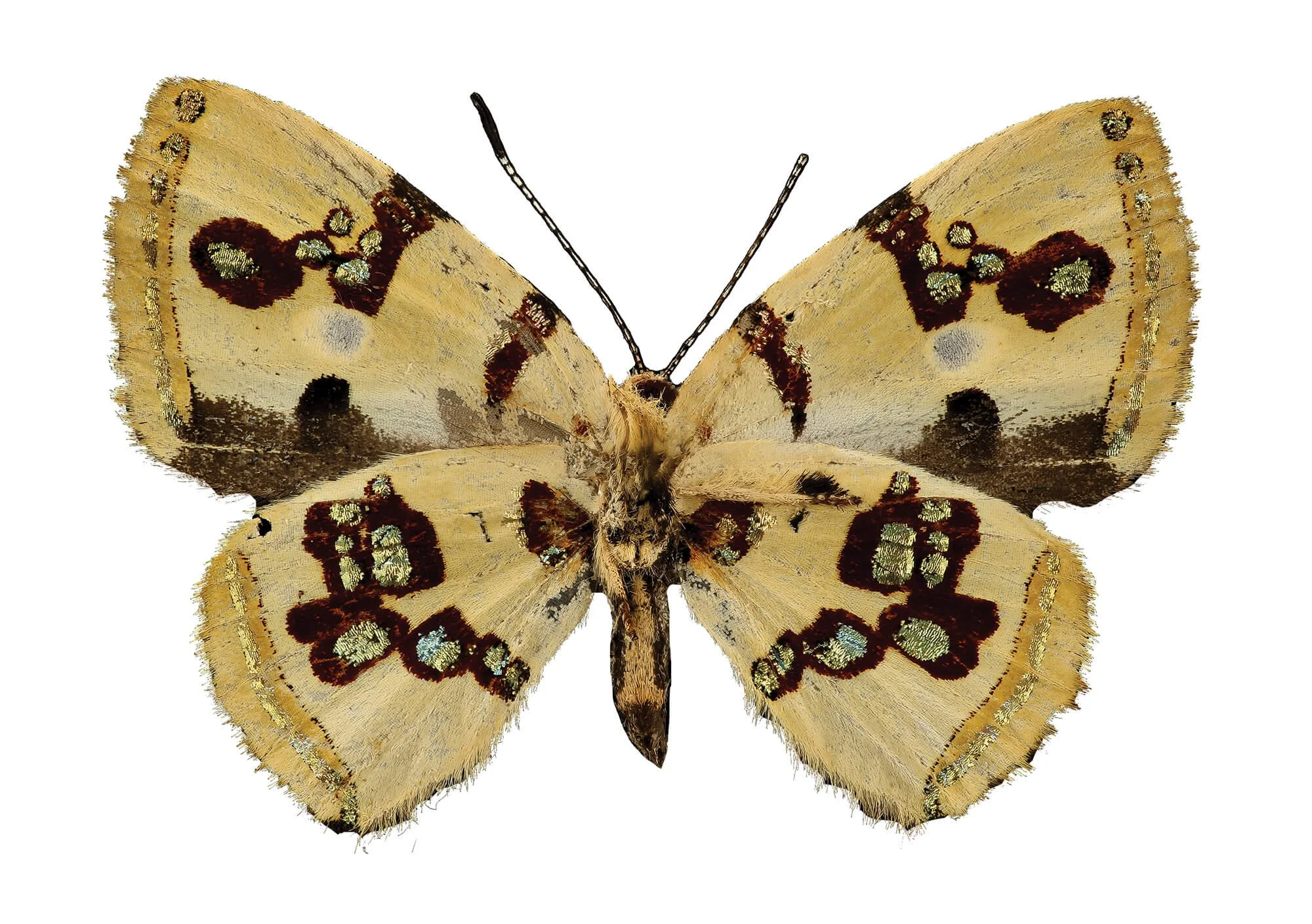
Formosus Jewelmark
Anteros formosus
Did You Know 🔍
Scientists use the CUIC to address many novel research questions. The tools used to collect, identify, and study insect specimens are also very diverse!
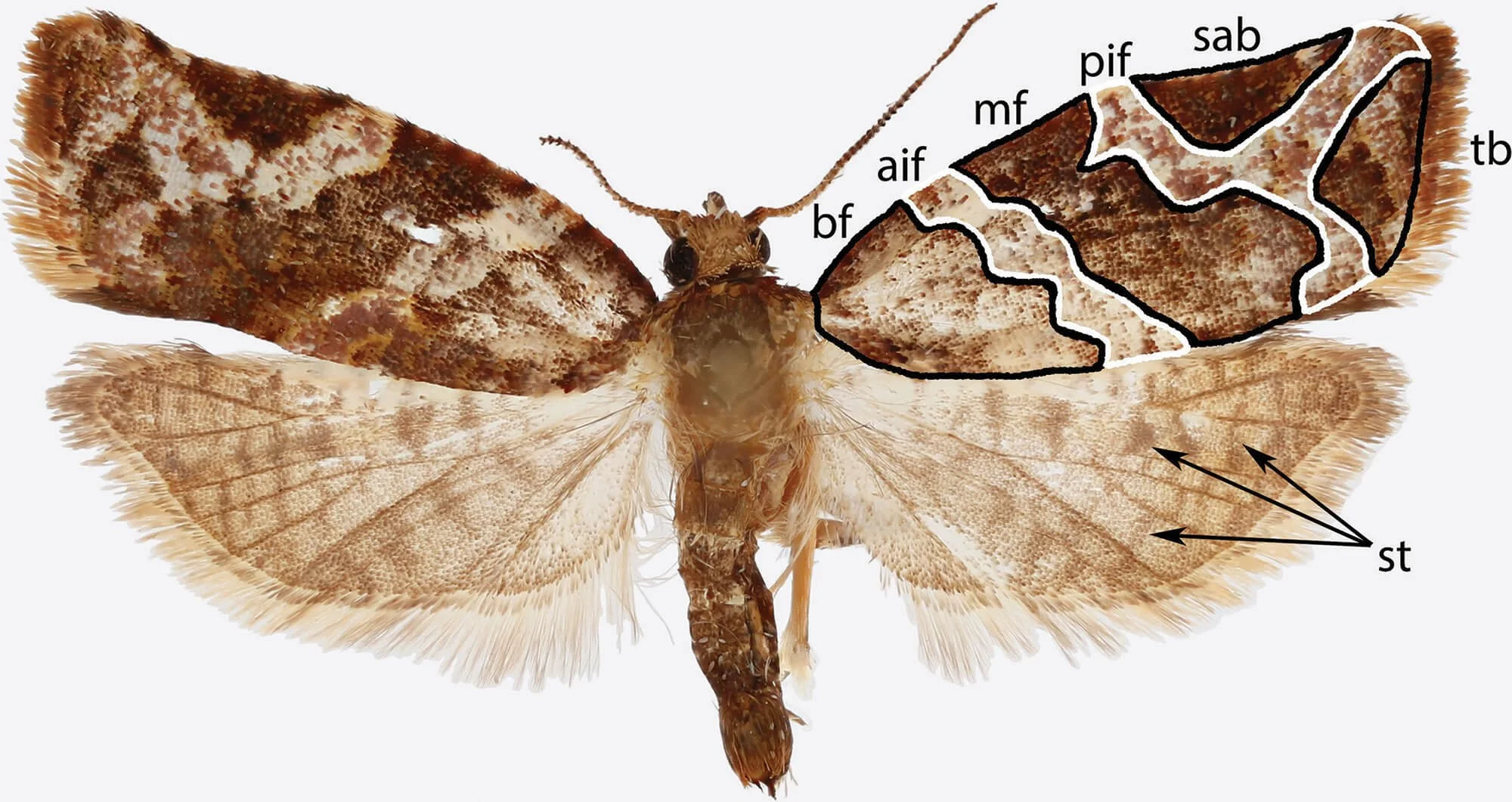
Tortrix moth (Argyrotaenia paradisei) showing typical wing pattern.
Systematics & The Tree Of Life
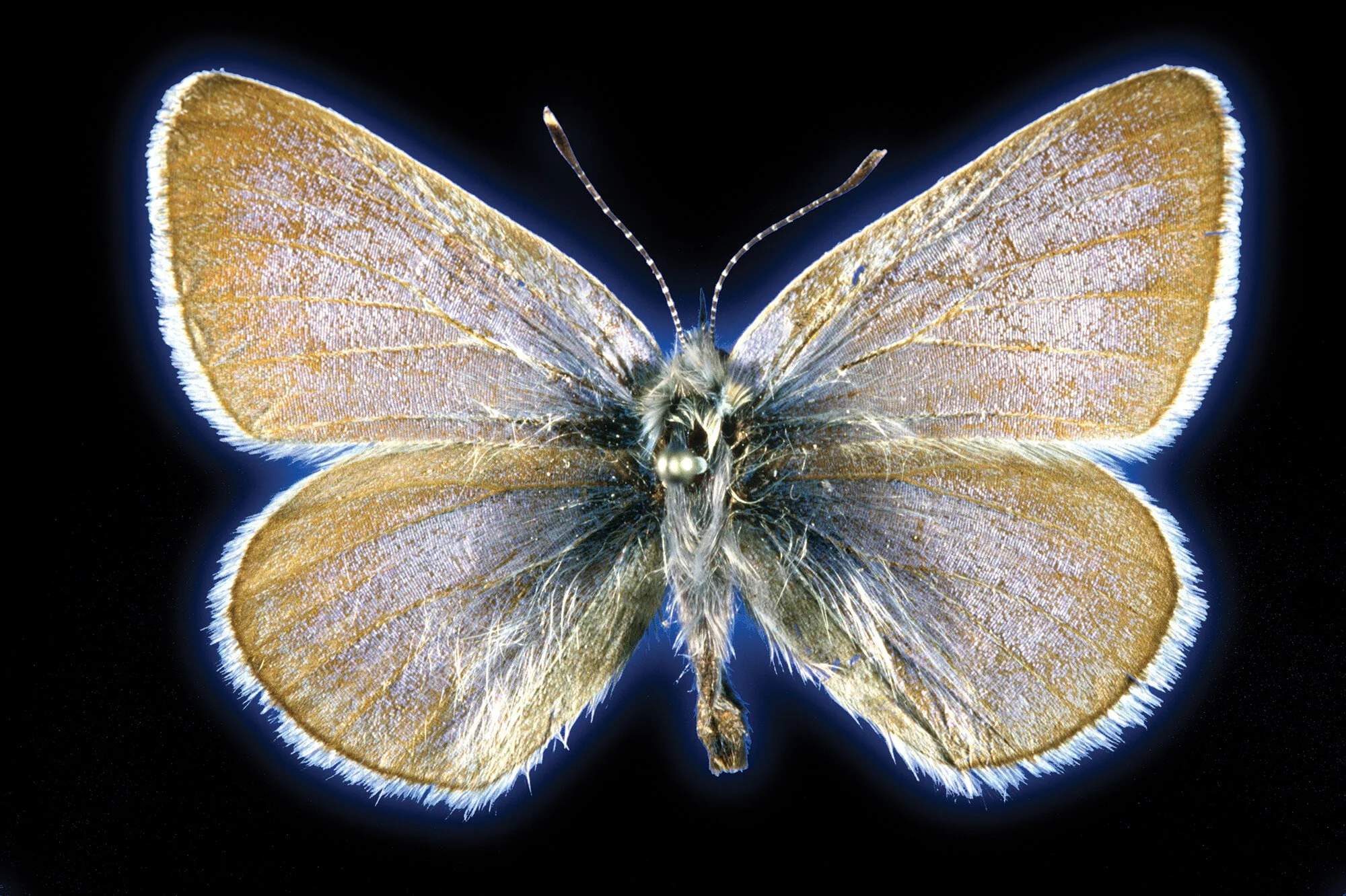
Xerces Blue Butterfly
Glaucopsyche xerces
Systematics is the study of the relationships and diversification of life through time. This research helps us to build the family tree, or phylogeny, of insects. We can use information about body parts (or, morphological data) and genetics (or, molecular data) to help us understand the relationships between species, and how traits or characteristics of the insect have evolved. For example, we can reconstruct an insect family tree by analyzing DNA, then use that phylogeny to answer questions about evolution, such as: How many times have spines evolved in the group?; or, Are all the species with red wings closely related to each other?
Using molecular tools, we can answer many more questions, including the timing of a group’s evolution, when new characteristics of a group evolved, and even questions related to conservation. For example, to understand when bees evolved and diversified, Dr. Bryan Danforth, Professor and Curator, was able to map key events in the evolution of bees.
For more than 100 years, scientists have debated whether the extinct Xerces blue butterfly (Glaucopsyche xerces) was driven to extinction, or if it was just a sub-population of a different butterfly species. Dr. Corrie Moreau, Director and Head Curator of the CUIC and Professor, extracted DNA from the Xerces blue and found that this butterfly was, in fact, a distinct species driven to extinction by human activity.
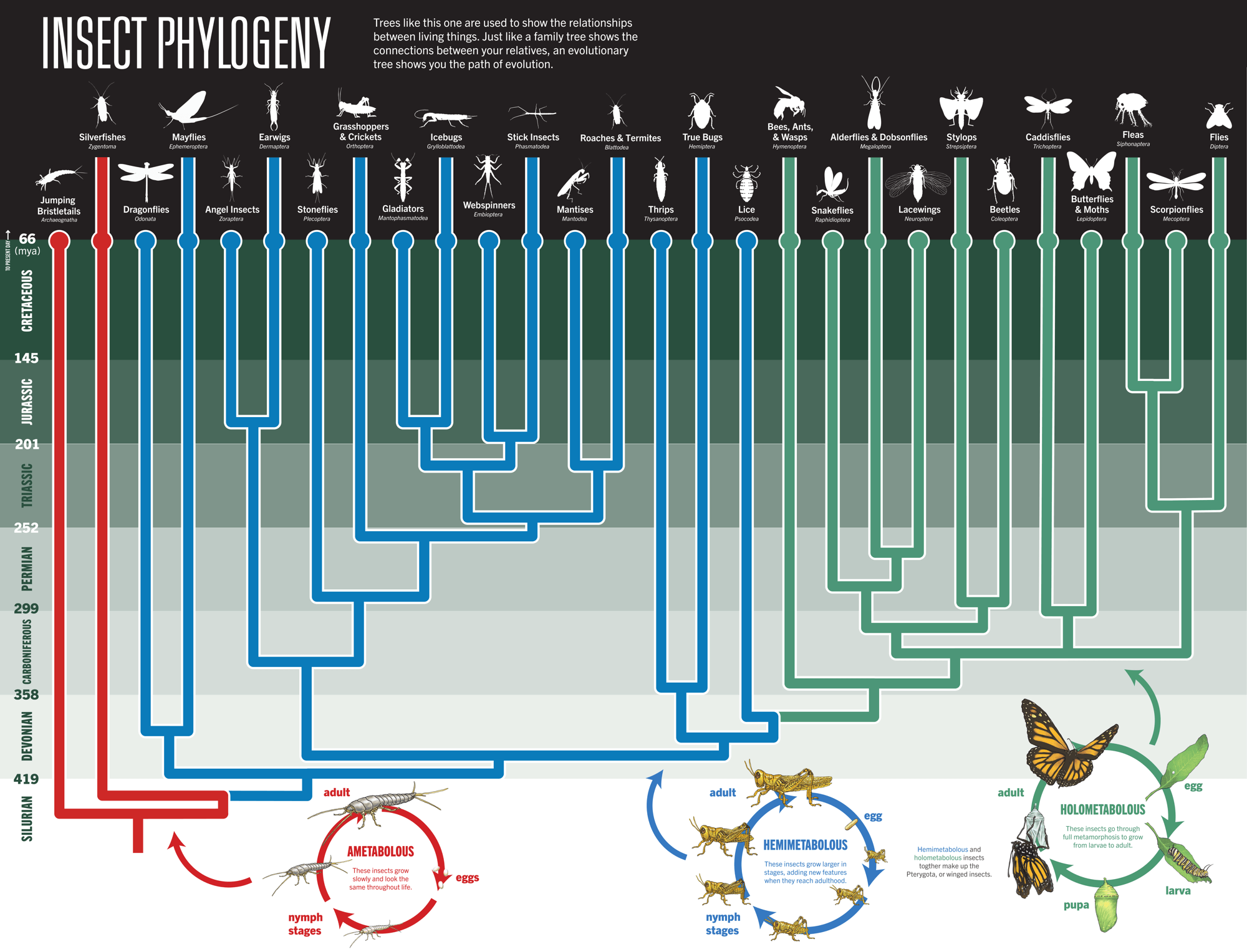
Insect Phylogeny
Trees like this one are used to show the relationships between living things. Just like a family tree shows the connections between your relatives, an evolutionary tree shows you the path of evolution.
Download PDF | 11MB
Biogeography of Species Distributions & How They Change Through Time
Museum collections can help us address scientific questions about where species are found. Because the CUIC dates back to the mid-1800s and we continue to add new specimens every year, we can ask if species are shifting their ranges, disappearing from their original locations, or even arriving in places they were not found before. For example, when a grower or state agricultural agency thinks they have found a potential new pest, we can compare the sample to our collection to understand if it is new to the region or native to the area.
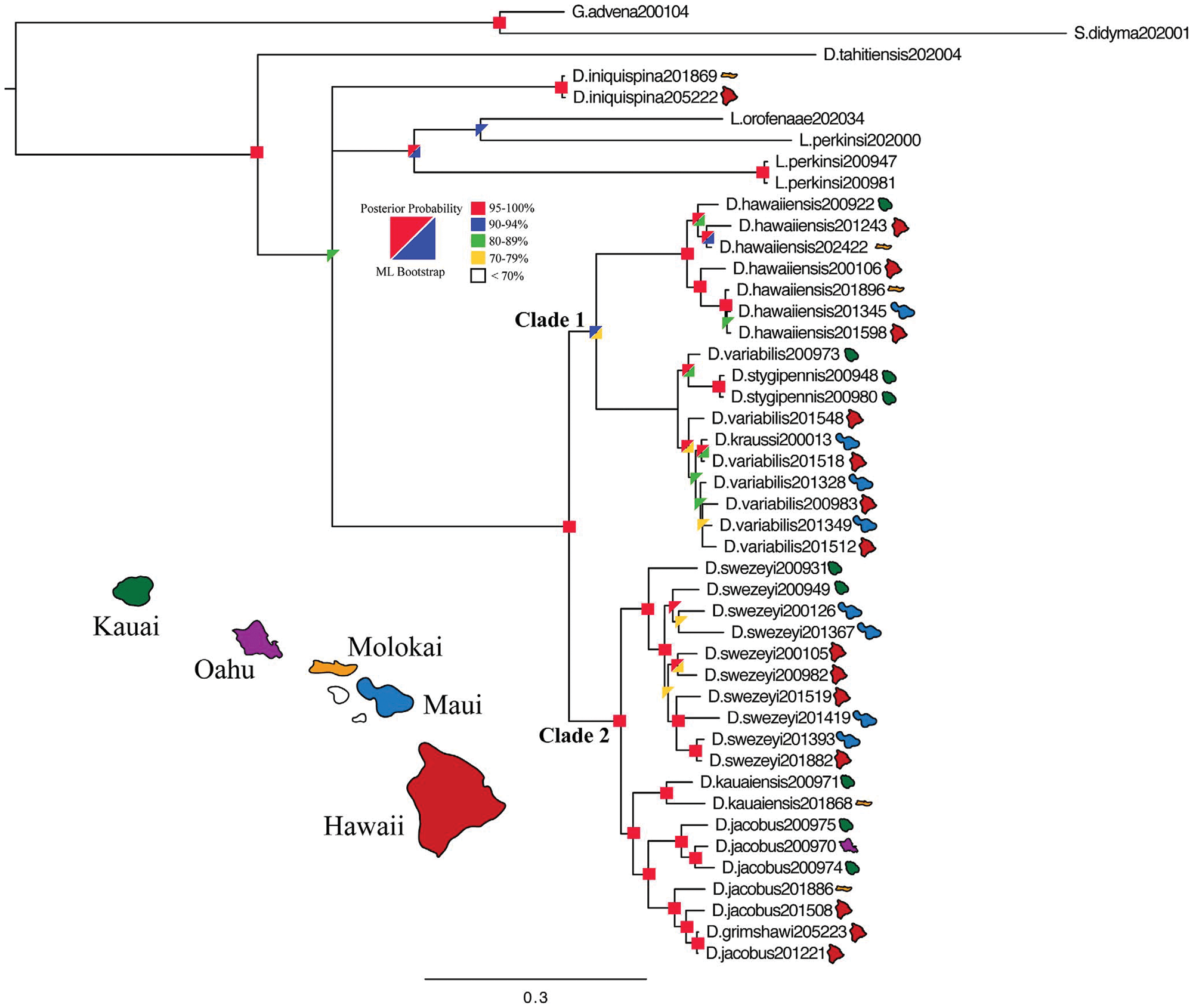
In this scientific publication, Goodman and O’Grady used molecular data to reconstruct the evolutionary family tree of native Hawaiian crane flies in the genus Dicranomyia. They then mapped which island the sample was collected from on the right side of the phylogeny. You can see that some species are found on only one island and some are found on multiple islands. They used statistical analyses to reconstruct the predicted origin and movement among these islands based on the age of the islands. The results show that frequent migration between islands through evolutionary time was common for many species in this genus.
Professor and Curator Ann Hajek’s work on insect pathogens uses the CUIC to help identify insect hosts of poorly understood native pathogens, and to identify any potential nontarget hosts of insect pathogens that might be used for biological control. We can even pair information about where species are found with phylogenies to understand if species have expanded their ranges through time. Professor and Curator Patrick O’Grady found that several groups of flies spread across the Hawai’ian islands as each island rose above the ocean and suitable habitat became available.
We can also couple species distribution data with climate models for the future to understand how species ranges will likely change over time. This is important because it will allow predictions to be made about whether pests will arrive in new areas, or if species are likely to become extinct if they cannot keep up with the rate of environmental change.
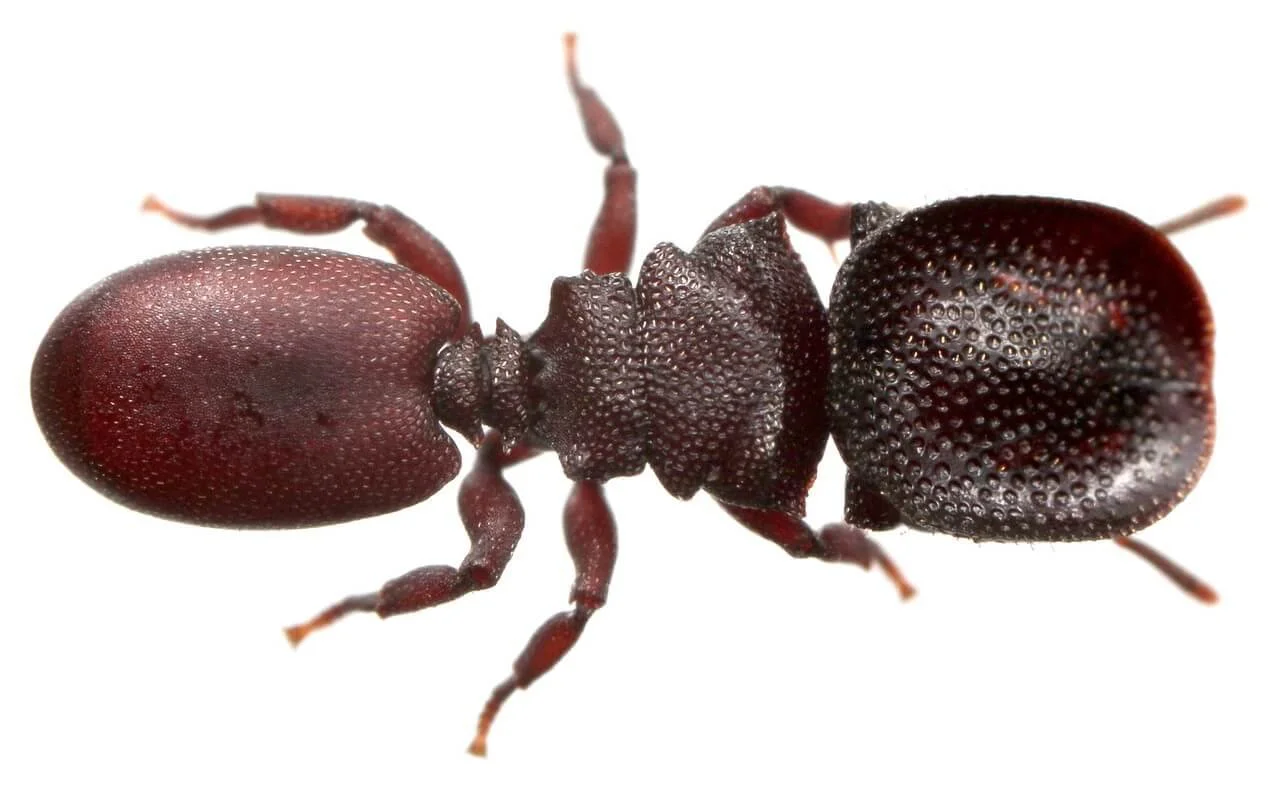
Florida Turtle Ant
Cephalotes varians
Photo by Steven Wang
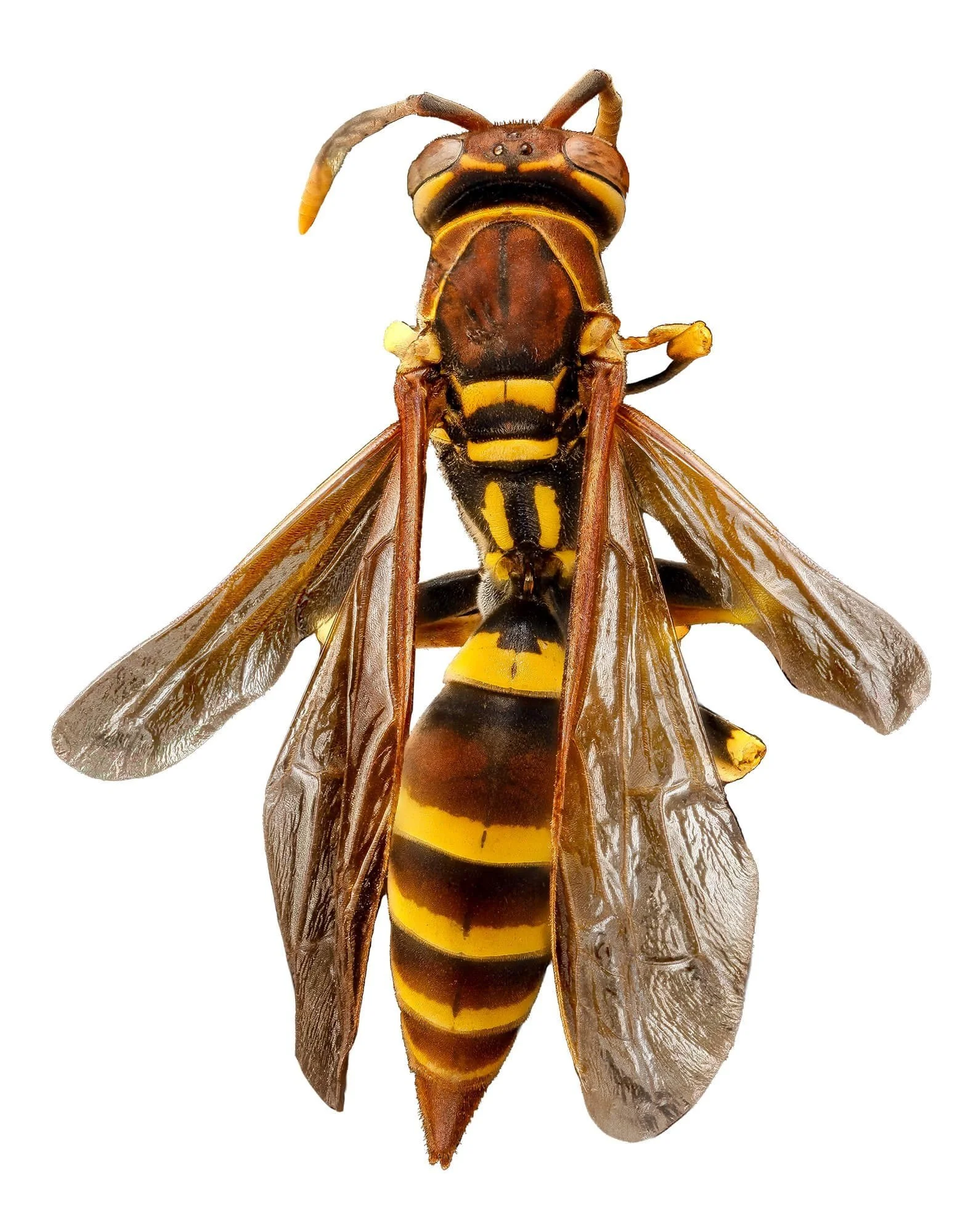
Paper Wasp
Polistes
Anatomical & Genetic Diversity
There is often great variation in form and genetics both within species and between species. This is one of the reasons that CUIC needs to collect many individuals of the same species. Dr. Michael Sheehan and Dr. Sara Miller have used our vast collections of Polistes paper wasps to study how body size is correlated with altitude, elevation, and climate variation across their range. They have also examined the color patterns on the faces of these paper wasps to understand how they tell species apart. Although DNA does degrade in specimens over time, new technologies make it possible to sequence DNA preserved in museum collections. This helps us understand how genetic diversity changes over long timespans.
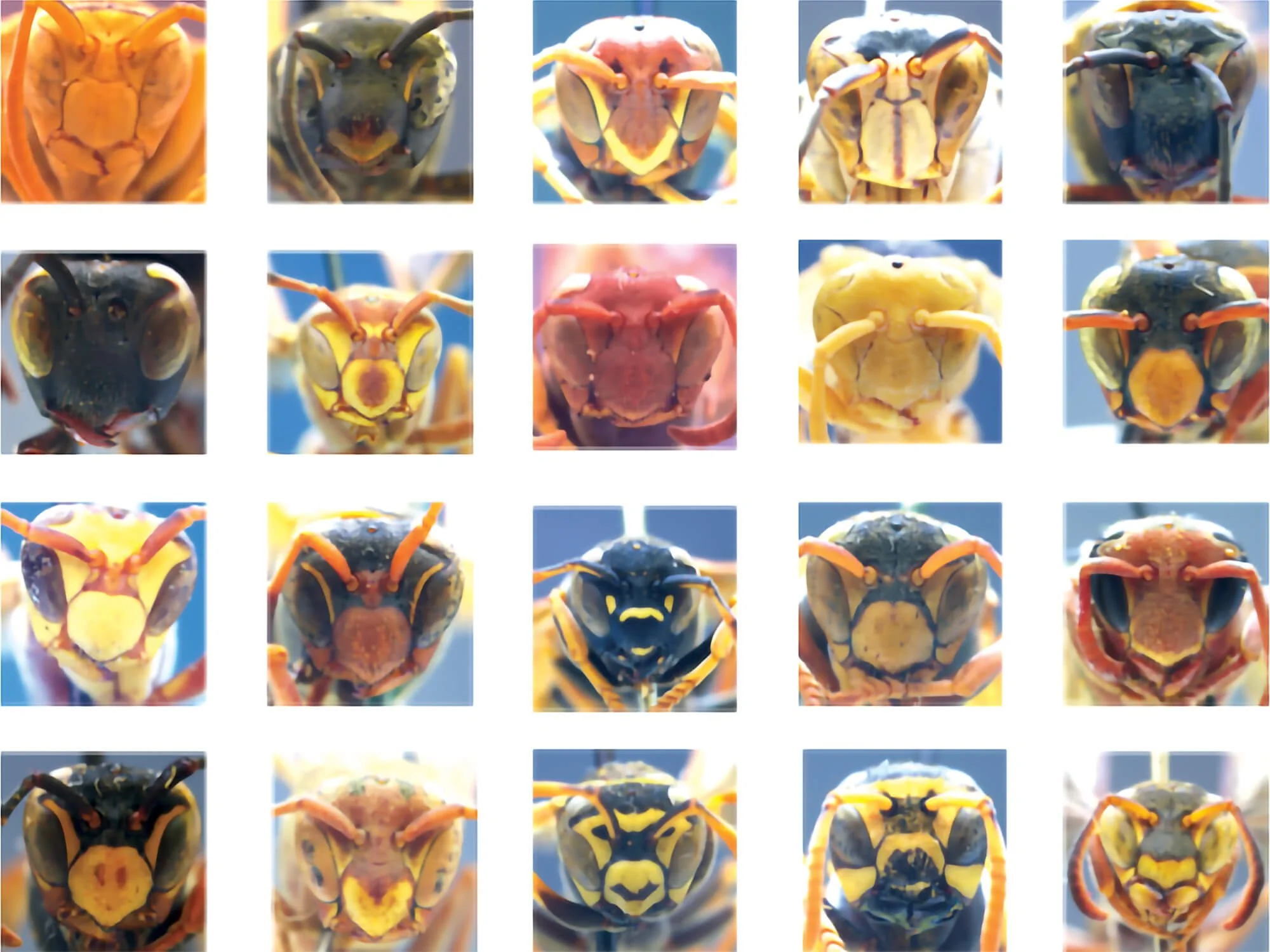
Color patterns on the faces of paper wasps.
Insect Record-Holders:
Loudest:
African Cicada (Brevisana brevis) sings at 110 decibels, louder than a chainsaw
Longest:
Stick Insect (Phryganistria sp.) over 2 feet long
Largest Wingspan:
White Witch Moth (Thysania agrippina) 12 inches
Heaviest:
Goliath Beetle (Goliathus goliathus) 3.5 ounces
Best Jumper:
Cat Flea (Ctenocephalides felis) capable of reaching 13 inches high
Largest Butterfly:
Queen Alexandra’s Birdwing (Ornithoptera alexandrae) a wingspan of 11 inches
Longest Life:
Golden Buprestid (Buprestis aurulenta) can survive inside wood for 35 to 50 years
Cross-Discipline Collaborations
Not only biologists use the CUIC to address scientific questions. For example, Dr. Jason Dombroskie and collaborators from the Biological and Environmental Engineering department at Cornell University fired high-speed water droplets on insect wings from our collection to understand how raindrops get shattered on biological surfaces.
Another cross-disciplinary collaboration between Dr. Corrie Moreau and Dr. Christophe Duplais used analytical chemistry methods to demonstrate that the Florida turtle ant (Cephalotes varians) uses symbiotic bacteria to build its tough external armor, called the cuticle.
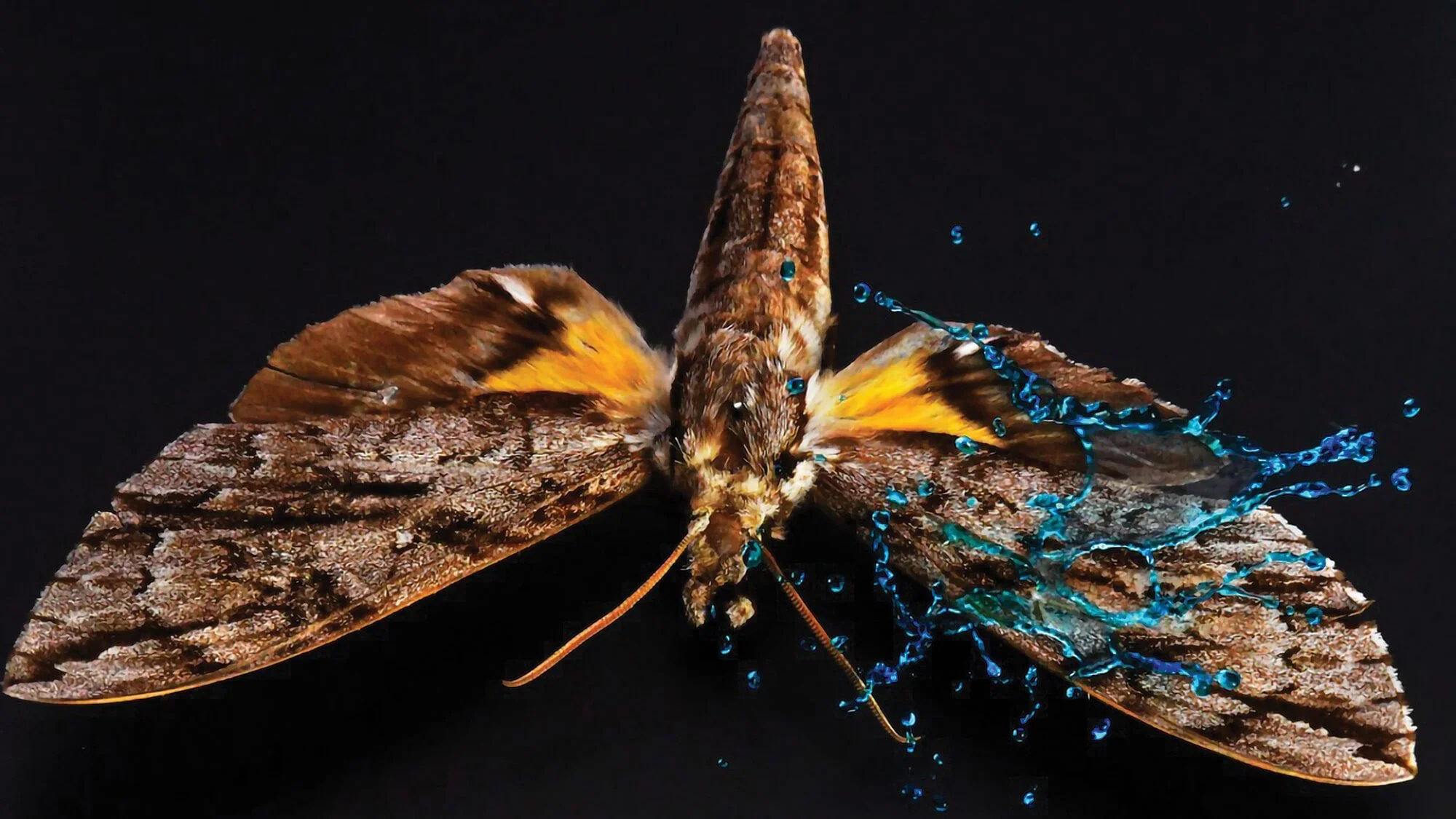
Micro-bumps and a nanoscale wax layer on fragile moth wings shatter and spread raindrops to minimize damage.