

Glaciers Move!
How glaciers grow
Two important factors that influence the growth of a glacier are temperature and snowfall. But the combination of these two factors is not always simple.
Try it out for yourself!
Use the controls on the simulation below to change temperature and snowfall and see how your glacier reacts. Does it advance or retreat?
Simulation by PhET Interactive Simulations, University of Colorado Boulder, licensed under CC BY-NC 4.0 (https://phet.colorado.edu).
Glaciers move!
Glaciers don’t just change in size, they also move across the landscape. A moving glacier alters the shape of its underlying landscape, flowing and sliding across the earth, down mountainsides, and even off the land and out to sea.
Heat from the Earth’s interior along with immense pressure from layers of ice above can melt the bottom layers of a glacier. The resulting water acts as lubrication between the ground and the ice, allowing the glacier to slide from higher ground to lower. This type of glacial movement is called basal sliding.
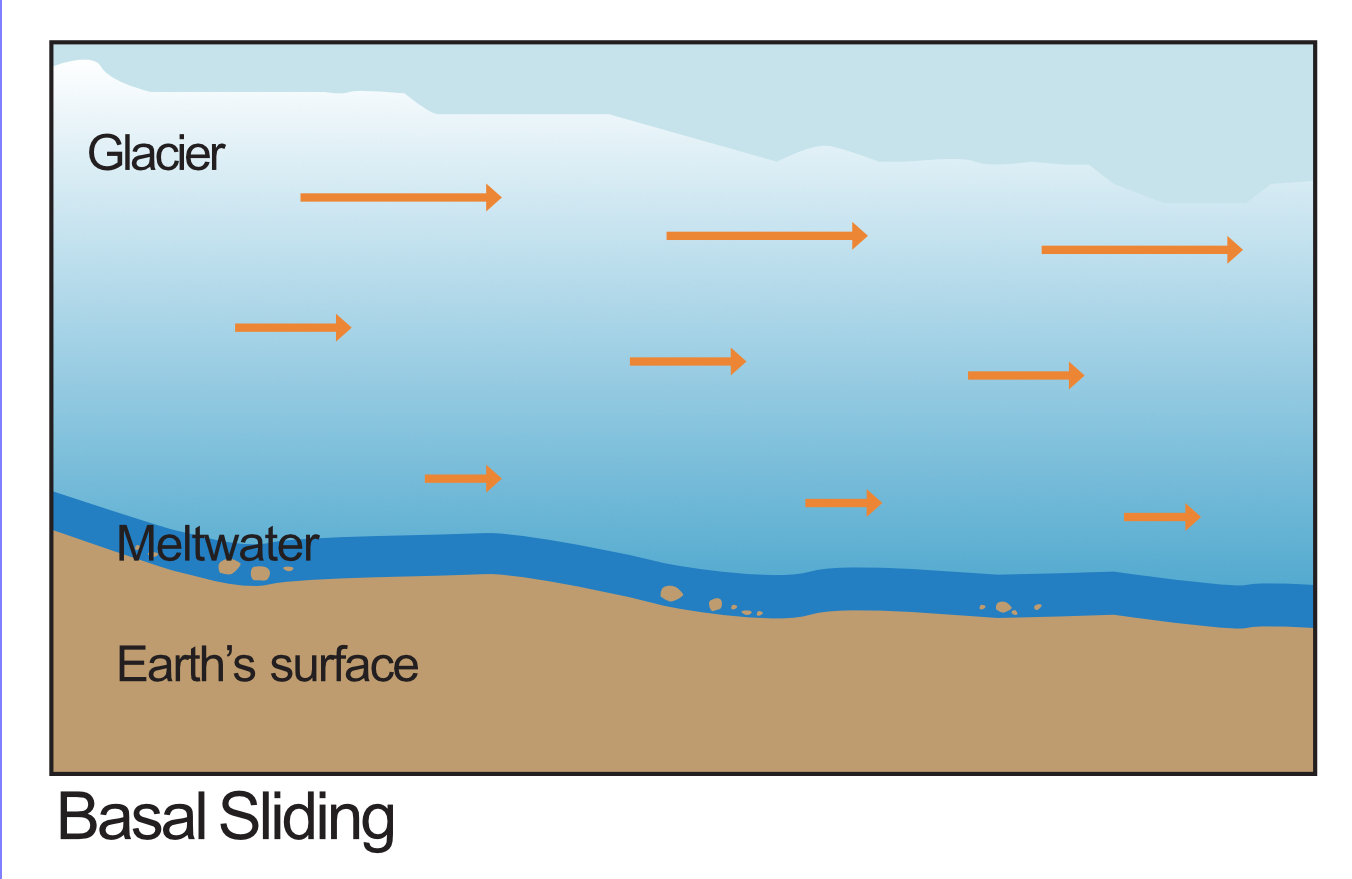
Basal sliding: The upper layers of a glacier usually move faster than the lower layers, which are slowed by their contact with the ground. But the presence of water at the glacier’s base can greatly accelerate the movement of the entire glacier.
Another kind of movement is plastic flow. The weight of the snow and ice in the glacier is so great that a zone is created near the bottom of the ice where the ice crystals can deform. This change within the ice enables the entire glacier to “flow.” Meanwhile, the upper parts of the glacier move more rigidly and are prone to fracture, creating large cracks in the ice called crevasses.
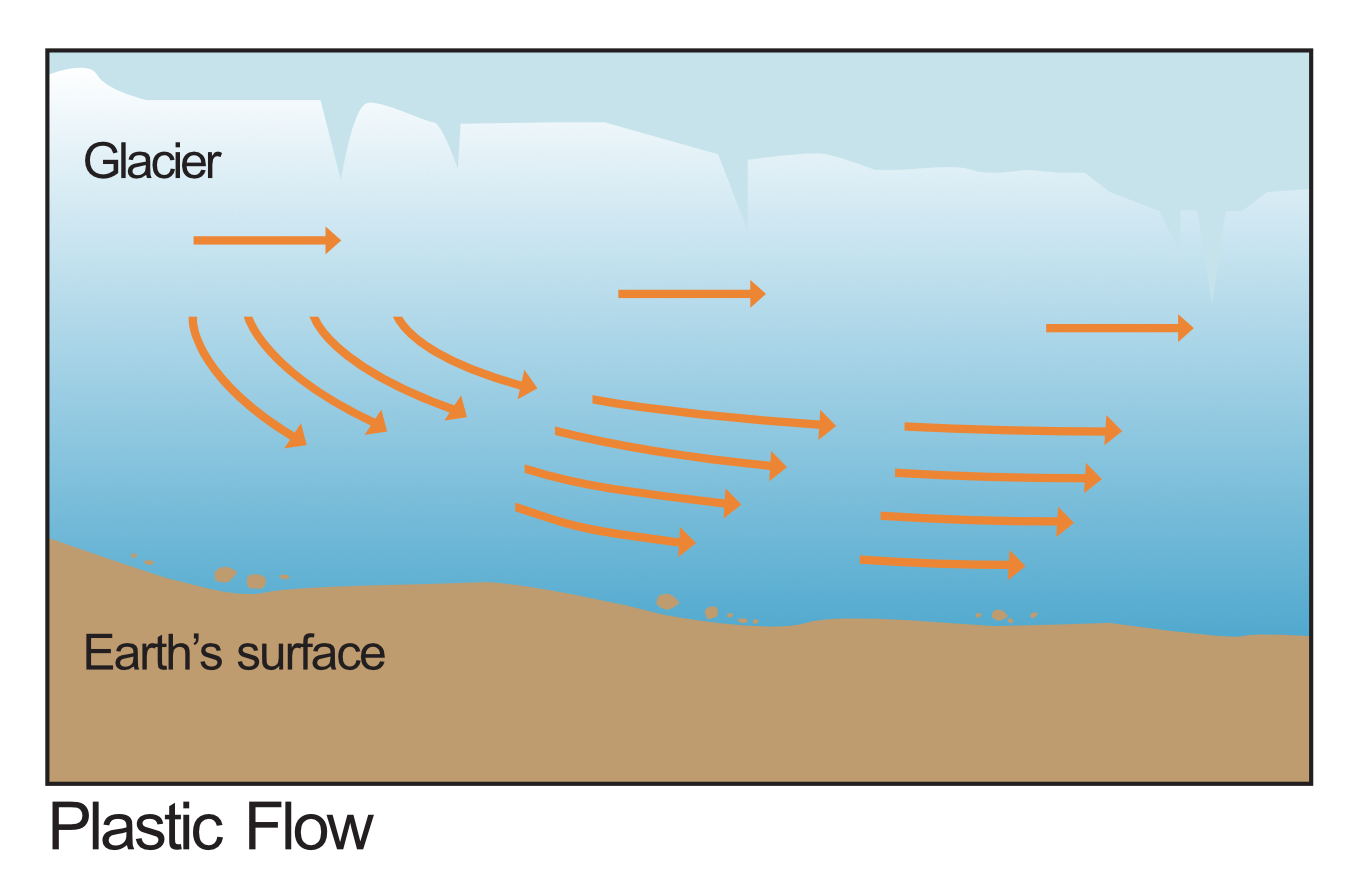
Plastic flow: Even though it is solid, ice flows – but not the way liquid water does. Under pressure, ice behaves like very cold honey, creeping forward. Different layers of the glacier move at different rates and in different ways within the glacier.