

Global Changes
In 2025, there were around 200,000 glaciers across the globe, from Canadian mountain glaciers to Patagonian ice fields. Their presence is essential to animal life and human communities for many reasons. However, glaciers around the world are melting faster than in recorded history, due to human activity.
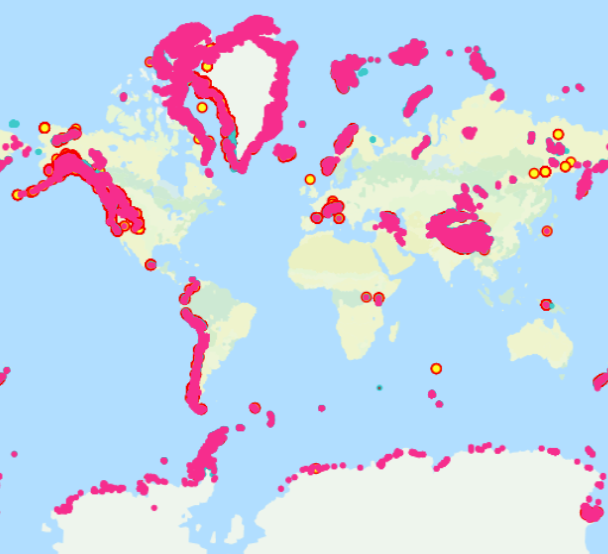
Map of glacier locations (in pink) around the world, from Global Land Ice Measurements from Space (GLIMS) Glacier Viewer, https://www.glims.org/glacierdata/index.php
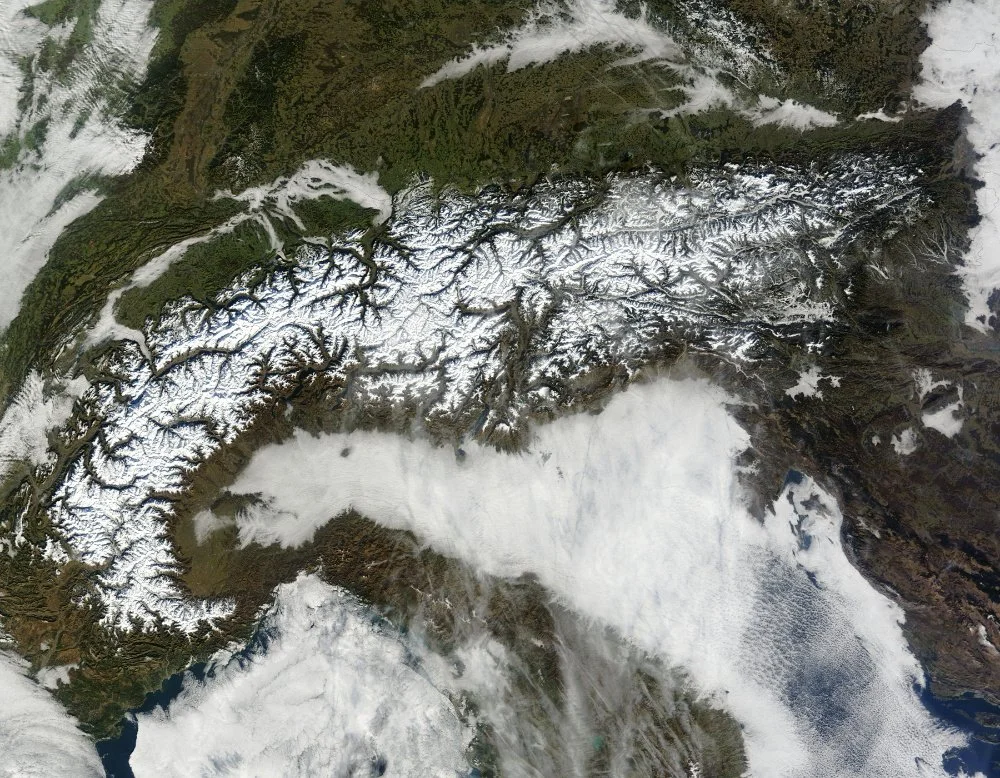
Satellite view of the European Alps from January 17, 2011. Image: Jeff Schmaltz, MODIS Rapid Response Team at NASA Goddard Space Flight Center, https://science.nasa.gov/earth/earth-observatory/a-clear-view-of-the-alps-48845 A 2023 study found that by 2050, these mountain glaciers are expected to lose over one third of their 2023 ice mass, even if the climate did not change further.
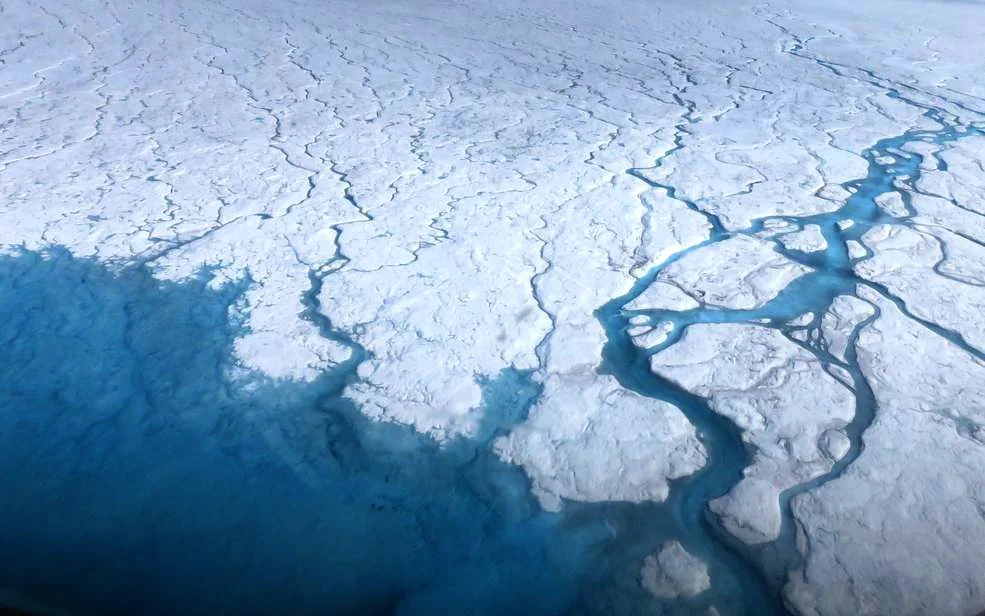
Streams and rivers that form on top of the Greenland ice sheet during spring and summer are the main agent transporting melt runoff from the ice sheet to the ocean. Surface melting on the Greenland ice sheet has been increasing as the planet heats up. Photo: NASA Goddard Space Flight Center (public domain) via Wikimedia Commons.
Big Changes Across the Globe
South Island, New Zealand
“While the glacier has always been dramatic in its advances and retreats, the rapidity of the present retreat is remarkable.”
DR. BRIAN ANDERSON, VICTORIA UNIVERSITY, 2012
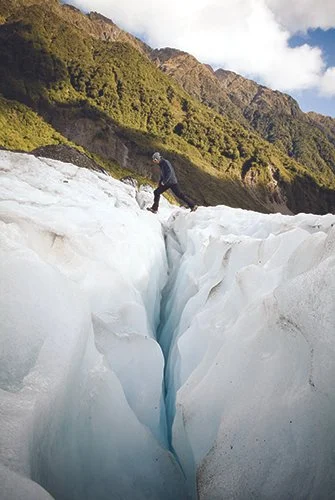
One of just three glaciers in the world that descend into a rainforest, the Franz Josef Glacier sits at an elevation of nearly 8300 feet and extends down to just 820 feet above sea level. The glacier exists in such warm temperatures because it receives so much snow that its rate of accumulation outpaces its rate of melting. Meltwater from the glacier feeds into the temperate rainforest—creating a unique ecosystem and providing water for animals that are not found anywhere else in the world. Although the Franz Josef glacier regularly advances and retreats, it has entered a very rapid phase of retreat since 2008. In fact, scientists expect the glacier to lose 38% of its mass by 2100.
Mount Everest, Tibetan-Qinghai Plateau
“The world has never faced such a predictably massive threat to food production as that posed by the melting mountain glaciers of Asia.”
LESTER BROWN, EARTH POLICY INSTITUTE, 2008
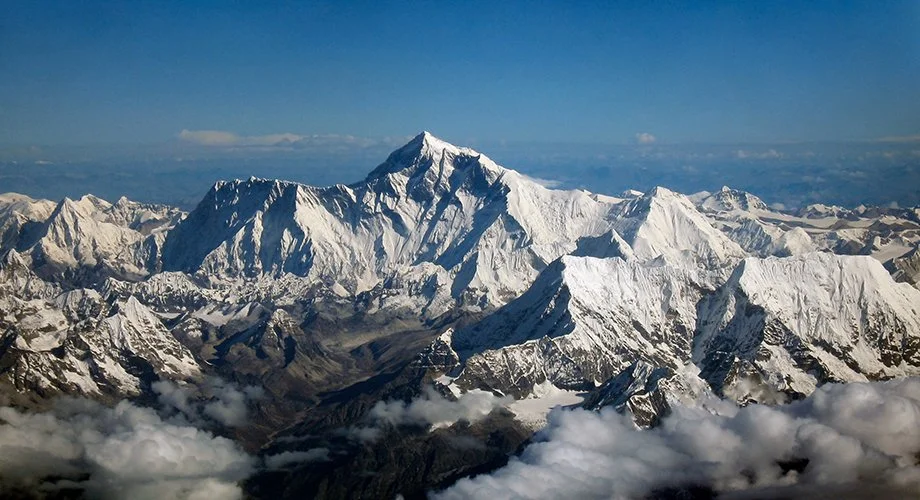
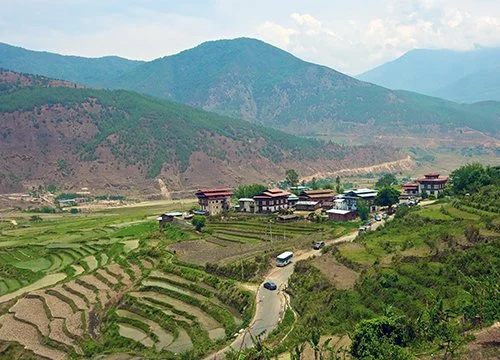
Annual glacial meltwater on Mount Everest and its surrounding mountains feeds into rivers across China and India during dry season—when water is needed most to irrigate rice and wheat crops. Not only do hundreds of millions of people depend on these foods for their staple calories, but together China and India produce more than half of the world’s wheat and rice. Unfortunately, glaciologists estimate that two-thirds of the glaciers on the Tibet-Qinghai Plateau will be gone by 2060. Losing such an important source of irrigation could lead to devastating food shortages in countries where populations are booming.
La Paz & El Alto, Bolivia
“Twenty years ago there was a lot more water. We want to plant potatoes, maize, and beans but we don’t have enough water.”
LUCIA QUISPE, LA PAZ, 2009
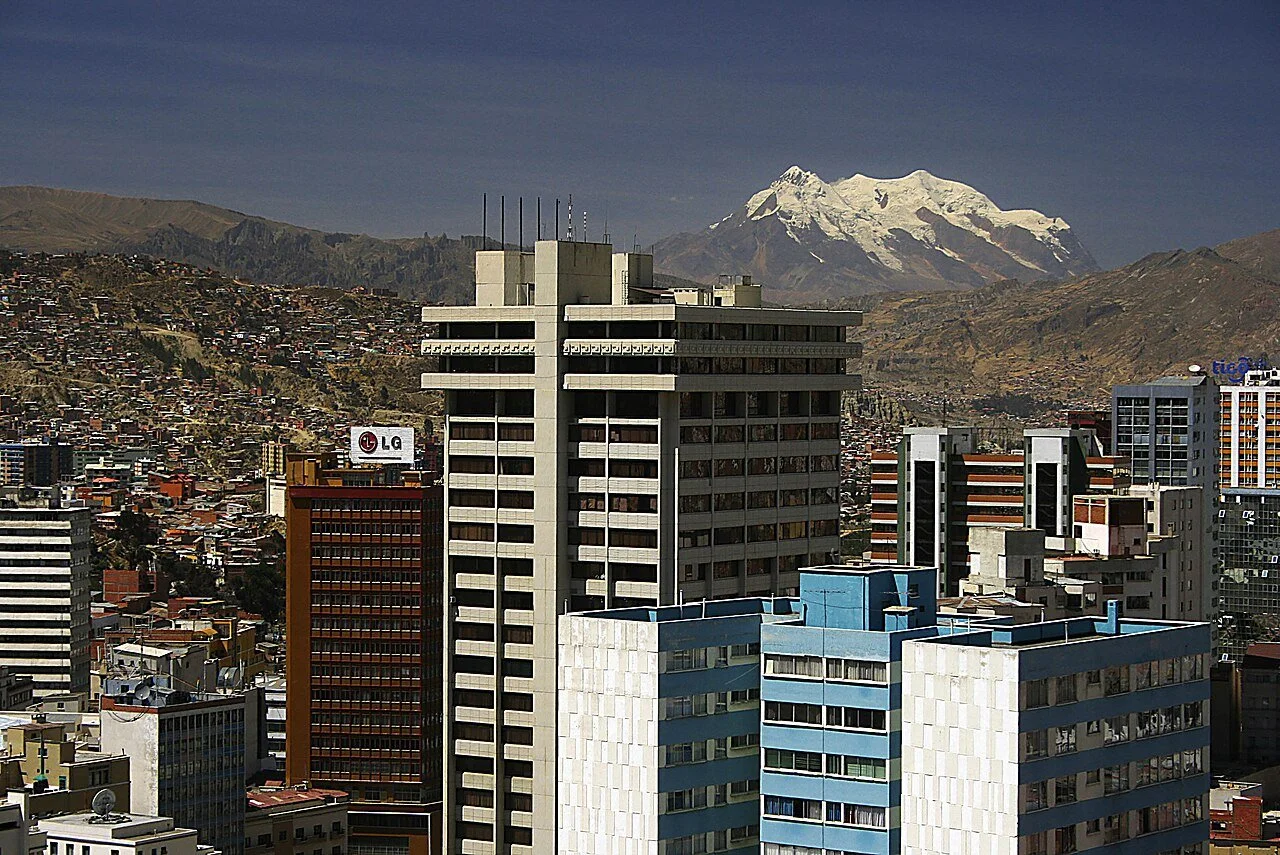
The people of La Paz and El Alto, sprawling cities in South America, depend on glaciers for at least a third of their water. Glaciers high in the Andes provide not just drinking water, but also power—Bolivia depends on hydropower for about half its electricity. Scientists monitoring the glaciers say the ice is showing signs of shrinking faster than previously forecast. Many glaciers in this portion of the Andes are expected to disappear completely by the late 21st century.
Himalayas, India & Pakistan
“There is evidence that the core of the glacier is melting. While some of the reasons are macro-level, like global warming, micro-level factors also precipitate the damage.”
PROFESSOR S. HASNAIN, JAWAHARLAL NEHRU UNIVERSITY, DELHI, 2004
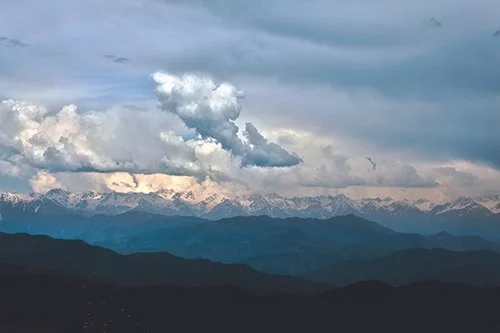
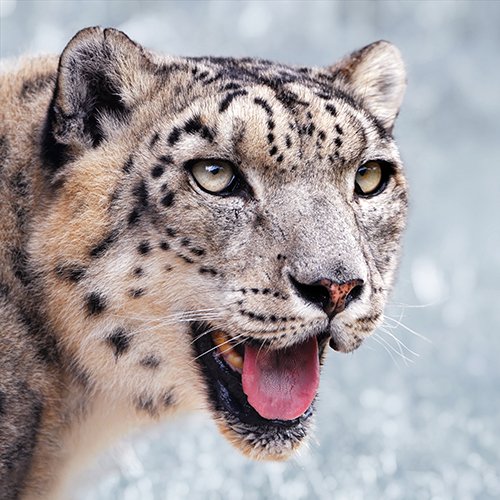
Siachen Glacier, the world’s longest mountain glacier outside of the polar regions, sits in the Himalayas between India and Pakistan. Uninhabited by humans until 1983, the region is home to an amazing array of rare animals, such as the snow leopards, brown bears, ibexes, and many birds. Unfortunately, this habitat is quickly being destroyed on two fronts: glacial retreat and pollution. Studies project that Himalayan glaciers could lose over one third of their ice mass by the end of the 21st century.
Glaciers, sea level, and us
The mass of glaciers and the level of the oceans are directly related. When glaciers grow, the amount of water in the world’s oceans decreases, lowering sea level. But as glaciers melt, sea level rises again.
During the 20th century, melting glaciers caused global sea level to rise by about four inches, and studies predict that it will rise an additional six to nine inches in the next one hundred years. If the Earth continues to warm at present rates, most of the world’s ice caps and mountain glaciers could disappear by 2300, resulting in as much as 20 inches of sea level rise.
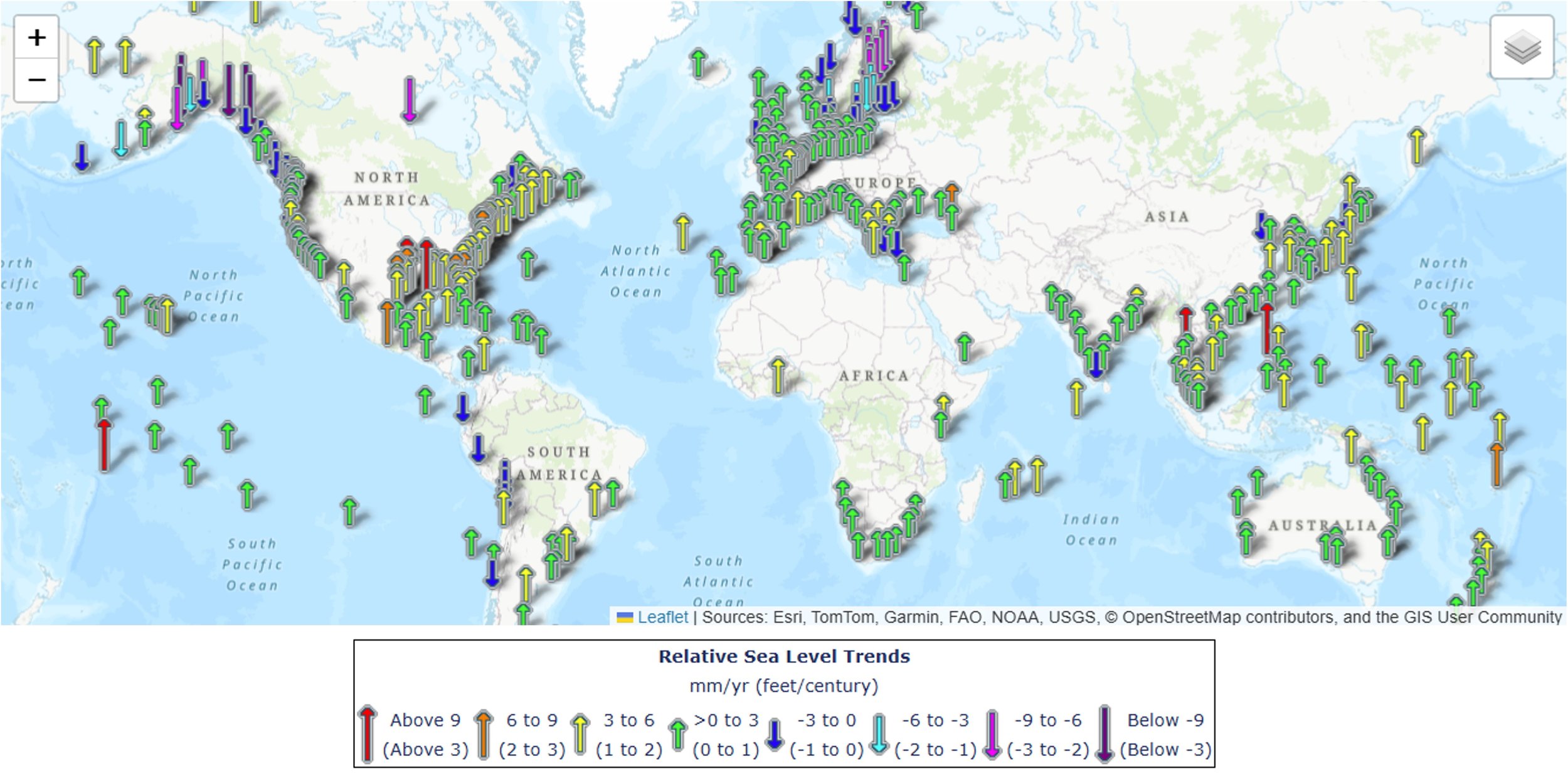
Map of local relative sea level trends. Sea level is rising in most parts of the world. The sea level decreases observed in the Arctic and on the west coast of South America are primarily the result of isostatic rebound (rising of the Earth’s crust following the most recent retreat of enormous ice sheets, i.e., the Earth’s crust bouncing back after the weight of the ice sheets was gone.) Map: NOAA Tides and Currents Sea Level Trends, https://tidesandcurrents.noaa.gov/sltrends/ , accessed August 17, 2026.
Other projections are even more dire—with sea level rises of as much as two to six feet or even more by the end of this century. These scenarios will pose serious problems for people who live within about 60 miles of a coastline – 40% of the world’s population would be forced to relocate due to permanent flooding. In addition, glaciers that provide water for drinking and irrigation would be gone, and with them, vast amounts of crop land and fresh water.
Other species would be affected by global warming and melting glaciers as well. The colder habitats of animals such as seals, polar bears, snow leopards, and more would change dramatically. Plants and animals living in warmer climes would slowly shift farther from the equator, crowding out temperate and cold weather-loving species.
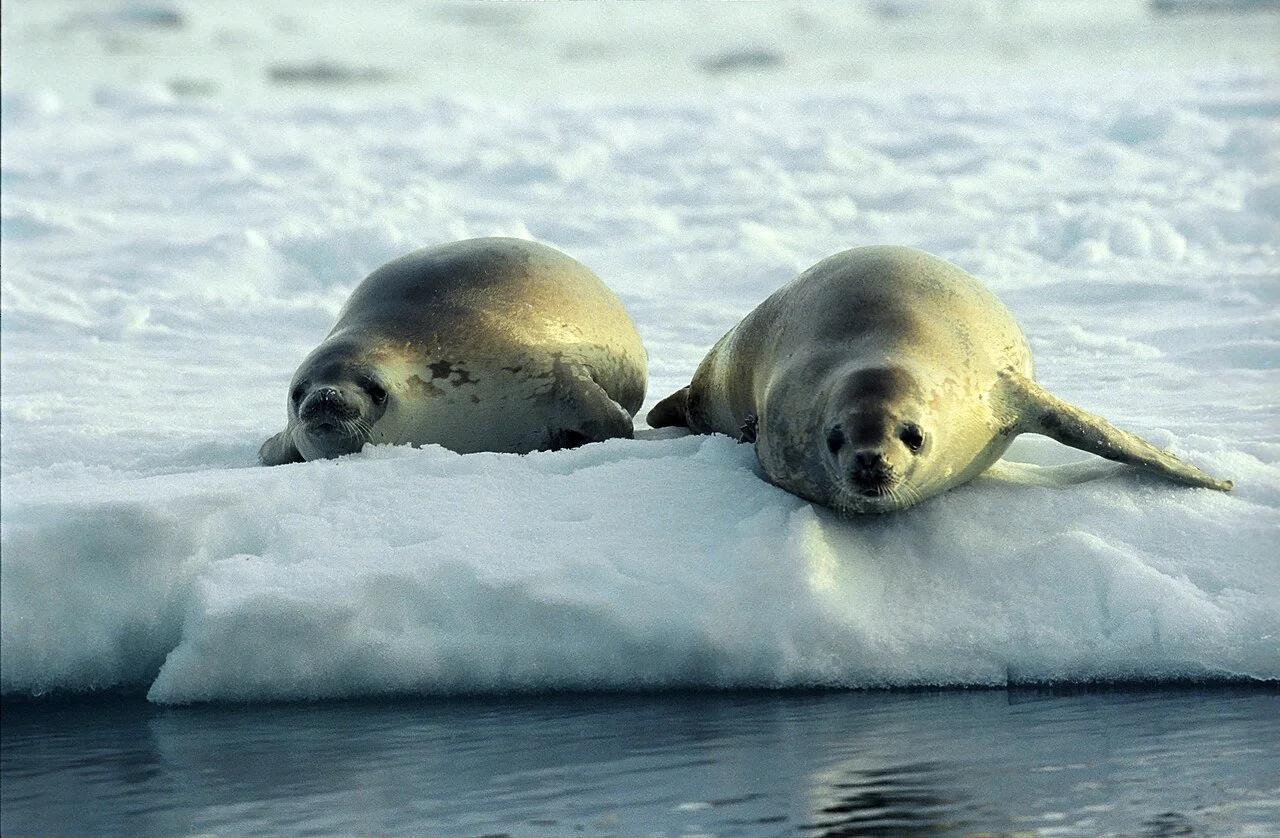
Crabeater seals. Photo: Jerzystrzelecki (CC BY 3.0) via Wikimedia Commons
Even the most dramatic predictions for human-induced global climate change don’t foresee that all the glaciers will melt anytime soon. But a sea level rise of even a few feet would have drastic consequences for human and animal communities around the globe.
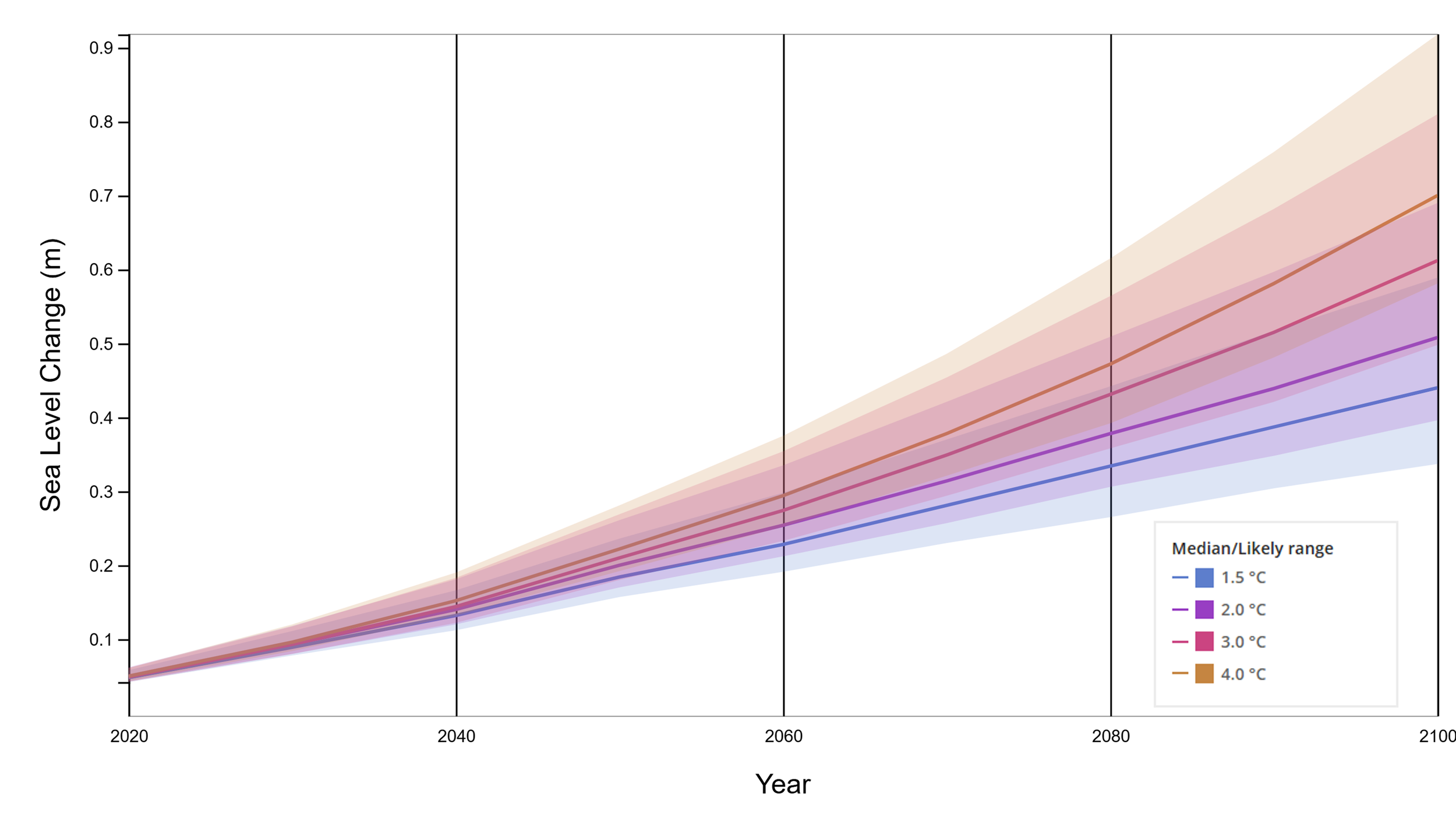
Projections of climate change depend heavily upon future human activity, and so climate models are based on how we change – or don’t change – our behavior. This graph shows projections of global sea level rise for four different scenarios, resulting in global temperature rises (above the average from 1850-1900) by the year 2100 of 1.5° C, 2° C, 3° C, and 4° C (in Fahrenheit: 2.7°, 3.6°, 5.4° and 7.2°, respectively). As of the year 2026, scientists think we are currently on a trajectory to reach about 3° C (5.4° F) of global heating above the 1850-1900 average by the end of this century. Graph: Intergovernmental Panel on Climate Change (IPCC) 6th Assessment Report Sea Level Projection Tool by NASA, https://sealevel.nasa.gov/ipcc-ar6-sea-level-projection-tool?type=global&data_layer=warming , accessed August 17, 2026.
Sea level also rises due to thermal expansion of ocean waters as the ocean heats up. You can learn more about the science of this phenomenon in the video below.