

Life on the Move
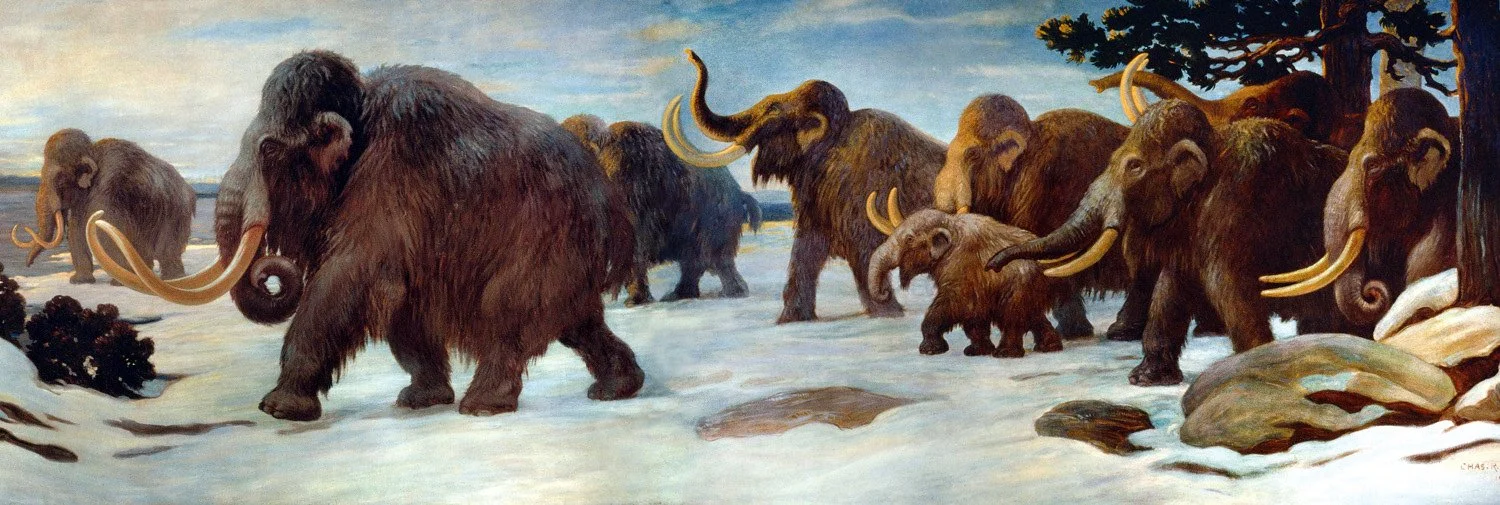
Painting of wooly mammoths near the Somme River by Charles R. Knight, from the American Museum of Natural History. Public domain, via Wikimedia Commons.
One of the reasons paleontologists think that climate change occurred in the past is that the fossil record frequently shows geographic range shifts of species. These shifts between higher and lower latitudes, or deep and shallow water, may have occurred in response to a warming or cooling climate.
For example, temperature-sensitive animal and plant species in both the ocean and on land move south during glacial periods and north during interglacials (periods of ice sheet retreat). Sediments from the pond where the Hyde Park Mastodon was found preserve a record of plant species that grew once again after glaciers had retreated.
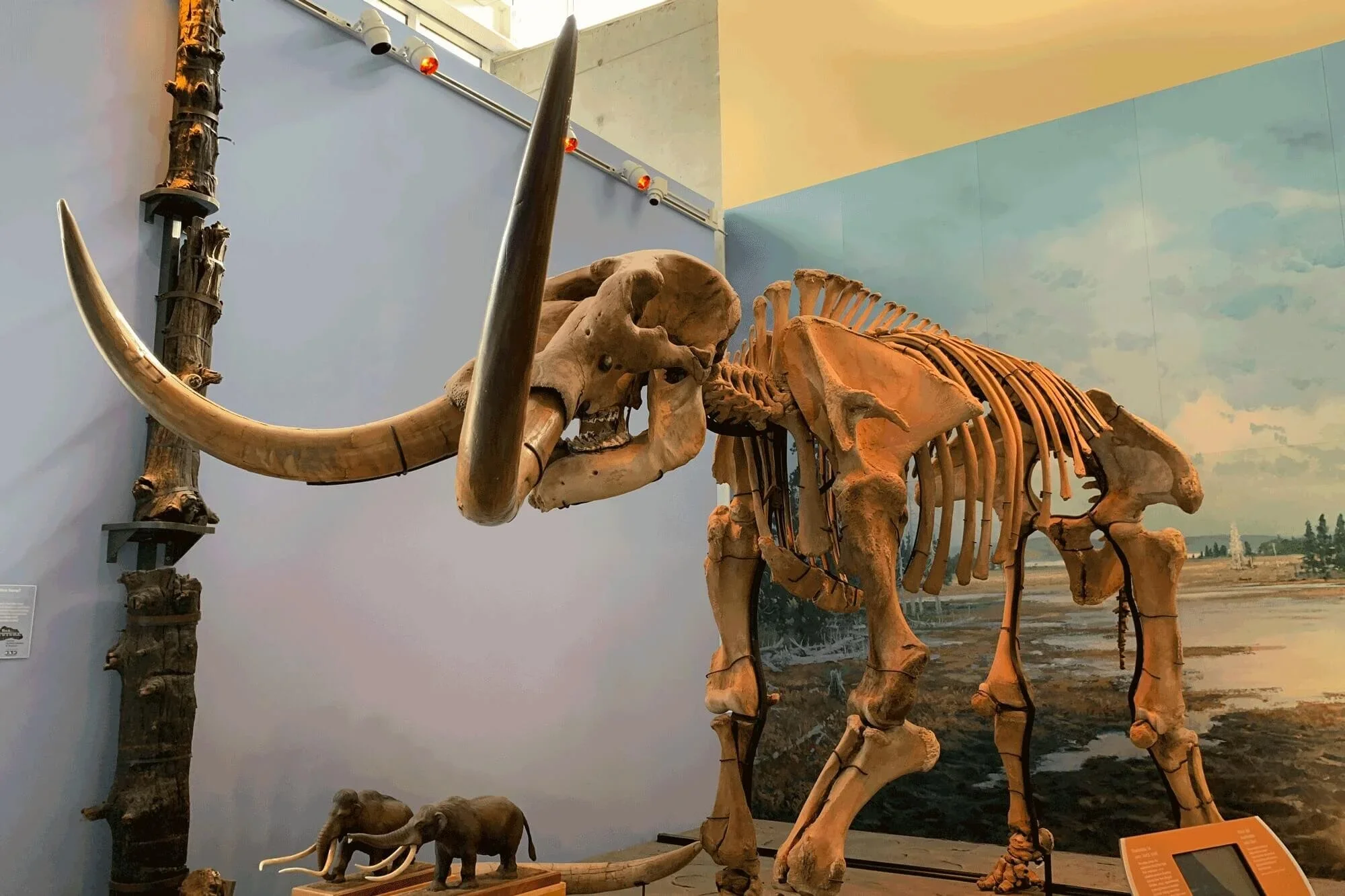
Hyde Park mastodon skeleton at the Museum of the Earth, Ithaca NY
How humans affect Earth’s climate
Studies show that climate has varied throughout Earth’s history, but changes in the past century or so have been startlingly drastic and rapid. The amount of carbon dioxide (CO2) in the atmosphere has increased almost 40% since the Industrial Revolution, about 200 years ago, largely because of industrial activity.
When we burn fossil fuels like coal and gasoline, the amount of CO2 in the atmosphere increases. Another cause of the recent rise in CO2 is deforestation: when there are fewer plants to absorb CO2, more of it remains in the atmosphere. CO2 and other gases in the atmosphere trap heat around the planet through a phenomenon called the Greenhouse Effect.
During the 20th century, Earth’s surface temperature rose by 1.4 degrees Fahrenheit (0.2 degrees Celsius), and it is predicted to rise about another 5.5 to 7.2 degrees F (about 3 to 4 degrees C) over the next 100 years.
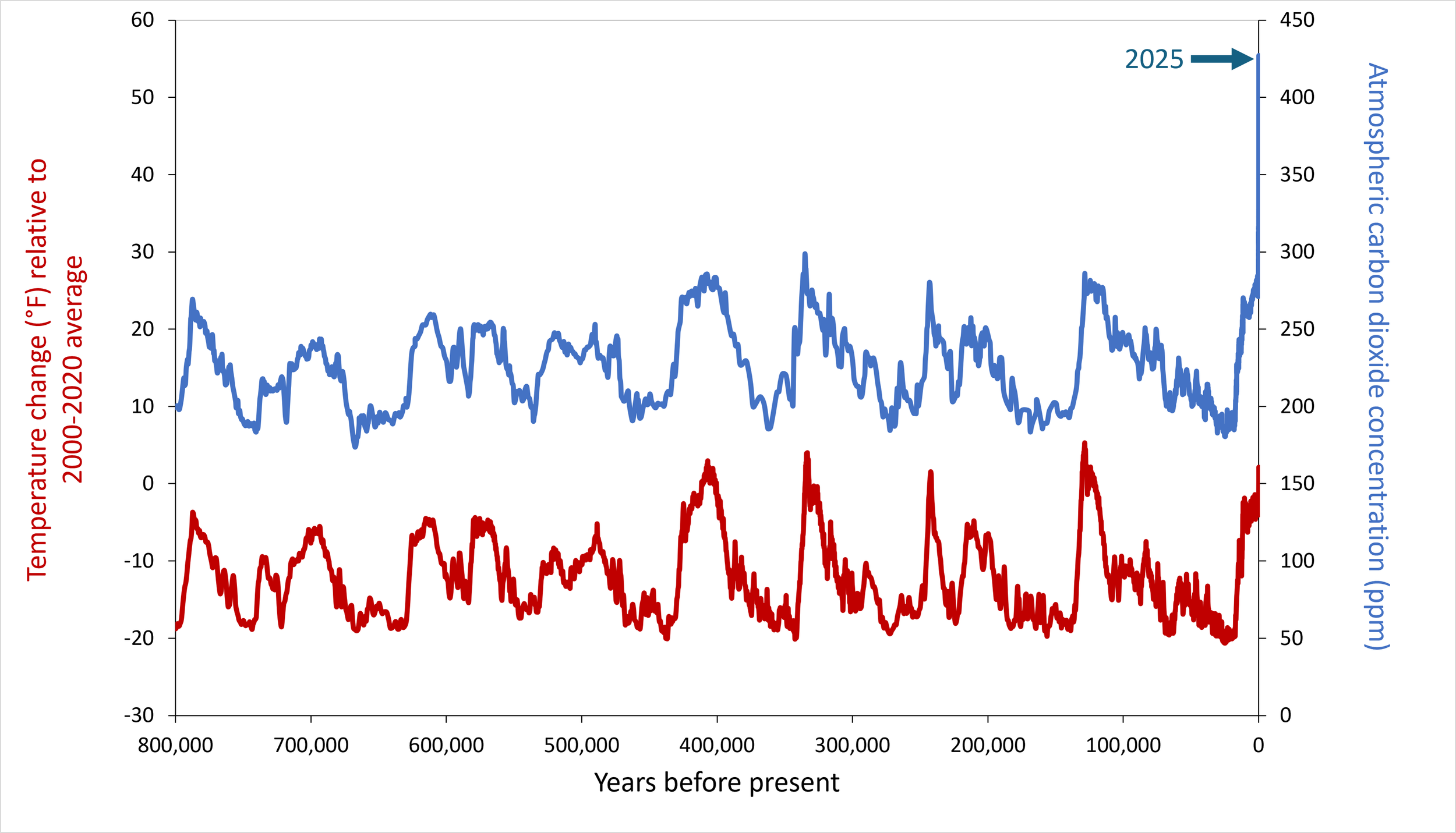
The graph above shows carbon dioxide (CO2) concentration in blue and Antarctic temperature change relative to the average from 2000-2020 in red, for the past 800,000 years. The data come from ice cores taken in the Antarctic ice sheet, and the most recent data are from 2025. The cool times are glacial periods and the warmer times are interglacial periods. With each cycle of warming and cooling, populations of organisms migrated north or south as temperatures changed.
The fossilized palm frond below was found in southwestern Wyoming. It, and many other tropical species, lived there about 48 million years ago during the Eocene epoch when Wyoming, and the rest of the planet, was much warmer. Today, winter temperatures in southwest Wyoming are frequently in the teens, sometimes dropping well below zero degrees, and the nearest palm trees are found more than 1000 miles to the south.
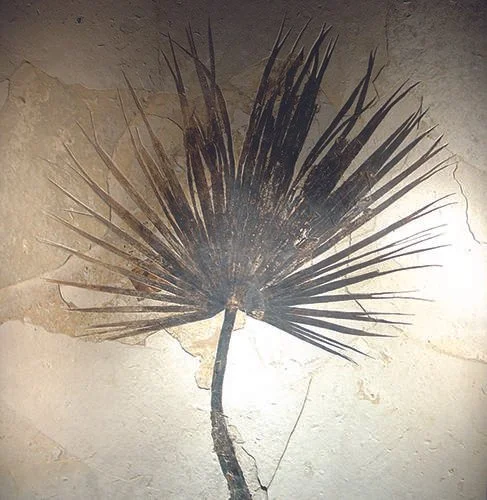
Fossil palm leaf. Photo by Phil Stoffer, USGS (public domain) via Wikimedia Commons
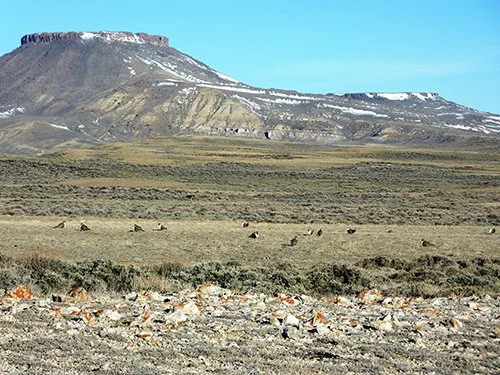
Red Desert, Wyoming, with Greater Sage-Grouse in the foreground. Photo by Mark Bellis / US Fish and Wildlife Service (public domain) via US Geological Survey