
The Minor Groups of Mollusks
While Cephalopods, Bivalves, and Gastropods represent most of molluscan diversity, these are not the only groups in the phylum!
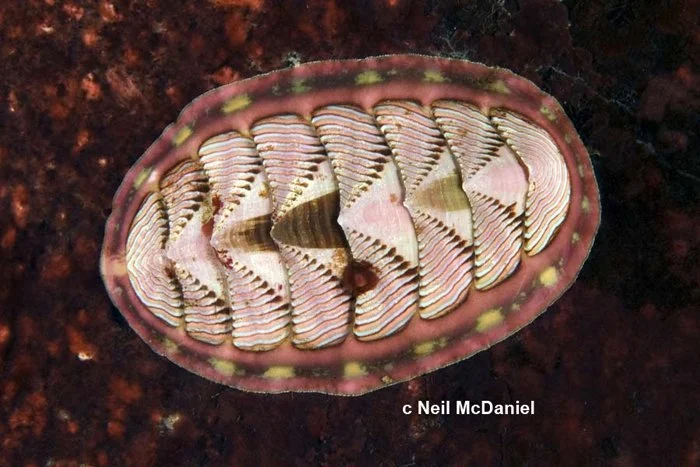
Tonicella lineata, a species of chiton from the northern Pacific Ocean.
Chitons (Polyplacophora) are mollusks with a series of plates on their back and are just as diverse as cephalopods. All modern chitons have 8 plates. Chitons are grazers and can be found on the surface in both shallow and deep water. Some even have complex, image-forming eyes in these plates that help them see what passes over their backs! Several chitons also have iron minerals in their teeth which help them graze on hard surfaces like rocks and corals.
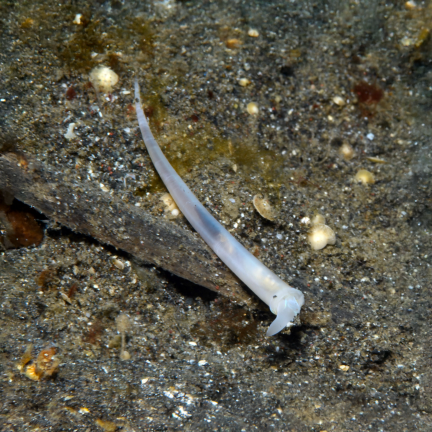
A dentaliid scaphopod from Lembeh, Indonesia.
Tusk shells (Scaphopoda), Monoplacophorans, and Aplacophorans are also mollusks that live in the oceans today. Tusk shells bury in sediment to feed and have distinct shells that are open at both ends.
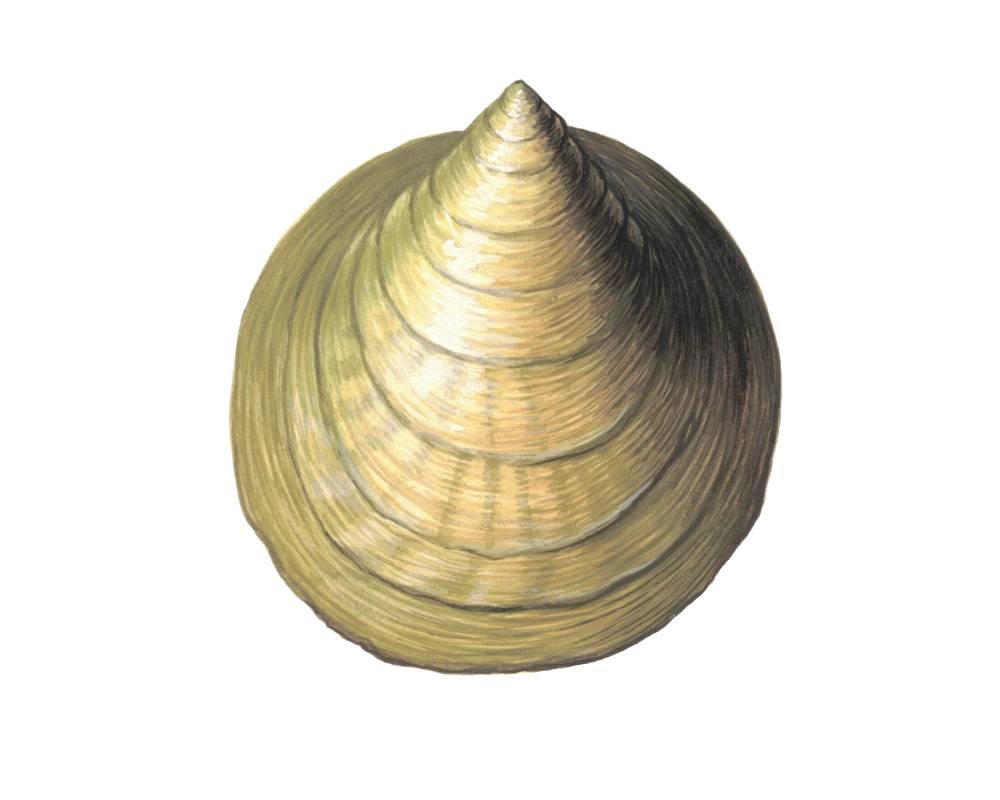
An illustration of Neopilina, a modern monoplacophoran genus.
Monoplacophorans were originally only known as fossils but we now know they can be found deep in modern oceans. Monoplacophorans have one shell like snails, but their soft tissues are very different.
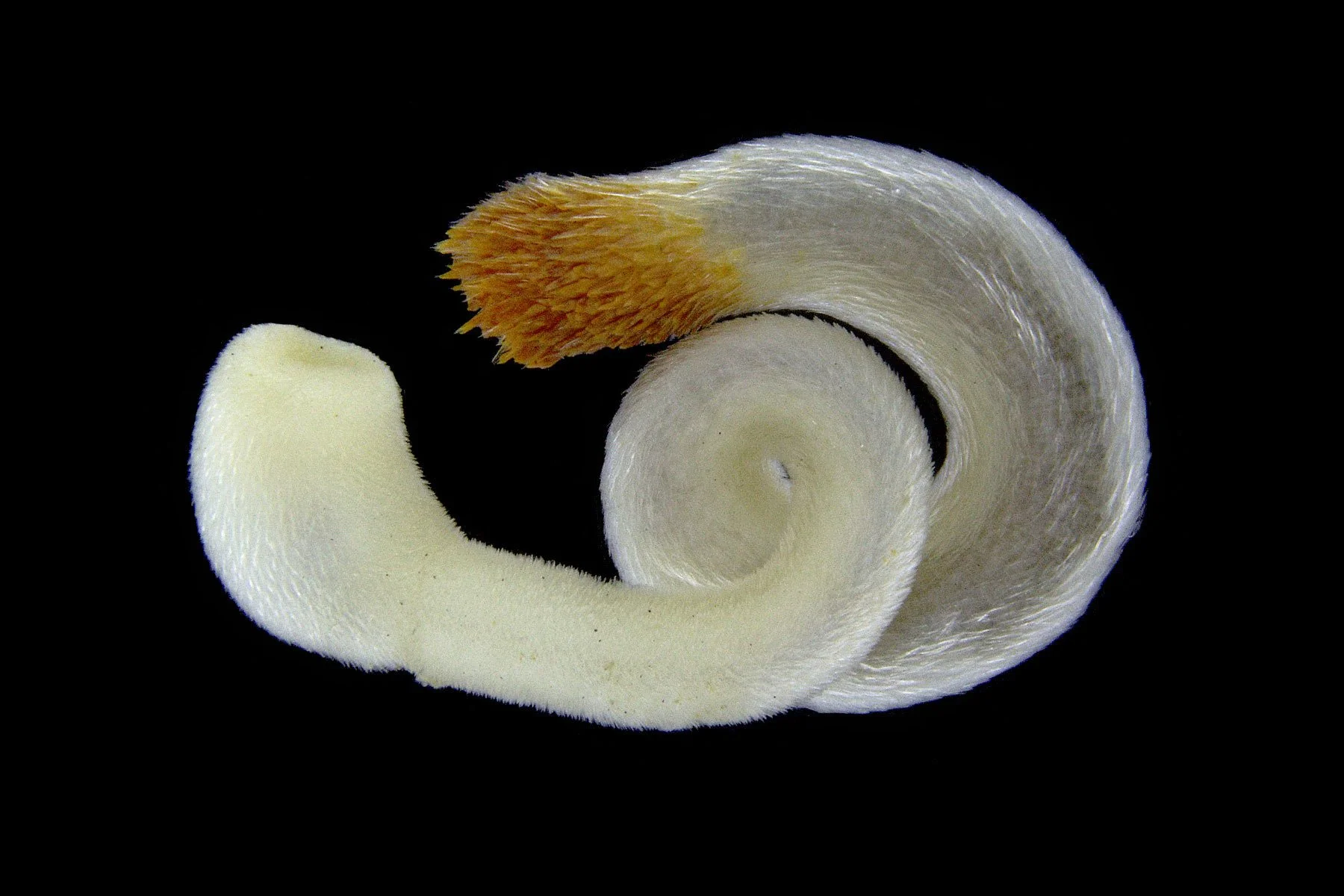
Chaetoderma nitidulum, a species of aplacophoran from the north Atlantic ocean.
Aplacophorans are mollusks but lack a shell or plates and are instead covered in small spicules (calcium carbonate spines).
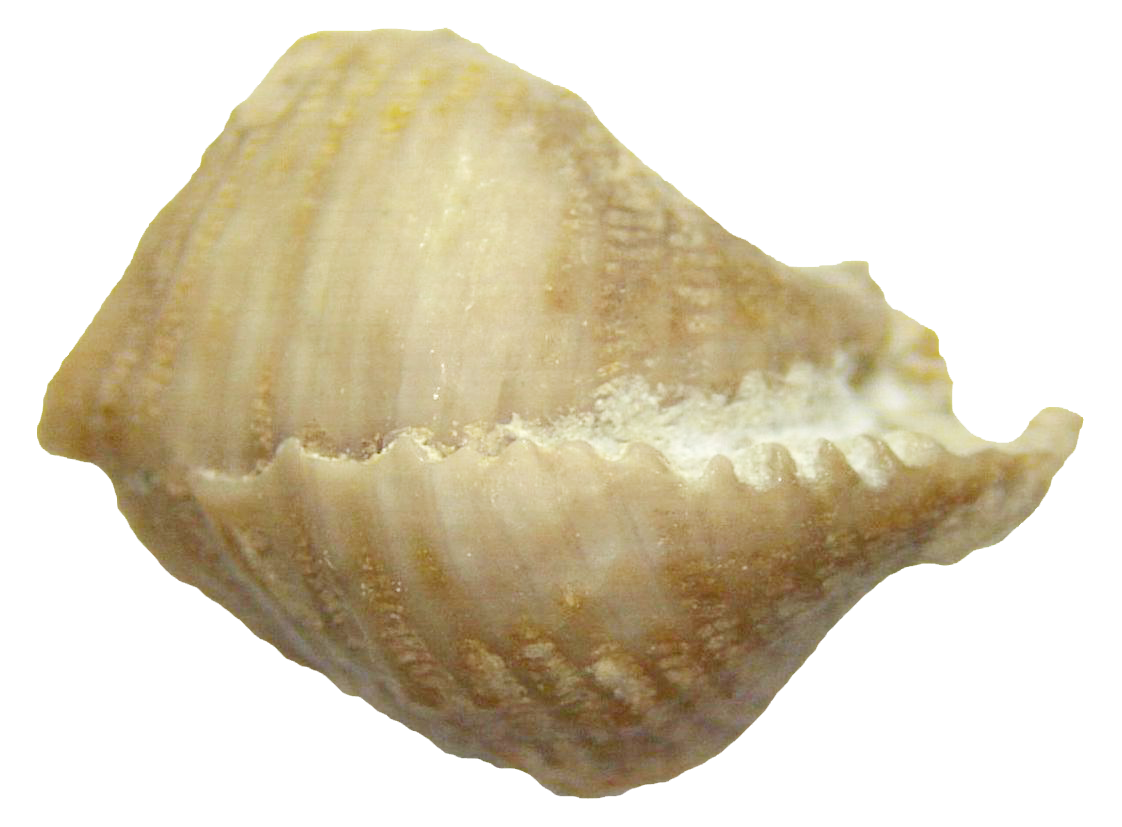
Mulceodens jaanussoni, a rostroconch from the Silurian period (TUG 1254).
Additionally, the fossil record of mollusks includes the class Rostrochonchia, which inhabited Paleozoic oceans. This group resembled Bivalves externally, but Scaphopods internally.