
Find resources here to help you dig deeper and learn more about climate change and energy.
On this page:
EXHIBIT TAKEAWAYS
Pamphlets and activities created for visitors to Changing Climate: Our Future, Our Choice
K-12 Teacher’s Guide to the exhibit
A guide to help use the exhibit as a teaching tool, with activities and discussion questions for each section of the exhibit.
Trifold Pamphlets
View online or download, print double-sided flipping on the short edge, and fold to create a trifold pamphlet
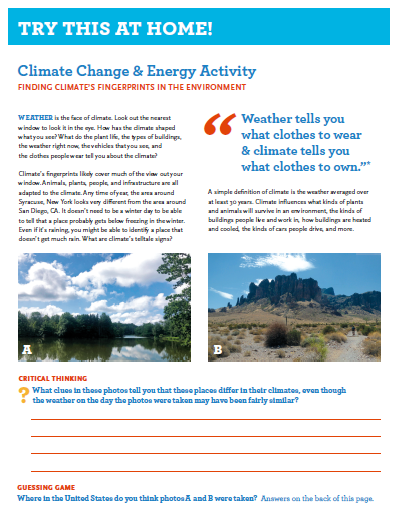
Try This At Home Activities
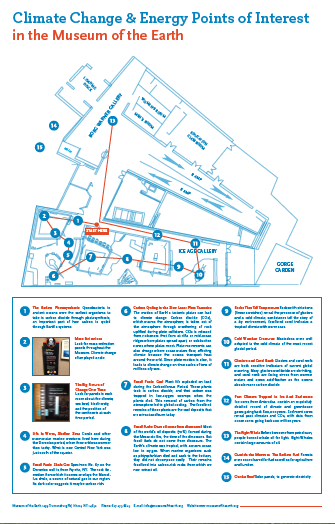
Museum Map
PRI RESOURCES

A series of videos on key concepts in climate change science. The videos include demos, experiments, and data analyses, plus insights from Dr. Alexandra Moore.
A content resource for teaching about climate change, though non-teachers can benefit from it, too. The guide includes the basics of climate change science, social science concepts important for teaching climate change, regional information, and climate change solutions.
A free online toolkit for learning about Earth and its 4.5-billion-year history. Earth@Home is rich with free interactive content about Earth and its life, with a focus on geology, paleontology, climate, and the connections of Earth’s different systems.
A playlist of different changes everyone can implement in their daily life that will, step-by-step, help us all be better prepared for climate change, reduce our carbon footprint, and teach others how to do the same!
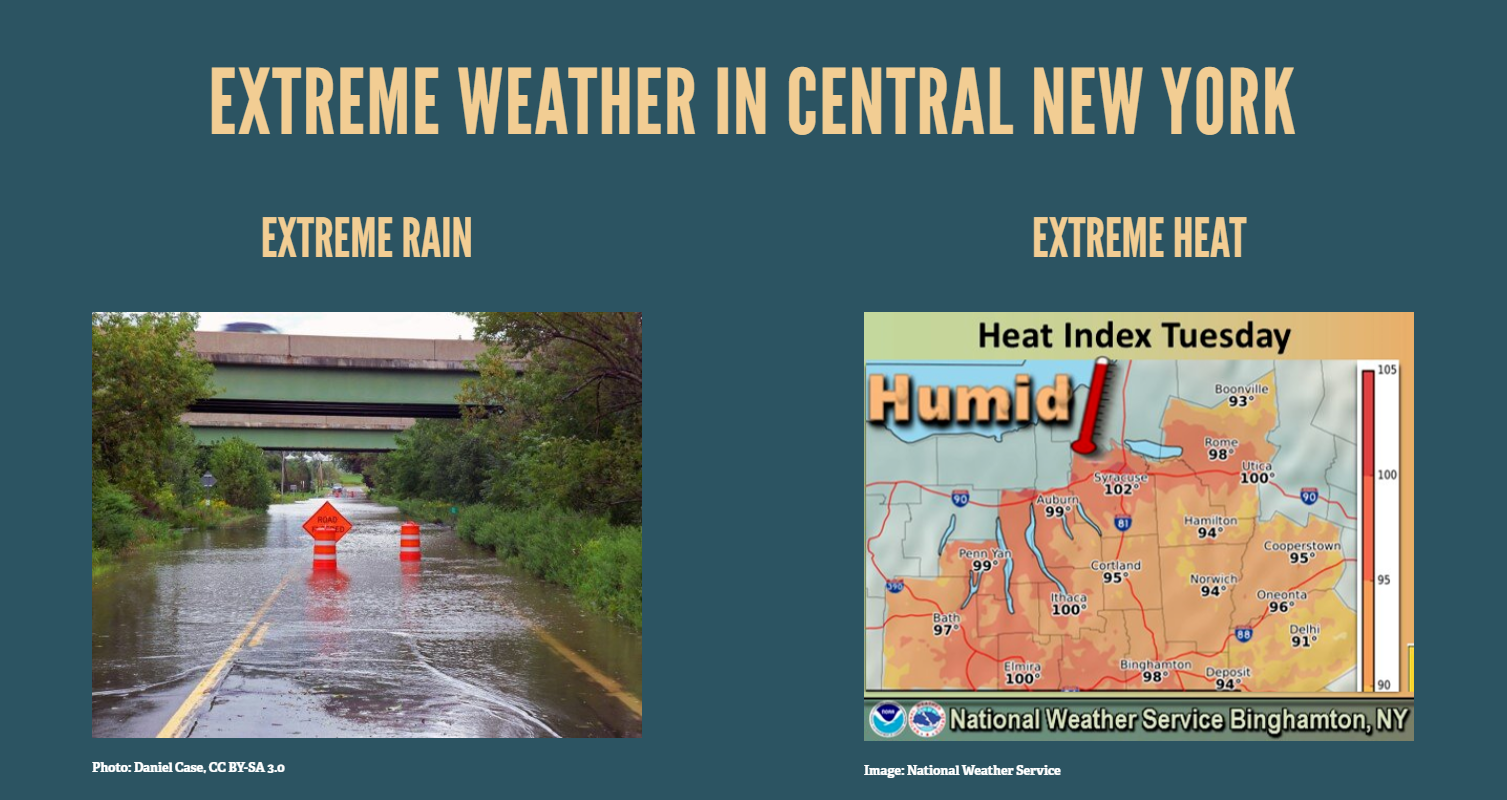
Information about Central New York’s climate, including historical observations, future projections, impacts on plants and wildlife, and resources for further exploration.
Links to information relevant to Tompkins County, NY about weather safety and preparedness, home energy efficiency and choices, carbon offsets, reuse, and transportation. Residents of other locations may find useful information on this page as well.
Learn about climate change and its impacts in Central New York.

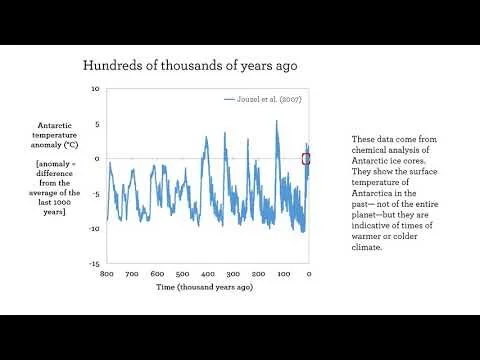
An animation of reconstructions and measurements of Earth’s past temperature, at time scales from hundreds of millions of years ago to the last 140 years.
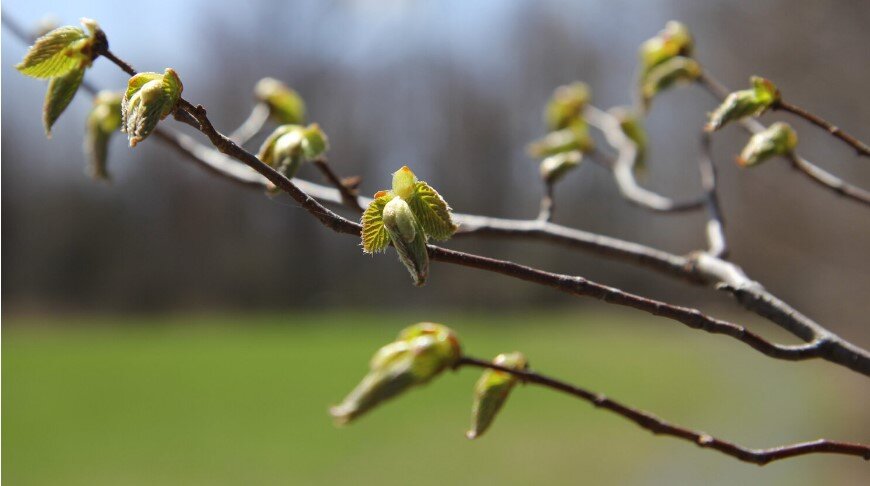
A set of two blog posts on spring tree phenology. Phenology is the study is seasonal and cyclical changes in plant and animal life, especially as related to climate change.
RESOURCES FROM OTHER INSTITUTIONS
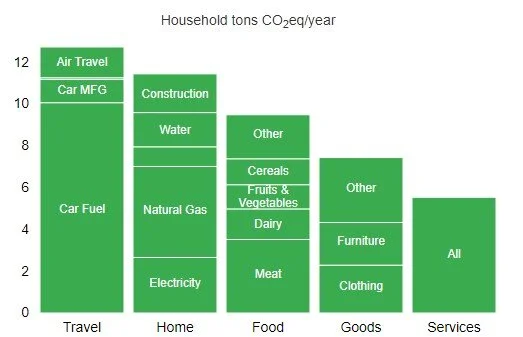
A carbon footprint calculator that helps you see the carbon emissions from your travel, energy and water use, food choices, goods, and more.
A comprehensive hub of interdisciplinary resources vetted by scientists, reviewed by teachers, and crafted to assist New York educators in integrating climate education into their classrooms.
A resource from Cornell Cooperative Extension of Tompkins County to help residents of New York’s Southern Tier save money and energy by connecting them to resources on energy efficiency, renewable heat, and solar.
Descriptions and analyses of solutions to reach Drawdown, the future point in time when levels of greenhouse gases in the atmosphere stop climbing and start to steadily decline. The solutions focus on all aspects of the climate equation—stopping the sources of greenhouse gas pollution, supporting and enhancing the sinks of carbon dioxide found in nature, and helping society achieve broader transformations.
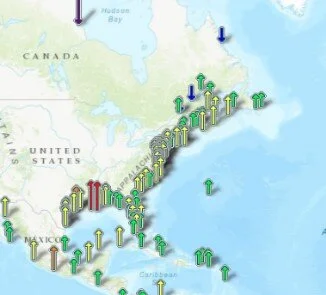
Information and tools to help communities understand and address their climate risks.
Learn about fundamental Earth system processes and phenomena relevant to environmental and climate change.
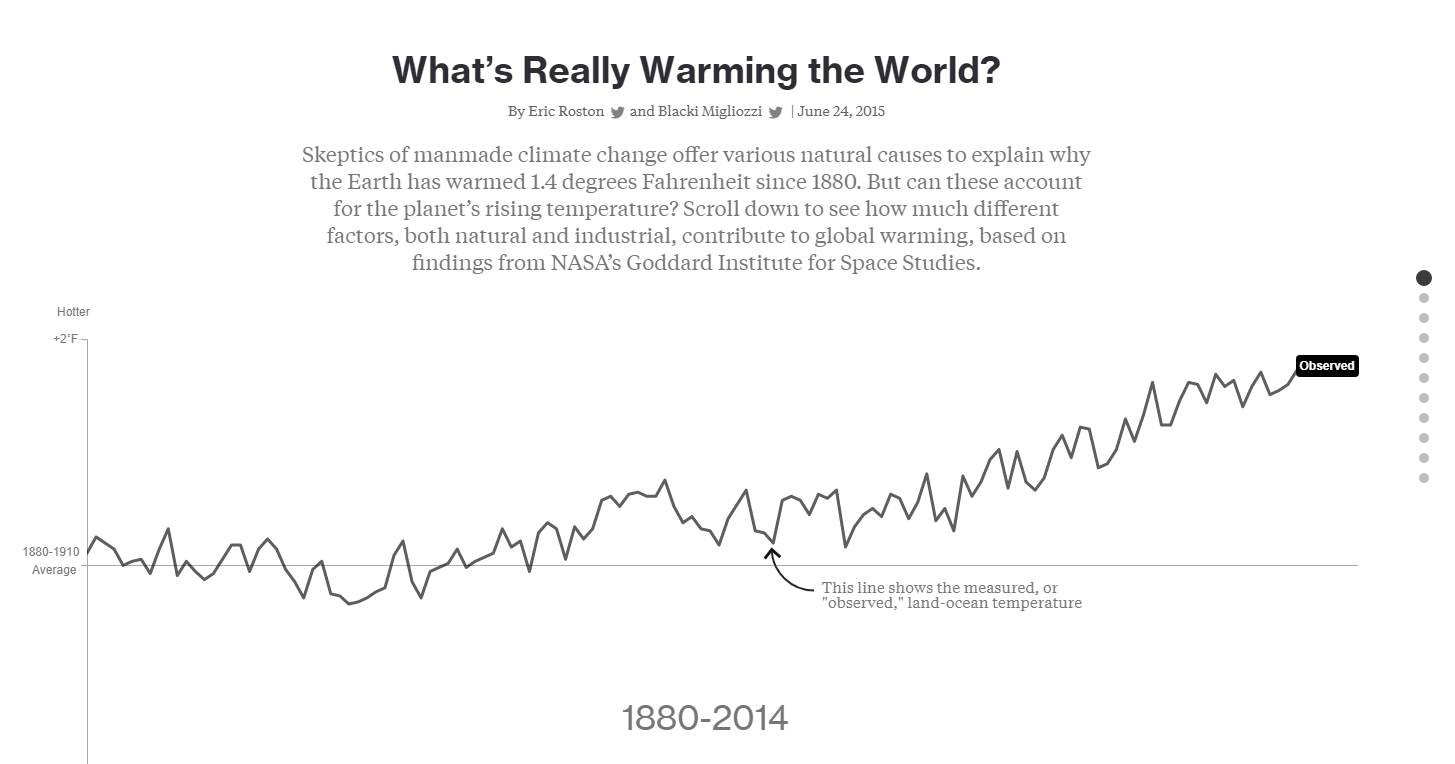
An interactive data visualization that shows different contributions to changes in Earth’s temperature since 1880—from both natural and human sources—and how they add up.
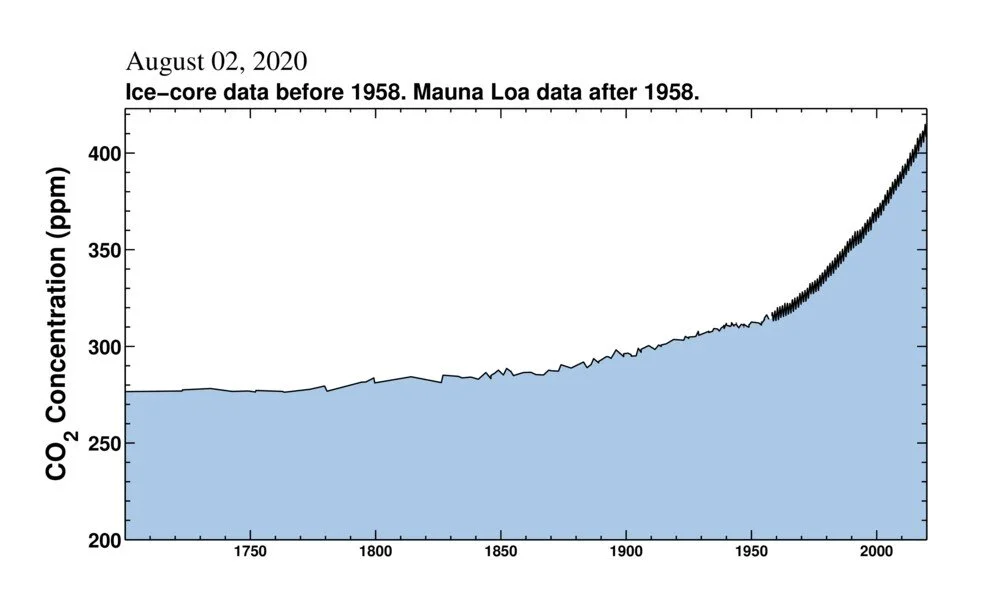
Graphs of atmospheric carbon dioxide levels. The graphs combine data from measurements taken at Mauna Loa, Hawaii, and from Antarctic ice cores, and the time scales range from measurements taken during the current week to data from 800,000 years ago to the present.
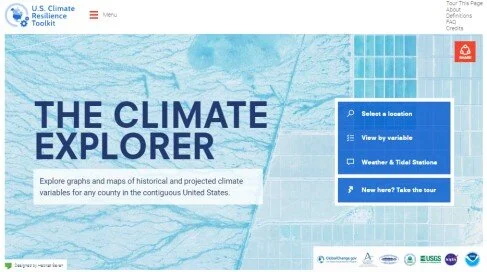
Graphs and maps of historical and projected climate variables for cities and any county in the contiguous United States.
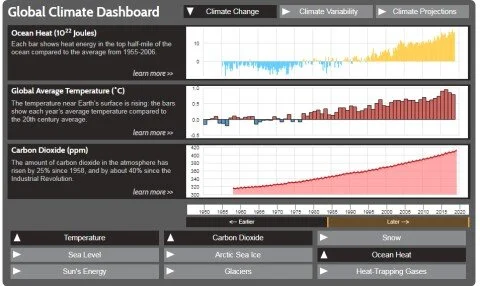
Graphs of climate variables and climate change indicators such as changing sea level, Arctic sea ice extent, and changes in glaciers.
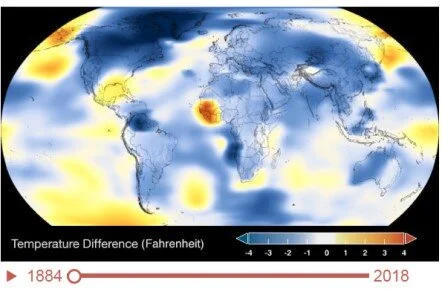
Animated map of global temperature change from 1884 to the present.
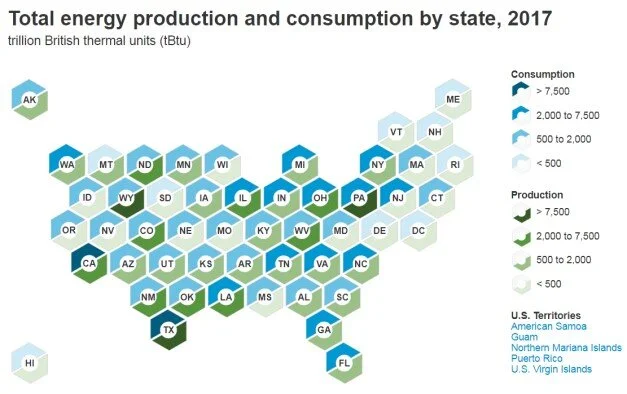
A vast amount of data, graphs, maps, and analyses about energy production and use, as well as greenhouse gas emissions.
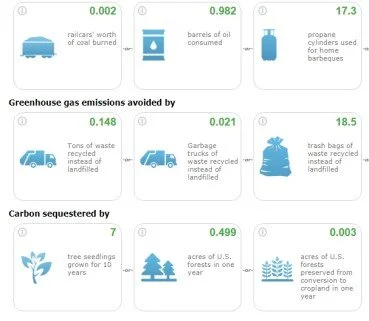
A calculator that translates energy use and/or greenhouse gas emissions into equivalents from everyday activities such as driving a car, using electricity in a home, charging a smartphone, or running a coal-fired power plant. It also compares emissions avoided by recycling, using wind energy, and switching to LED lighting, and emission sequestered by planting trees.
FOR EDUCATORS
A content resource for teaching about climate change, though non-teachers can benefit from it, too. The guide includes the basics of climate change science, social science concepts important for teaching climate change, regional information, and climate change solutions.
Resources for teaching about climate change, including toolkits, videos, workshops, and more.
A collection of over 700 free, ready-to-use learning resources rigorously reviewed by educators and scientists, suitable for secondary through higher education classrooms. CLEAN also provides guidance on teaching about climate change and energy, and fosters an active network of educators.
A portal for credible, engaging, and unbiased climate change teaching resources, for teachers of all subjects. The portal includes inquiry-based lesson plans designed by teachers for teachers.
A comprehensive hub of interdisciplinary resources vetted by scientists, reviewed by teachers, and crafted to assist New York educators in integrating climate education into their classrooms.
Education resources for learning about the Critical Zone—Earth’s near-surface layer, from the tops of the trees to the bottom of the groundwater. Resources can be filtered by grade level and include videos and Virtual Fieldwork Experiences.
A free online toolkit for learning about Earth and its 4.5-billion-year history. Earth@Home is rich with free interactive content about Earth and its life, with a focus on geology, paleontology, climate, and the connections of Earth’s different systems.
This list is nothing like comprehensive, but offers a sampling of resources that support teaching climate change across the curriculum, in disciplines including the sciences, humanities, math, technology, agriculture, music, driver education, and more.
Exhibit Image Credits
Many thanks to Metcalfe Architecture and Designfor design services for Changing Climate: Our Future, Our Choice at the Museum of the Earth.
Introduction
Flooding in Jakarta, Indonesia, World Meteorological Organization via Flickr (CC BY-NC-ND 2.0)
Fire (making coals), Johann Kuester via Flickr (Public domain)
Early Homo sapiens skull, Philipp Gunz, MPI EVA Leipzig (CC-BY-SA 2.0)
Late-glacial landscape at south end of Cayuga Lake, Ithaca, NY, painting by William Dilger
Farmer plowing in ancient Egypt, from the burial chamber of Sennedjem, The Yorck Project via Wikimedia Commons (Public domain)
Men shoveling coal into the furnace of a locomotive, 19th century, artist unknown, stock photo
Construction worker in the heat, stock photo
Man installing solar panels, U.S. Air force photo by Roland Balik
Western New York Youth Climate Summit, photo by Kelli Grabowski
Temperature and Carbon Dioxide Through Time
Fire (making coals), Johann Kuester via Flickr (Public domain)
Wooly Mammoths, painting by Charles R. Knight via Wikimedia Commons (Public domain)
Early Homo sapiens skull, Philipp Gunz, MPI EVA Leipzig (CC-BY-SA 2.0)
World maps from 144,000 and 120,000 years ago, copyright Colorado Plateau Geosystems, Inc., used with permission
Late-glacial landscape at south end of Cayuga Lake, Ithaca, NY, painting by William Dilger
Farmer plowing in ancient Egypt, from the burial chamber of Sennedjem, The Yorck Project via Wikimedia Commons (Public domain)
Men shoveling coal into the furnace of a locomotive, 19th century, artist unknown, stock photo
Mauna Loa Observatory, photo by Alexandra Moore
Keeling Curve, Scripps Institution of Oceanography
Western New York Youth Climate Summit, photo by Kelli Grabowski
Climate Proxies
Reading Climate Through Earth History, Don Haas
Large Climate Core, Digital Atlas of Ancient Life (CC BY-SA 4.0)
Students visiting the Gulf Coast Repository of the International Ocean Discovery Program at Texas A&M University, photo by Kusali Gamage
Ocean sediment core, 66 million years old, photo from joidesresolution.org, Lamont-Doherty Earth Observatory
Climate Bivalve, Digital Atlas of Ancient Life (CC BY-SA 4.0)
Slice through a clam shell, photo by Linda Ivany
Climate leaves, Digital Atlas of Ancient Life (CC BY-SA 4.0)
Drill rig on the West Antarctic ice sheet, photo by Mark Dreier
2,000 meters depth is reached in a core from the West Antarctic ice sheet, photo by Kristina (Dahnert) Slawny
Ice core section from Clark Glacier, photo by Emily Stone, National Science Foundation
Researcher collecting a tree core in Smith Woods, photo courtesy of Cornell Tree-Ring Laboratory
Climate Change Affects All of Us
Flooding in Jakarta, Indonesia, World Meteorological Organization via Flickr (CC BY-NC-ND 2.0)
Construction worker in the heat, stock photo
A farmer in a dry field in Thailand, stock photo
Monarch butterfly, photo by Alexandra Moore
Marine snails, photos by National Oceanic and Atmospheric Administration
Icons
We Can Do Something About It
Man installing solar panels, U.S. Air force photo by Roland Balik