


PRI seismometer
Seismograms in the Museum of the Earth
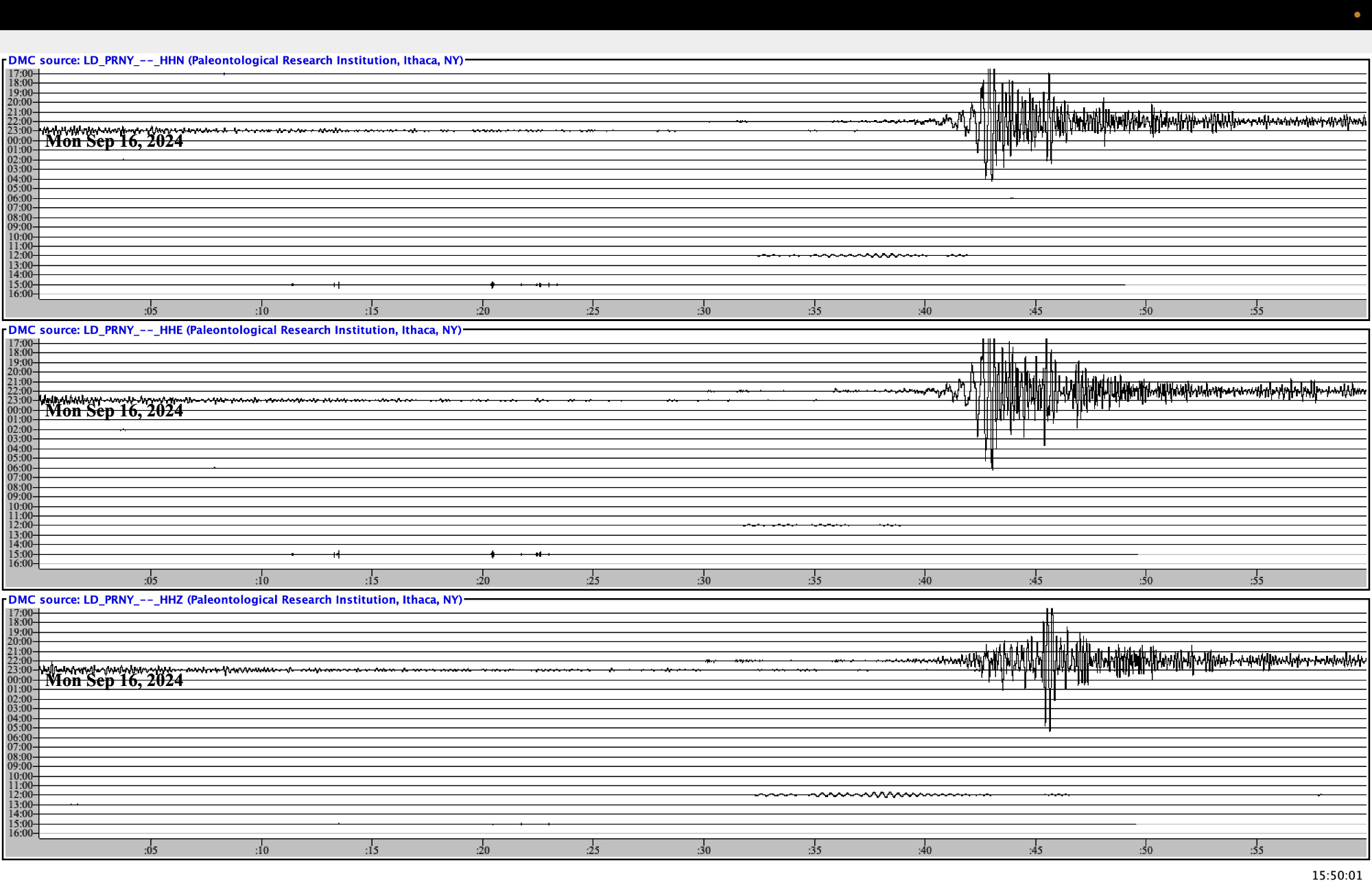
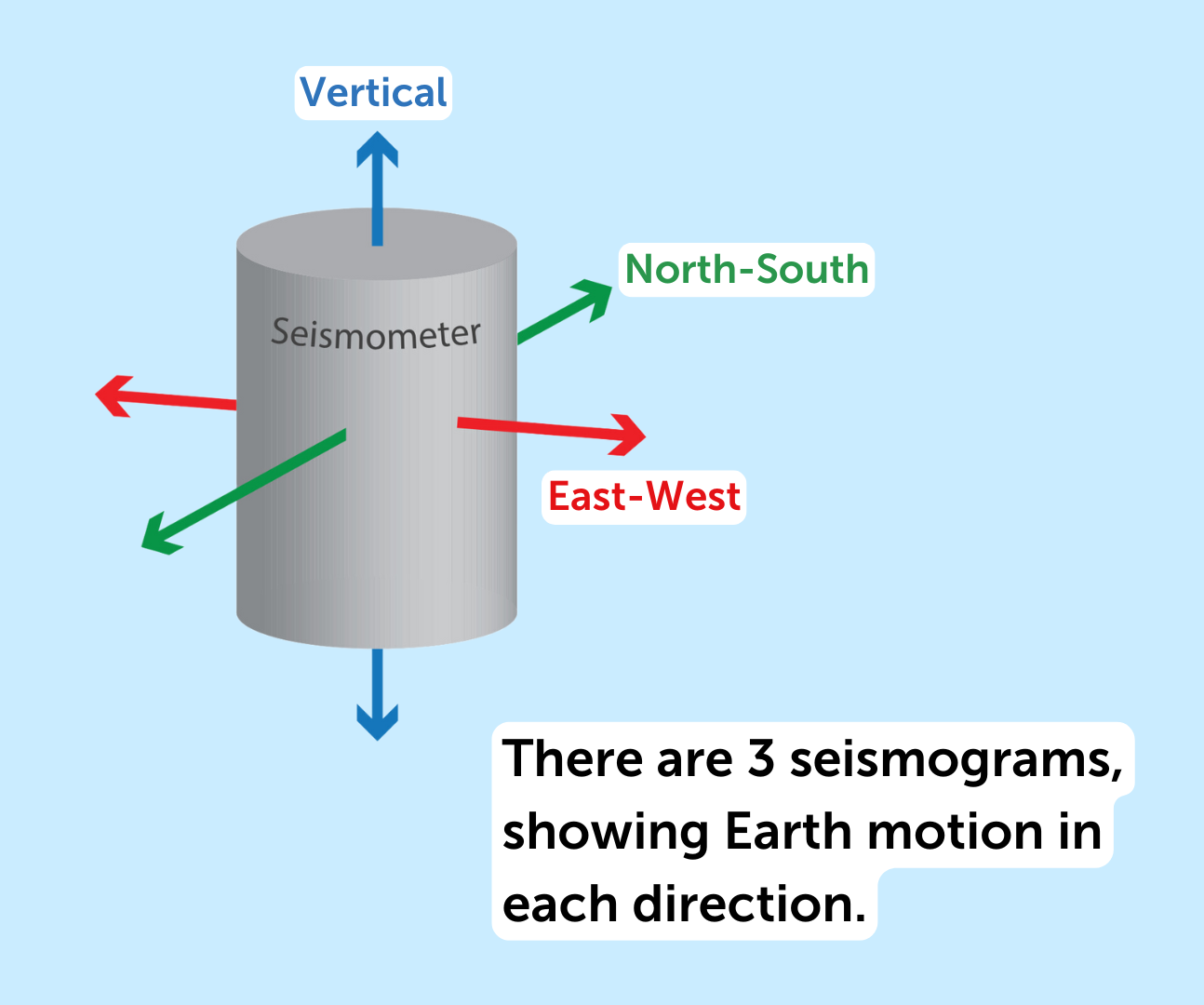
The seismograms on display in the Museum of the Earth (below) show Earth vibrations being recorded by a seismometer behind the Museum, shown at right. Each line is one hour of measurements. Flat lines reflect no earthquake activity. Wavy lines show ground motion caused by earthquakes — some may be large earthquakes on the other side of the world or smaller ones here in the northeastern US.
You can access real-time data from PRI's seismometer from the EarthScope Consortium.
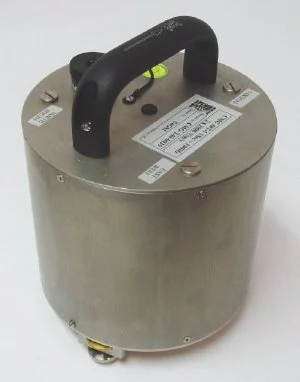
The seismometer used at the Museum of the Earth, designed and manufactured by Guralp Systems (model CMG-40T Triaxial Broadband Seismometer). The seismometer is underground behind the Museum.
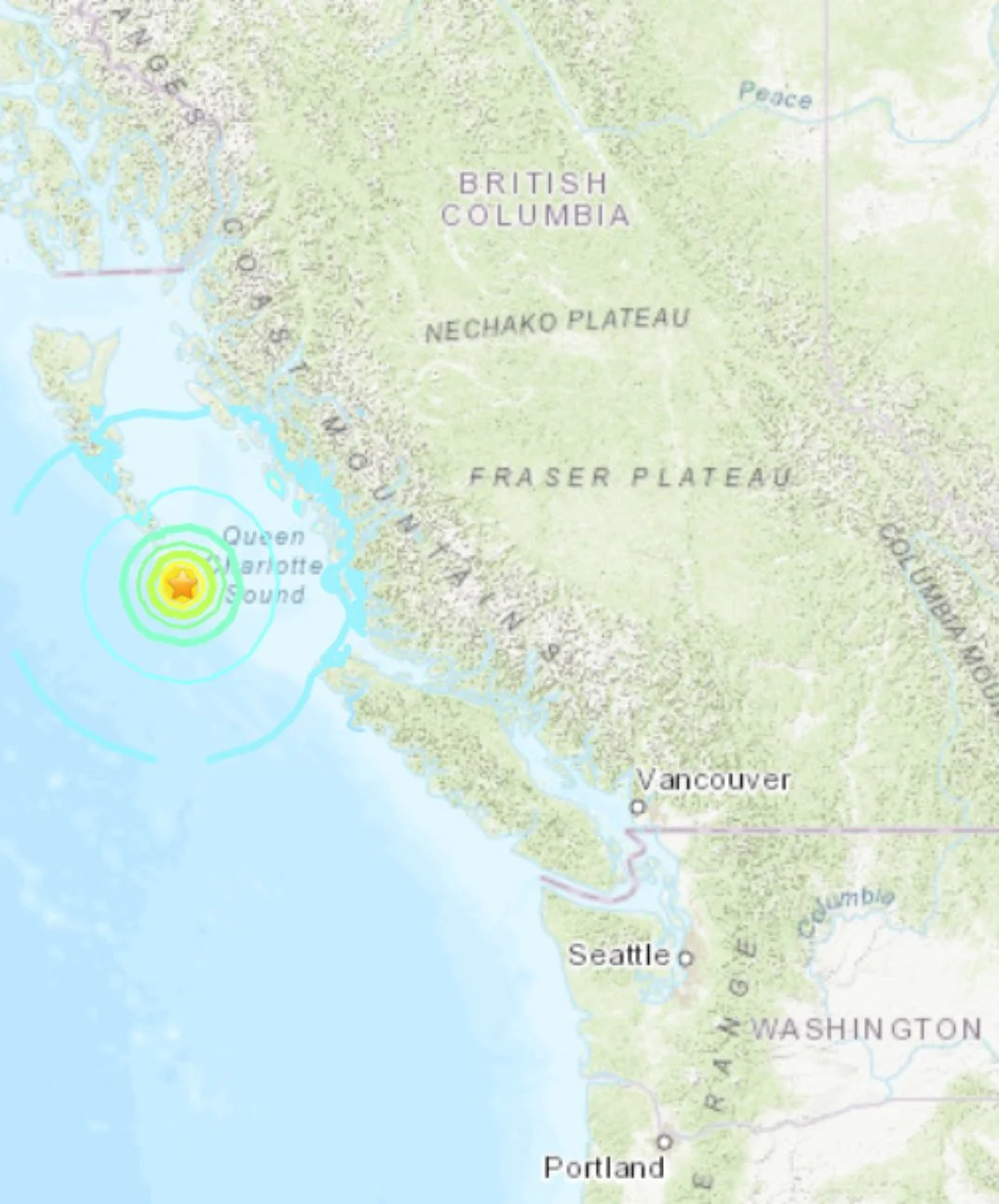
Below: Screenshot of a seismogram from PRI's seismometer, showing the signal of an earthquake that took place off the west coast of Canada, in the vicinity of Port McNeill, British Columbia.

Make your own Museum-quake
In the Museum of the Earth you can jump or stomp your foot to make the floor vibrate — within a few seconds a museum-quake will appear on the seismogram. The up-and-down motion you caused was recorded by a small seismometer on the floor near the exhibit. Earth motion from most human activities (such as people and machines) is brief and only detectable locally.
